
Bricklaying and repointing in Milborne St Andrew
Lime repointing, flint and brick repair, chimney stacks, barns and roadside walls in Milborne St Andrew and the villages along the A354.
The site visit is free and so is the written itemised quote. Thomas Hannen prices every job himself.
Bricklaying and repointing
Repointing in Milborne St Andrew: what we do, and what we leave be
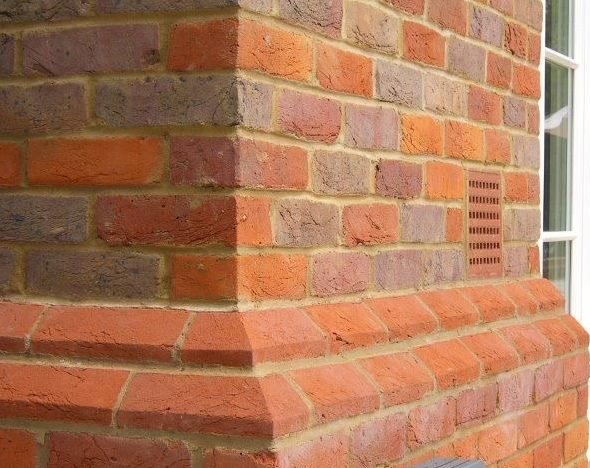
Most brickwork in this village is old, solid and bedded in lime, and the most useful thing we do in Milborne St Andrew is take hard cement pointing back out of walls that were never built for it. Put a lime mortar back and the wall dries out through the joint. Leave the cement in and the brick face keeps taking the damage instead, one frost at a time.
People ring us about three things. Joints washed out on the face that takes the weather, deep enough to see into the wall. Grey ridges of old cement pointing standing proud of brick that is crumbling behind them. Or something that has moved: a roadside wall leaning out, a gate pier off plumb, a crack stepping up from the corner of a window.
We come and look at the building before saying anything about price, because in a village of this age the first question is what the wall is actually made of and whether it is listed. You get a straight answer on what needs doing, what can be left alone, and an itemised written price if you want one. The site visit and the quote are both free.
The work
The brickwork jobs we do in Milborne St Andrew
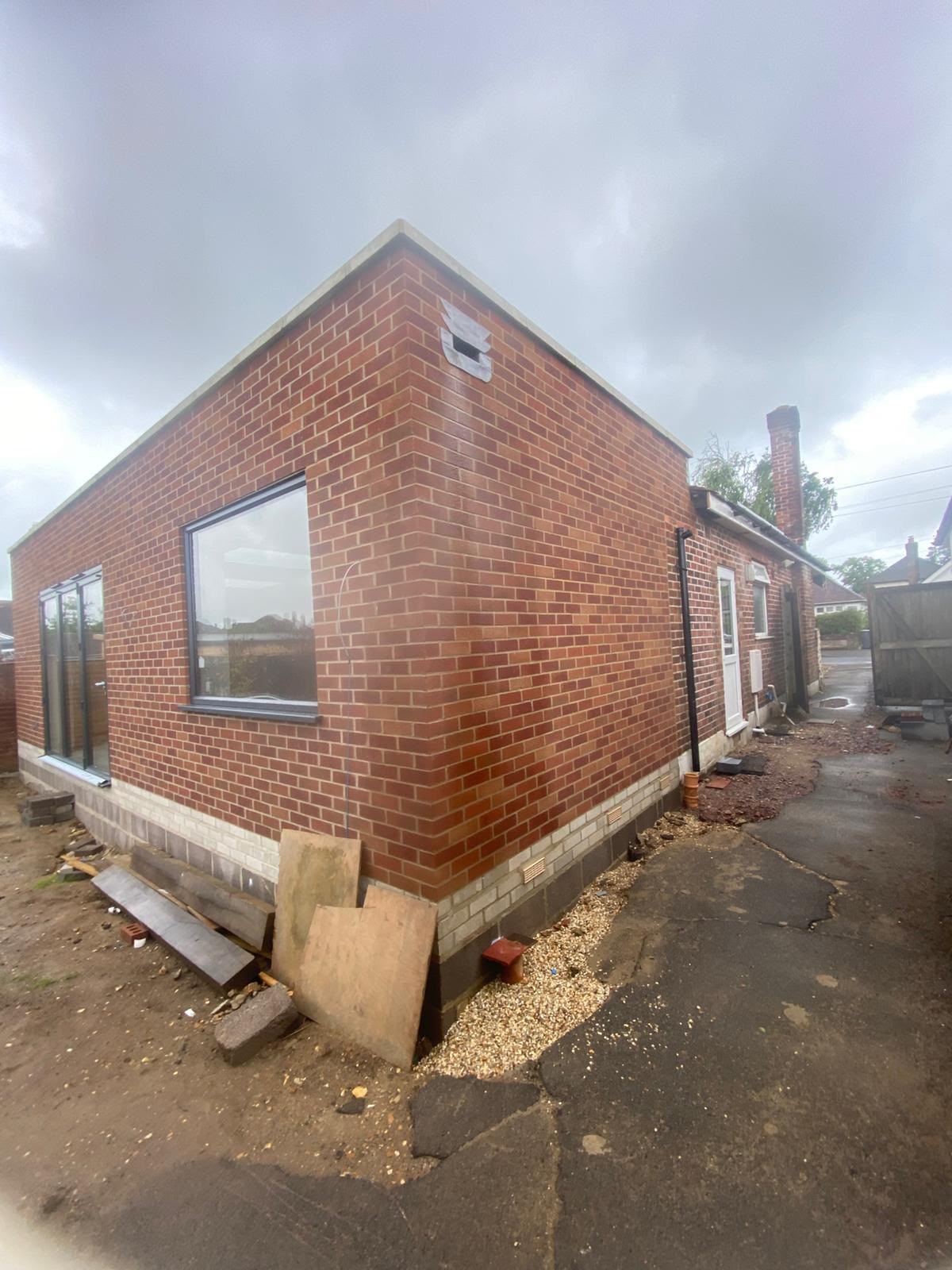
Lime repointing on solid walls. This is the bulk of the work here. Joints are raked out by hand, roughly to twice their width, with no disc cutter anywhere near a soft old arris, and repointed in an NHL lime mortar mixed with a sand chosen to match what came out for colour and grain. You get a sample panel to look at in daylight before we commit to an elevation, and the profile goes back as the building has it, flush or a shade recessed on this fabric rather than the weather struck edge a modern wall carries. It is slower than cement and it is the only thing that works on a wall with no cavity and no damp proof course.
Flint, cob and brick together. In chalk country a good many older walls are not brick the whole way through. Flint with brick quoins and banding, brick dressings round openings, a brick plinth under a cob wall. The discipline is the same: match the mortar, keep it softer than what it holds, and never point flint so proud that water sits on the ledge. Where a wall is mixed we price the brick work and the flint work separately. The walls along the street take a beating from traffic coming through and most have no damp proof course, so the bottom courses go soft first, and some of the walls and piers here are listed in their own right, which we check before anything is opened up. Where a soft handmade brick has started spalling we cut out the whole brick and replace it from a reclaimed batch. On the threshing barns and cart sheds, single skin with piers on little more than a wide first course, we say plainly when a bowed section has gone too far to patch twice. A failed lintel over a cart opening is replaced before anything above it, and a pier with no foundation gets a footing dug under it. A stack on an old cottage takes weather from four sides, and where a roof is thatched we work with the thatcher rather than around him.
How it runs
From your call to a written price
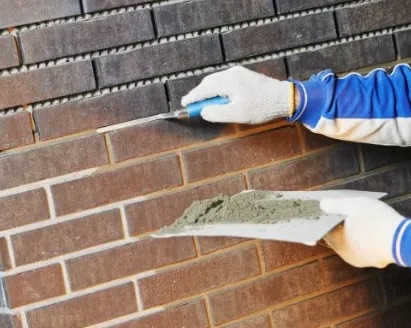
One team from first visit to last, and the price broken out by elevation so you can compare it line by line. There is no conservation area over Milborne St Andrew, so on an ordinary house repointing and brick repair are repair and need no application. Around two dozen entries in the parish are listed, and on a listed building or wall repointing counts as alteration and needs listed building consent from Dorset Council first. Changing how a wall looks rather than putting it back can need planning permission, which Planning Portal guidance on external walls explains, and Planning Portal guidance on other permissions is the place to start if you are unsure. Structural work goes through building control, and a shared wall brings in Party Wall etc. Act 1996.
Cost
What decides the price of a brickwork job
No rate per square metre: the joints decide the job, not the area. A cottage fronting straight onto Blandford Hill, a farmhouse with a yard to work in and a barn whose wall is also the boundary are three different set ups before anybody starts. A stack or a gable wants a scaffold and a garden wall wants nothing, and work at height rules make the platform a priced line. On soft old brick the joints come out by hand, so their depth and any spalled faces decide the hours. Ask whether the mortar was matched and whether access is in.
If something has moved
Loose brickwork, or a wall that has shifted
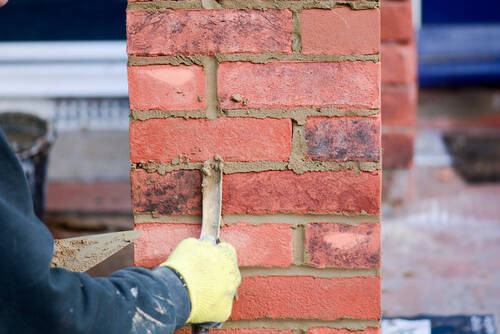
Ring rather than use the form. Anything overhead or leaning jumps the queue. The first visit is about making it safe and stable, and we price the permanent repair once we can see how far the movement goes. Here it is most often a roadside wall clipped by something coming through the village, or a stack shifted in a gale. The phone is answered 24 hours for emergencies; scheduled work runs Monday to Friday, 8am to 6pm.
The one local thing
No conservation area, but a lot of listed walls
Milborne St Andrew catches people out. There is no conservation area over the village, which means that if your house is not listed, repointing, brick repair, a rebuilt pier or a new garden wall are yours to get on with and nobody has to approve the mortar. But the parish carries around two dozen listed entries, and they are not all houses.
A front boundary wall is listed here. So are gate piers to a house that has gone, a threshing barn, and a pair of milestones. Whether you need consent turns on your particular address and even on which structure in the garden you are touching, not on where the village boundary runs.
Two practical things follow. First, check before anyone lifts a chisel, because work to a listed structure without consent is a criminal matter rather than a form you forgot, and the responsibility sits with the owner. Curtilage is the part people miss: an outbuilding or a wall inside the grounds of a listed house can be covered by the listing without being named in it. Second, build the time in.
Consent for like for like lime repointing is not usually a difficult application, but it is not instant either, so it wants sorting before scaffold is booked rather than after. We identify all of this at the survey, tell you which of your walls it touches, and set the specification to suit a listed wall anyway: hand raking, a lime mix matched to what is there, a sample panel to approve, and the original profile put back.
Who you are dealing with
A local firm you can check
Milborne St Andrew is at the far end of our patch, about eighteen miles from the yard up the A354, and we work the DT11 villages along it, Winterborne Whitechurch, Tolpuddle and Bere Regis, and on into Blandford and Puddletown. We come out for the site visit whatever the size of the job, and we will be straight with you about when we can start.
Bournemouth Roofing & Building Ltd, registered in England and Wales, company number 15471719, which you can look up in a minute. Thomas Hannen's business, and he is the one who comes out to price the job, not a salesman. A verified customer's 10 out of 10 on Checkatrade. The visit and the written quote are both free.
Questions
Milborne St Andrew questions we get asked
Do you cover a village this far out?
We do. Milborne St Andrew is 18 miles from our base, so we plan it as full consecutive days rather than dropping in for an hour at a time. That suits raking out and pointing, which wants a continuous run and a wall kept damp between lifts. Thomas Hannen still drives out to look at the wall and price it, and the site visit is free.
The joints are soft. Is that a fault?
Not on its own. On an older solid wall the joint is meant to be weaker than the brick or the stone, so it takes the movement and the salts and wears back first. That is the sacrificial part of the wall doing its job. It becomes a fault when it has washed back far enough to hold water in the recess. We rake to sound material and match what is already there.
Does the Poole Harbour nutrient rule affect a loft conversion?
It can, and it catches people out. Milborne St Andrew drains into the Poole Harbour catchment, and the nutrient rule engages where a scheme adds overnight accommodation, so a loft conversion or an annexe can trigger it while repointing, a garden wall or a re-roof does not. If you are adding a bedroom, raise it with Dorset Council early. Brickwork repairs sit outside it entirely.
Does living near the church put us under extra rules?
Only if the cottage itself is on the list. Milborne St Andrew has 25 listed entries, the Parish Church of Saint Andrew among them, and no conservation area drawn around the village, so standing next to a listed building puts no control on your own house. Where a house is listed, consent comes first and the mortar mix, the joint finish and how far we rake back are all agreed with Dorset Council.
Why does a village wall fail at the top?
Because it takes rain on both faces and straight down onto the coping, so water sits in the top few courses and frost lifts them. On the free standing walls around Milborne St Andrew you see a loose coping, a slight bulge near the head and sound brickwork underneath. Rebuilding the head and getting a decent weathering back on it fixes most of them without touching the rest.
Nearby, and next door
Bricklaying and repointing near Milborne St Andrew
Bricklaying and repointing nearby
Our other trades in Milborne St Andrew
Everything we do in Blandford Forum Bricklaying and repointing, all areas Every area we cover
Free quote
Get an honest look at the wall
Tell us which wall is bothering you and roughly how old the building is. We will come out, work out what it is made of and what it needs, and put an itemised written price in your hand.