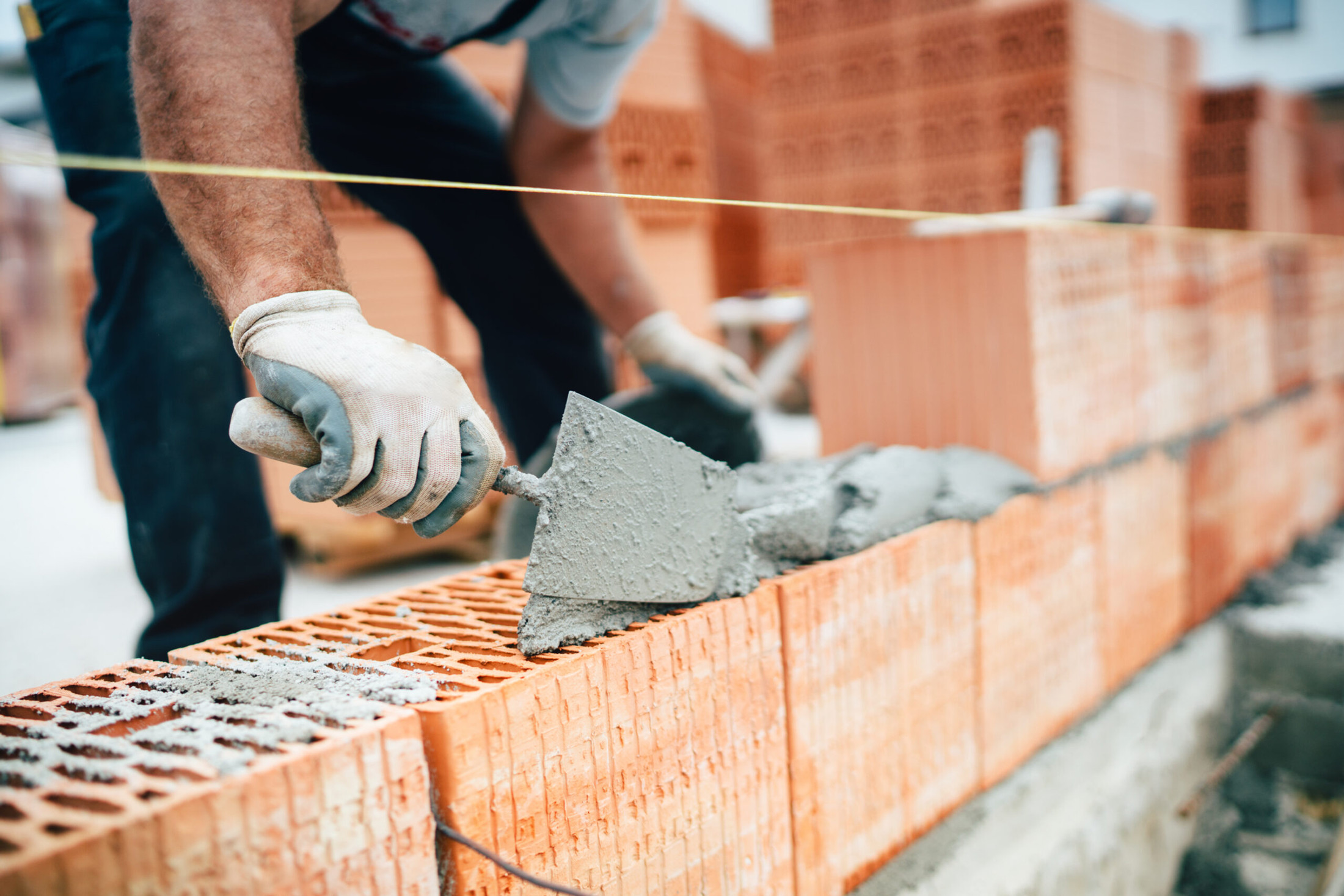
Milborne St Andrew repointing and mortar matching
Old mortar out by hand, a mix matched to what came out, and a straight answer on which elevations are actually due.
The site visit is free and so is the written itemised quote. Thomas Hannen prices every job himself.
On the older walls in Milborne St Andrew the mortar has to stay the softest thing in the wall. Get that right and the joint wears back over decades while the brick stays whole. Get it wrong and the brick face goes instead, which is the failure we are called to most often here.
People ring about the same handful of things. Mortar gone back to sand, so a joint empties under a thumbnail and you can see daylight through a perpend. Brick faces flaking away behind a band of pointing that is still hard and standing proud. Or grit collecting on a sill after every dry windy week, which is a wall quietly emptying itself.
Every one of those is mortar rather than structure, and none gets better on its own. Water sits in an open joint, freezes and takes a little more of the wall each winter. We go round the whole building, scrape a few joints to see what the original mortar is, tap the courses for anything that has come away behind the face, and photograph each elevation. Then you get a written itemised quote with the mix on it, and a straight answer on which faces are due. The site visit and the quote are free.
The work
Where the pointing fails on a village wall, top to bottom
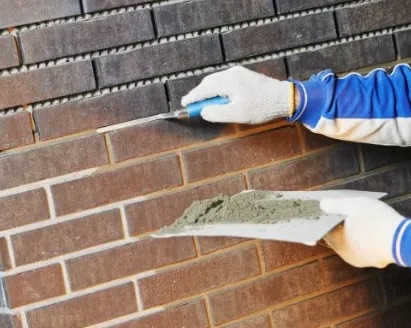
The head of the wall. The top few courses take rain on both faces and down onto the coping, so water stands in the joints and frost lifts them first. On a house that is the course under the verge and around the eaves, on a free standing wall the whole head. Repointing those joints and re-bedding a loose coping stone in a matched lime mix deals with most of it, and it is quick work next to what happens if the top stays open.
The weather face. The elevation that takes the driven rain runs years ahead of the sheltered ones, and it is where the joints have washed out deepest. We rake it back by hand with a plugging chisel to roughly twice the width of the joint, until we reach sound mortar, and point it in lifts in a natural hydraulic lime gauged with a sand matched to what came out. The wall is damped down first, the joints brushed back once the mix has taken up, and the profile put back as the building carries it, flush or slightly recessed rather than struck at an angle.
The middle, where somebody has been before. Plenty of walls here carry a stripe of sand and cement from a repair thirty or forty years ago. A hard joint in a solid wall shuts the escape route for moisture, which then leaves through the brick face and pops the surface off at the first hard frost. Taking that out is slow hand work and no disc cutter goes near it, because an angle grinder widens the joint and takes the arris off a soft handmade brick for good.
The bottom courses. Most of the older cottages have no damp proof course and never did, so the lowest metre stays damper and carries salts up with it. Mortar down there turns friable faster than anything above head height. We point it in the most permeable mix the wall will take, and where a border or path has been built up against the brickwork we say so, because pointing a base course standing in wet ground is money spent twice.
Spalled faces, and the stack. Where a face has blown, pointing round it just frames the damage, so the brick comes out whole and a reclaimed match goes in. Chimneys go last on the survey and first on the priority list: a stack stands clear of everything, takes weather on four sides, and its joints and flaunching go friable long before the house walls do.
How it runs
From your call to a written price
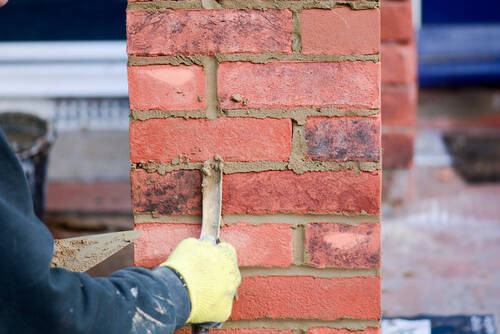
Same team from first visit to last, one person to ring, and no sub-contracting. The quote breaks out access, raking out, the mortar mix, the area of each elevation, brick replacement and disposal on separate lines, so you can compare it against anyone else's.
Nothing is left open overnight, the site is swept daily, and what comes out leaves with us. If something turns up that nobody could have seen, you get a photograph and a price first.
Repointing like for like is repair rather than development, so there is no planning application and nothing for building control to sign off. No conservation area is drawn over Milborne St Andrew, so on an ordinary house nobody controls what mortar goes back. Around two dozen entries in the parish are listed, and on a listed building the pointing counts as part of the fabric, so it needs listed building consent from Dorset Council before a joint is opened. We look the address up before we quote.
Cost
What decides the price of a repointing job
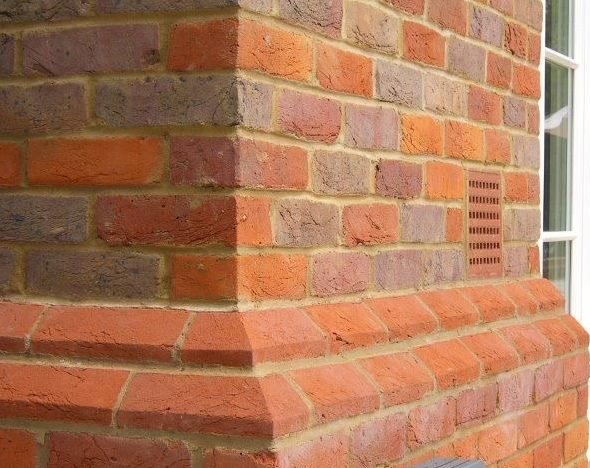
No rate per square metre: the area tells you almost nothing until somebody has looked at what the joints are like.
Getting to it. A cottage fronting straight onto Blandford Hill, a farmhouse with a yard you can get a mixer into, and a low garden wall you can work off the ground are three different set ups before a joint is opened. The work at height rules are why the scaffold is a priced line rather than something absorbed into a rate.
The joints decide it, not the wall. How deep the joints have to come back, and whether the faces have already spalled, sets the hours far more than the area does.
Matching is the part that shows. Too strong a mix is the classic mistake, and one hard frost takes the face off soft brick. Lime is right on most pre-1919 walls here.
Comparing quotes? Ask how deep the joints are raked and by hand or by disc, what the mix is and whether it has been matched, and whether the scaffold is in the price. Two quotes for the same job are usually two different jobs.
If water is getting in
Open joints, and water coming through the wall
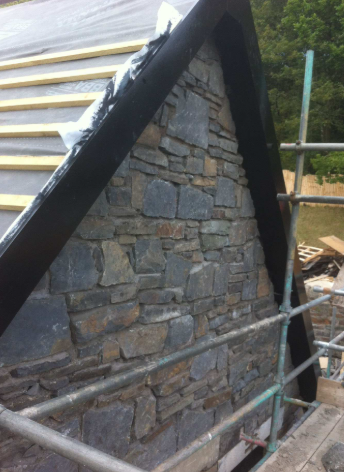
Ring rather than use the form. Joints washed out let driven rain straight through to the inside face, and on a chimney it finds the flashings too. We come and look, sheet or temporarily point the worst of it, and price the full elevation once it has dried enough to see what is sound. Out here it is usually the stack, or a gable open long enough for penetrating damp to show on the inside face after a wet week. The phone is answered 24 hours for emergencies; scheduled work runs Monday to Friday, 8am to 6pm.
Worth knowing
Nobody here will stop you putting the wrong mortar on
Milborne St Andrew has no conservation area over it, so unless your address is a listed one there is no council officer, no consent and no conversation about the mix. That sounds like freedom and mostly it is. It also means the only person who will ever check whether a soft chalkland cottage is about to be pointed in sand and cement is you, on the day you accept a quote.
That matters more with mortar than with almost anything else on a house, because the mistake is not easily undone. Cement in a soft old joint has to be cut back out by hand, and every pass takes a little more brick. It costs more to remove than the pointing cost to put in, and by then you usually have spalled faces to cut out as well. Nobody sets out to do that: a strong mix is quicker to work, sets in any weather, and sounds like it will last longer.
The check takes two minutes. Scrape a little of the old mortar out of a sheltered joint. If it crumbles between your fingers, feels sandy and shows the odd white fleck, the wall was built in lime and wants lime back. If it is grey, rings against a chisel and refuses to give, somebody has already been there in cement. Then ask whoever is quoting what they intend to mix.
Who you are dealing with
A local firm you can check
We are along the A354 most weeks, covering Milborne St Andrew, Tolpuddle, Winterborne Whitechurch, Bere Regis and Puddletown, broadly DT11 and DT2, under Dorset Council. You are dealing with Bournemouth Roofing & Building, the trading name of Bournemouth Roofing & Building Ltd, registered in England and Wales, company number 15471719, which you can look up in a minute. Thomas Hannen's business, and he is the one who comes out to price the job, not a salesman. A verified customer's 10 out of 10 on Checkatrade. The visit and the written quote are both free.
Questions
Milborne St Andrew questions we get asked
What is a lime mortar actually made of?
Sand and a lime binder, and on an old wall the sand is most of it. We use a natural hydraulic lime here, gauged so the finished joint sits a shade softer than the brick, with a sharp sand matched to the colour and grain of the original. No cement in it. The sand is what you see, which is why matching it takes the time.
How long before we can stop worrying about the new pointing?
Lime takes up in days and gains strength for months, so it is protected while young: damped down, sheeted against driving rain and kept off a hard frost for the first week. That is why it is worked in spring and autumn rather than in a heatwave or a cold snap. Once carbonated it is doing its job for a very long time.
Can you point just the one bad patch?
Sometimes, and we say so if it is sensible. A single failed area on a sheltered elevation is worth patching. A frontage where the joints have gone across the whole face is not, because fresh mortar next to eighty year old mortar reads as a patch for years. We price by elevation so you can see the difference.
You are eighteen miles out. Does that change how the work is booked?
It changes the shape of it rather than the price of the mortar. Pointing wants a continuous run, with the wall damped between lifts and the new work protected overnight, so we plan a village this far out as full consecutive days rather than odd half days. Thomas Hannen still drives out to price it himself, and that visit is free.
Nearby, and next door
Repointing near Milborne St Andrew
Repointing nearby
Our other trades in Milborne St Andrew
Everything we do in Blandford Forum Repointing, all areas Every area we cover
Free quote
Find out what your wall was built in
Thomas comes out, scrapes a joint, works out what the original mortar is and puts an itemised written price in your hand. It costs nothing.