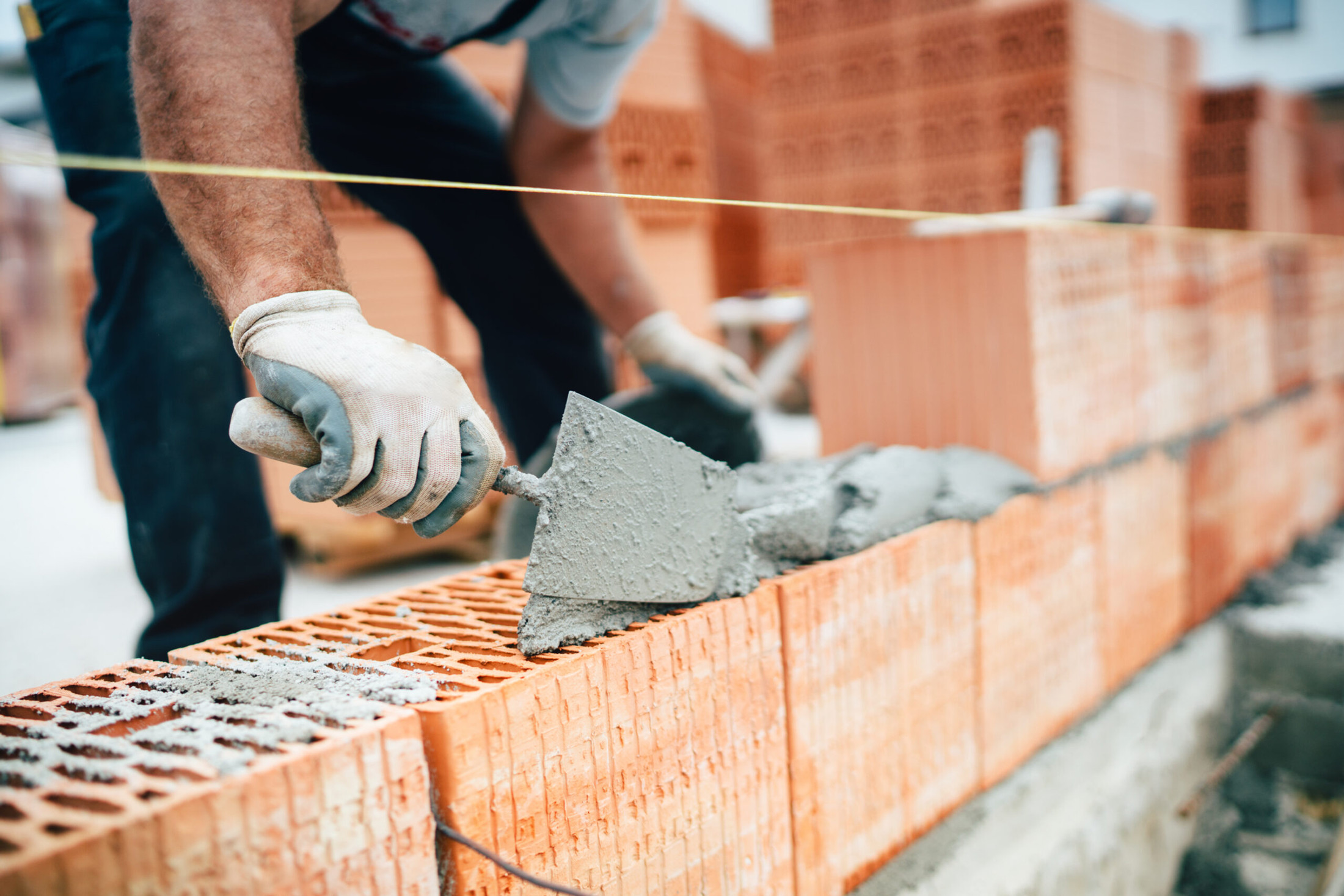
Bere Regis repointing, brick and flint
Lime mixes worked deep into flint walls, brick joints raked by hand, and the cement somebody put on in the seventies taken back off.
The site visit is free and so is the written itemised quote. Thomas Hannen prices every job himself.
A good many older walls in Bere Regis are not solid brick at all. They are flint rubble with brick bands and brick quoins, and a flint wall is pointed differently from a brick one: more mortar, worked deeper, in lime, and brushed back off the stone rather than smeared across it.
That is the first thing we work out on a visit, because it changes everything after it. Brick and flint sit side by side in this village, sometimes in the same wall, and want the same mix for different reasons. Get it wrong on the flint and the pointing comes off in sheets with stones in it.
What brings people to the phone is usually simpler. Pointing dropping out of a boundary wall in lumps after a frost. Joints on a gable open far enough to see from the lane. Penetrating damp on an inside face that turns up only after a wet south westerly. Brick faces flaking under a sill. We look at every elevation rather than the one you have spotted, scrape joints high and low to find how far the decay runs, and mark the loose and crumbling lengths as we go. Every face is photographed, and it comes back in writing, elevation by elevation, with the faces we would leave alone marked as such. The visit and the itemised quote are free.
The work
The walls we get asked to look at in the village
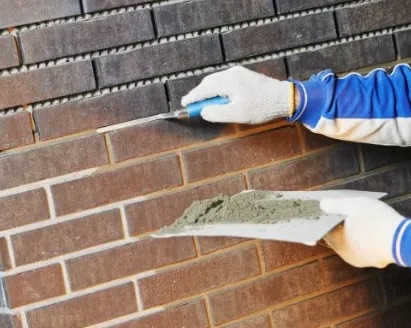
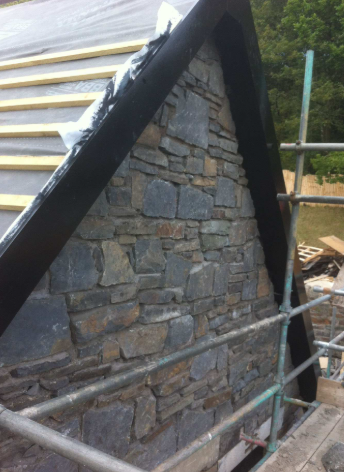
Flint and brick together. Banded flint with brick courses running through it, brick quoins at the corners and brick around the openings is the old walling of this part of Dorset, and the parish church of St John the Baptist is the obvious example. On a wall like that the mortar is most of the wall by volume and the only thing holding smooth impermeable stones together. It gets an NHL lime mix worked well back into the void in more than one pass, the surface brushed back to expose the face of the flint rather than skimmed over it, and small flint chips pressed into any joint too wide to fill cleanly.
Solid brick cottages, in lime. A solid wall has no cavity behind the brick and sheds water only by letting it evaporate back out through the joint, so it has to stay breathable and the mortar softer and more open than the brick. Joints come out by hand to a depth of twice their width, the angle grinder stays in the van, and the mix is gauged to the original sand. They are damped down before filling and brushed back once the mix has taken up. The profile goes back to what the wall carries, usually flush or slightly recessed on a period village frontage rather than weather struck.
Cement pointing, and getting it off again. A lot of village walling was repointed in sand and cement between the sixties and the nineties. On brick it traps water and blows the faces; on flint it is worse still, for the reasons set out further down. Removing it is careful hand work and shows as its own line on the quote.
Faces that have blown. Where the face of a brick has come off we cut it out whole and turn or replace it against a sample held on the wall, rather than filling the hollow with mortar, which never matches and drops out inside a couple of winters. Frost damage collects in the same places every time: under sills, beside downpipes and in the courses just above ground where a path has been laid up against the wall.
Stacks. A chimney has weather on four sides and nothing warming it from inside, so its mortar goes friable while the house walls are still sound, and sand in the gutter is the first sign. That is work at height and wants a scaffold rather than a tower, so everything up there goes in one go. What we will not do is point over movement: cracking that repeats every fifth or sixth course is not tired mortar.
How it runs
From your call to a written price
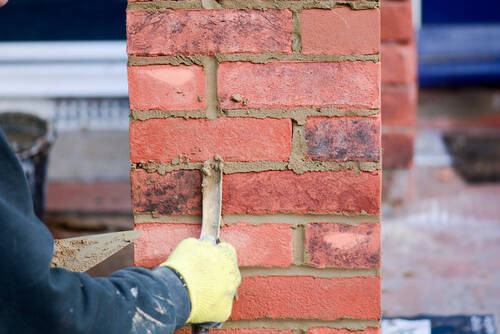
Same team from first visit to last, one person to ring, and no sub-contracting. The quote is itemised: access, raking out, the mortar mix, the area of each elevation, brick replacement and disposal on separate lines, so you can compare it against anyone else's.
Nothing is left open overnight, the site is swept at the end of each day rather than the end of the job, and what comes out leaves with us. Anything nobody could have foreseen gets a photograph and a price before we carry on.
Repointing on a like for like basis is repair rather than development, so there is no planning application and nothing for building control to sign off. Appearance is the exception. Forty three listed entries sit in and around Bere Regis, the parish church among them, and on a listed building the mortar counts as protected fabric, so listed building consent is needed before a joint is opened, whether the change is the mix, the colour or the profile. Dorset Council is the authority and we check an address before quoting.
Cost
What decides the price of a repointing job
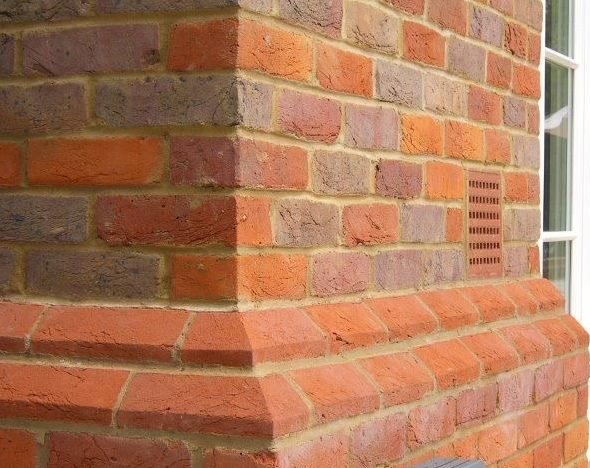
No rate per square metre, because the square metres tell you almost nothing until somebody has looked at the joints.
Getting to it. A flint and brick cottage on the street, a barn wall in a yard and a tall boundary wall running along a lane are three different set ups before a joint is opened. How long the platform stands matters as much as how big it is, and the work at height rules are why access is a priced line rather than one absorbed into a rate.
The joints decide it, not the wall. Raking out by hand is slow, and on soft brick it is the only safe way. How deep the joints come back, and whether the faces have already spalled, sets the hours far more than the area does.
Matching is the part that shows. Too strong a mix is the classic mistake: cement holds water against a soft brick and the face blows off in the first hard frost. Lime is slower to work and to cure, and it is the right answer on most pre-1919 walls.
Two quotes for the same job are usually two different jobs, so ask each one how deep the joints are raked and whether the scaffold is in the price.
If water is getting in
Open joints, and water coming through the wall
Ring rather than use the form. A wall with the joints washed out lets driven rain through to the inside face, and on a chimney it finds the flashings too. We come and look, sheet or temporarily point the worst of it, and price the elevation once it has dried enough to see what is sound. Around here it is usually a flint wall shedding panels of pointing after a frost, or a south west facing gable. The phone is answered 24 hours for emergencies; scheduled work runs Monday to Friday, 8am to 6pm.
Worth knowing
Flint, and why cement pushes it out of the wall
A brick wall is mostly brick with thin joints between. A flint rubble wall is the other way about: the stones are irregular, they touch at points rather than along faces, and the mortar fills everything in between, which in a random rubble wall can be a third or more of the volume. So the mortar is not pointing in the decorative sense, it is the structure, and flint itself is glassy and takes up almost no water, so every drop that gets into the wall has to leave through the mortar. That is the whole argument for lime here, and the practical guidance in the standard guidance on preparing and using lime mortars and the lime classifications in BS EN 459-1 are the reference points we work to.
Cement fails on flint for three reasons at once. It shrinks as it cures, so it pulls away from a smooth stone it was never going to key into. It is far less permeable than the wall behind it, so water that gets in stays in. And it is stronger than the bedding mortar beside it, so when frost lifts it, it comes away in slabs and brings flints with it. If a flint wall here is losing pointing in panels rather than grain by grain, that is what has happened. The repair is lime, worked in deep and in more than one pass so it fills the voids rather than bridging them, brushed back once it has taken up so the flint faces show, and protected while it cures. Ask anyone quoting for a flint wall what mix they intend, and be wary of an answer that mentions cement.
Who you are dealing with
A local firm you can check
We cover Bere Regis, Winterborne Kingston, Briantspuddle, Wool and out towards Wareham, broadly BH20, under Dorset Council. You are dealing with Bournemouth Roofing & Building, the trading name of Bournemouth Roofing & Building Ltd, registered in England and Wales, company number 15471719. Thomas Hannen's business, and he is the one who comes out to price the job, not a salesman. A verified customer's 10 out of 10 on Checkatrade. The visit and the written quote are both free.
Questions
Bere Regis questions we get asked
Can a flint wall be repointed in ordinary sand and cement?
It can be, and it is the reason a lot of them are in the state they are. Cement will not bond to a smooth flint, it shrinks as it sets, and it stops the wall drying out, so water sits behind the pointing and frost lifts it off in panels with stones attached. Lime is the right answer on flint.
Why do you press small stones into the joints?
That is galleting, and it is not decoration. Where a joint between flints is too wide to fill cleanly, small chips of flint pressed into the fresh mortar reduce the amount of mortar exposed to the weather and stop it slumping as it cures. It is also what the original builders did here, so it matches.
Half our wall is brick and half is flint. Does it all get the same mortar?
Usually yes, and usually lime. Both materials in a wall of that age were bedded in lime, and two different mixes in one wall gives you two rates of movement and drying. What changes is the technique rather than the mix: flint takes more mortar, more passes and more brushing back.
How much of the old pointing has to come out?
As much as is not sound, which we find out by scraping rather than guessing. On brick the working rule is twice the width of the joint. On flint it is deeper, because the voids behind a failed face can run a long way in, and filling only the front leaves a shell with nothing behind it.
Our cottage has no damp proof course. Does that change the pointing?
It changes what you put at the bottom of the wall. Without a damp proof course the low courses carry ground moisture and the salts that come with it, so they want the most permeable mix on the building, kept softer than the courses above and treated as something to renew rather than seal. Pointing that band in cement turns a damp wall into a spalling one.
Nearby, and next door
Repointing near Bere Regis
Repointing nearby
Our other trades in Bere Regis
Everything we do in Wareham Repointing, all areas Every area we cover
Free quote
Have the flint and the brickwork looked at together
Thomas comes out, scrapes a few joints, photographs each elevation and puts the price in writing, itemised, at no cost to you.