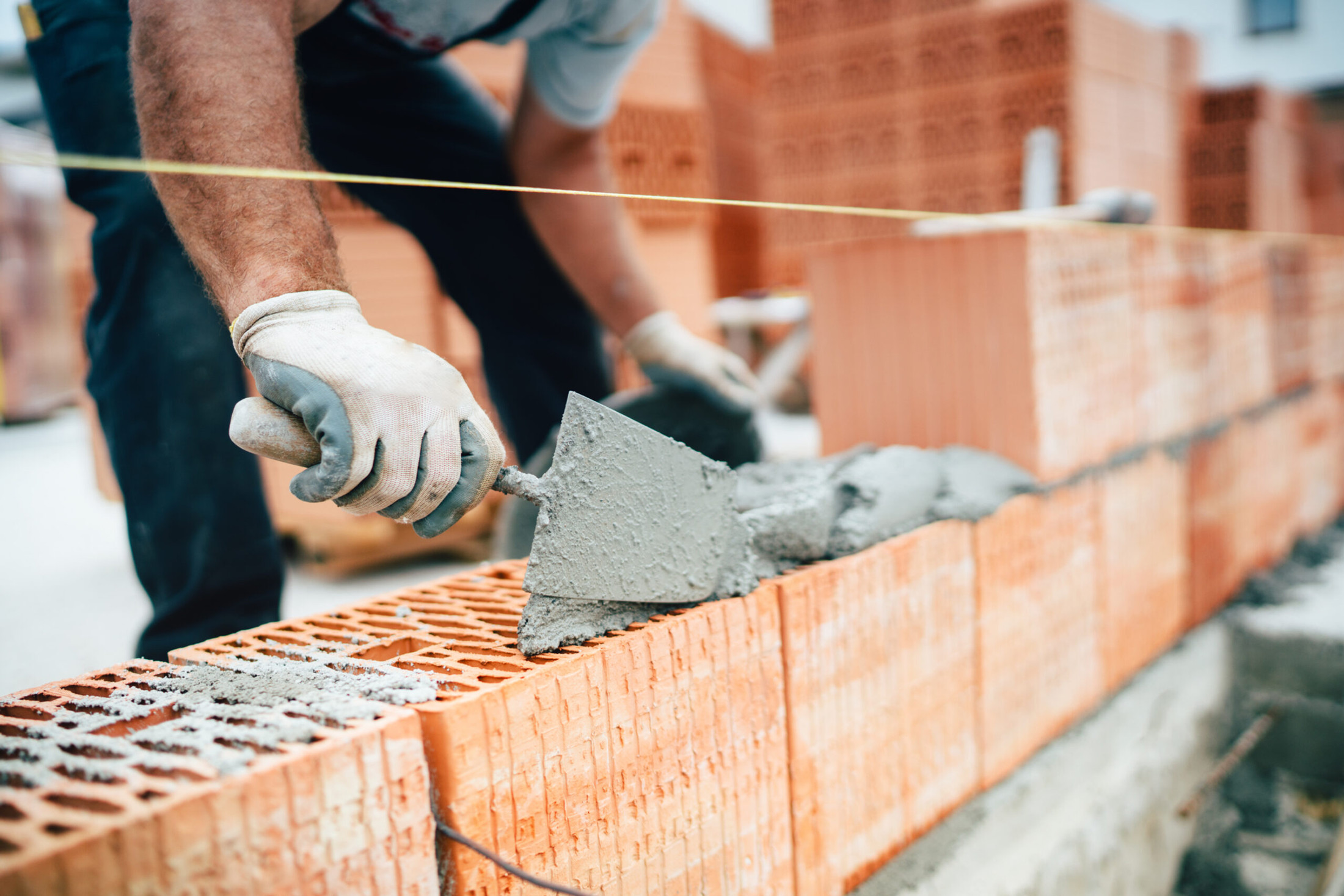
Bricklaying and repointing in Bere Regis
Lime repointing, brick and flint wall repairs and new brickwork in Bere Regis, done in a mix that suits the wall it is going on.
The site visit is free and so is the written itemised quote. Thomas Hannen prices every job himself.
On an old Bere Regis wall the mortar should be softer than the brick, not harder. If someone has pointed a soft period wall in cement, the damage you can see is usually the cement doing its work, and putting it right starts with taking that out by hand.
Three things bring people here to the phone. Damp inside a solid wall that has been pointed or rendered in cement at some stage and has never dried out since. Brick faces crumbling away in the wall below a window or beside a downpipe, so the wall is losing its skin course by course. Or a boundary wall along a lane that has bellied out, dropped its coping, or been caught by something bigger than a car.
The village has a lot of old fabric in it and a lot of newer houses around the edges, and the right answer is not the same on both. We come out, survey the wall properly and look at what is keeping it wet, and tell you plainly whether you are looking at a morning of work, a season of watching it, or a job that needs consent before anybody lifts a chisel.
The work
The jobs we do on old walls, and on the newer ones
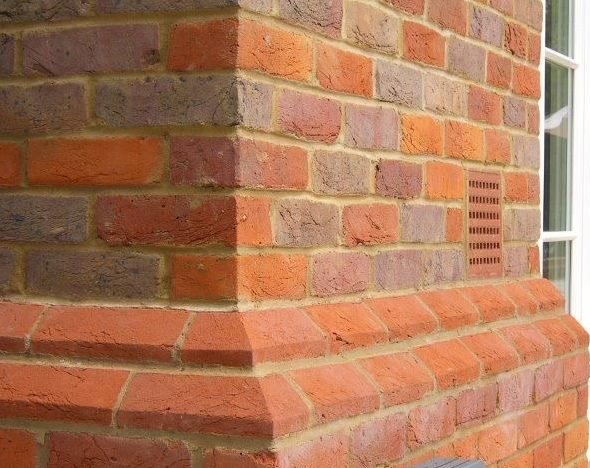
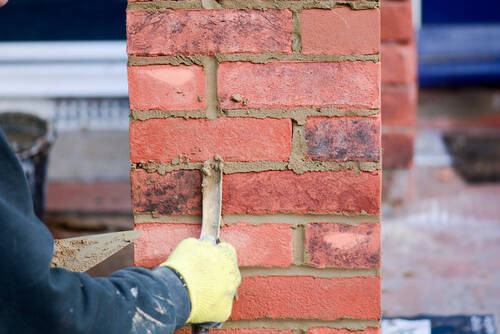
Lime repointing, and taking cement back off. On the older brickwork in the village the joint is meant to be the sacrificial part: water goes in and comes back out through the mortar, and the brick stays sound. We rake out by hand with a chisel and a hacksaw blade rather than a disc, back to sound material, and point in a lime mix such as an NHL 3.5 matched to the existing for colour, sand and strength. Taking cement pointing off a period wall is the commonest job we do here. Cement is less permeable than the brick around it, so moisture that used to leave through the joint leaves through the brick face instead, and one hard frost later the faces have blown while the pointing itself is still perfect.
Flint, brick and cob. Boundary walls here take a beating from vehicles on narrow lanes, from ivy, and from water sitting on top where the coping has gone. Flint bedded in lime does not tolerate being pushed, so once a wall is bowed the answer is to take that section down and rebuild it off the same footing with the flint reset. Where a wall is cob with a brick plinth and coping, we look after the brick that protects it, because keeping the top and the base dry is most of what keeps cob standing. The cob itself is a specialist repair and we will say so rather than patch it in something that will do it harm.
Old stacks stand clear of everything and take weather from all sides, so the joints go first and then the flaunching cracks and starts feeding water down inside the stack. On a thatched roof, access has to be planned around the thatch, and that is a conversation before the quote rather than after. The twentieth century parts of the village are ordinary cavity work, and so is most of what people want built.
How it runs
From your call to a written price
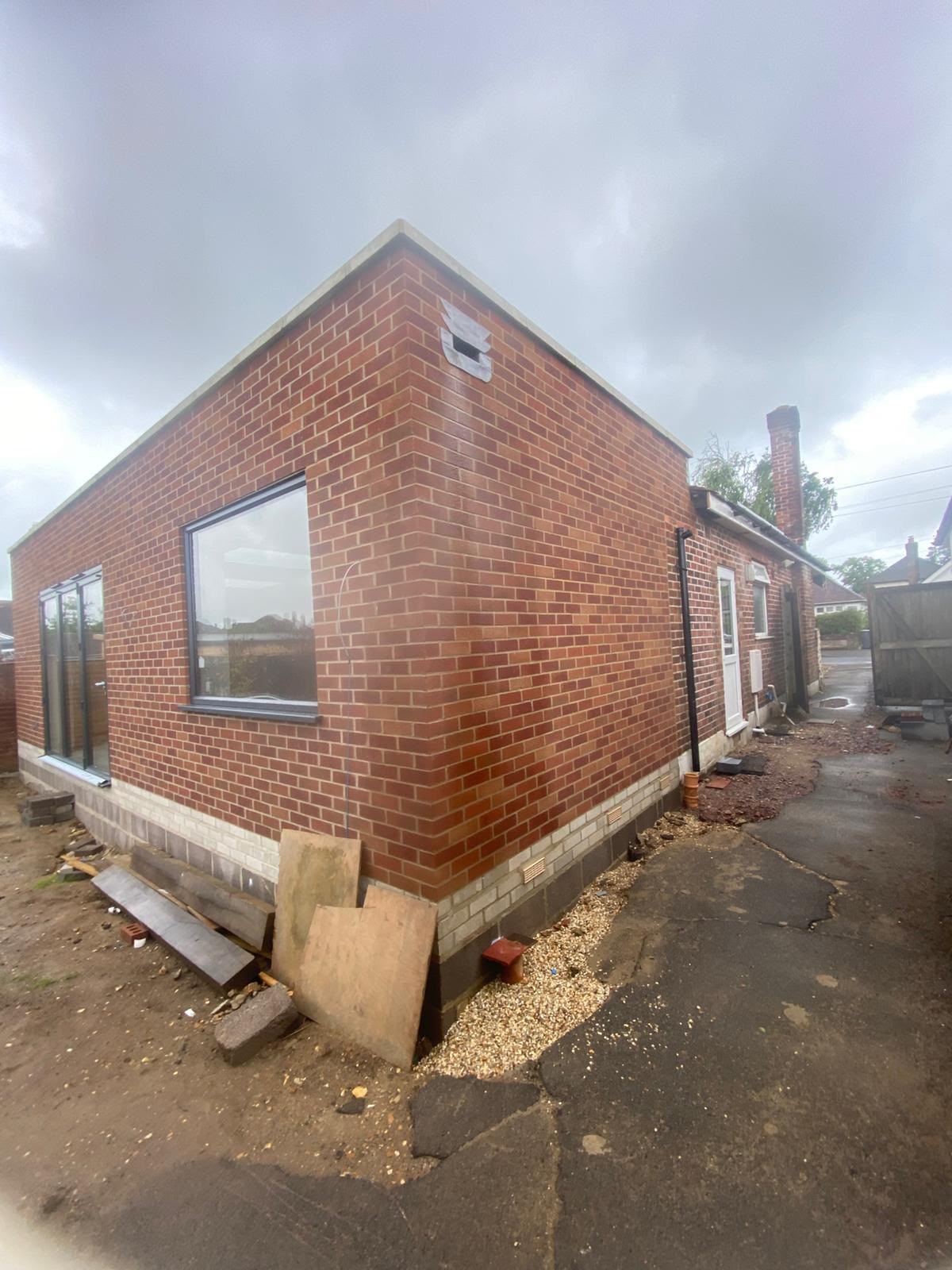
The quote is itemised: access, raking out, the mix, the area of each elevation, brick replacement and disposal on separate lines. On permission, repointing and repairing like for like on an unlisted building is maintenance, with no planning permission and no building control involved. Bere Regis has no conservation area of its own, but there are forty three listed entries in the parish, the parish church among them, and on a listed wall even a change of mortar can need listed building consent from Dorset Council. We check which of those you have before we quote, not after. Building control is separate again and applies where the structure changes: a lintel, a widened opening, underpinning or a load bearing pier.
Cost
What decides the price of a brickwork job
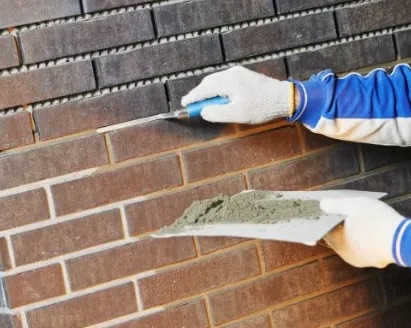
No rate per square metre, because the joints decide it and not the area. A cottage on the street with nowhere to stand a scaffold, a farmhouse set back behind a yard you can get a lorry into, and a flint boundary wall out on a lane are three different jobs before any mortar is mixed. A chimney or a gable wants a scaffold, and how long it stands is why work at height rules make access a priced line. Raking by hand is slow, and joint depth and spalled faces decide the hours. Ask how deep, by hand or disc, what mix, and whether scaffold is in.
If something has moved
Loose brickwork, or a wall that has shifted
Ring rather than use the form. Anything overhead or leaning goes to the front of the queue, and the first visit makes it safe before we price the permanent repair. We are half an hour out along the A31 and A35, and through the village often enough that a wall pushed into a lane gets seen quickly. The phone is answered 24 hours for emergencies; scheduled work runs Monday to Friday, 8am to 6pm.
The one local thing
If your house is listed, the mortar is part of what is listed
There are a lot of listed buildings in this village, and the listing covers the whole of the building rather than the interesting bits of the front. It normally reaches the walls and outbuildings inside the curtilage too, so a garden wall or a range across the yard can be protected even though nobody thinks of it that way.
That matters for brickwork because changing the mortar changes the character of the wall: taking out lime and pointing in cement is an alteration, not a repair, and doing it without listed building consent is an offence rather than a technicality. Like for like repair in the same lime mix is normally fine without any application at all.
The practical advice is simple. Find out whether you are listed before you collect quotes, because it changes the mix, the method and the timetable, and a determination on a consent application takes a couple of months rather than a couple of weeks.
If consent is needed, a conservation officer will want to know the mix, the sand, the joint profile and how the wall will be raked out, and the easiest way to answer all four is a small sample panel on a quiet elevation. We will build one and put the specification in the quote in the same words the officer needs to see, and we would rather wait for the paperwork than get a wall wrong that has stood for three hundred years.
Who you are dealing with
A local firm you can check
We cover Bere Regis, Winterborne Kingston, Milborne St Andrew, Briantspuddle, Wool and the rest of BH20, and the distance is in the quote rather than hidden in the rate. Bournemouth Roofing & Building Ltd, registered in England and Wales, company number 15471719, which you can look up in a minute. Thomas Hannen's business, and he is the one who comes out to price the job, not a salesman. A verified customer's 10 out of 10 on Checkatrade. The visit and the written quote are both free.
Questions
Bere Regis questions we get asked
Forty three listed entries and no conservation area. How does that work?
It happens where the heritage sits in individual buildings rather than in a designated area. Bere Regis has no conservation area of its own but forty three listed entries, among them the Parish Church of St John the Baptist, so the controls attach to particular properties. If yours is on the list, repointing needs listed building consent because the mortar is part of the fabric. If it is not, Dorset Council treats a like for like repair as maintenance.
Why will you not rake out an old wall with a disc cutter?
Because on soft handmade brick the cutter runs into the unit and not just the joint. Around Bere Regis the older walls have wide irregular beds and a lime mortar softer than the bricks it holds, so the joint has to come out with a plugging chisel or a fine blade run dry and finished by hand. A widened joint that has clipped the arrises never looks right again, and it cannot be put back.
Does the Poole Harbour catchment affect building work here?
Only where a scheme adds somewhere to sleep. Bere Regis drains to the Poole Harbour catchment and the nutrient rules engage on new overnight accommodation, so a holiday let, an annexe or a conversion with a bedroom in it gets caught. Repointing, a rebuilt chimney, a new garden wall or a repaired boundary does not. Raise it with Dorset Council at the outset if the brickwork forms part of a larger conversion.
Where does the spoil go on a village lane job?
Off site the same week. Raked out lime mortar is dusty and it travels, so we sheet down and damp the beds rather than letting it blow across a neighbour's car. In Bere Regis the working space is often the pavement or a shared lane, which means a smaller stack of materials, more trips and a tidy up each evening rather than a heap sitting over a weekend. We agree where the van and the bags go beforehand.
How do I tell lime mortar from cement on my wall?
Scratch it in a hidden spot. Lime is softer than the brick and gives under a key or a screwdriver, and it is usually a warmer sandy colour with lumps of unburnt lime through it. Cement is grey, hard and often stands proud of a weathered face. The older properties around Bere Regis were built in lime, and the giveaway is a hard grey band pointed over soft brick that is now spalling behind it.
Nearby, and next door
Bricklaying and repointing near Bere Regis
Bricklaying and repointing nearby
Our other trades in Bere Regis
Everything we do in Wareham Bricklaying and repointing, all areas Every area we cover
Free quote
Get an honest look at the wall
A free site visit, the mix and the method in writing, and no work started on a listed wall before it is cleared.