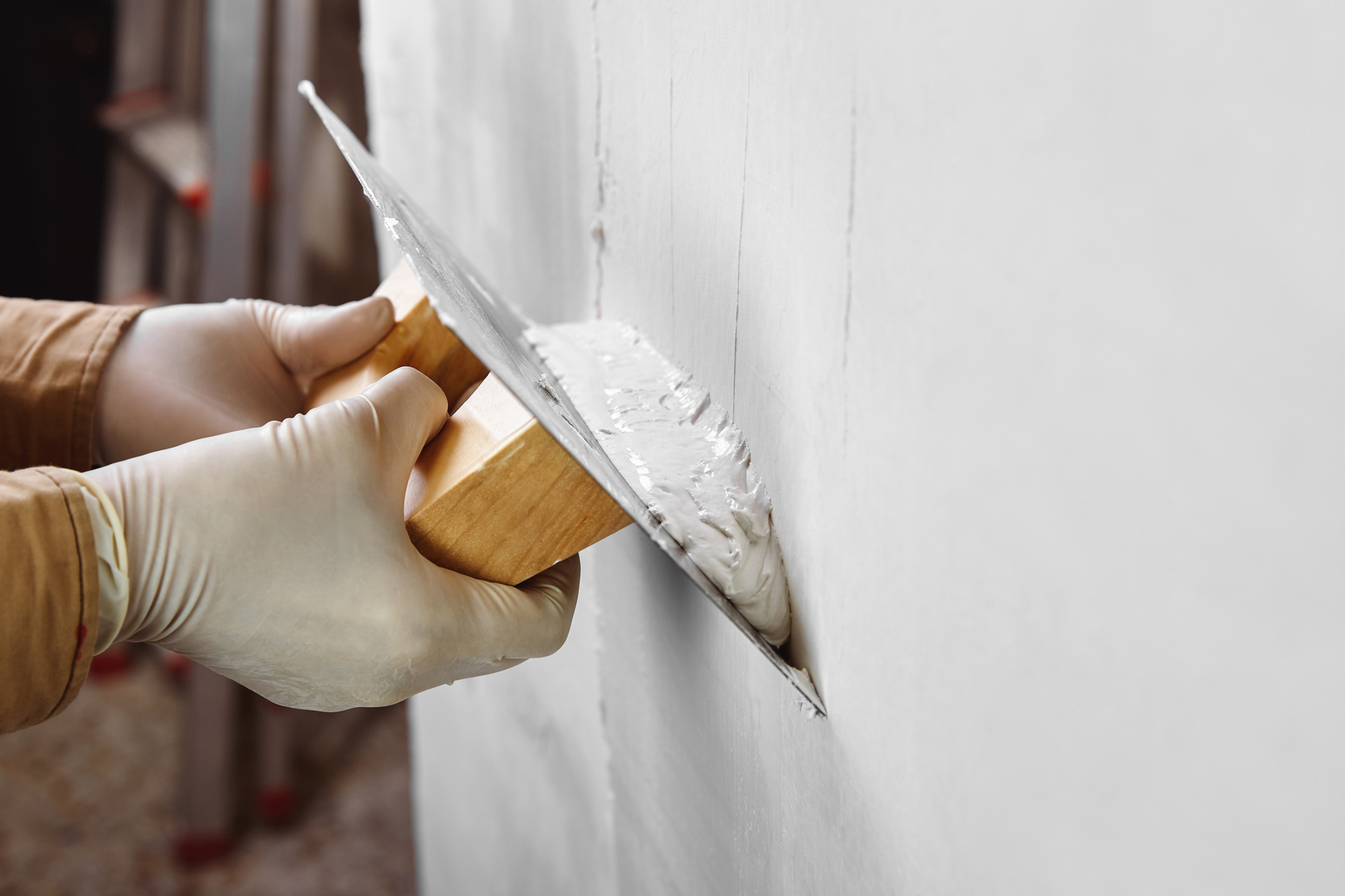
Plastering in Bere Regis
Lime plaster, lath ceilings, skimming and external render across Bere Regis and BH20. Free visit, itemised written quote.
The site visit is free and so is the written itemised quote. Thomas Hannen prices every job himself.
On an older Bere Regis house the first question is not what finish you want, it is whether the wall is solid or cavity. A solid wall needs a breathable finish, lime rather than gypsum, and getting that wrong is what puts most of the blown plaster we are called to on the wall.
Most calls from the village are one of three. Plaster is coming off the bottom of a wall in a cottage and it has been patched twice already. A ceiling has started to sag, or a crack has opened along the line of a beam. Or a wall outside is cracked and hollow on one elevation and fine on the other three.
All three are worth seeing in person, because on a solid-walled house the finish that is failing is usually the wrong finish rather than a bad job. We are fifteen miles out, the site visit costs nothing, and the quote comes to you in writing.
The work
Cob and flint walls only work if they can dry
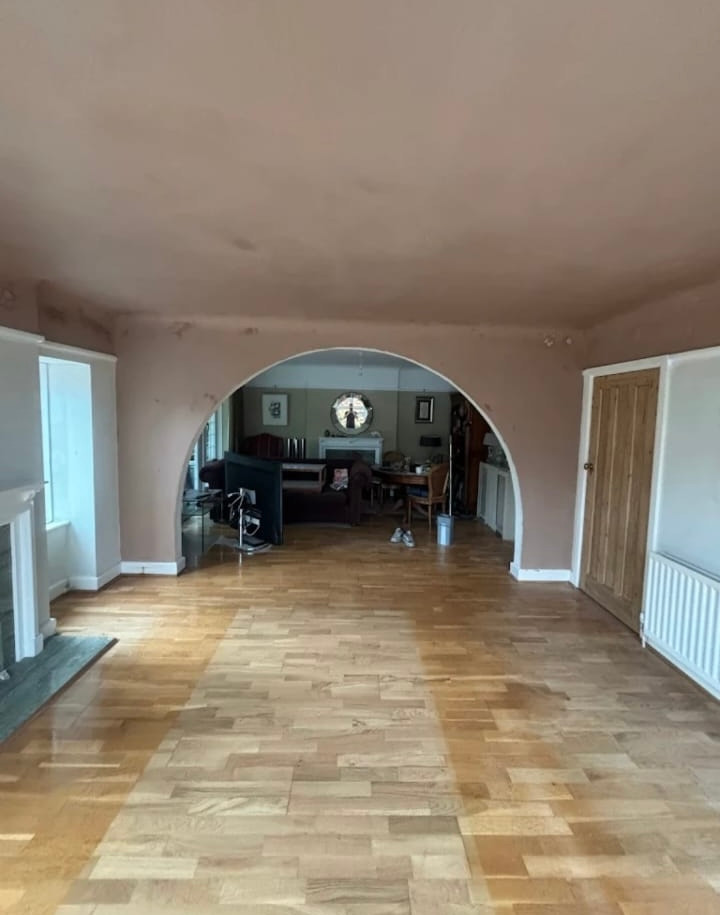
Solid walls, and why lime. Plenty of what we plaster in this village has no cavity: brick, flint and brick, or cob under a render. A wall like that has always handled water by letting it back out again, so the finish has to let it. Lime plaster on a lime backing coat does that. Gypsum skimmed over old lime, or plasterboard dabbed onto a damp solid wall, does not, and both are why we get called back to walls that have blown twice already. Tap along the bottom of a wall: where the note goes hollow, the finish has parted from the masonry and filler will not put it back.
Lath and plaster ceilings. Old ceilings hold up because the plaster was pushed through the gaps between the laths and hooked over the back. When those nibs shear off, the ceiling sags. Where the lath is sound we can secure the ceiling back to the joists and skim over it. Where it has gone, it comes down and is replaced in plasterboard with tape and joint. On a listed cottage that is a consent question before it is a cost question, and it is filthy work either way, because a century of soot sits in the void above.
Damp at the bottom of a wall is the most common call from the village. Before anybody sells you an injected course, we look at the outside: ground and path levels raised over the years until they sit above the internal floor, or a cement render skirt round the base holding water in. Deal with that, let the wall dry, then replaster with a lime backing that will carry the salts. On the twentieth century houses it is dry lining, taped joints and a skim instead, with browning or hardwall as a backing coat. Same trade, two sets of rules, and the mistake is using one on the other.
How it runs
From your call to a written price
Same team from the first visit to the last, one person to ring, and nobody sub-contracted in. The quote is itemised rather than one figure on the back of a card: preparing and protecting the room, any board or backing coat, beads, the finish coat, making good and disposal on separate lines. Plastering inside an ordinary house is not development, and there is no conservation area over the village. Listed buildings are the exception, and it is a big one here, because listed building consent covers the inside as well as the outside. Taking down a lath and plaster ceiling can need it, there are forty-three listed entries in the parish, and it is worth checking yours before you book a skip.
Cost
What decides the price
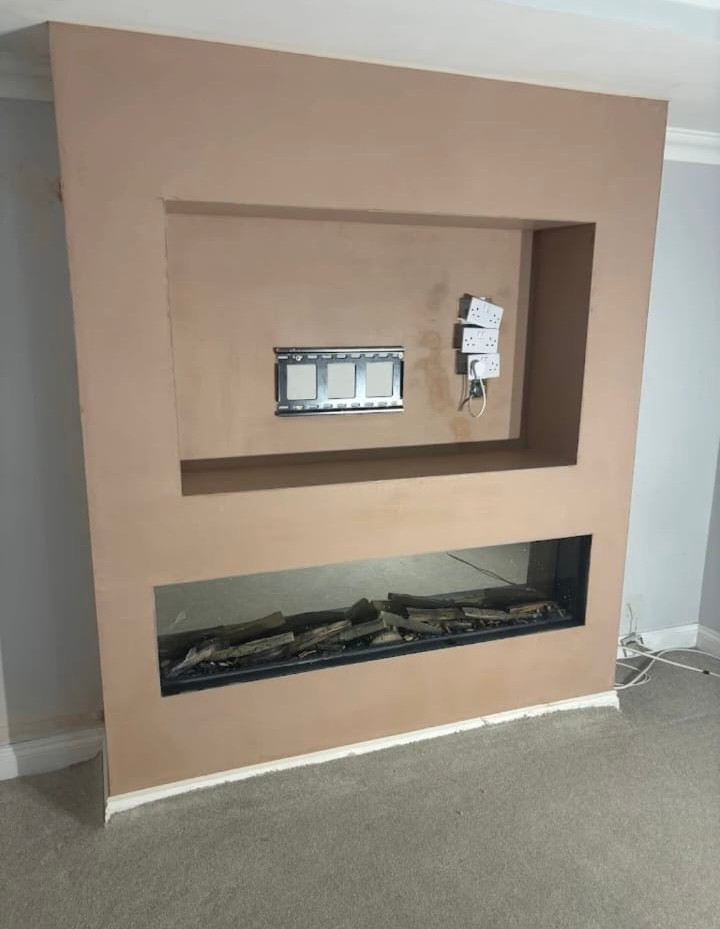
No rate per square metre: the square metres are the easiest thing to measure and the least useful thing to know. A sound wall that only wants a skim is a different job from one where the backing coat has blown and has to come off back to the masonry. A cottage fronting straight onto the street with nowhere to stand a tower, a farmhouse with a yard, and a modern house with a side gate are three different jobs before we start. Ask any quote whether it is a skim or a full replaster, and how long it wants for drying.
If it has come down
A ceiling down, or plaster blown off the wall
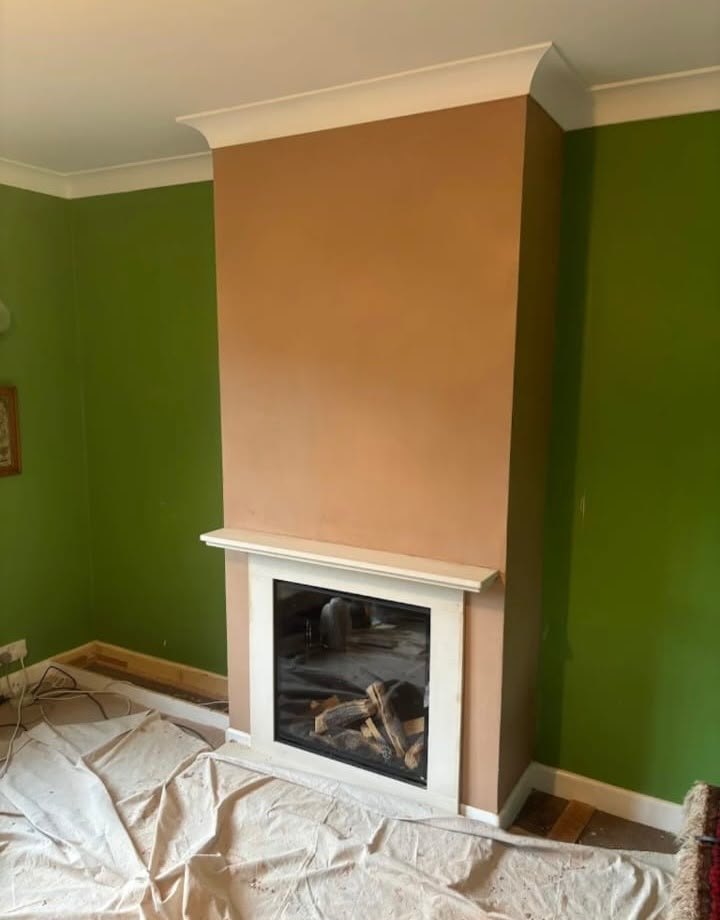
Ring rather than use the form. A ceiling that has cracked and dropped goes to the front of the queue. We are fifteen miles out, so this is usually next day. If water has been through a ground floor, the plaster has to come off well above the line it reached and the wall has to dry before anything goes back, and the government flood risk service will tell you what the address is dealing with.
Worth knowing
The south-west wall is the one that fails first
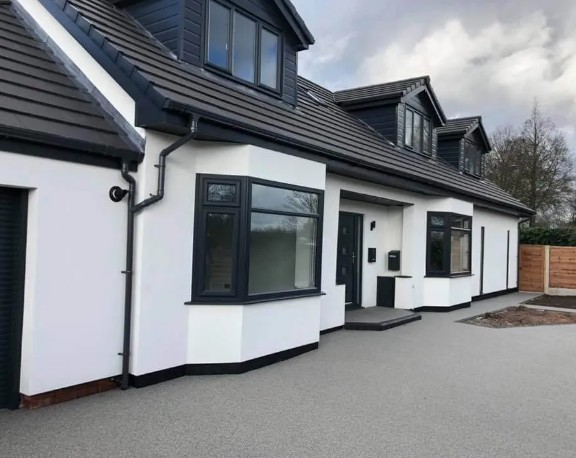
Weather here comes in from the south-west, and the elevation facing it takes driven rain that the other three sides never see. It is why a house can have three walls of sound render and one that is cracked at the window heads, drumming at the base and green along the bottom. Sound render does not let water through.
Cracks do, and once water is behind the render it cannot get back out, so every winter opens the crack a little further and lifts a little more off the wall. When somebody rings about render we ask which elevation before we ask anything else, and the answer is nearly always the same one.
What to put back matters less than you would think; where it stops matters more. A rigid sand and cement render on a wall that moves will crack again on that elevation. A basecoat with mesh bedded through it, a primer and a silicone topcoat flexes, sheds water and still lets the wall breathe, and a monocouche or a thin coat system does much the same. Then the details: a bell cast bead at the base so water drips clear instead of tracking back underneath, a stop bead at every reveal, and enough overhang at the sills that water is thrown off the face rather than run down it.
On an old solid wall it is lime render instead, for the same reason it is lime inside. Re-rendering in a similar appearance is normally permitted development and the Planning Portal guidance on external walls sets out where that stops, though on a listed cottage it does not apply and that is a decision for before the scaffold goes up, not after.
Who you are dealing with
A local firm you can check
We cover Bere Regis, Briantspuddle, Winterborne Kingston, Wool, Wareham and the rest of BH20. Bournemouth Roofing & Building Ltd, registered in England and Wales, company number 15471719, which you can look up in a minute. Thomas Hannen's business, and he is the one who comes out to price the job, not a salesman. A verified customer's 10 out of 10 on Checkatrade. The visit and the written quote are both free.
Questions
Bere Regis questions we get asked
Bere Regis has many listed buildings but no conservation area?
That is right, and the two are separate things. There are 43 listed entries in the parish, including the Parish Church of St John the Baptist, but no designated conservation area over the village. So a house that is not on the list is treated as ordinary by Dorset Council, while one that is on it carries controls its neighbour twenty yards away may not. It goes address by address.
Does listed building consent cover replastering inside the house?
It can, and people are often caught out by that. Listing covers the whole building rather than just the front elevation, so stripping historic plaster off an internal wall or ceiling in one of the listed properties here is not automatically maintenance. The safe route is to ask Dorset Council before anything is hacked off. Where consent is needed the specification usually comes back as lime rather than gypsum.
Does the Poole Harbour nutrient rule affect our extension?
Only if it adds somewhere to sleep. Bere Regis drains into the Poole Harbour catchment, and the nutrient requirement is triggered by new overnight accommodation rather than by building work in general. An extra bedroom brings it in. A re-render, a new ceiling or a replastered kitchen does not. It is settled through the planning application, and the plastering happens long after that has been resolved.
We are well inland. Why does one gable stay damp?
Because exposure does the damage here, not salt. At 14.8km from the coast there is no meaningful salt load on the walls, but the exposed elevation still faces south west and catches driven rain across its whole height. Water works in at the edges and around openings rather than through the middle of a sound surface. That is why one wall is soft at the corners while the rest is dry.
Is one room in Bere Regis worth the trip?
Bere Regis is 15.0 miles from the yard and we work across that side of the county regularly, so a single room is not too small a job to look at. Thomas Hannen comes out to see it and prices it himself. The site visit is free and so is the written quote, which is itemised by stage. If your timing is flexible we fit it alongside other work heading that way.
Nearby, and next door
Plastering and rendering near Bere Regis
Plastering and rendering nearby
Our other trades in Bere Regis
Everything we do in Wareham Plastering and rendering, all areas Every area we cover
Free quote
Get a price for plastering in Bere Regis
Tell us the address and what the wall is doing. We will come out, look properly, and put an itemised price in writing. No charge for either.