
Plastering in Tolpuddle
The wall has to stop getting wet before it gets a finish, so we find the cause first and price the plastering second.
The site visit is free and so is the written itemised quote. Thomas Hannen prices every job himself.
Plaster is the last thing that goes on, not the first thing you fix. In a village of old cottages like Tolpuddle, most walls we are asked to replaster are wet for a reason that is still there, so we find the reason, then price the finish.
People ring us about three things. A ceiling has cracked, bellied or begun to shed, often an old one that has lost its grip on the laths. A wall has gone soft, powdery or hollow, usually in the bottom couple of feet or beside a chimney breast. Or a builder, an electrician or a plumber has finished and left chases, holes and a rough edge that wants making good before the room can be decorated.
The visit is the same every time. We sound every wall and ceiling, take a reading where anything reads wet, look outside at what is above and below the wet part, and then write it up. Sound plaster is priced as a skim, failed plaster as a strip and rebuild, and the making good is itemised rather than buried in a lump sum. The site visit and the written quote are free.
The work
Straighten the old wall, or follow it
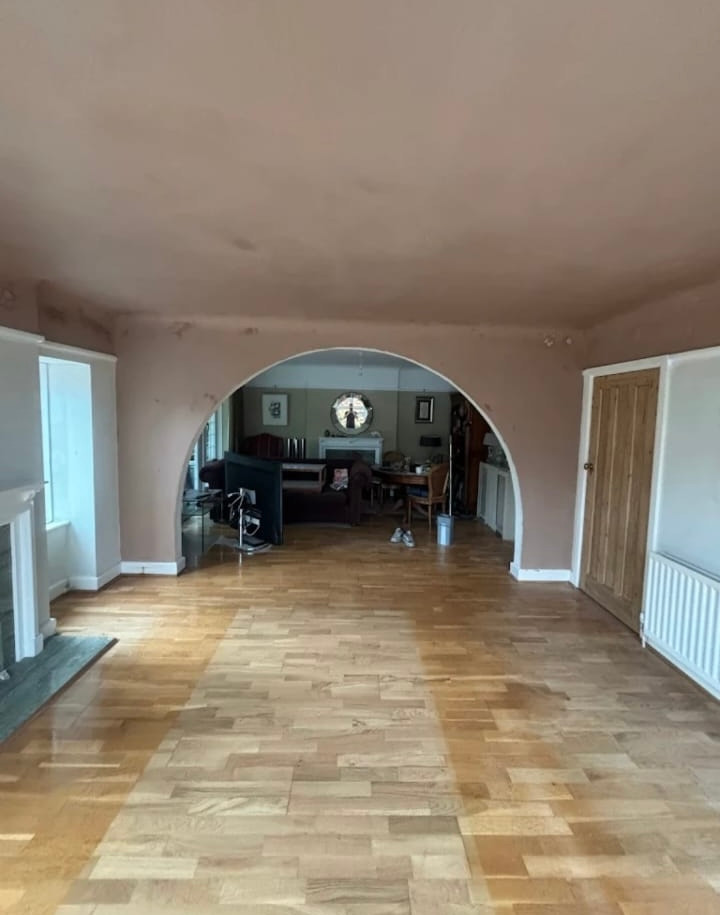
Straighten the old wall, or follow it. This is the decision people are never offered and it changes how a cottage room looks. You can rule an old wall dead flat by dubbing out the hollows with a backing coat and floating it to a rule until a straight edge sits on it anywhere. Or you can follow the wall, take out only what is ugly and leave the gentle movement in it, which is what most people actually want in a room with a beam across it. We ask before we start rather than deciding for you.
A cottage ceiling here is lime plaster squeezed through riven lath, held up by the nibs that formed above it. When those break it bellies between the joists and drops fine dust. If most of the key is intact it can be consolidated and skimmed. If it is moving it comes down, and then it is plasterboard fixed to the joists, or new lath and lime if the fabric matters. We also get ceilings that were overboarded years ago straight over the old one, screwed into plaster instead of joists, which is why they now sag in lines. Those come off.
A large part of our work in the village is picking up after somebody else: chases cut for cables and pipes, the scar where a chimney breast came out, a new opening that wants an angle bead on the corner and a stop bead at the reveal. On a solid wall those get filled with a compatible backing coat rather than modern filler, because a hard plug in a soft wall shows through the paint within a year as a straight bright line. On the newer houses it is browning or hardwall instead, or bonding on a dense face. Barn and outbuilding conversions go on dot and dab, or a stud where the blockwork is not flat, then tape and joint. Outside, cottages here were often rendered in sand and cement in the last sixty years, and that is what is now crazed and letting water sit against a wall that cannot dry. Taking it off and going back in lime is the right answer on an old wall. On modern block it is a render coat under a silicone thin coat instead.
How it runs
From your call to a written price
Same team from the first visit to the last, one person to ring, and nobody sub-contracted in. The quote is itemised line by line, from protection to disposal. Twenty-seven entries in this parish are listed, so the first thing we check is the address: listed building consent is needed for a change of plaster or render, and on a listed cottage that reaches inside as well as out. Tolpuddle also has its own conservation area, so rendering a wall that is not rendered now needs permission, and Planning Portal guidance on external walls sets out where that line falls. Taking render off most of an elevation brings Approved Document L in instead.
Cost
What decides the price
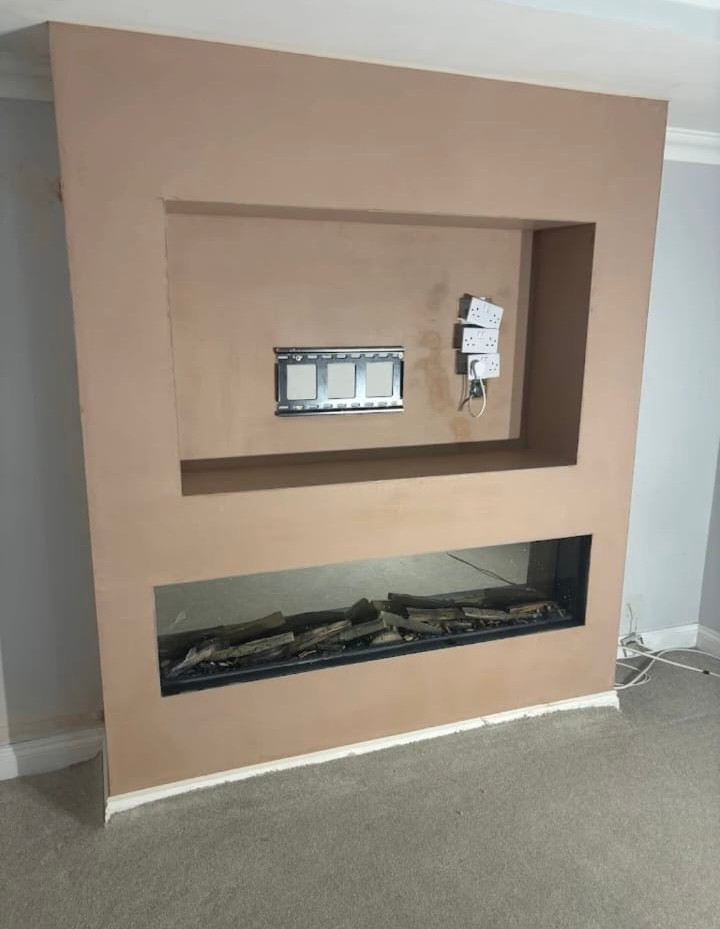
No rate per square metre, because two rooms the same size can be a day apart. A sound wall that only wants a skim is a different job from one where the backing coat has blown. Ceilings cost more than walls because everything is worked overhead. Round here access is usually a cottage on the village street with no side gate, so every bag and every board goes in and out through the front door, or a converted outbuilding where the doorways are too low to turn a full sheet. Outside, a tower or a scaffold is a priced line.
If it has come down
A ceiling letting go, or damp plaster off the wall
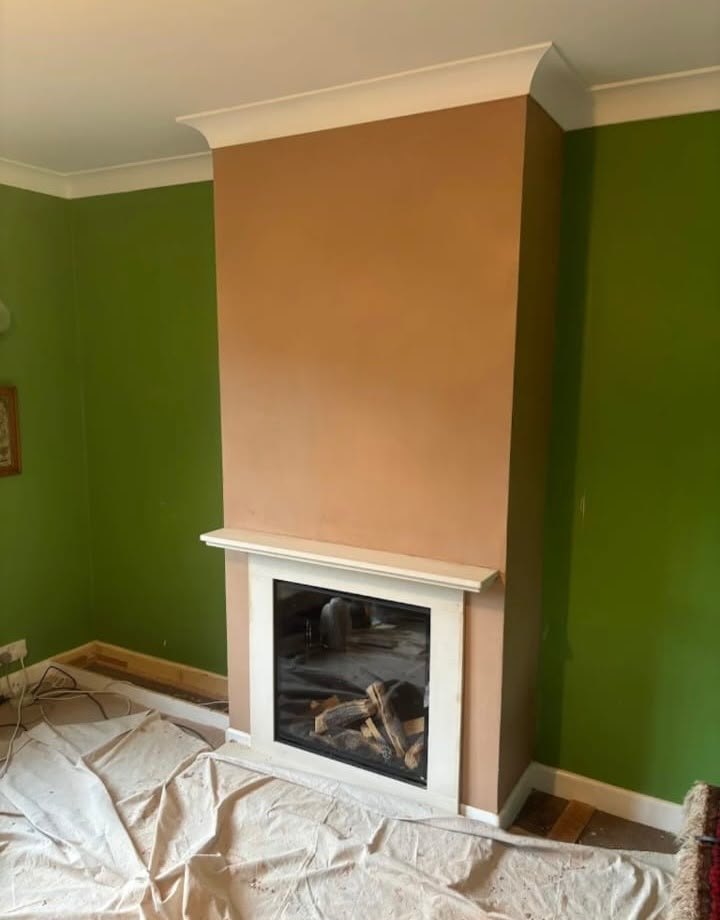
Ring rather than use the form. A ceiling that has cracked and dropped, plaster coming off in sheets, or a wet patch spreading across a wall all go to the front of the queue. We are about eighteen miles out along the Dorchester road, so we tell you on the phone whether it is today or first thing tomorrow rather than leaving you waiting in all day.
Worth knowing
Nothing gets plastered here until the wall has stopped getting wet
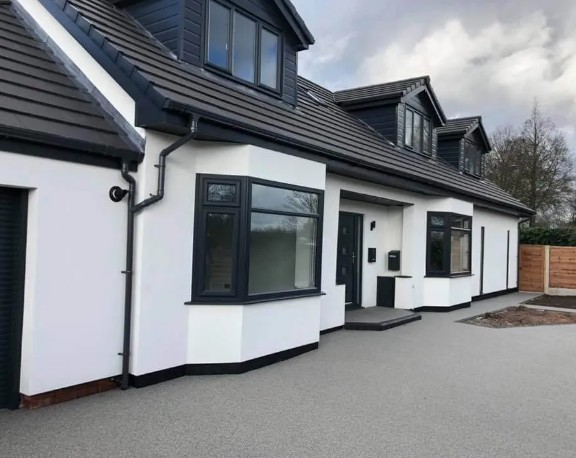
Tolpuddle sits low, on the valley floor, and the old cottages were built without a damp proof course because they were never meant to need one. They shed water through their own faces instead. What has changed since is everything around them: paths and drives laid up against the walls, borders built up over the years, a tarmac apron that now sits higher than the floor inside. Go outside and look at the bottom two feet of the wall you are worried about.
If the ground outside is higher than your floor, or a gutter drips onto the same spot, or a downpipe runs into nothing, that is the job, and plastering is not it. It is worth checking the flood record for the address on an old house down here too, because a wall that has been under water once behaves differently afterwards.
Once the cause is gone, the wall has to dry before a finish goes on, and it dries from the back. As it does, the salts it drew up come out on the face as a white bloom, which is why we take the old plaster off higher than the stain and let the wall breathe rather than sealing it.
A waterproof additive, a cement render or a plastic tanking coat all do the same thing on a wall like this: they hold the water in and move the problem up to the next dry course, usually into the ceiling joists. Lime, a salt-resistant backing coat and patience cost less over ten years than doing it twice.
Who you are dealing with
A local firm you can check
About eighteen miles from us, covering Tolpuddle, Burleston, Puddletown and the DT2 addresses along the Piddle valley, with Dorset Council for planning and building control. Bournemouth Roofing & Building Ltd, registered in England and Wales, company number 15471719, which you can look up in a minute. Thomas Hannen's business, and he is the one who comes out to price the job, not a salesman. A verified customer's 10 out of 10 on Checkatrade. The visit and the written quote are both free.
Questions
Tolpuddle questions we get asked
Martyrs' Cottage is listed. Does that affect the neighbours?
Only where a neighbouring building is listed in its own right, or stands in the curtilage of one. Tolpuddle has 27 listed entries, the Martyrs' Cottages and the former Methodist chapel to their east among them, so listing is common along the main street. A listed cottage is protected inside as well as out, which means the plaster, the lath and the historic surfaces all need consent before any of it comes off.
Can we take the render off and leave the wall bare?
Not without asking, in the Tolpuddle Conservation Area. Stripping a render off changes the appearance of a building every bit as much as adding one does, and appearance is exactly what the conservation area controls, so it goes past Dorset Council first. There is a practical reason as well. A wall that was rendered from the start is usually rendered because the material behind it was never meant to face the weather on its own.
We want to plaster out an annexe in Tolpuddle. Any catch?
There is one worth knowing about before you get that far. Tolpuddle drains to Poole Harbour, which is protected for nutrients, and the rule engages wherever a scheme creates new overnight accommodation, so an annexe with a bed in it is caught while a home office is not. It has nothing to do with the plastering, but it can hold a whole project up, and the wet trades are what get squeezed when it does.
You are eighteen miles away. Is that too far out?
No. Tolpuddle is a little over eighteen miles from the yard and we work along that valley anyway, so it gets covered the same as anywhere nearer. What the distance changes is how the days are arranged: we turn up with the full set of materials and work through the coats rather than dropping in for an hour at a time. Thomas Hannen comes out to measure and price before any of that is booked.
The plaster is soft and crumbly to the touch. Why?
Because it is old lime that has lost its binder, or because salt has been working through it from a damp wall. In a village carrying 27 listed entries, lime rather than gypsum is common on the older Tolpuddle cottages, and once one of those walls has been kept damp the lime turns to powder that comes off on your hand. Skimming over that puts a hard shell on nothing. It comes back to a sound edge first.
Nearby, and next door
Plastering and rendering near Tolpuddle
Plastering and rendering nearby
Our other trades in Tolpuddle
Everything we do in Wareham Plastering and rendering, all areas Every area we cover
Free quote
Get the Tolpuddle wall looked at properly
A free site visit, a reading on anything that looks wet, and an itemised written quote that keeps the cause and the finish on separate lines.