
Bricklaying and repointing in Wool
Wall tie repairs, repointing, brick replacement, chimney stacks and garden walls in Wool, Bovington and the BH20 villages around them.
The site visit is free and so is the written itemised quote. Thomas Hannen prices every job himself.
Bricklaying and repointing
Cracking gables, wall ties and blown brick in Wool
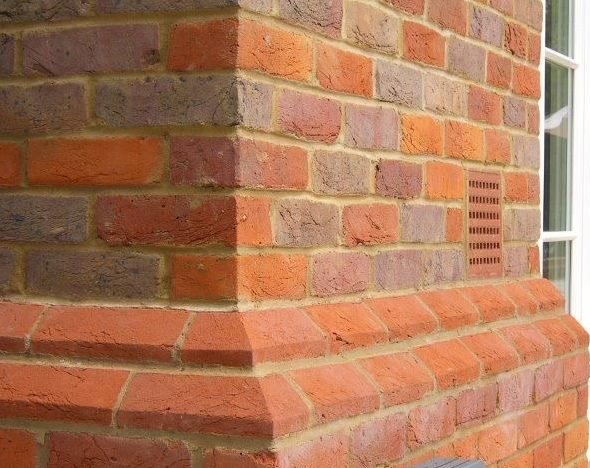
Most of Wool is cavity brickwork put up in the same handful of years, and on that sort of house the thing that fails is rarely the pointing. It is the wall ties, the lintel over an opening, and the mortar on the one gable that takes the weather. So the first thing we do here is work out which of those you have got, because repointing a wall that is cracking from corroded ties is money spent on the symptom.
The calls come in three shapes. A horizontal crack that runs along a bed joint and repeats up the wall at a regular spacing. A crack stepping up from the corner of a window or sagging over a garage door. Or, in the older part of the village, joints on a solid wall weathered back until a key goes straight in, and brick faces flaking off either side of hard grey pointing that somebody put on decades ago.
We come and look at all four elevations before anything is priced, and on a semi or a terrace we look at the neighbours too, because these houses fail as a row rather than one at a time. You get a straight answer on what needs doing this year, what will keep, and an itemised written quote for whichever of it you want. The site visit and the quote are free.
The work
The brickwork jobs we do around Wool
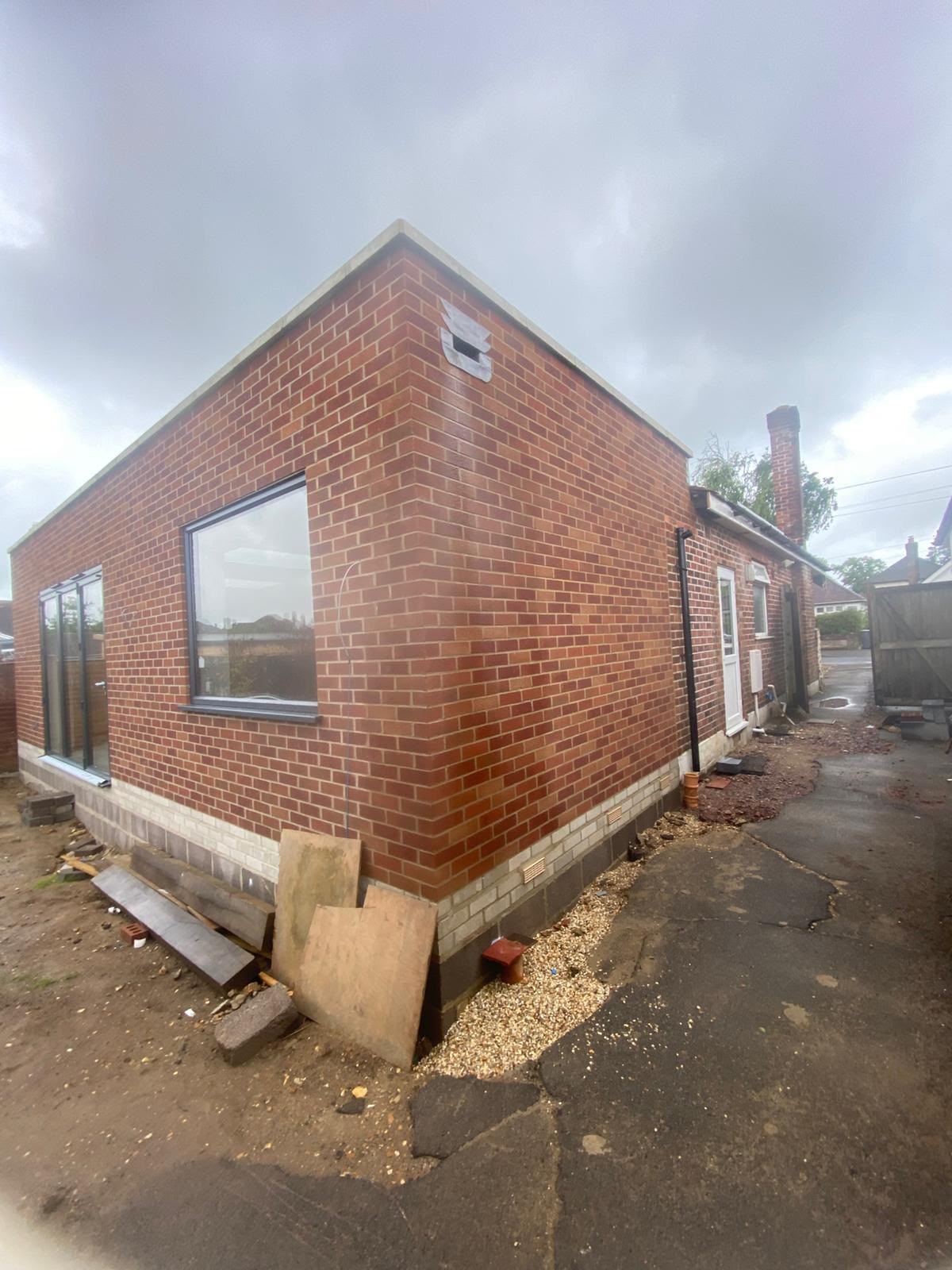
Wall ties. This is the job Wool gives us more than any other, because 55.0 per cent of the housing went up between 1945 and 1982 and it peaks in the 1970s and early 1980s. Stretcher bond outside, blockwork inner leaf, ties bridging the cavity. When those ties corrode they swell and jack the bed joint apart, so you get a horizontal crack repeating up the wall at the tie spacing, most often on the gable that takes the weather, which here is the south west face. Left long enough the outer leaf starts to bow away from the inner. Ties are replaced from outside, drilled and fixed through the joint and made good, without taking the wall down or emptying the house, and we survey a sample of the cavity first so you know how many are going in before you get a price.
Lintels and cracked openings. The second thing this cohort does is drop a window or door head. A corroded steel lintel expands the same way a tie does and lifts the courses above it, and a garage opening spanned optimistically in the first place sags in the middle. We support, cut out and replace the lintel, rebuild the courses above and repoint so the repair does not read across the front of the house. Repointing itself is usually the one weather gable rather than four elevations: joints raked by hand to about twice their width, a measured cement and sand mix back in on the post-war brick with the sand chosen for colour and grain, and a cured sample panel on your own wall before we start. On the older solid walls near the river, and 12.0 per cent of Wool predates 1919, it is an NHL lime mix instead and hand tools only.
Once a face has spalled, frost gets in behind and lifts the next layer, so blown brick is replaced one at a time rather than patched over, matched for size, texture and colour, and we work out what soaked the wall in the first place. Estate boundary walls here are low, long and built on very little footing in ground that shrinks and swells, and with terraces at 25.8 per cent and semis at 24.7 per cent the wall between two front gardens usually belongs to both of you. We reset or replace coping so the head of the wall throws water clear, rebuild bowed lengths off a proper base, and tie a gate pier into the wall rather than leave it standing on the end of it. Stacks lose their flaunching, then the pointing on the top courses, then they lean, and plenty out here are no longer serving anything, so we either rebuild from below the damage or take a redundant stack down and make the roof good, with the access priced as its own line. New work is the rest: extensions, porches, garden rooms and garden walls, with a footing sized for the ground and the outer skin toothed into the existing bond.
How it runs
From your call to a written price
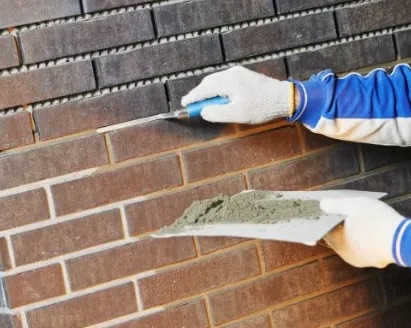
Repointing, tie replacement and like-for-like brick repair all count as repair, so at most Wool addresses there is nothing to apply for. The older part of the village sits in the Wool conservation area, where appearance is controlled, so changing a material, a colour or a joint profile rather than putting it back can need planning permission, and the Planning Portal sets out where that line falls. The parish also has nine listed entries, and on a listed building even plain repointing counts as alteration and needs listed building consent from Dorset Council. A rebuilt boundary wall has height limits under the guidance on walls, gates and fences. Replacing a lintel or putting in a new footing goes through building control, and where the wall is shared the Party Wall etc. Act 1996 sets a notice period.
Cost
What decides the price of a brickwork job
No rate per square metre. Access first: a semi where the gable is half your neighbour's, a terraced row where one scaffold serves three houses and a cottage in the old part with a lane down one side are three different set ups. How long the platform stands matters as much as its size, and work at height rules are why it is a priced line. On tie replacement it is the number of ties that decides it, not the area of wall. Ask what the mix is and whether the scaffold is in.
If something has moved
Loose brickwork, or a wall that has shifted
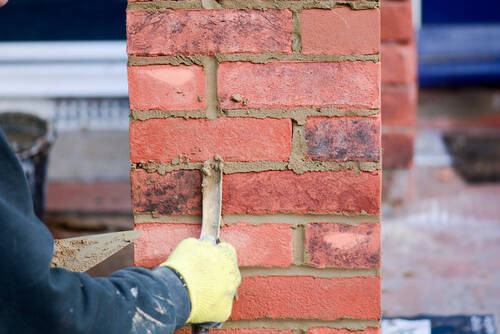
Ring rather than use the form. Anything overhead or leaning goes to the front of the queue, and the first visit is about making it safe. Around Wool it is usually an outer leaf bowing away at the top of a gable, a pier clipped by a vehicle, or a stack that has moved in a gale. The phone is answered 24 hours for emergencies; scheduled work runs Monday to Friday, 8am to 6pm.
The one local thing
A village built in one go, ageing all at once
More than half the homes in Wool went up between the war and the early eighties, and a big share of those within a few years of each other. That matters more for brickwork than it sounds. Wall ties, lintels and mortar all have a working life, and when a street was built in one go they reach the end of it together.
It is why you will see the same horizontal crack on the same gable on three houses in a row, and why the neighbour who had ties done last year is a better guide to your own wall than any amount of guessing. Walk the street and look at the gables. If theirs is cracking along the bed joints at a regular spacing, yours is on the same clock.
Two things follow from that, and both are useful to you. First, know what you are looking for: horizontal cracks repeating up a wall, an outer leaf that leans out at the top, a window head lifting, and mortar that has weathered back evenly across a whole elevation rather than in patches. Those are cohort problems, not one-off accidents, and none of them is fixed by repointing on its own.
Second, talk to your neighbours before you book anything. On a semi or a terrace the same scaffold can serve more than one house, and the survey work goes faster when two identical properties are looked at together. We are happy to quote adjoining houses on the same visit and set the prices out separately, so each of you can decide on your own and still share the access.
Who you are dealing with
A local firm you can check
Wool is about sixteen miles from the yard, an easy run down the A352, and we are in the Purbeck villages regularly. We cover BH20, Wareham, Bovington, Winfrith Newburgh, West Lulworth and Bere Regis, along with the rest of Purbeck.
Bournemouth Roofing & Building Ltd, registered in England and Wales, company number 15471719, which you can look up in a minute. Thomas Hannen's business, and he is the one who comes out to price the job, not a salesman. A verified customer's 10 out of 10 on Checkatrade. The visit and the written quote are both free.
Questions
Wool questions we get asked
What does a failed wall tie look like from outside?
A horizontal crack running along one bed joint, repeating every fifth or sixth course, and sometimes a slight bulge in the outer leaf. Wool is 55.0% post war stock with the peak in the seventies and early eighties, which is squarely cavity wall territory, so it is a common find here. The tie rusts, expands and jacks the joint open. Replacement ties go in from outside and the joints are pointed after.
Are we inside the Wool conservation area?
Part of the village is and part is not, so the boundary is checked on the Dorset Council mapping before anything is priced. Inside the Wool Conservation Area the appearance of a repair is controlled, which in practice means matching the mortar and the joint finish rather than seeking permission to repair at all. Outside it, the same work is plain repair. The technical answer about the mix does not change.
We share a wall with next door. Who deals with what?
The shared wall is joint business and the flank you can see is yours. Semis and terraces together come to over half of Wool, so this comes up constantly. Where work sits on the shared line I want both owners aware of what is happening before it starts, and where two neighbours want the same elevation done, the access equipment and the mixing station serve both and go up only once.
Why is the mortar failing on the bottom two courses only?
Because the ground around Wool holds water rather than shedding it, so the foot of a wall stays damp long after the face has dried off. Damp, salts and frost between them strip a joint from the ground upwards, and splashback off hard paving doubles the rate. Those courses get cut out and pointed back, and the paving or the border is then made to fall away from the brickwork.
Does the Poole Harbour nutrient rule affect a small extension?
Only where the scheme adds a bedroom. Wool drains into the Poole Harbour catchment, and extra overnight accommodation has to be balanced for nutrients before permission is granted, so a loft conversion or an annexe gets caught while repointing or a garden wall does not. If you are extending, allow time for it at the planning stage. It has no bearing on the brickwork itself.
Nearby, and next door
Bricklaying and repointing near Wool
Bricklaying and repointing nearby
Our other trades in Wool
Everything we do in Wareham Bricklaying and repointing, all areas Every area we cover
Free quote
Get a price for the brickwork in Wool
Tell us what the wall is doing and we will come and look at it. Free site visit, free itemised written quote, and a straight answer on what can wait.