
Bricklaying and repointing in Crossways
Garden walls, driveway piers, repointing, lintels and brick repair across Crossways and the DT2 villages around it.
The site visit is free and so is the written itemised quote. Thomas Hannen prices every job himself.
Bricklaying and repointing
Brickwork in Crossways: what we do and what it costs
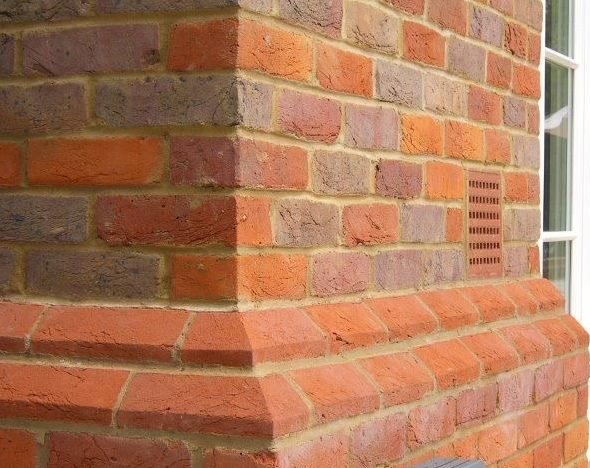
Most brickwork calls in Crossways are about walls in the garden rather than walls holding the house up. Boundary walls, driveway piers and low retaining walls between plots take the weather and the knocks, they were nearly all built without a damp proof course, and they are the first thing to go. They are also the cheapest thing on a property to put right properly, if it is done before the whole length starts leaning.
The other two reasons people ring are a gable that has started to lose its joints on the weather side, and cracking above a garage door or a patio opening where the lintel has begun to move. Neither is dramatic, both get slowly worse, and both are far cheaper to sort at the point you first notice them.
We come out and look at the whole property, not the single wall you have spotted, and tell you which of those you have. If it is nothing worth spending money on yet, we will say that plainly and put nothing in front of you. The site visit and the itemised written quote are free either way.
The work
The brickwork jobs we do in Crossways
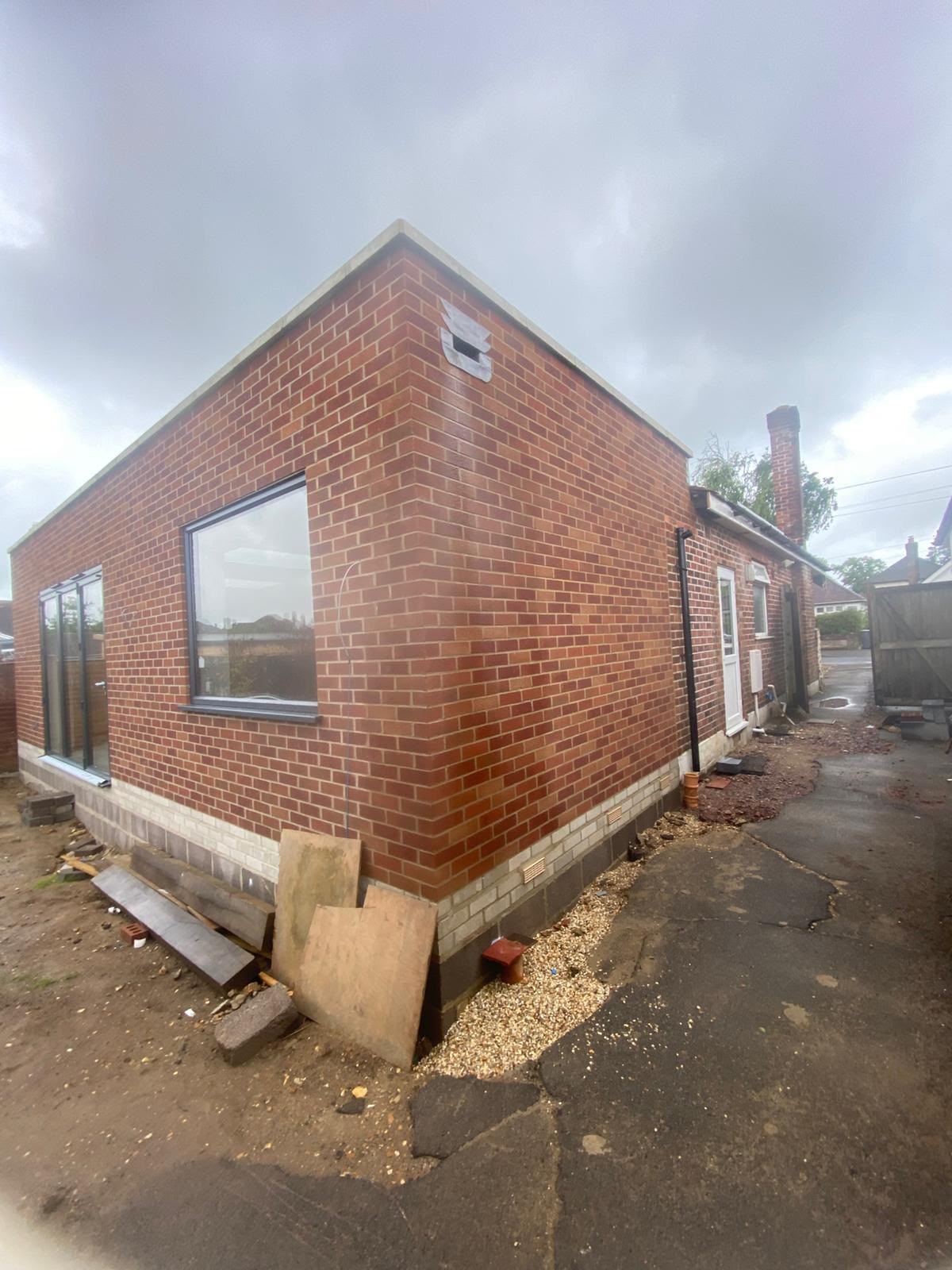
Walls, piers and retaining walls. Estate plots here are divided by long low brick walls, and driveways are flanked by piers that were built to hold a gate and often never got one. Most were laid off a shallow footing with no damp proof course, so they draw water out of the ground, the bottom courses go soft and the wall leans, and on ground that shrinks and swells the movement is seasonal as well. We rebuild bowed lengths on a proper foundation, put a DPC in, reset the coping so water is thrown clear, and rebuild gate piers bonded into the wall instead of standing on their own. Where a wall is retaining ground between two levels it gets built as a retaining wall, with drainage behind it, rather than as a garden wall that happens to have soil against one side.
One elevation, not four. Plenty of Crossways houses are only thirty or forty years old and already want pointing on one elevation, which surprises people. It is normal: the gable that faces the weather is worn out long before the sheltered walls. We rake back to sound mortar, match the mix and the sand for colour, and finish the joint bucket handle or weather struck to match what is already on the house rather than cut flush because it is quicker. Wide garage openings, patio doors and picture windows of this age sit on steel lintels, and a corroding lintel expands and cracks the brickwork it carries: prop, cut out, replace and rebuild over it. That is structural and goes through building control. On the older half of the village the ties are galvanised and worth a look, since corroding ties show as fine horizontal cracking at regular intervals and remedial ties go in from outside without taking the skin down.
Around the edges of the village there are properties that predate all of this, solid wall construction with no cavity behind them, and those get lime rather than cement: an NHL mortar, raked by hand, kept breathable, with a sample panel to look at first. Putting a hard modern mix on soft period brick is what causes the spalling faces on so many walls repointed decades ago. Stacks lose their flaunching and top courses first and are rebuilt off a scaffold. New work means extension skins, porches and garden walls, where the job is matching a facing brick that is often no longer made: reclaimed stock, a sample brick off the wall, and you see what we have found before it is laid.
How it runs
From your call to a written price
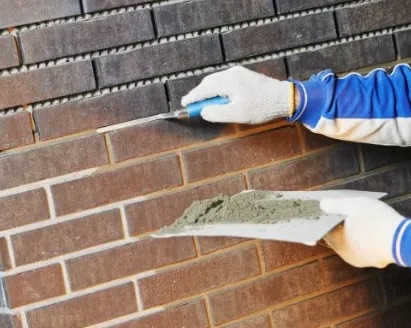
Thomas prices it himself, and the quote itemises access, raking out, the mix, each elevation and any brick replacement. Crossways is Dorset Council, and consents here are as simple as they get on our patch: no conservation area, nothing listed, and repointing and brick repair is maintenance that needs nothing. A new or raised garden wall has height limits, one metre fronting a highway and two metres elsewhere, which Planning Portal guidance on fences, gates and garden walls sets out. Changing the outside appearance of the house is covered by Planning Portal guidance on external walls. Structural work such as a lintel or a retaining wall goes through building control, and a shared wall brings in the Party Wall etc. Act 1996.
Cost
What decides the price of a brickwork job
No rate per square metre: the metre of wall tells you nothing until you know what the joints are like. A house on an open estate frontage, a terrace with a shared rear path and a bungalow tight against next door's fence are three different set ups. The platform is a priced line rather than a favour, under work at height rules. Depth of rake and the state of the brick faces decide the hours, not the square metres. Two quotes for the same wall are usually two different jobs, so ask what is in each.
If something has moved
Loose brickwork, or a wall that has shifted
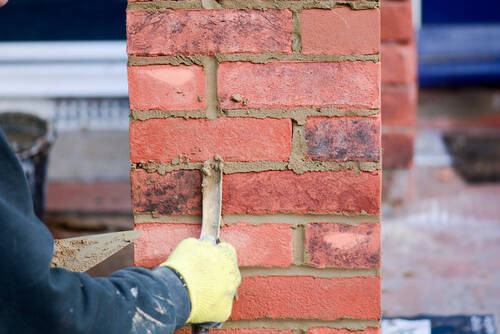
Ring rather than use the form. Anything leaning or overhead comes first: a moving chimney, a parapet, a wall pushed out by roots or clipped by a vehicle. In Crossways it is nearly always a driveway pier or a length of boundary wall that a vehicle has caught, or loose brickwork over a garage opening. The phone is answered 24 hours for emergencies; scheduled work runs Monday to Friday, 8am to 6pm.
The one local thing
Nothing here is listed, and that saves you real money
Crossways has no conservation area and there is not a single listed entry in the village. On this patch that is genuinely unusual, and it is worth knowing because it takes a whole layer of cost and delay off a brickwork job. You can repoint in whichever mortar actually suits the wall without asking anyone.
You can choose the brick when something has to be replaced, rather than hunting for an exact match because the council will look at it. You can rebuild a garden wall in a different brick, put a modern coping on it, or take a pier down and not put it back. Ten miles away, on a listed cottage, every one of those needs consent in writing before a joint is opened, and getting it takes longer than the work does.
What that freedom does not do is change the physics, and this is where people here lose money. Because nobody has to approve the mortar, it is tempting to let whoever is cheapest put a strong cement mix on everything. On the modern houses that is roughly right, because they were built that way. On the older cottages on the lanes it is wrong, and it will spall the brick faces within a few winters.
The same goes for the ground: no designation stops rainwater from a downpipe soaking the footing of a wall, and Approved Document H still sets out where surface water is supposed to go. Pick the mortar to suit the wall, get the water away from the base of it, and the absence of a heritage constraint turns into money saved rather than a wall done twice.
Who you are dealing with
A local firm you can check
Crossways is about twenty miles west of the yard, so we work the DT2 villages in planned runs and take in Moreton, Woodsford, Owermoigne and Broadmayne on the same trip. Bournemouth Roofing & Building Ltd, registered in England and Wales, company number 15471719, which you can look up in a minute. Thomas Hannen's business, and he is the one who comes out to price the job, not a salesman. A verified customer's 10 out of 10 on Checkatrade. The visit and the written quote are both free.
Questions
Crossways questions we get asked
Nothing is listed in Crossways. Can we do as we like?
On the planning side, more or less. Crossways has no conservation area and no listed entries at all, which is unusual on this patch, so repointing, brick replacement and a rebuilt wall are ordinary repairs and Dorset Council is not going to ask what colour the joints are. The wall itself is less relaxed. Put a hard cement mix on a soft brick and it will do damage whatever the planning position happens to be.
Does a crack that opens each summer need underpinning?
Not often. The ground at Crossways is cohesive and shrinks and swells with the seasons, so a shallow footing rides up in winter and settles in a dry summer and the crack breathes with it. What matters is whether it is wider each year and whether water is being delivered to one spot by a downpipe or a soakaway. Most of these get stitched and repointed once the water has been dealt with.
Crossways is nearly twenty miles out. Will you come?
We do, and we plan it rather than dropping in. It is 19.8 miles from the yard, so the visit, the measuring and the quote happen in one trip, materials arrive in one load and the work runs in a block instead of scattered days. That suits a single elevation or a garden wall well. If something is unsafe, say so on the phone and it gets dealt with ahead of the rest.
What mortar suits a 1980s estate house?
A gauged mix, softer than the brick and no stronger than it has to be. The largest slice of Crossways housing is 1970s and early 1980s, machine made facing brick in a cavity wall, and that takes cement and lime gauged together without complaint. The pre-1919 element here, roughly one house in seven, has to be lime. Getting those two the wrong way round is what ruins an old wall.
Would a new annexe here need nutrient mitigation?
If someone is going to sleep in it, yes. Crossways sits inside the Poole Harbour nutrient neutrality catchment, and the requirement engages where a scheme adds overnight accommodation, so a habitable annexe is caught while a garage, a workshop or a garden wall is not. Brickwork repair and repointing sit outside it entirely. Dorset Council will say what mitigation an annexe needs before you get as far as foundations.
Nearby, and next door
Bricklaying and repointing near Crossways
Bricklaying and repointing nearby
Our other trades in Crossways
Everything we do in Wareham Bricklaying and repointing, all areas Every area we cover
Free quote
Get a straight answer on that wall
Tell us what you are looking at. We will come out, say whether it needs doing now or can wait, and give you a written itemised price if it does.