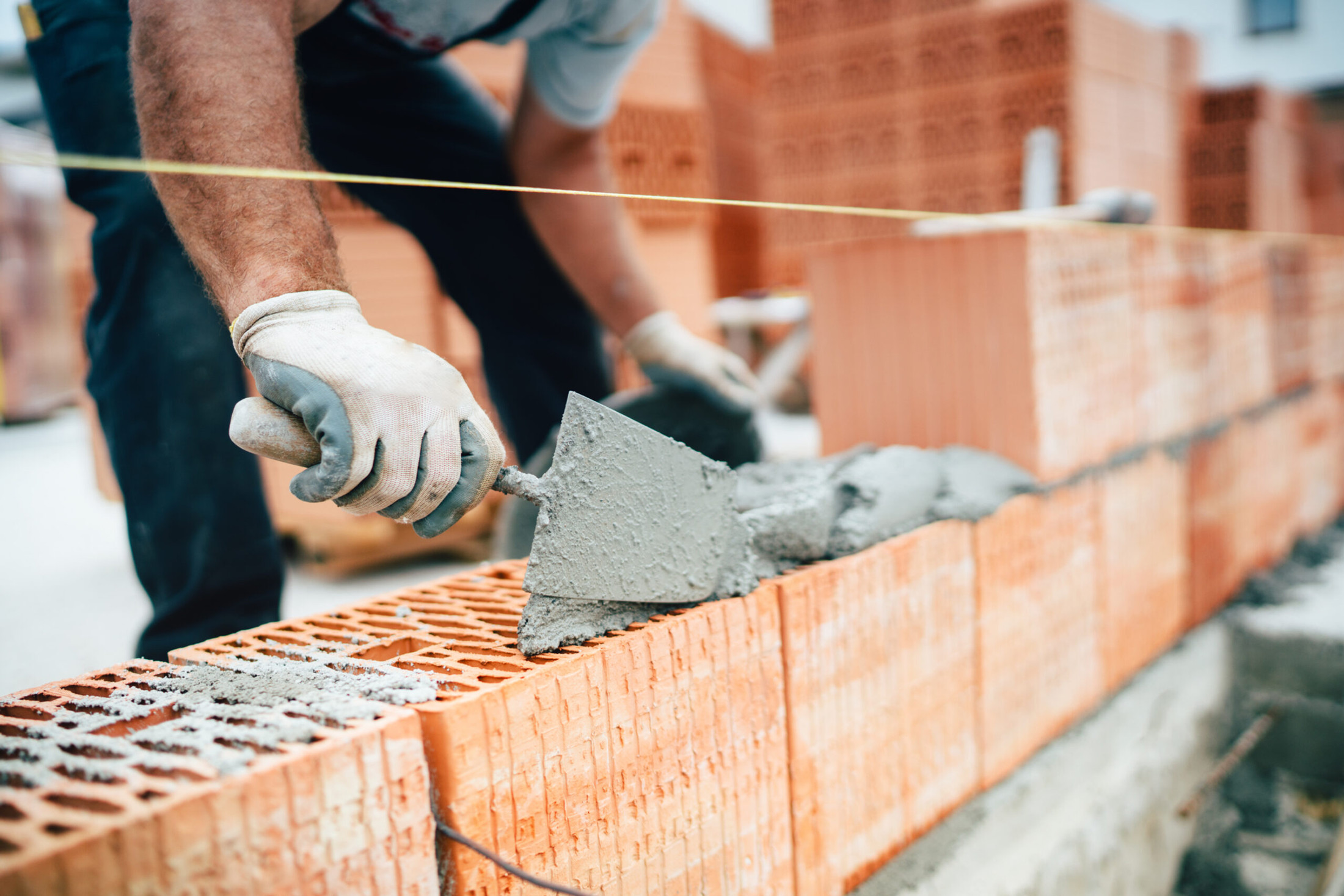
Bricklaying and repointing in West Lulworth
Lime repointing, brick and stone repairs, chimneys and the boundary walls that take the weather, in West Lulworth and across the Purbeck villages.
The site visit is free and so is the written itemised quote. Thomas Hannen prices every job himself.
In West Lulworth the pointing usually fails long before the wall does. Get the joints raked out and put back in a lime mix that is softer than the stone or brick around it, and the same wall carries on doing its job. Point it in hard cement and you will be paying to cut faces out in a few winters.
People ring us here for three things. Mortar washing out of a wall on the side that faces the weather, so the joints have gone hollow and you can see daylight through a boundary wall. Faces flaking off brick or stone, usually near the ground or near the top where water sits. Or a wall that has started to lean, which round here is normally a garden or roadside wall that has been holding back more ground than anyone designed it to.
We come and look properly, which means getting to the wall rather than judging it from the lane. We scrape a joint to find out what the original mortar actually is, tap the masonry for anything hollow behind, and photograph it so you see what we saw. Then you get a plain answer about what needs doing this year and what does not.
The work
What we take on in West Lulworth
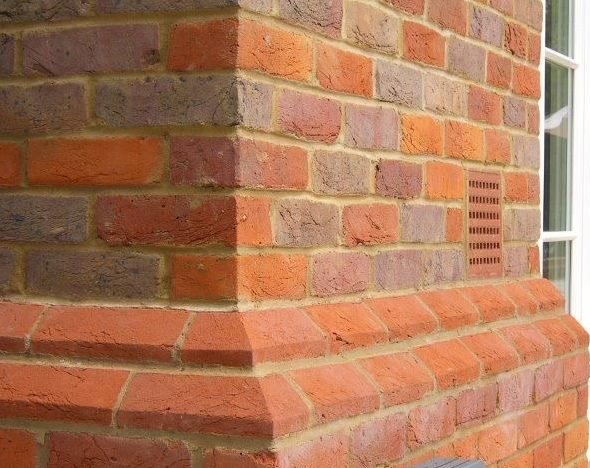
Repointing stone and brick. Much of the older village is rubble stone with brick used for the quoins, the window heads and the chimneys, and all of it was bedded in lime because lime is the sacrificial part. We rake out by hand, take the joint back to sound mortar rather than skimming over the top of it, and point back in a natural hydraulic lime graded to suit the wall. Nothing goes near a soft wall with a disc cutter. On rubble work the joint is finished flush or just behind the face so water runs off the stone; weather struck and bucket handle joints belong on the later brickwork, not on this. The village is seven hundred metres from the sea and the most exposed elevation faces south west, so the seaward face is usually the one that has gone while the sheltered side is sound, and salt keeps a wall damp between showers rather than letting it dry.
The boundary walls. There are a great many of them here, running along the lanes, holding gardens up off the road and standing round the mill pond, and they take more weather than any house wall because they are wet on both sides with no roof over them. Coping is what saves them, so a loose or missing coping stone gets re-bedded first. Where a wall has bowed we take the leaning section down, sort the footing, which on ground that shrinks and swells is usually the real fault, and rebuild with what came out. Gate piers get rebuilt plumb rather than propped.
Where a brick face has blown, the brick comes out whole and a replacement goes in. Matching in a village like this means sourcing: a reclaimed or handmade brick, and for stone a piece that sits right for colour and texture. Where it will be seen from the road we build a sample panel first and you look at it dry, because wet mortar lies to everybody. Exposed stacks take weather from every direction, so raking and repointing above the roof line, renewing the flaunching that holds the pots and rebuilding the top courses is regular work here, and that is scaffold work, priced as its own line rather than added afterwards. On the newer houses at the edge of the village the walls are cavity work and the faults change: a lintel corroding over a window lifts the course above it, and wall ties rusting push the outer leaf out and crack the wall on a line every few courses.
How it runs
From your call to a written price
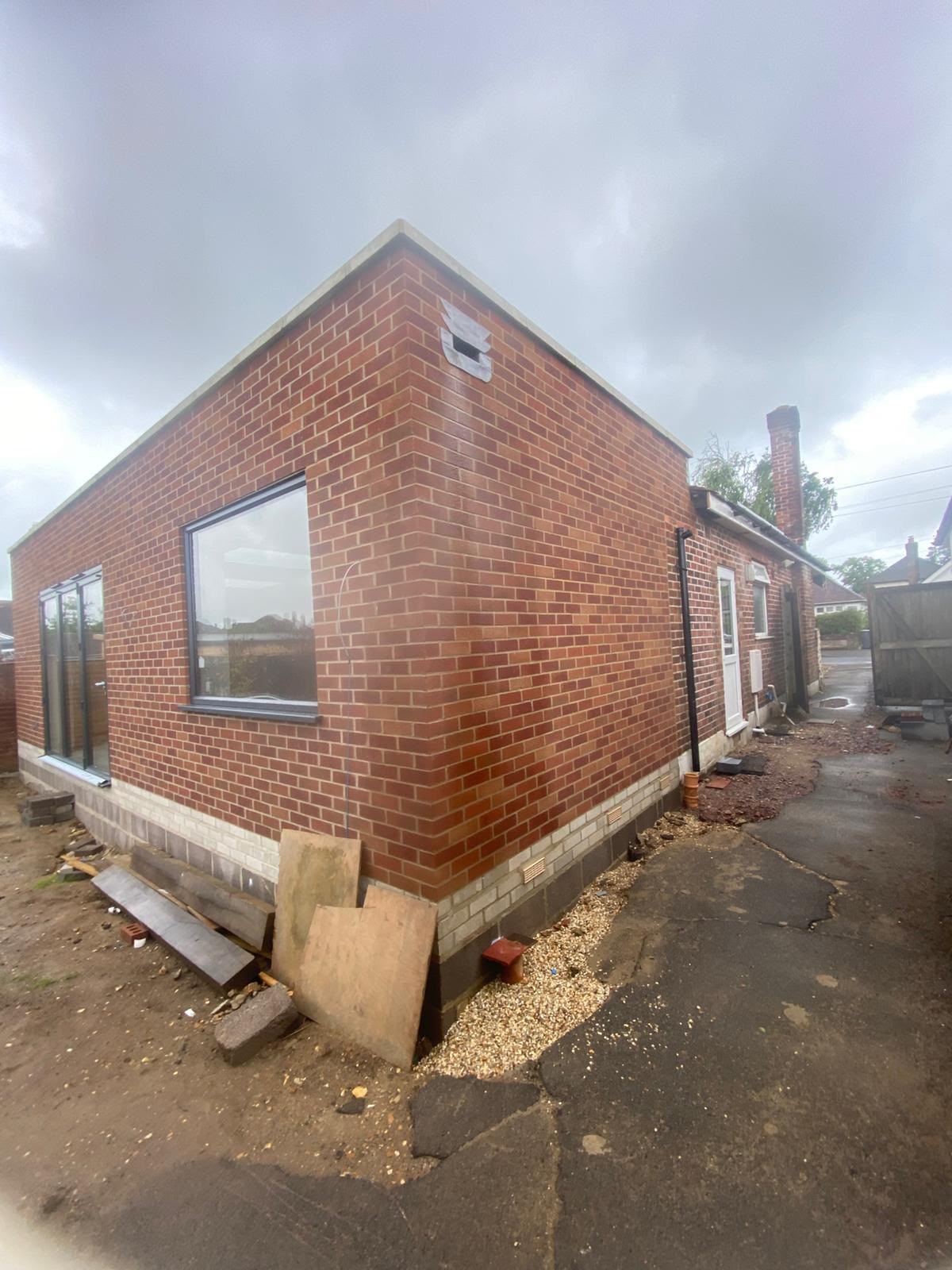
Repointing and repairing like for like is maintenance and there is nothing to apply for. Two things change that here. The village is the West Lulworth Conservation Area, so taking down a boundary wall of any height that fronts the lane needs consent even if you intend to rebuild it exactly as it was. And a lot of the buildings along Main Road are among the 43 listed entries here, where listed building consent is needed before the mortar mix, the joint profile or a brick type changes. Where you are rebuilding on the line with a neighbour the Party Wall etc. Act 1996 sets a formal notice period. We tell you which of those you are in before you commit.
Cost
What decides the price of a brickwork job
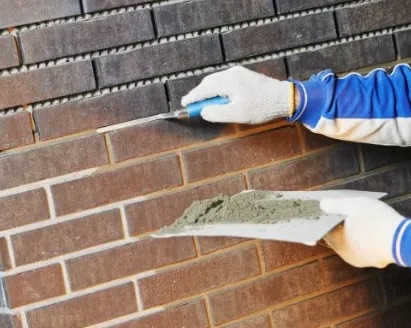
No rate per square metre. Access first: a cottage straight onto the lane, a detached house with a bank behind it and a roadside retaining wall are three different jobs, and plenty of the low work here comes off a tower. How long the platform stands matters as much as its size, and work at height rules are why it is a priced line. On lime and rubble the hours go on hand raking and on matching stone or brick. Ask what the mix is and whether the scaffold is in the figure.
If something has moved
Loose brickwork, or a wall that has shifted
Ring rather than use the form. Anything overhead or leaning jumps the queue, and the first visit is about making it safe. A roadside wall that has bellied out over a pavement or one of the lanes is the one we drop everything for, because the next thing to lean on it is usually a person. The phone is answered 24 hours for emergencies; scheduled work runs Monday to Friday, 8am to 6pm.
Worth knowing
Salt air decides what mortar goes back in
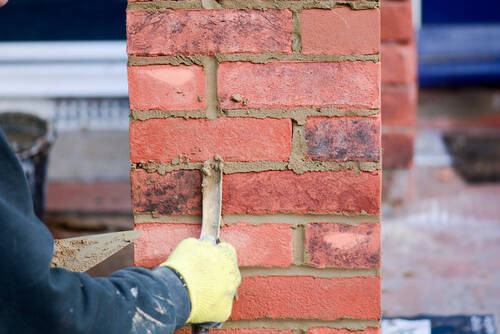
You are under a mile from open water here, and the wind that comes up off the Cove carries salt with it. Salt does not simply sit on a wall. It is drawn in with the rain, then as the wall dries the salt crystallises just behind the surface, and those crystals are what push the face off a brick or shell a soft stone.
It happens on the seaward elevation years before it happens on the sheltered side of the same house, which is why we price the two elevations differently instead of quoting a wall as one number. Round here the exposed face is usually the one looking south west.
What that means in practice is that the mortar has to be the escape route. A breathable lime joint lets the water and the salts come back out through the mortar, where they do nothing worse than leave a bloom you can brush off. A hard cement mortar, or a sealant painted on to make a wall look after itself, closes that route and forces the drying out through the brick and stone instead.
That is the single most expensive mistake made on walls in this village. The other thing salt air does is eat metal, so when we are on a wall we look at what is buried in it: wall ties, the ends of lintels, old iron cramps and railing stubs. Rust expands, and expanding iron lifts courses and cracks masonry from the inside. If ties are being replaced anywhere within reach of this coast, they go back in stainless.
Who you are dealing with
A local firm you can check
We cover West Lulworth, East Lulworth, Winfrith Newburgh, Wool and the villages across BH20. The free site visit is where the survey happens, at the wall with you, rather than a price worked out from photographs you emailed over.
Bournemouth Roofing & Building Ltd, registered in England and Wales, company number 15471719, which you can look up in a minute. Thomas Hannen's business, and he is the one who comes out to price the job, not a salesman. A verified customer's 10 out of 10 on Checkatrade. The visit and the written quote are both free.
Questions
West Lulworth questions we get asked
We are 0.7km from the sea. Does salt reach the mortar?
It reaches the metal in the wall first. At 0.7km from the coast, West Lulworth walls carry salt on the wind, and it corrodes wall ties, cramps and the fixings under copings from the edge inwards while the joint face still looks respectable. Salt also holds damp in the surface between showers, so the wall dries slowly and frost gets more attempts at it. The seaward face wants stainless fixings.
Does the conservation area cover our garden wall?
Often it does, because the West Lulworth Conservation Area controls appearance across the designated area rather than building by building, and boundary walls are a large part of why a street looks the way it does. Repairing one as it stands is maintenance. Raising it, rebuilding it in another material or changing the coping is not, and that is a conversation with Dorset Council beforehand rather than afterwards.
Which elevation goes first if we cannot do all four?
The south west facing one. In West Lulworth that is the most exposed face, and wind driven rain concentrates on the edges and the openings, so the verge, the reveals and the copings on that side empty their joints while the sheltered face stays sound. Priced elevation by elevation, you can do the weather side now and leave the rest until it genuinely needs doing.
Should the rainwater off the roof worry me?
Where it lands should. The ground under West Lulworth shrinks and swells with the seasons, so a gully that overflows or a soakaway sitting too near the house keeps wetting and drying the soil beside a footing. That movement opens joints faster than anything the weather does to the face of the wall. Sorting an overflowing gully is a small job that heads off a much bigger one.
Does the wind here stop you pointing?
Wind does more harm to fresh work than rain does. It skins a joint before the mortar has taken, and on the exposed West Lulworth elevations it drives rain straight into an open joint waiting to be filled. So the wall gets sheeted, the raked out sections are kept short, and the pointing follows the raking closely instead of a whole elevation being opened at once. In a real blow we stop.
Nearby, and next door
Bricklaying and repointing near West Lulworth
Bricklaying and repointing nearby
Our other trades in West Lulworth
Everything we do in Wareham Bricklaying and repointing, all areas Every area we cover
Free quote
Get a written price for your West Lulworth brickwork
Free site visit, free itemised quote, and an honest answer on whether the wall needs pointing or rebuilding.