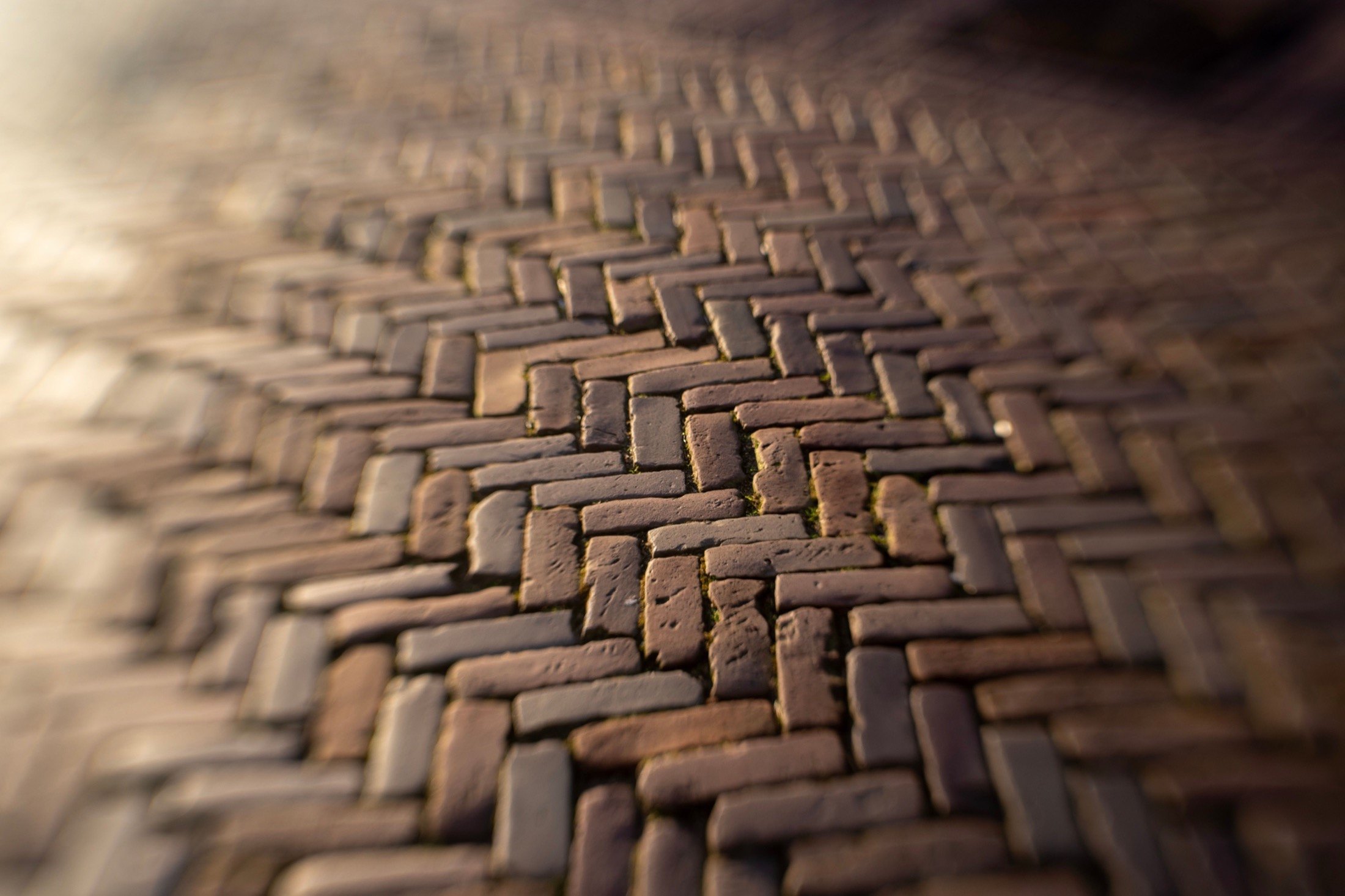
Driveways and patios in West Lulworth
Stone terraces, steps, resin and block paved drives and drainage built for a slope, across West Lulworth and the BH20 villages. Free site visit and written quote.
The site visit is free and so is the written itemised quote. Thomas Hannen prices every job himself.
Paving this close to the sea has two jobs the rest of Dorset does not ask of it. It has to hold on a West Lulworth slope, and it has to stay safe underfoot when salt air keeps it damp for weeks at a time. That narrows the surface and the jointing before anybody talks about price.
The calls from the village are usually one of three. Loose gravel that has washed down the slope again and spread itself across the lane. A terrace behind the house that is green and greasy from October through to April and nobody dares walk on in slippers. Or steps and a path to a front door that were fine twenty years ago and have now moved enough that a visitor arriving in the dark catches a toe on them.
All three are ground problems wearing a surface. The free site visit means surveying the falls, opening a small hole to see what is under the paving, and working out where the water is running before it is anywhere near the road. Then you get a written itemised quote with the method on it, so you can see what is being built rather than just what it costs.
The work
Paving on a slope, and within sight of the sea
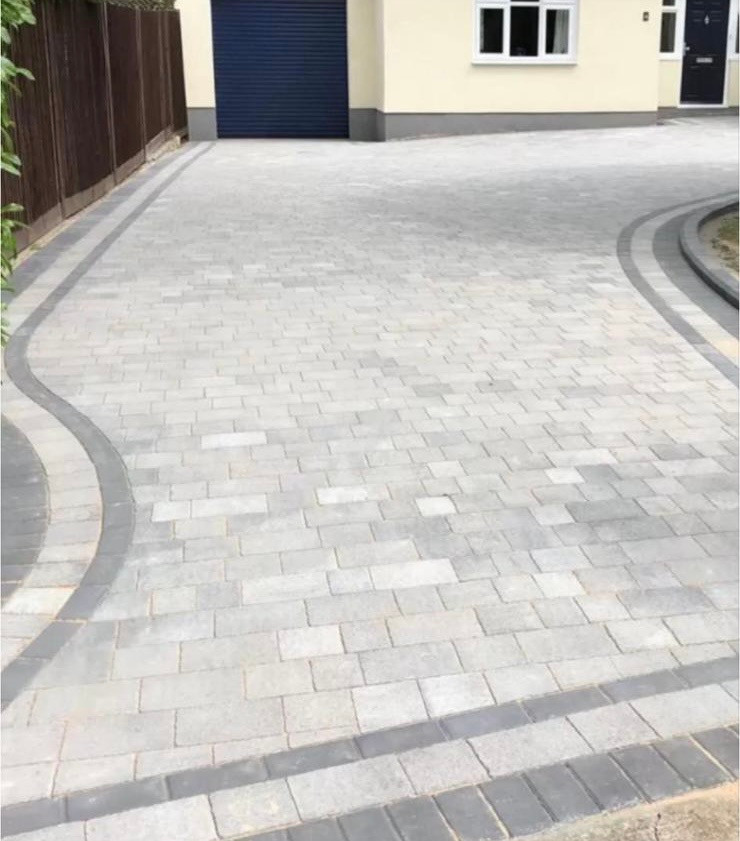
Drives and parking that stay put on a gradient. Ground around the village falls hard towards the cove, and loose gravel on a slope moves every time it rains. Where the gradient is gentle we lay gravel over a stabilisation grid on a compacted sub-base and a geotextile membrane, which holds the stone in its cells instead of in the gutter. Where it is steeper the honest answer is a bound surface: resin bound over a properly built base or over sound tarmac, or block paving with the edge restraint haunched in concrete so nothing creeps downhill. Either way a channel drain goes across the bottom, because a drive that sheets water into the lane is somebody else's problem.
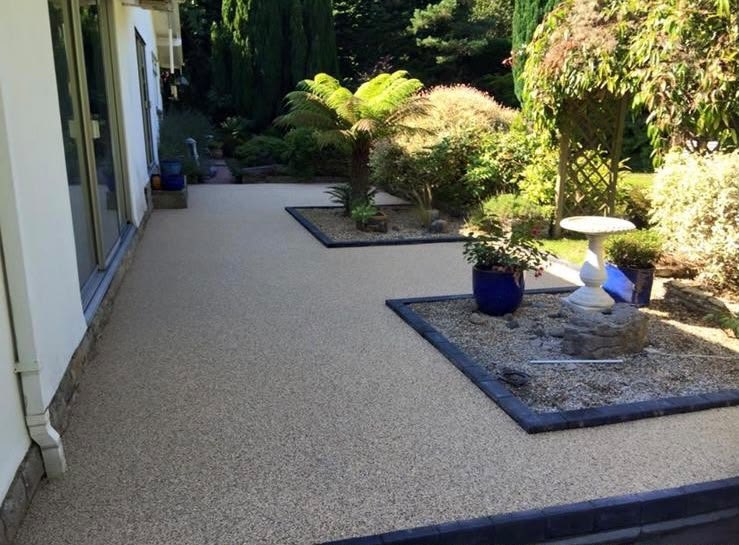
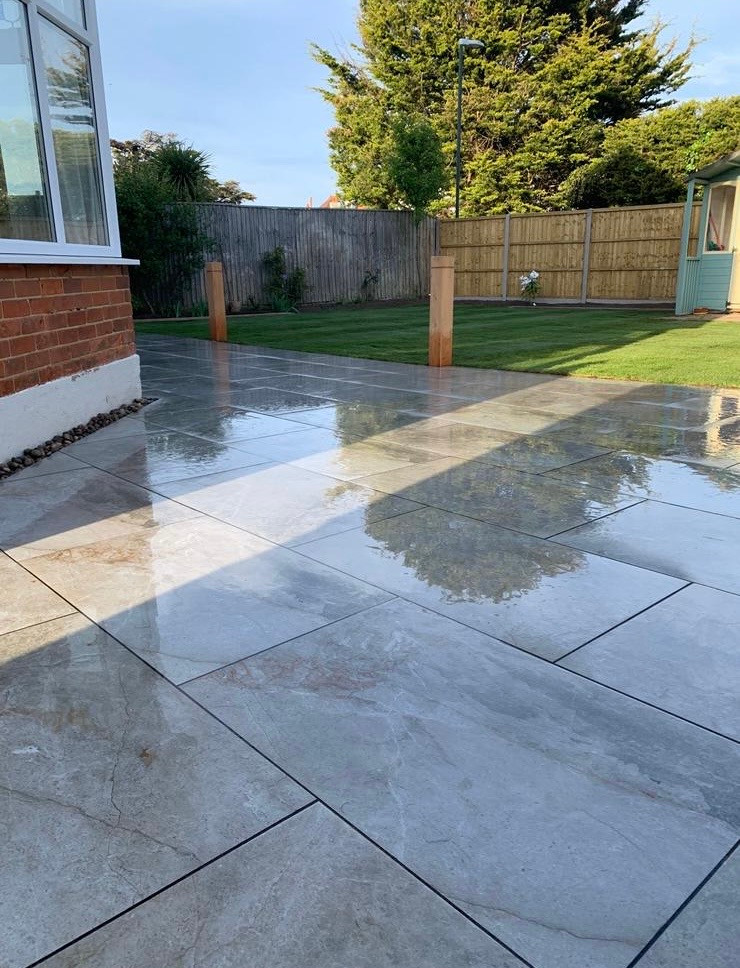
Terraces cut into the bank. Level ground is scarce here, so a usable patio usually means holding a bank back and building a platform: a footing, a retaining wall, drainage behind it so water is not pushing on the back of the wall all winter, and steps with a consistent rise. Where a wall sits on a boundary or fronts the lane, the rules on walls and gates are worth a look before it is designed. Slabs go down on a full mortar bed, because five dabs on a slope with a freeze in it gives you a rocking slab and a cracked corner. Under a kilometre from the sea the salt keeps a surface damp between showers and works at anything metal, so gratings and fixings are specified for it.
Re-setting a slab that has tipped, rebuilding a step whose riser has broken away and lifting the bay that has sunk and now holds a puddle are the everyday jobs. Ponding in one corner and staining down a slope mean the falls are wrong, which is a re-lay rather than a rebuild. On a holiday let we can do that between changeovers rather than shutting the place for a fortnight.
There is no surface water sewer here, so the ground has to take its own water: a permeable build-up that stores rainfall in open stone, a soakaway sized from a percolation test and placed where the slope will not push the water back out downhill, or a positive outfall to a ditch that is yours to use. Approved Document H is the standard the design is measured against. Access decides a surprising share of the rest: the lanes are narrow, there is often nowhere to sit a lorry, and we work out at the visit what comes in by machine and what by barrow.
How it runs
From your call to a written price
One person to ring, the same team throughout, and the quote itemised: excavation, muck away, sub base, edgings, surface and drainage on separate lines. The village sits inside the West Lulworth Conservation Area, with 43 listed entries in and around it and the cove, Little Bindon among them. That does not stop you paving, but appearance is a planning matter and not only a taste one, and where a building is listed listed building consent can reach the ground around it as well. The front garden rule applies here as everywhere, per Planning Portal guidance on front gardens, and a new crossing over the verge is a separate approval, which the dropped kerb guidance covers.
Cost
What decides the price of a driveway
No rate per square metre. What is under it decides more of the cost than what goes on top. A cottage on the lane with nowhere to stand a lorry, a house cut into the bank above the road and a holiday let with a gravel turnaround are three jobs before the first barrow moves. After that it is the depth of the dig, how much muck goes away and where the water is allowed to go, which on a slope is a design decision rather than an afterthought. Ask the dig depth, the sub base and who takes the spoil.
If it is urgent
A trip hazard, or a drive that floods
Ring rather than use the form. A lifted slab, a sunken bay by a doorway or a gully that has stopped taking water will not wait: somebody falls, or the water ends up against the house. Here it is usually a step that has moved on a sloping path, or gravel washed down onto the lane after a heavy night. We make it safe first, then price the rest.
Worth knowing
Salt air keeps the surface wet, and that decides what to lay
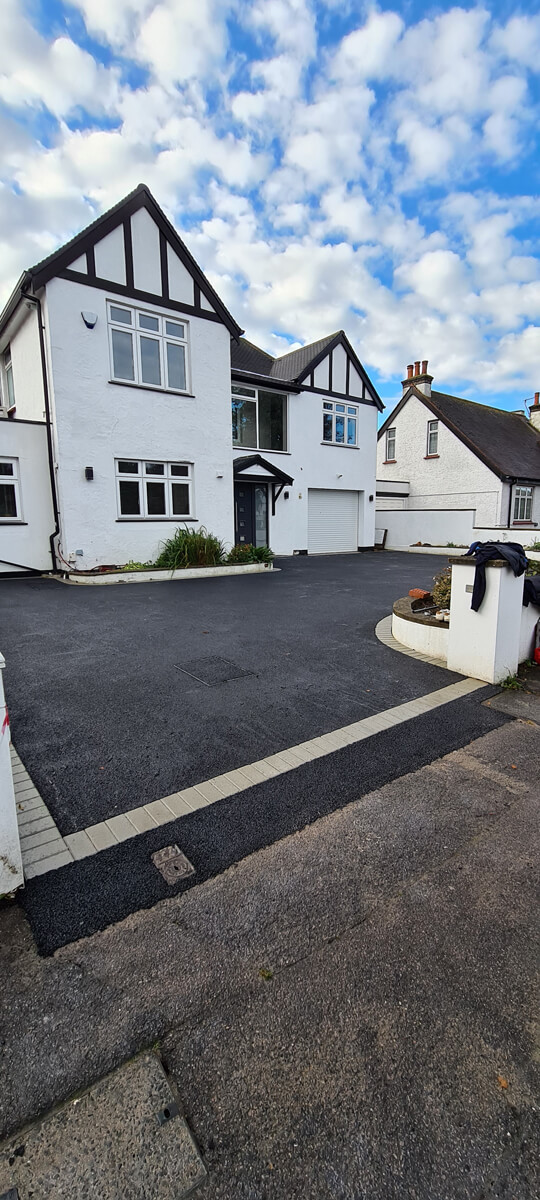
Under a kilometre from open water, paving does not dry out the way it does inland. Salt in the air holds damp on a surface long after the rain has stopped, and a surface that stays damp grows things. That is why the slab that looks handsome a few miles up the road turns black and slippery on a north-facing terrace here within two winters. It matters most where you are on your feet: steps, a sloping path, the walk from the parking to the door in the dark.
Open textured riven stone and softer sandstones hold water and green over quickly. Porcelain, closer grained stone and a resin bound drive shed it and stay cleaner, and a decent wet slip rating is worth more here than any amount of colour. Sealing is not a way round it, because a sealer over damp traps the moisture underneath, so the choice has to be made when you buy the paving rather than afterwards.
The other half is what salt does to metal. Aluminium and steel edging strips, screw fixings, channel drain gratings and handrail feet all corrode from the edge inwards here, and they take the mortar and the pointing next to them with them when they swell.
So we build edge restraints in haunched concrete or bedded stone kerb rather than in a strip you can bend by hand, specify a composite or stainless grating on any threshold drain, and keep exposed fixings out of the design where a detail can do the job instead. Ask anyone quoting for a job in this village what the edging and the gratings are made of. It is a small question that tells you a lot about how often they have worked this close to the water.
Who you are dealing with
A local firm you can check
We cover West Lulworth and the cove, East Lulworth, Winfrith Newburgh, Wool and the BH20 villages across the Purbeck side, and Dorset Council is the planning and building control authority for this address. Bournemouth Roofing & Building Ltd, registered in England and Wales, company number 15471719, which you can look up in a minute. Thomas Hannen's business, and he is the one who comes out to price the job, not a salesman. A verified customer's 10 out of 10 on Checkatrade. The visit and the written quote are both free.
Questions
West Lulworth questions we get asked
Will the conservation area limit how the drive looks?
It limits the material more than the layout. Inside the West Lulworth Conservation Area the council judges appearance, so a like for like repair passes without argument while a change of surface may not. Gravel, hoggin and stone setts read correctly against the cottages here, and a bright red and charcoal block pattern does not. Show us the surface you have in mind at the site visit and we will say whether it is likely to be accepted.
Does being 0.7km from the sea change the materials?
It changes the metal and the fixings rather than the paving. At 0.7km from the coast salt gets into everything, eating gate ironwork, channel gratings and cheap steel edging from the outside in. Surfaces also stay damp between showers, so algae builds up faster on a smooth finish. We specify stainless or plastic drainage components, choose a textured surface over a polished one, and keep the bedding mortars strong.
Our drive slopes. Will loose gravel stay put?
Not on its own once the fall gets past about one in ten. Gravel migrates downhill with every car and ends up in the lane or piled against the door. On the slopes around West Lulworth we either bind the stone in resin, use a cellular grid filled with chippings, or break the run with a set of shallow steps and a cross channel so water is never travelling the full length and carrying stone with it.
Is there anywhere here for water to soak away?
Sometimes, and it has to be proved rather than assumed. Ground at West Lulworth varies within a few metres, draining freely in one corner and holding water in the next, so the only honest answer comes from digging a pit and timing how fast the water leaves it. Where infiltration fails, run off is piped to an outfall clear of the buildings. That test happens before the quote, not on the first morning.
Is it better to book this outside the visitor season?
For anything involving a lorry, yes. The lanes into West Lulworth fill with visitor traffic through the summer and a grab lorry has nowhere to turn or wait, so digs and deliveries run far smoother between autumn and spring. Laying is not the constraint: stone base and blocks go down in cold weather provided the ground is not frozen. Only wet concrete and resin genuinely need a settled forecast.
Nearby, and next door
Driveways and patios near West Lulworth
Driveways and patios nearby
Our other trades in West Lulworth
Everything we do in Wareham Driveways and patios, all areas Every area we cover
Free quote
Get a written price for paving in West Lulworth
A free site visit, the falls and the water worked out first, and an itemised written quote you can compare properly.