Insulation in West Lulworth
Loft depth and eaves ventilation done properly on coastal roofs, rafter level work in rooms under the slope, and straight advice on old stone walls.
The site visit is free and so is the written itemised quote. Thomas Hannen prices every job himself.
Heat costs more in West Lulworth than it does in town, because a lot of the village is off the gas main and buying oil or electricity instead. That makes the loft the best value work you can have done on the house, and it is usually a day or less.
Three things bring people to the phone here. A house that swallows a tank of oil far faster than it should, where the loft turns out to have a thin, patchy layer put down decades ago. A bedroom under the slope of the roof that is cold, or one where black mould keeps coming back in the corner by the eaves. And a cottage with thick old walls that never seems to warm through, where somebody has suggested filling a cavity that does not exist.
We come out, get into the roof space and look properly before anyone quotes. The site visit is free, the written itemised quote is free with it, and if the honest answer is depth overhead, a sealed hatch and some draught proofing rather than anything to the walls, that is what you will be told.
The work
If the house stands empty, pipes come before depth
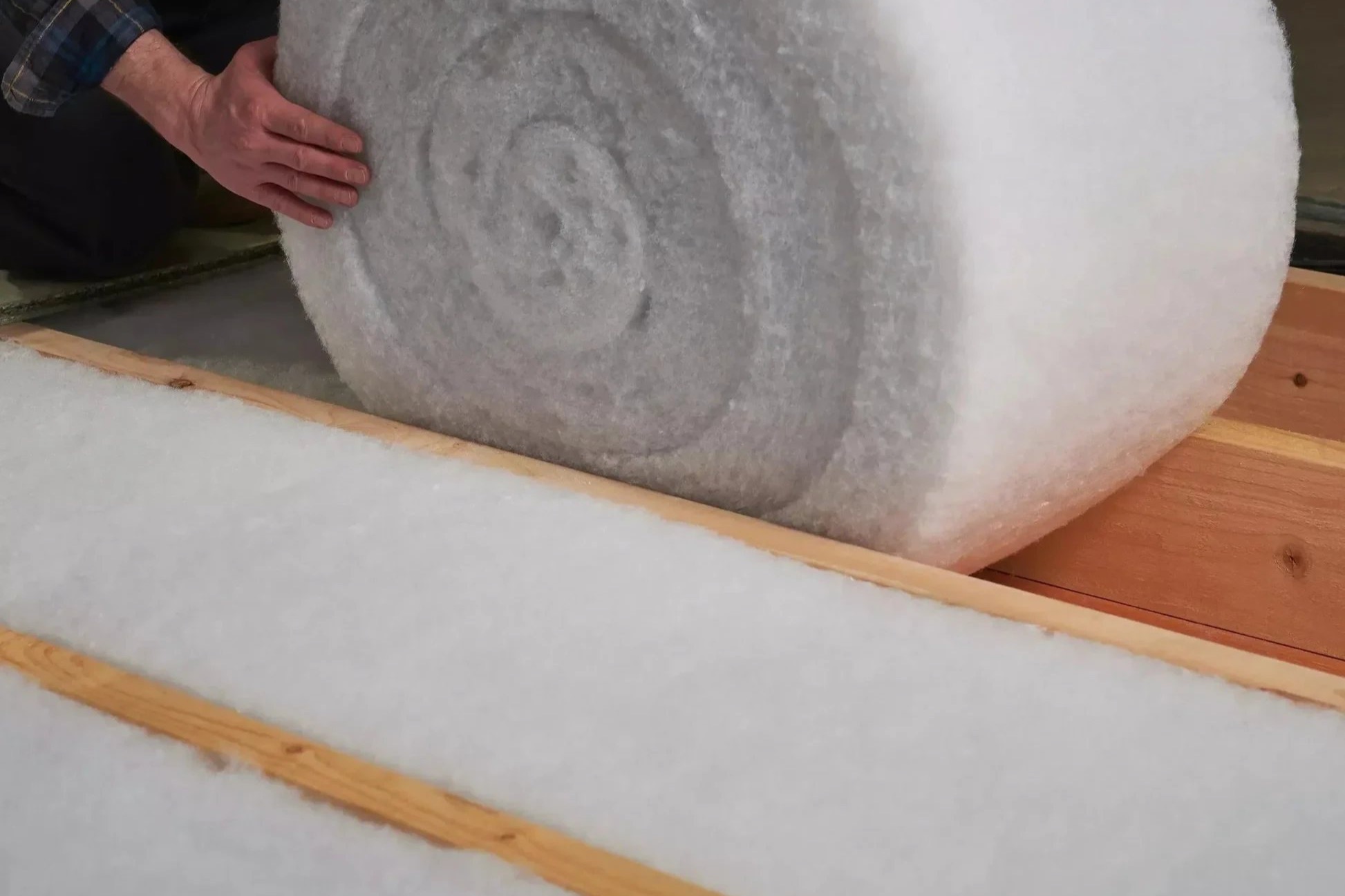
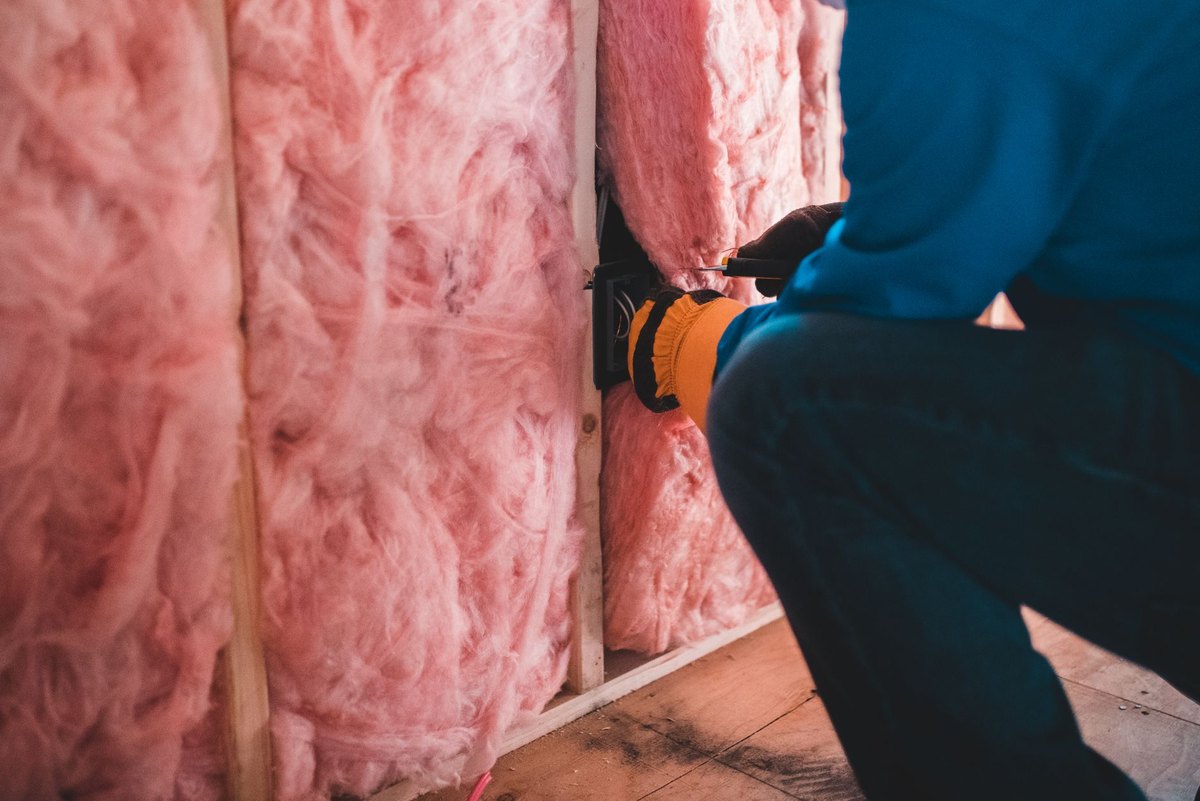
Loft depth, done to the edges. Most lofts here have something in them and almost none have enough. We straighten and repair what is down, close the gaps where the runs stop short, fit vent trays along the eaves, then lay eco roll across the joists at right angles, between and over, to a finished depth of about 270mm. That is the depth behind the 0.16 u-value Approved Document L sets for a renovated roof. Sound old material stays and we lay over it. Anything wet, mouldy or nested in is bagged and leaves with us, on its own line in the quote.
Ventilation, which matters more this close to the sea. The village is under a kilometre from the water and the prevailing weather comes off it, working at the edges of a roof rather than the middle, so eaves here are often already damp before anyone adds insulation. Pack wool into that gap and you have sealed the one path the roof space had, and a cold loft with no airflow grows mould on the underside of the felt. Trays go in first so the airflow the Approved Document F standard expects is kept, and the depth stops at the tray rather than in the gutter line.
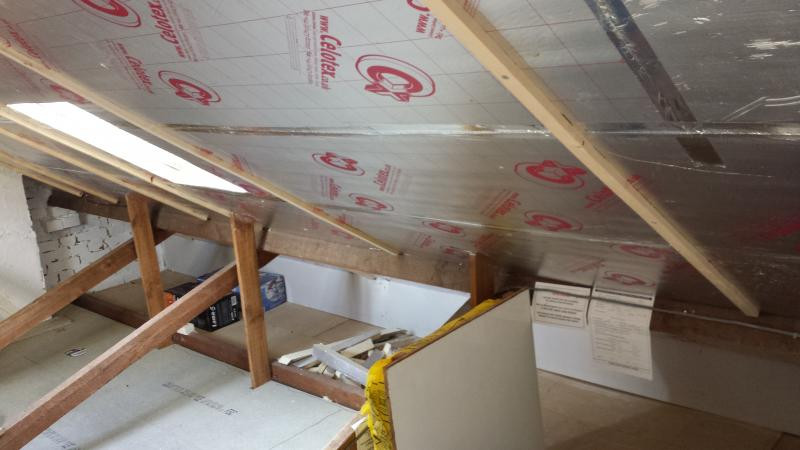
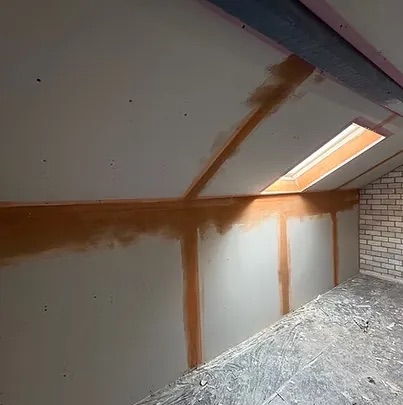
Where a bedroom is already tucked into the roof the work is at rafter level: rigid PIR board such as Celotex cut tight between and under the rafters with a ventilation gap kept clear above, a vapour control layer before boarding, and the dormer cheeks and sloping ceilings done to match. Where the head height is already low, a multi-layer foil quilt such as TLX gets you performance without losing another inch. If the roof is thatched, that is a specialist trade and we will say so on the phone.
Houses that stand empty over the winter are common enough round here to be worth their own line. An empty house with a well insulated loft is a colder loft, so the tank and every run of pipework above the ceiling gets lagging as part of the job rather than as an afterthought, and the hatch gets boarded and draught sealed. If a place is let out or shut up between visits, tell us, because we will do the pipework first and the depth second. Where a wall is solid stone there is no cavity to fill whatever a leaflet says, and the real choice is an internal lining or external wall insulation, on a build-up that breathes rather than one sealed tight.
How it runs
From your call to a written price
The quote is itemised: survey, clearing, the material and its depth, ventilation works and disposal on separate lines.
Loft work needs no planning permission and an internal lining is not development at all. Outside is where the village differs: West Lulworth has its own conservation area, so cladding or rendering an elevation is not automatic and needs checking with Dorset Council first, while one of the forty-odd listed buildings in the parish needs listed building consent for work inside as well as out. Planning Portal guidance on insulation covers the general position. Building control applies either way, and regulation 23 of the Building Regulations means renovating more than half of a thermal element brings the whole element up to standard.
Cost
What decides the price of an insulation job
No rate per square metre. A cottage with a small hatch and a shallow roof space, a bungalow with the loft boarded out for storage, and a house with a bedroom already built into the roof are three different jobs. Old material to bag and take away, and storage to move and put back, come before anything new goes down, and Approved Document L sets what the work has to reach. Comparing quotes, ask what depth is being laid, whether the old material is removed or covered, and whether the hatch and pipework are included.
If it is urgent
Damp, condensation or a room you cannot heat
Ring rather than use the form. Mould that keeps coming back, a loft dripping with condensation, or a room that will not hold heat gets looked at quickly, and the first visit settles whether it is insulation or ventilation. At seventeen miles out this is a planned visit, with a day and a time rather than a window; say so if the house is let or standing empty.
Worth knowing
Off the gas main, the loft is worth more here than it is in town
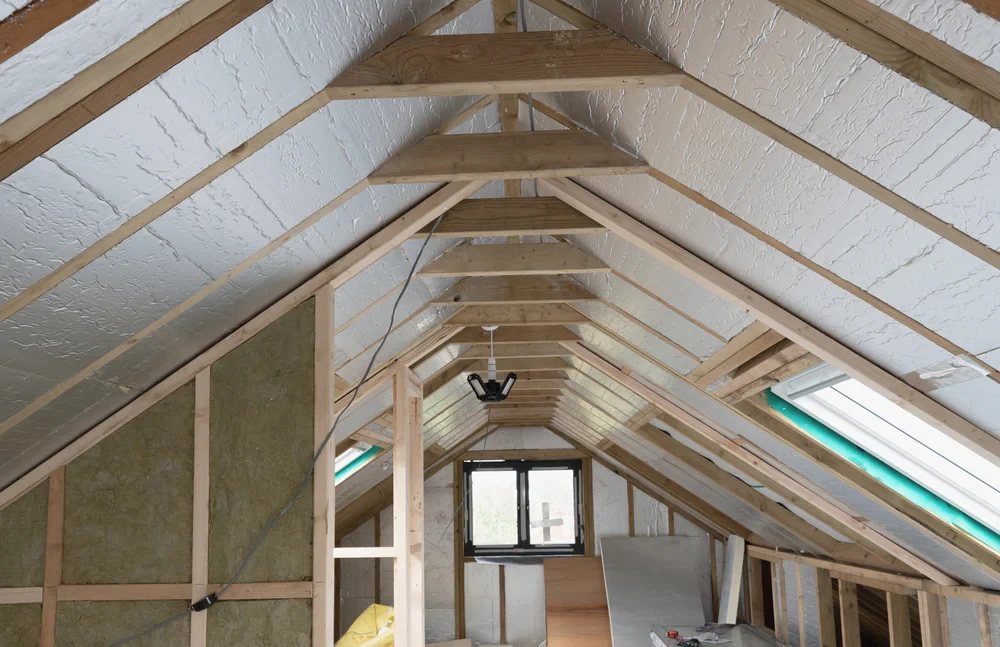
A lot of homes in and around West Lulworth are not on the gas main, so the heating runs on oil, on bottled gas or on electricity. The insulation work is exactly the same as it would be anywhere else. What changes is what the work is worth to you, because every unit of heat you stop losing through the ceiling is a unit you were paying more for in the first place.
It also changes the shape of the bills: a well insulated house holds its heat between oil deliveries and through a cold snap, instead of needing the boiler or the heaters to fight the weather every evening. If you are on storage heaters in particular, the fabric is the only real lever you have, since you cannot simply turn the heat up cheaply later in the day.
That points at a clear order of work. Loft depth first, because it is the cheapest thing on the list and the largest single slice of the heat loss in a house with an unheated roof space over it. Then the hatch, the draughts and the pipework, which cost very little and stop you heating the outside. Then, and only then, the walls, which are the expensive end and on an old stone building need doing carefully rather than quickly.
Materials of this kind are treated differently for VAT from ordinary building work, and HMRC VAT Notice 708/6 sets out what qualifies, so it is worth asking the question rather than assuming. We are happy to price the stages separately so you can do the cheap work now and think about the rest.
Who you are dealing with
A local firm you can check
We cover West Lulworth, East Lulworth, Winfrith Newburgh, Wool and the BH20 addresses along the coast road, with Dorset Council for planning and building control. Send the postcode if you want to be sure. Bournemouth Roofing & Building Ltd, registered in England and Wales, company number 15471719, which you can look up in a minute. Thomas Hannen's business, and he is the one who comes out to price the job, not a salesman. A verified customer's 10 out of 10 on Checkatrade. The visit and the written quote are both free.
Questions
West Lulworth questions we get asked
We are in the West Lulworth conservation area. What does that stop?
It stops changes to the way the place looks, not to what goes over a ceiling. Inside the West Lulworth Conservation Area, like for like repair counts as maintenance and a change of material does not, so swapping a covering or applying something to an outside wall gets assessed where a straight repair would pass. Loft work is invisible from the lane and sits outside the whole question.
A third of houses here run on oil. Does insulating change much?
It changes how much heat you have to buy, and off the gas main that is the only lever you have. 33.2% of households in West Lulworth are on oil and another 11.5% on electric, so heat comes out of a tank or off a meter rather than through a pipe. The fabric decides how much of it stays in the house, and a shallow loft lets it straight back out through the ceiling.
Being this close to the sea, does anything corrode in the roof?
It does. At 0.7km from the water this is about as exposed as a Dorset village gets, and salt works into metal from the edge inwards while keeping the surface damp between showers so it never fully dries. That is a problem for nail heads, clips and any steel in a soffit or a vent. Non ferrous fixings go in at the edges, and the seaward elevation gets the closer look.
The cottage is empty for part of the year. Does that matter?
It does, because an unheated house sits colder and damper for longer and moisture collects wherever the air is still. Add depth to a loft and the space above it runs colder than it used to, so the ventilation at the eaves has to be right or damp finds the cold surfaces first. We check the eaves gaps and any existing vents before laying anything, rather than afterwards.
There are dozens of listed entries here. How do we know about ours?
You look it up rather than guess at it. West Lulworth has 43 listed entries and Little Bindon is one of the better known, but plenty of ordinary looking cottages are on the list too, and falling within the curtilage of a listed building counts as well. If yours is listed, insulating over a ceiling is normally maintenance while touching the walls or the covering is not. Dorset is the one to ask.
Nearby, and next door
Insulation near West Lulworth
Insulation nearby
Our other trades in West Lulworth
Everything we do in Wareham Insulation, all areas Every area we cover
Free quote
Worth a look before winter
Free site visit in West Lulworth and along the coast, and a written itemised quote that separates the depth, the ventilation work and the pipework.