Insulation in Ridge
Loft top-ups taken right out to the eaves, rafter level board work and honest advice on the walls, priced after a proper look.
The site visit is free and so is the written itemised quote. Thomas Hannen prices every job himself.
Out on the lane to Arne the weather does most of the deciding. An open, harbour facing roof loses heat at its edges long before it loses it across the middle, so on houses at Ridge we spend as much time on the perimeter of the loft and on what the wind can get into as we do on the depth in the middle. The site visit and the written itemised quote are both free.
People here tend to ring for one of two reasons. Either a room has never held its heat, usually one under a sloping ceiling or on the weather side of the house, or the loft has been looked at after a wet spell and something up there is damp that should not be. Both are worth a proper look rather than another roll thrown in on top.
So the survey starts in the roof space with a torch and a probe. How deep the existing layer really is, whether it stops short at the eaves, whether the wind has flattened and parted it along the perimeter, what the underlay above it is doing, and where warm air is getting up out of the house in the first place. Nothing gets ordered until you have seen what we found and agreed the method in writing.
The work
The wind does not stop at the tiles out here
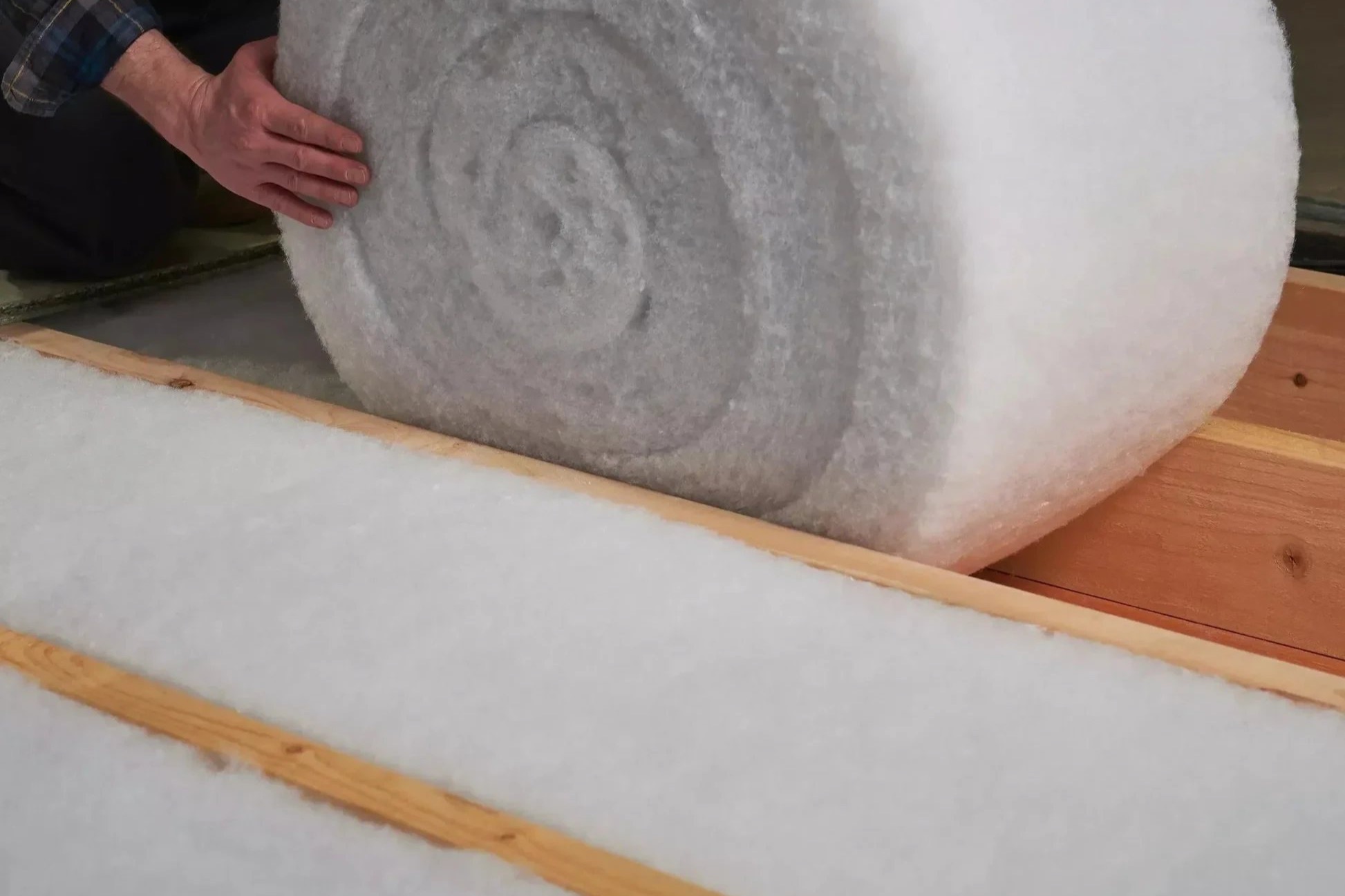
The metre nobody finishes. On an open site the wind does not stop at the tiles. It works in under the eaves and moves across the top of an open mineral wool quilt, and that takes the value out of the first metre or so around the whole perimeter, which is the same metre most installers cannot be bothered to crawl to. We lay between and over, an eco roll across the joists at right angles, then work the edge properly: full depth carried out over the wall plate, a vent tray holding the airway open above it, and a denser rigid board over the perimeter where exposure calls for it. A renovated thermal element is expected to reach a U-value of 0.16, nearer 270mm than the 250 people remember, and that depth is wanted at the edge as well as the middle.
Older roofs out here were felted with bitumen that has gone brittle, and some have no underlay at all. In driven rain off the south west, or in dry snow, water and spindrift get in over the tile lap and land on top of the insulation, which then holds it. If we find water tracks, daylight or a felt that has torn along every rafter, we will tell you the roof comes first, because a deep new quilt under a covering that is letting weather through is money spent on a sponge.
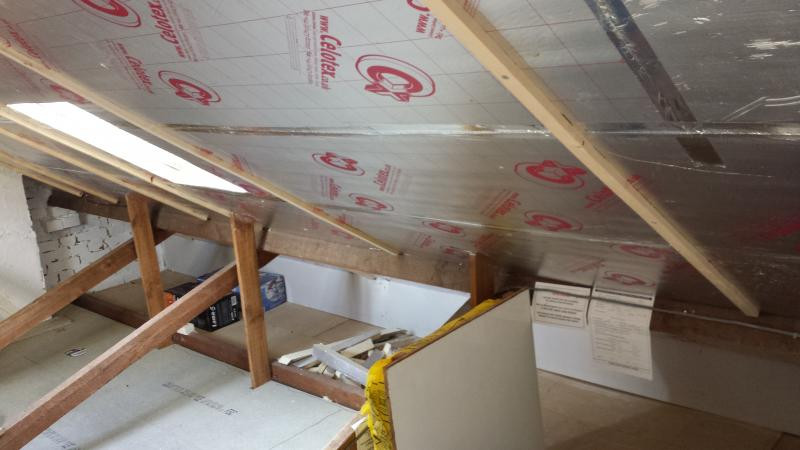
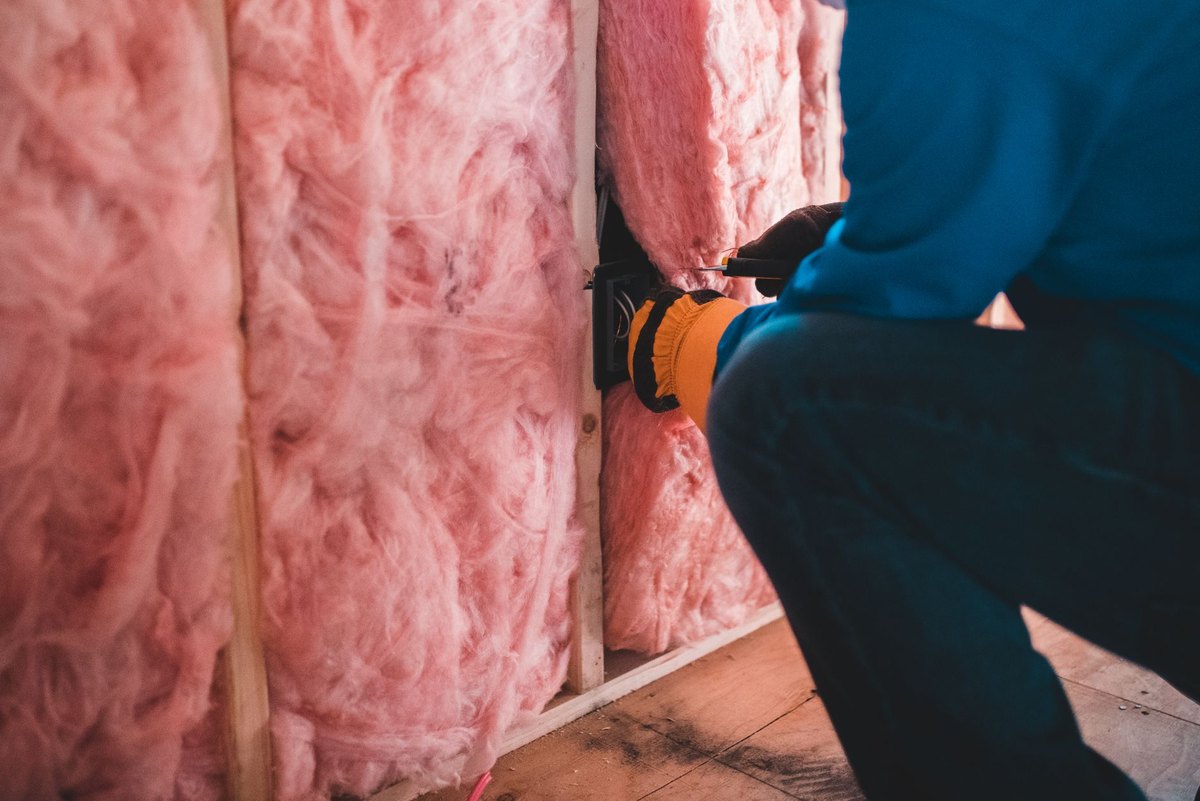
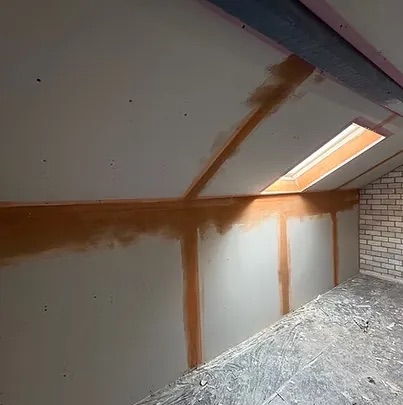
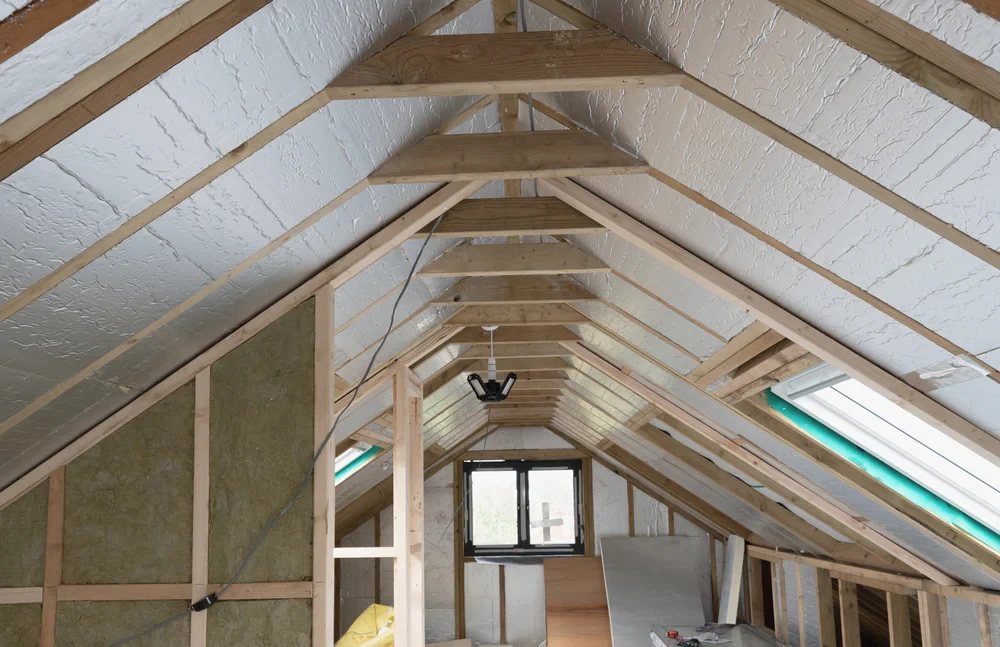
Where the roof is already lived in the work moves to rafter level, PIR between the rafters with a multi-layer quilt such as TLX under the sloping ceiling where the depth is not there, and the knee wall voids and dormer cheeks are where the draught comes from on a windy site. Wind pressure pushes air through every gap it can find, and warm wet air leaving the rooms is what makes a cold loft damp, so the hatch gets a compression seal, holes where pipes and cables come through the ceiling get closed, the tank and the pipe runs get lagged, downlighters get fire rated covers, and we check the bathroom fan discharges outside rather than into the roof space. There is no cavity wall to fill in the older cottages here, so a cold wall means an internal wall lining built to breathe.
How it runs
From your call to a written price
Laying quilt in a loft or lining a wall on the inside needs no planning permission. The Planning Portal sets out where that stops, and out here anything visible on the outside of a building sits in a nationally designated landscape and gets more scrutiny. Building control comes in once a thermal element is renovated or the roof becomes a room, and regulation 23 sets what it has to reach. Dorset Council is the authority. The listed entries near Ridge are concentrated in Wareham rather than along the lane, but if yours is one listed building consent can reach inside as well as out. Insulation fitted in an existing home is zero rated for VAT under HMRC VAT Notice 708/6.
Cost
What decides the price of an insulation job
No rate per square metre: the area is the easy part and everything round it is the awkward part. A low eaved cottage where the roof pitches away within a yard of the hatch is one day; a converted roof where the only way in is to take a ceiling down is another. Old material to bag and take away, and boarding to lift and put back, come before anything new goes down. Approved Document L sets what the work has to reach. Ask what depth is being laid, whether the old material comes out, and whether the eaves and hatch are included.
If it is urgent
Damp, condensation or a room you cannot heat
Ring rather than use the form. A loft dripping with condensation, mould that keeps coming back, or a room that will not hold heat gets seen quickly. The first visit settles whether that is insulation, ventilation or both, because insulating a space that cannot breathe makes it worse. Ridge is a short run out past Wareham for us. Outside Monday to Friday, 8am to 6pm is by arrangement.
Worth knowing
Which way your worst wall faces changes the specification
There is nothing between the houses here and the weather that comes up off the harbour and across the heath, and the wet weather arrives from the south west. That matters more than people expect, because wind driven rain does not fall on a wall, it is pushed into it. On a sheltered street a cavity full of blown mineral fibre is a straightforward improvement.
On a badly exposed south west elevation with weathered pointing or a hairline crack in the render, the same fill can give water a path across the cavity to the inner leaf, and you get a damp patch on a bedroom wall that was dry before. That is why a proper survey checks the exposure and the condition of the outside face before anybody recommends a fill.
What we do about it is take the elevations one at a time. A sheltered wall in sound condition can be filled. A punished one may be better with a bonded bead fill, which does not wick the way loose fibre can, or left alone with the money spent on the loft and the draughts instead, or lined on the inside of the coldest room with a build-up that still lets the wall dry.
Whatever we recommend, the pointing, the render and the sealant round the openings get sorted first, because on an exposed wall it is the edges, the reveals and the sills that let the water in rather than the middle of the brickwork. If a quote you have been given does not mention which way the wall faces or what condition it is in, it has skipped the only question that really matters here.
Who you are dealing with
A local firm you can check
We cover Ridge, Stoborough, Arne and Wareham on BH20, out through Sandford, Wool and across to Poole, and Dorset Council is the planning and building control authority for this address. Bournemouth Roofing & Building Ltd, registered in England and Wales, company number 15471719, which you can look up in a minute. Thomas Hannen's business, and he is the one who comes out to price the job, not a salesman. A verified customer's 10 out of 10 on Checkatrade. The visit and the written quote are both free.
Questions
Ridge questions we get asked
We are in the Dorset landscape designation. What does that control?
It controls what can be seen, not what sits inside the building. Ridge falls within the Dorset landscape designation, so anything visible from outside attracts more design scrutiny than it would elsewhere, and a change of roof covering or external cladding is exactly the sort of thing that draws it. Loft and floor insulation are invisible and unaffected. If external wall insulation is being considered, that goes to Dorset Council as a proper question.
The loft has insulation and the house is still cold. Why?
The loft is one of several ways out of a house, and here it is often not the biggest. A house at Ridge takes the weather on its south west face, and wind driven rain wetting that wall carries heat out of it faster than the roof does. Draughts round doors, floors and an open chimney flue account for much of the rest. We measure the ceiling first because it is quick, then look hard at that elevation.
The Priory and the church are listed. Is the village restricted?
Only the listed buildings themselves are. Ridge and the parish around it carry 12 listed entries, including the Parish Church Of Lady St Mary and the Priory beside it, and none of that puts a control on an ordinary house nearby. There is no conservation area here either. On a listed building the test is whether the work can be undone later, and material laid over a ceiling generally can be.
Is a suspended floor worth insulating on ground like this?
Ground that drains freely makes it a straightforward job. The soil under Ridge drains well, so the void beneath a suspended floor is usually dry and the joist ends are not standing in damp, which makes fitting between them worthwhile rather than a gamble. We still want the airbricks clear, because a dry void only stays dry while air crosses it. Sealing the board gaps at the same time kills the draught across your feet.
Is scaffolding needed to insulate a roof from outside?
Only if the covering comes off, which for most of this work it does not. Material laid over a ceiling or fitted between rafters from inside needs a ladder and a sheeted landing and nothing more than that. Putting insulation above the rafters means stripping the tiles at Ridge, and then you need a scaffold and a run of dry days. We say which of the two your roof needs rather than leaving it open.
Nearby, and next door
Insulation near Ridge
Insulation nearby
Our other trades in Ridge
Everything we do in Wareham Insulation, all areas Every area we cover
Free quote
Get the edges of your loft looked at
A free site visit, a probe into what is already up there, and an itemised written quote with the depth and the method on it as well as the price.