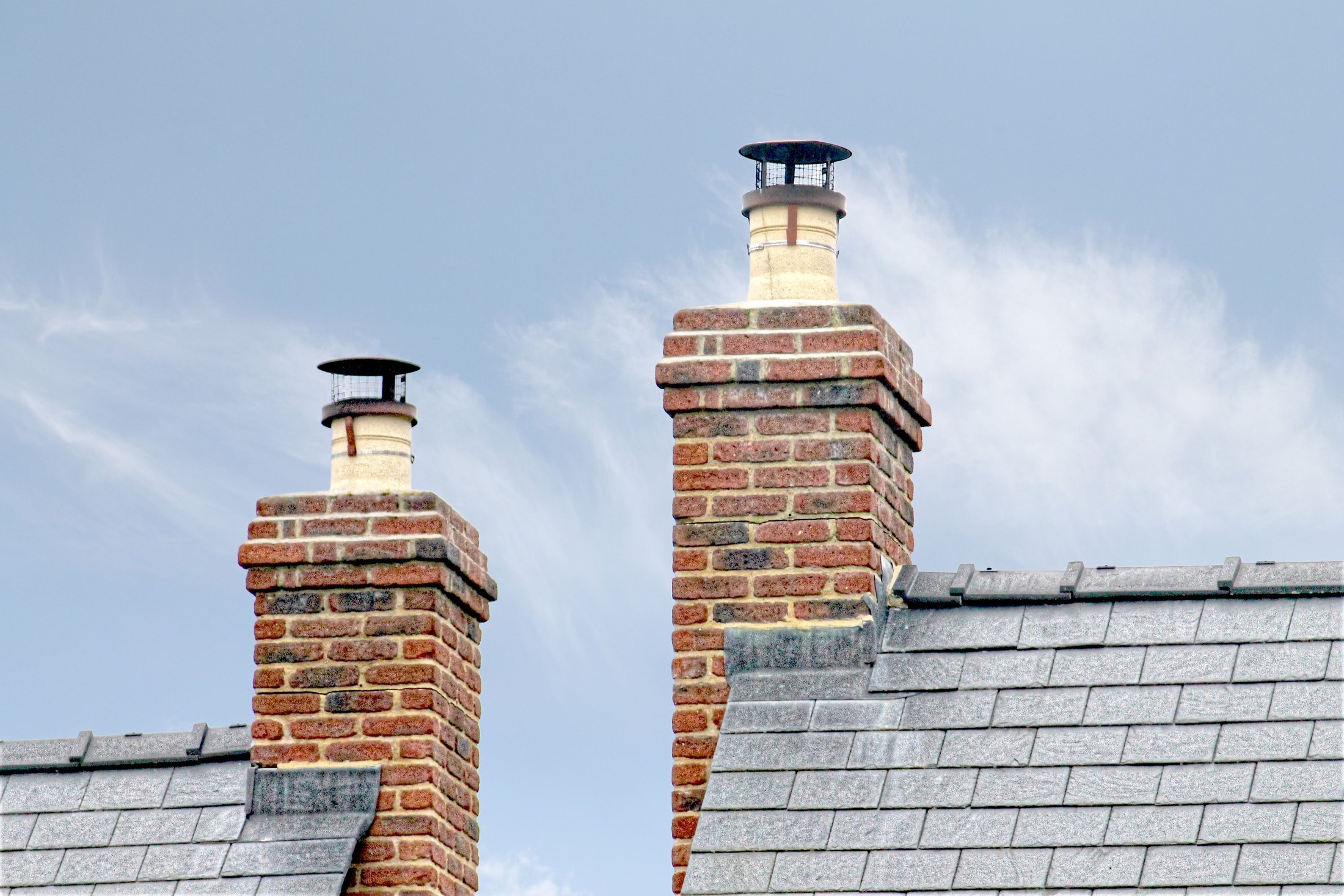
Roofing in Ridge
Stone slate, tile and slate repairs, re-laying and re-covering, flat roofs, leadwork and gutter work at Ridge, Stoborough and Arne.
The site visit is free and so is the written itemised quote. Thomas Hannen prices every job himself.
Ridge sits inside the Dorset National Landscape. That does not stop you re-covering a roof like for like, and it does not add an application. What it does mean is that the covering you put back on a roof anyone can see from the lane is a decision worth taking slowly.
Ridge is a short string of addresses on the lane between Wareham and Arne rather than a village with a centre, and the roofs run the whole range. Purbeck stone on the old ones, clay plain tile and natural slate on the rest, concrete tile on anything post-war, and the odd thatch among them. What they share is the setting: low, open towards the harbour, and down lanes with soft verges and nowhere obvious to put a lorry.
We survey the covering from outside, the timbers from in the loft, and photograph what is there. Site visit and written quote both free.
The work
The stone is fine, it is the oak peg that rots
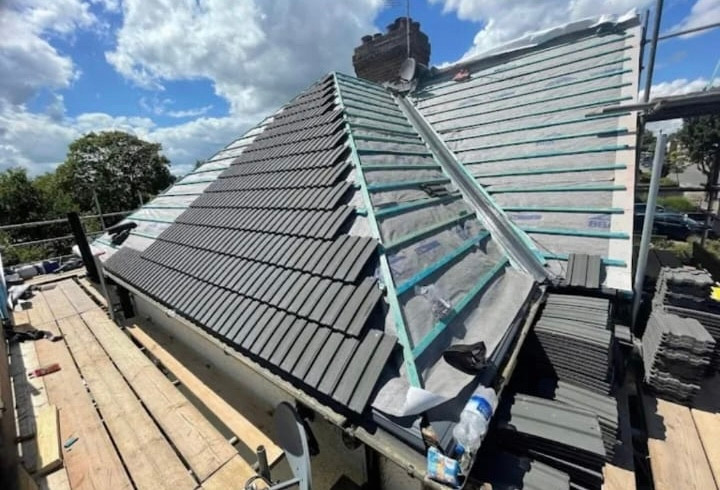
Purbeck stone slate. On a stone roof the stone is almost never the problem. The oak peg rots, the batten behind it softens, and a slate slips with a hundred more above it waiting to do the same. Re-laying, rather than a re-roof in something else, is the job: every slate numbered and set aside, the battens renewed, a breathable membrane laid where there was only torching before, and the original stone put back in diminishing courses. Shortfalls are made up with reclaimed stone, not bought new off a pallet.
Weight, and the rafters under it. A stone slate roof is several times the dead load of a concrete tile one, so before anything is quoted we want to see the rafter feet and the wall plate. Nobody should put stone back onto tired timber, and nobody should swap it for concrete tile to save money.
Plain tile on peg and nib on the later cottages, natural slate where the roof was re-done in the nineteenth century, concrete tile since the war. Where a cottage is thatched we leave the thatch to a thatcher and take the tiled outshut and the lead between the two. On tiled and slated roofs we strip the cracked mortar bedding and convert to dry ridge and dry verge screwed onto a vented roll, the mechanical fixing BS 5534 expects. On a stone roof that is not the right answer and we say so: the ridge is re-bedded in a lime based mortar that suits what it sits on.
Chimney flashings, soakers and valleys in code rated lead. Stone and lead sit together well, which is why the old work here is lead and why it is worth replacing in kind. Open ground and heath either side means debris in the gutters and downpipes and algae and moss on any slope that does not get the sun, so clearing them out is regular work, and a fascia that stays wet behind a blocked run rots before anything else does, the soffit with it. With the roof open, insulation and eaves ventilation are far cheaper, and Approved Document L sets the standard a renovated roof is expected to reach.
How it runs
From your call to a written price
Same team throughout, no sub-contracting, and an itemised quote: scaffold, the strip out, battens and membrane, the covering, each junction and disposal on separate lines. There is no conservation area at Ridge, so on an unlisted house a like for like re-cover, a repair, new rainwater goods and rooflights all sit inside householder permitted development, as long as nothing stands more than 150mm above the roof plane, and Planning Portal guidance sets out the limits. The National Landscape designation does not change that for a roof covering. Twelve buildings in the parish are listed, the parish church and the priory among them, and those need listed building consent whatever is going back on. Dorset Council.
Cost
What decides the price of a roof
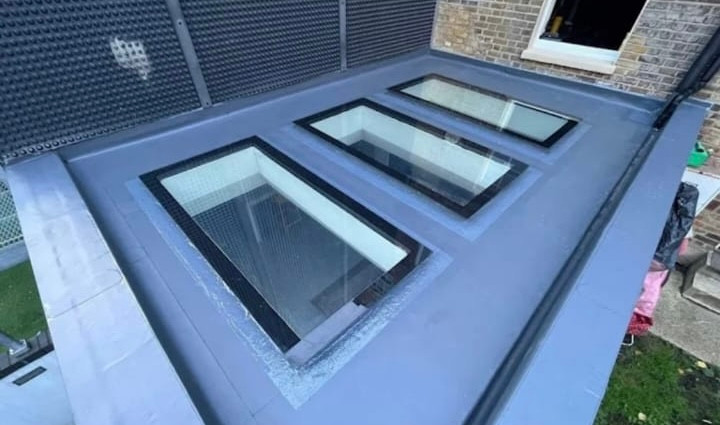
No rate per square metre. Getting a lorry to a Ridge address is half the conversation. The lanes are narrow with soft verges and nowhere to turn, so where the scaffold stands and how the material arrives is worked out on the first visit. On soft ground a platform wants proper sole plates, and on the smaller cottages a tower does more of the work than it would in town. This is work at height and the work at height rules are why the platform is a priced line. Chimneys and valleys are priced one at a time.
If it is leaking now
Water coming in today
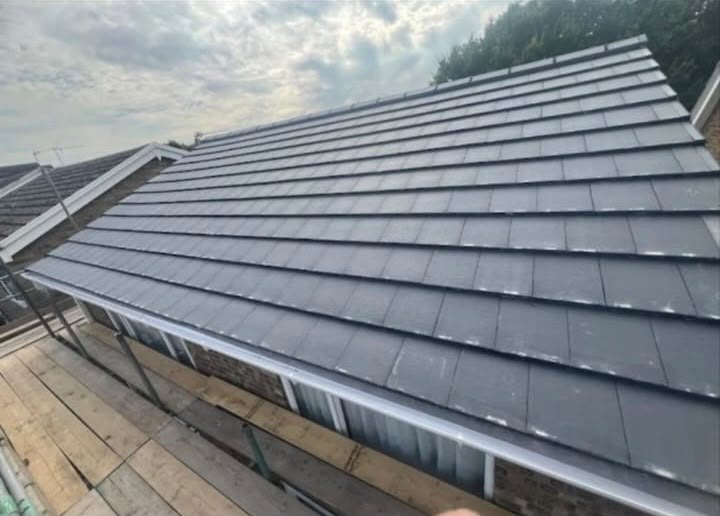
Ring rather than use the form. Anything letting water in comes first and the first visit makes it safe and watertight. Look along the ridge and the verges from the ground and check the path for anything that has come off. Storm damage shows as slipped and missing tiles in a line rather than one on its own. If the roof is stone, keep off it and keep everyone else off it, because one cracked slate under a boot costs more to put right than the leak did.
Worth knowing
Anything visible from the lane gets a harder look
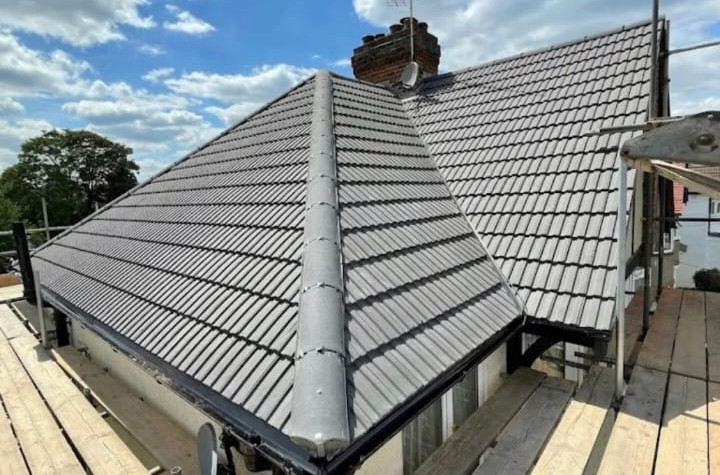
The whole of this corner sits in the Dorset National Landscape, and the practical effect on a roof is not a form to fill in. It is that the appearance of what you put back matters more here than it would on an estate, and that is worth knowing before you choose rather than after.
Two things follow. The covering is the big one. Going from stone or clay to a modern concrete profile is the change people notice from the lane, and on a roof that reads as part of the landscape it is worth matching what came off even where nothing obliges you to.
Reclaimed stone and clay both exist, and we price them beside the alternative so you can see the gap rather than guess at it. The other is anything standing proud of the slope. A standard rooflight sits above the plane and shows, a conservation pattern sits flush and does not, and that is a decision made at quote stage rather than on the morning the scaffold goes up.
Who you are dealing with
A local firm you can check
About ten miles from us, covering Ridge, Stoborough, Arne and the BH20 addresses south of Wareham, with Dorset Council for planning and building control. Bournemouth Roofing & Building Ltd, registered in England and Wales, company number 15471719, which you can look up in a minute. Thomas Hannen's business, and he is the one who comes out to price the job, not a salesman. A verified customer's 10 out of 10 on Checkatrade. The visit and the written quote are both free.
Questions
Ridge questions we get asked
Is there a conservation area covering Ridge?
Not over Ridge itself. Twelve entries in the area are listed, the Parish Church of Lady St Mary and the Priory beside it among them, and those need Dorset Council consent before a tile is moved. Everything else is permitted development for a like for like re-cover. What does apply here is the landscape designation, so anything visible attracts more design attention and a change of covering is worth asking about first.
Would a lighter coloured tile cause a problem out here?
It can, because this is designated landscape and roofs read across open ground from a long way off. A bright, uniform new covering stands out in a way it would not in a street, and Dorset Council take an interest in what is visible. Where a change is genuinely wanted we suggest a blended or weathered finish and check it before ordering, since a full load of tiles is not something you send back.
The wind here is relentless. What actually lifts a tile?
Suction at the edges, not the weight of wind on the middle. The most exposed elevation faces south west, and as air passes over a ridge or round a gable it pulls hardest along those lines, which is why the verge, the ridge and the eaves course go while the field of the slope stays put. Mechanical fixing and clips along those edges are worth more here than anywhere else on the roof.
How do you find a leak when the loft is boarded out?
We lift a section of the boarding, or work from outside and trace the run of the water. From above the giveaways are a lifted tile, a torn felt lap or a flashing that has come away from its joint, and we hose the slope from the bottom upwards in stages with somebody watching inside. Guessing and re-bedding everything in sight is how the same leak gets chased twice.
Where does the old roof go from a place like this?
Off site the same day wherever we can, because there is nowhere sensible to stack it here. Tiles and slates load straight into the lorry, felt and battens travel separately, and any lead comes down and goes for recycling rather than sitting on the scaffold overnight. Nothing is left on the ground when we finish for the day, and the grass gets checked for nails before the scaffold comes down.
Nearby, and next door
Roofing near Ridge
Roofing nearby
Our other trades in Ridge
Roofing guides
Concrete vs clay roof tiles: which is right? Planning, building regs or listed building consent Storm damage to a roof: the first 24 hoursEverything we do in Wareham Roofing, all areas Every area we cover
Free quote
Get your Ridge roof looked at properly
A free site visit, a look at the timbers from inside as well as the covering from outside, and a written itemised quote.