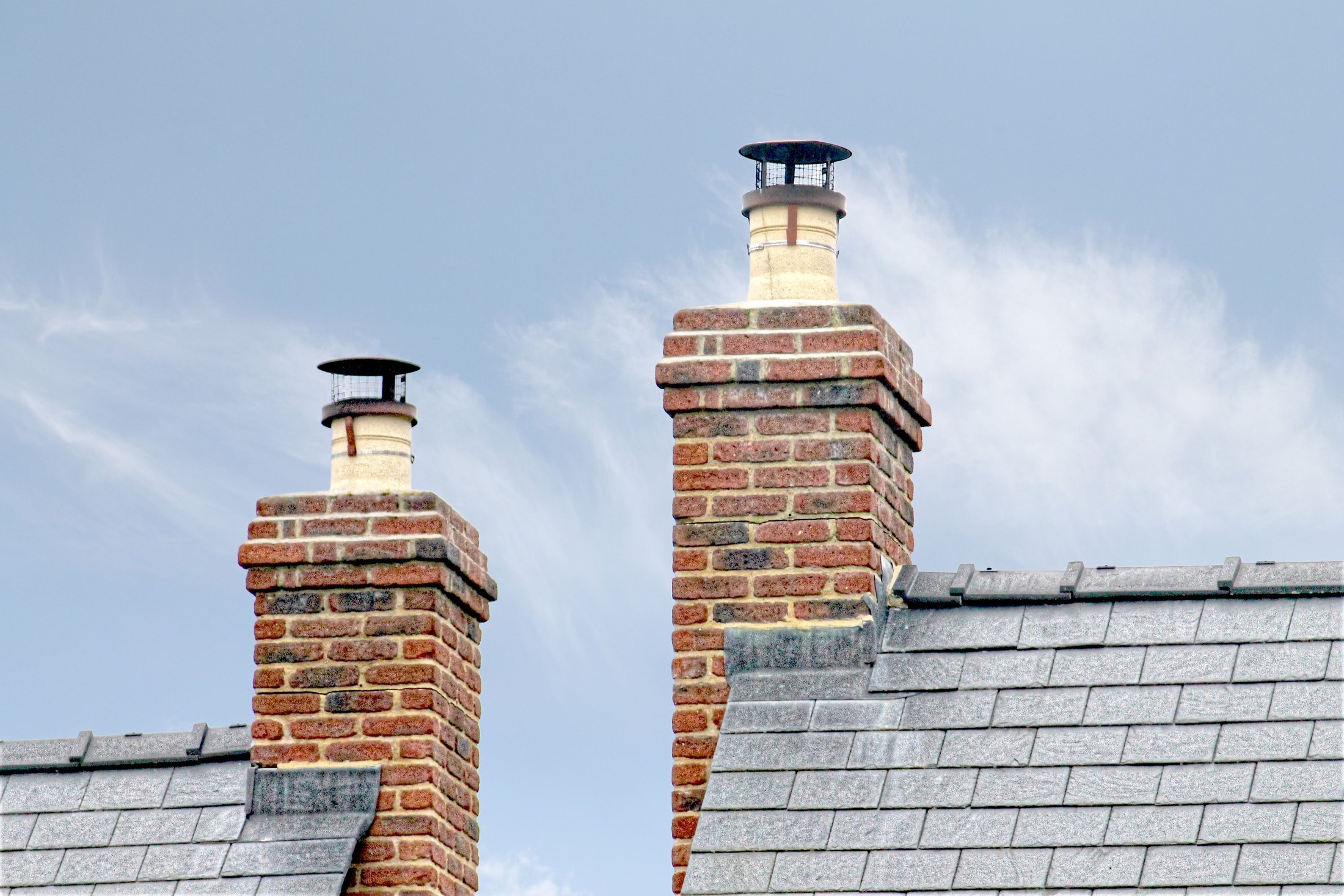
Roofing in Holton Heath
Repairs, ridge and verge work, strip and re-cover, flat roofs, leadwork and rainwater goods across Holton Heath and the Wareham St Martin addresses around it.
The site visit is free and so is the written itemised quote. Thomas Hannen prices every job himself.
On the roofs round Holton Heath the tiles are almost never the problem. They outlast the nails, the underlay and the mortar holding the edges down, so the honest answer is usually edge work or a strip and re-cover rather than a handful of new tiles.
The calls come in three shapes. Something has let go at the ridge or the gable after a blow. A ceiling has marked and nobody can say where the water is getting in. Or the roof has reached the age where you want somebody to tell you straight whether it has a decade left.
Most of the housing here went up between the war and the end of the eighties, so we are usually looking at roofs that were built the same way and are now the same age. We come out, get on the roof, look in the loft where there is access, and photograph what we find, so the survey leaves you with something to look at rather than a number on the phone.
The work
Eighties tiles are sound, eighties nails are not
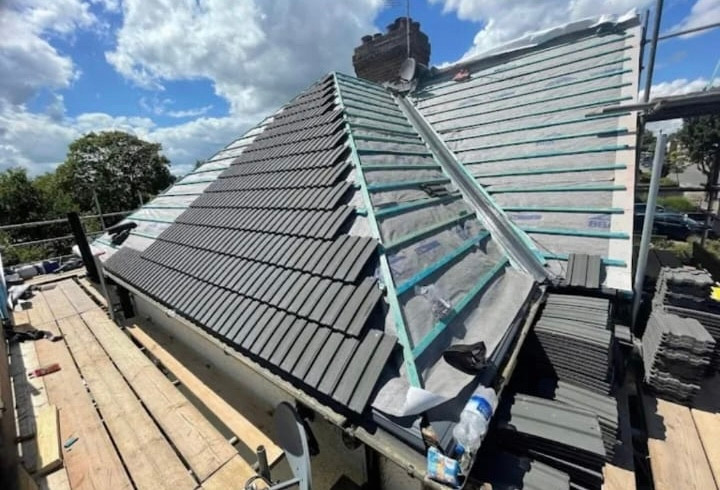
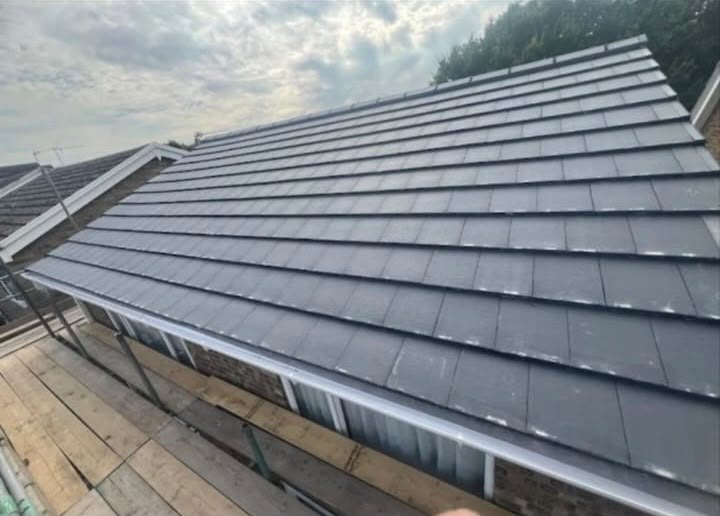
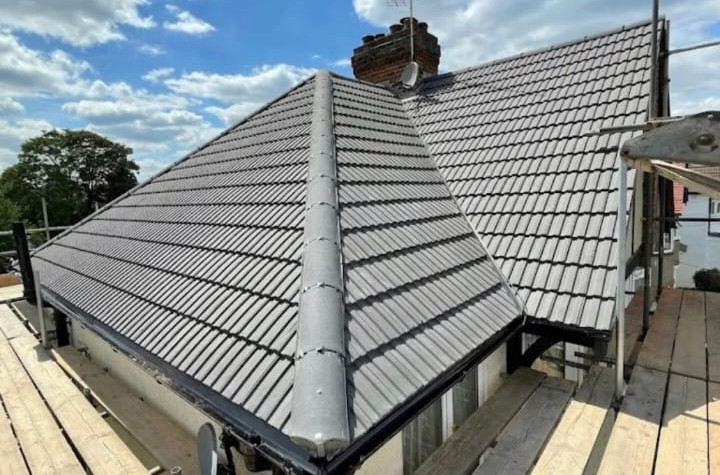
Eighties tiles are sound, eighties nails are not. More than a third of the dwellings here went up between 1983 and 2008, most of them in the 1980s, and the commonest finding on a roof of that age is that the concrete interlocking tiles are fine and the nails holding them are not. Concrete tile of that era outlasts its own fixings. Steel corrodes at the head, the tile drops a fraction, and the slope starts shedding one tile a winter. That is a strip and re-cover rather than a repair, and it is worth knowing early rather than paying for six patch visits first. Mortar bedding of the same era cracks, a ridge tile rocks, the gable verge loses its haunching and a cap ends up on the drive, so ridge and hip go to a dry fix system screwed onto a ventilated roll and the gable to dry verge, the mechanical fixing BS 5534 asks for.
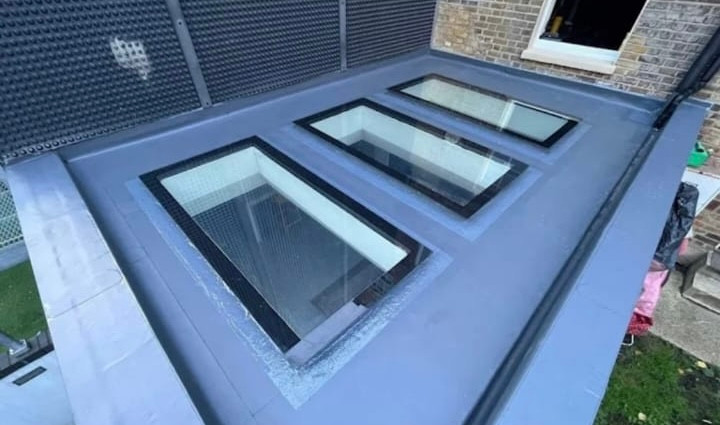
The bitumen felt used through the seventies and eighties goes brittle and tears where it laps into the gutter, exactly where it has to be sound, and a wet fascia is often the first sign. Plain clay tile and natural slate turn up on the older properties, some of it on sarking boards, which changes the strip. On a plain tile roof of that age it is the nibs and the nails that go rather than the clay. Cement fillets instead of lead were common on estate housing of this period and crack along the joint every time, so they come out and code rated lead flashings, soakers and abutment pieces go in. Garages, porches and rear extensions are mostly on their original felt, GRP or EPDM and well past it, so the deck is the first thing we open up. Original plastic rainwater goods go chalky and sag between brackets, and a sagging run holds water, collects the debris and algae washed off the slope, and overflows behind the fascia. Houses of this vintage were insulated to the standard of the day and are well short of what Approved Document L now expects of a renovated roof, which is cheapest to put right with the covering off.
How it runs
From your call to a written price
One team, one person to ring, and an itemised quote you can hold against anyone else's. On permission this is one of the straightforward addresses. There is no conservation area over Holton Heath and only five listed entries in the parish, so a like for like re-cover, a repair, new rainwater goods and rooflights sitting no more than 150mm above the roof plane run under ordinary permitted development with no planning permission needed, within the limits the Planning Portal sets out. Re-covering most of a roof is building control work whoever does it. The Poole Harbour nutrient rules catch schemes that add a bedroom, so they touch a loft conversion and not a re-roof. Dorset Council for both.
Cost
What decides the price of a roof
Access here is usually in your favour. Most plots have a drive and a side gate, so the scaffold and the skip stand on your own ground rather than the road, and a lorry has somewhere to tip a load of battens. Bungalows and chalets get to the roof cheaply, while anything with a two storey rear addition and a valley costs more to reach than its size suggests. The work at height rules are why the platform is a line of its own, priced by how long it stands. Ask whether the scaffold is in the quote and who takes the old tiles away.
If it is leaking now
Water coming in today
Ring rather than use the form. Anything letting water in goes to the front of the queue, and the first visit makes it safe and watertight. Lift anything valuable clear of the loft floor, because soaked insulation stops working. Storm damage here shows as missing tiles along an edge rather than a hole in the middle. If the water only shows in driven rain, tell us, because that points at a junction or a verge, not the covering. The phone is answered 24 hours for emergencies; scheduled work runs Monday to Friday, 8am to 6pm.
Worth knowing
Ground that moves, and where your roof water goes
The ground round here is cohesive and rated as shrinking and swelling with the weather, which turns an ordinary roofing question into a structural one. A roof throws a surprising volume of water at the ground in a downpour, and on this sort of soil it matters a great deal where that water lands.
So we look at the bottom of the downpipe as carefully as the top of the roof. Does it discharge into a gully that goes somewhere, or into a soakaway, or onto a border a foot from the wall? Approved Document H sets out where rainwater is allowed to go, and a soakaway on ground like this has to sit well clear of the building and will often fail its percolation test, so a positive outfall is usually the honest answer.
It is also why an overflowing gutter is worth more attention here than the same gutter on sand: the nuisance is the same, and what it is doing to the ground beside the footing is not.
Who you are dealing with
A local firm you can check
Just under nine miles from us, covering Holton Heath, Sandford and the BH16 addresses either side of the Wareham road, in the parish of Wareham St Martin. Dorset Council for planning and building control. Bournemouth Roofing & Building Ltd, registered in England and Wales, company number 15471719, which you can look up in a minute. Thomas Hannen's business, and he is the one who comes out to price the job, not a salesman. A verified customer's 10 out of 10 on Checkatrade. The visit and the written quote are both free.
Questions
Holton Heath questions we get asked
Is a 1980s Holton Heath roof due for replacement?
Probably not the covering, though the felt and the mortar are worth a look. Holton Heath is largely modern stock: 36.4 per cent of dwellings went up between 1983 and 2008, with the 1980s alone at 26.3 per cent. A roof that age is normally still sound across the slope while the underlay at the eaves has gone brittle and the ridge bedding has cracked through. That is a day or two of edge work rather than a re-cover.
Does Poole Harbour affect what I can do to the roof?
Not to the roof itself. Holton Heath drains into the Poole Harbour catchment, where nutrient neutrality has to be dealt with on any scheme creating overnight accommodation. Re-covering a roof that already exists creates no new bedroom, so none of it is engaged. Turn the loft into a room and it becomes a planning question that has to be settled before consent is granted, which is worth knowing before you start pricing dormers and rooflights.
Why does the ridge keep letting go when tiles look fine?
Because mortar and tile do not move at the same rate. Every ridge and hip bedded in sand and cement is holding a joint that expands and contracts with each hot day and cold night, and eventually the bond breaks even where the tiles either side are perfect. Dry fixing takes the mortar out of it altogether and screws the ridge down onto a roll instead. On a roof of this era that is usually the single most useful thing to spend on.
Is an overflowing gutter really that urgent?
Here it is worth dealing with quickly. The ground through Holton Heath is cohesive with a significant shrink and swell rating, so it takes up water and moves rather than carrying it away, and a gutter emptying beside a wall in every shower loads the ground next to a foundation. It also soaks the fascia and the rafter feet from above. Clearing a blocked outlet is a small job; renewing a rotten eaves detail is not.
What happens to the old felt and battens?
They go into a skip on your drive and then to a transfer station, with the load sorted rather than tipped whole. Tiles that are sound come off by hand and go back on if you want them reused, which on a roof of this age is often most of them. Nails, broken tile, torn felt and old batten are the actual waste. Disposal sits as its own line on the quote so you can see exactly what it accounts for.
Nearby, and next door
Roofing near Holton Heath
Roofing nearby
Our other trades in Holton Heath
Roofing guides
Concrete vs clay roof tiles: which is right? Planning, building regs or listed building consent Storm damage to a roof: the first 24 hoursEverything we do in Wareham Roofing, all areas Every area we cover
Free quote
Get a written price for your Holton Heath roof
Send the postcode and what you have noticed. We come out, look properly and put an itemised price in writing at no cost.