
Driveways and patios in Ridge
Drives, entrances and terraces on the low ground between Wareham and the harbour, built for the ground they sit on and the vehicles that use them.
The site visit is free and so is the written itemised quote. Thomas Hannen prices every job himself.
Out on the low ground at Ridge, between Wareham and the harbour, a drive almost never fails because the surface wore out. It fails because what was put under it could not carry a loaded vehicle on soft, wet ground, and that is the part we price.
The calls out here have a pattern to them. An entrance off the lane has churned into ruts where vehicles turn in off the road. A concrete hardstanding has cracked along a line and one side now sits lower than the other. Or a terrace at the back holds water in the same corner every winter and has gone slippery with it.
None of that is solved by a fresh surface over the top. We open a trial hole at the site visit and see what the ground is actually doing, then tell you what it needs, including the times the honest answer is that a lift, relay and re-sand of one area will get you years more out of what you have.
The work
Drives built for working vehicles, not just a car
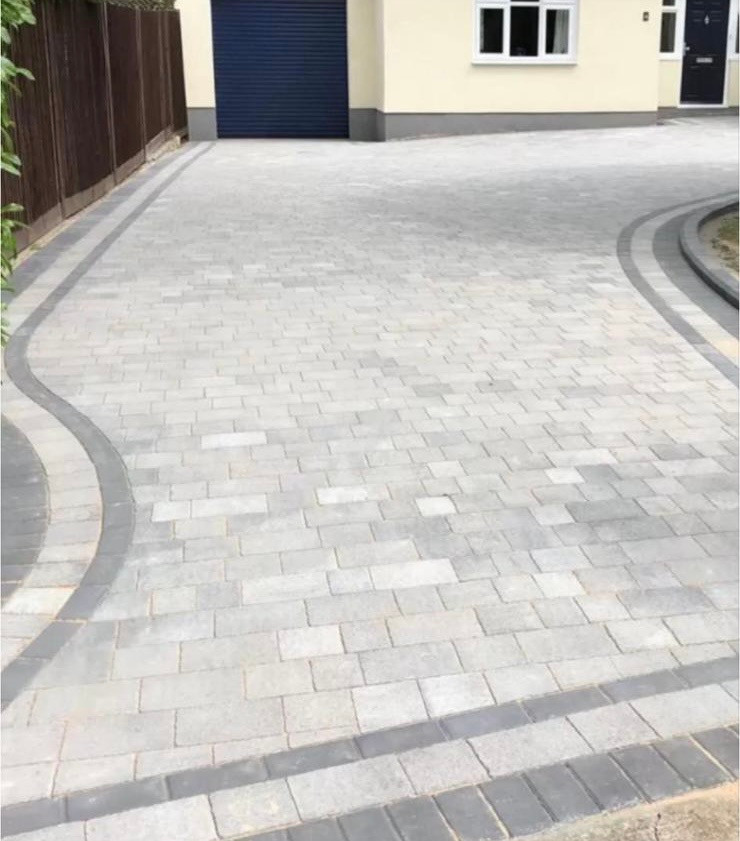
Entrances that take a beating. Properties out this way are reached off narrow lanes with no kerb and a soft verge either side, and what turns in is often heavier than a family car: a trailer, a tractor, a boat, an oil delivery. Those axle loads go straight through a thin build up. We deepen the sub-base at the entrance, compact it in layers rather than one lift, and bind the first stretch so the turning movements have something solid to work on. A haunched kerb along the verge side stops the whole thing spreading sideways.
Water in the hole. This is low, flat land and the water table is not far down in a wet winter. It is common to open a trial hole here and find water standing in it, which changes the design rather than the price at the end. A soakaway will not empty into ground that is already full, so the surface water wants a permeable build up with somewhere to go, or a positive outfall to a ditch or a surface water drain. Falls, a channel drain at the threshold and a gully that is actually connected do more here than any amount of extra stone.
Loose stone tipped straight onto this ground presses in, the fines come up through it, and by the second winter you have ruts and weeds rather than a drive; built properly, with a membrane at formation, a compacted sub-base, edge restraints and a grid, it works well. Standing for a boat, a caravan or a trailer carries a point load through small wheels, so it gets the sub-base depth of a drive rather than the build up of a patio. Where the ground falls away, the job is as much a safe route to the door as parking: a level landing, steps with an even rise, and the paving kept clear of the damp proof course. The flags themselves, natural stone or concrete, go on a full mortar bed with the jointing pointed rather than brushed in, so a landing does not sit ponding and staining green.
How it runs
From your call to a written price
Same team throughout, one person to ring, and an itemised quote with excavation, muck away, sub base, edgings, surface and drainage on separate lines.
Paving a front garden stays permitted development while the water is dealt with on your own land. Lay more than five square metres of new hard surface that runs onto the lane and you need planning permission, as the Planning Portal guidance on paving your front garden sets out. Altering the opening onto the highway is a separate dropped kerb application to Dorset Council. Most of the twelve listed entries near here are over in Wareham, and where a forecourt, wall or gate pier belongs to one of them you need listed building consent before it changes.
Cost
What decides the price of a driveway
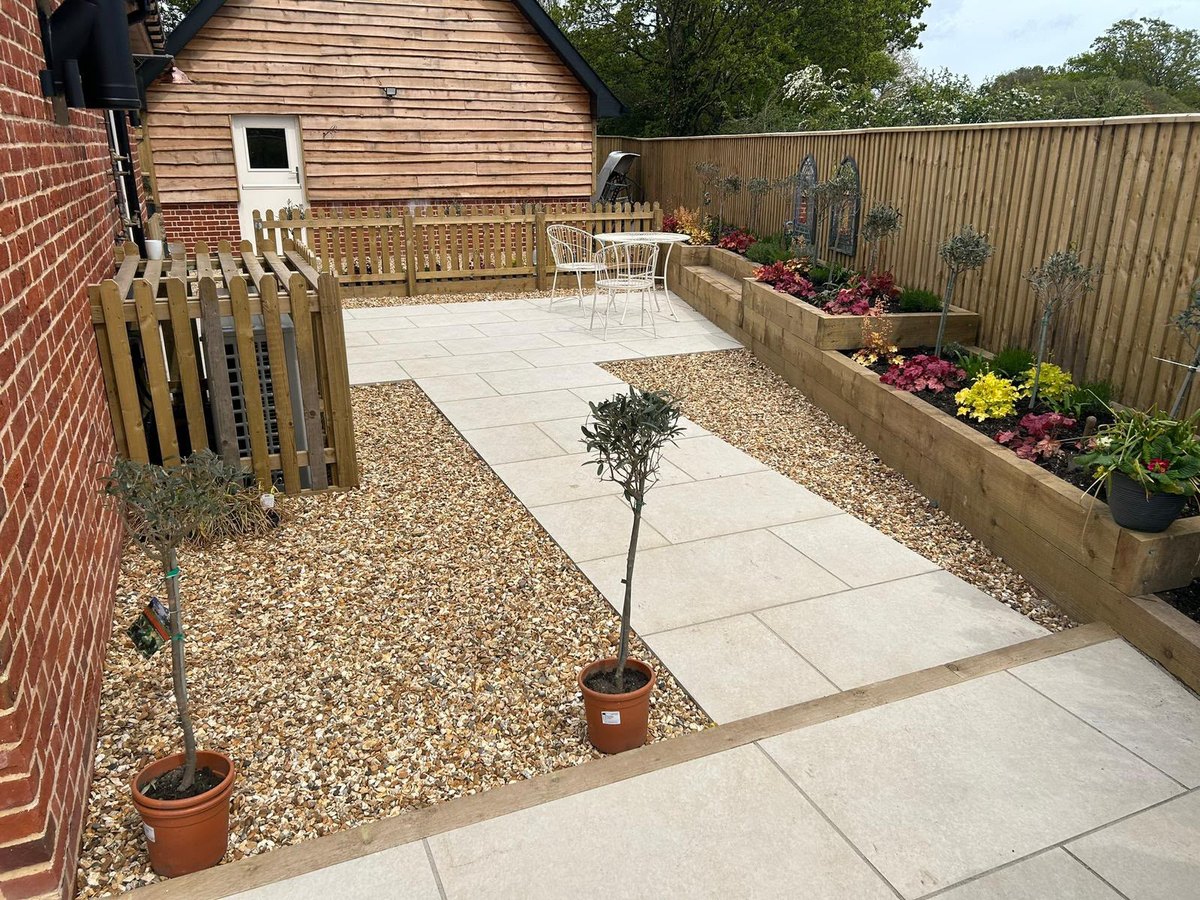
What drives on it decides the build up, and out here that is often a trailer, a boat or an oil lorry rather than a car. A house on the lane with a wide soft verge in front of it, a smallholding with a gated track and a bungalow with a single width drive down the side are three different jobs before anybody lifts a slab, because one takes a machine and a grab lorry at the door and the next is barrow work through a side gate with the spoil carried out the same way. On land this low the trial hole can come up wet, which changes the design. Ask what depth of stone is going in and where the surface water is being taken.
If it is urgent
A trip hazard, or a drive that floods
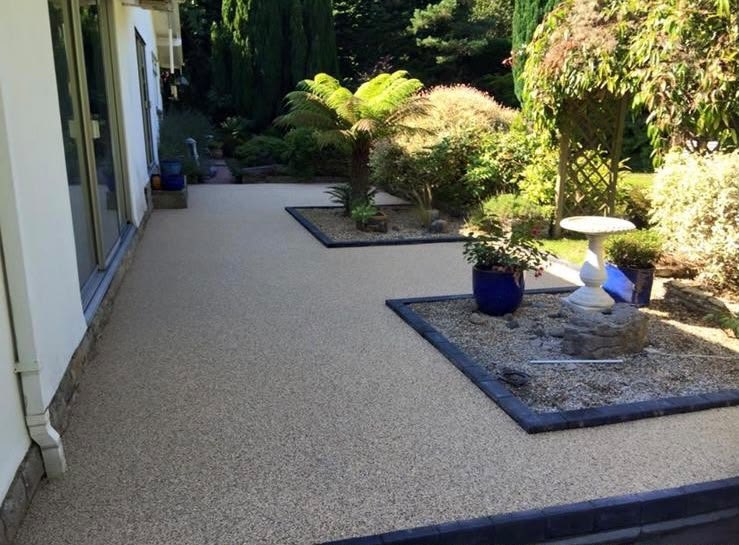
Ring rather than use the form. A lifted slab, a sunken bay by a doorway or a gully that has stopped taking water will not wait. If the entrance has churned up enough that a vehicle drops into it, or the gully by the gate has given up and the run off is heading towards the house, tell us when you ring. Monday to Friday, 8am to 6pm, and outside that by arrangement.
The one local thing
Soft, wet ground that moves through the year
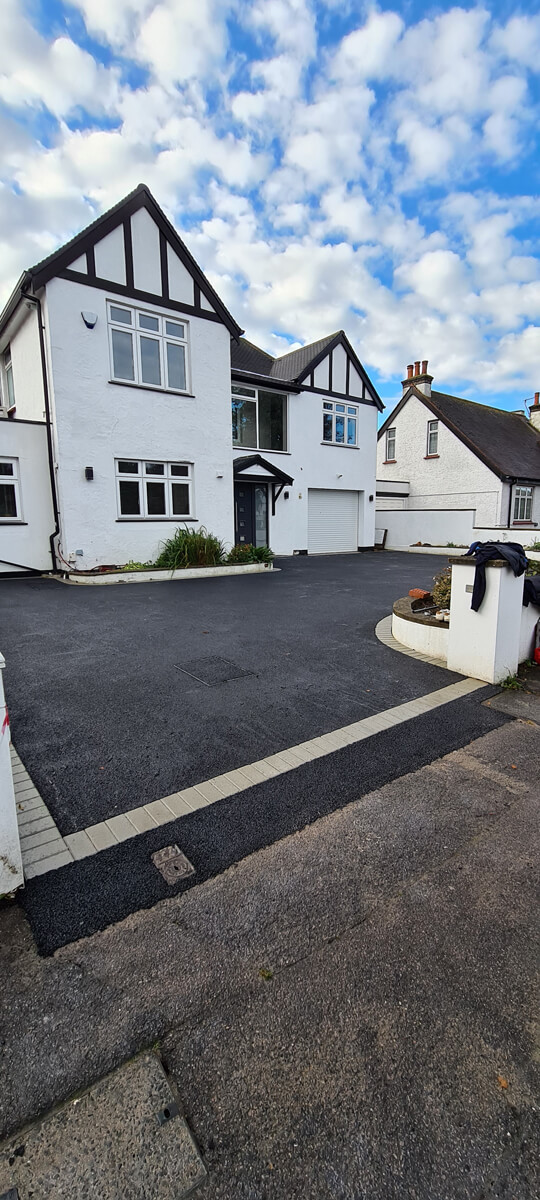
The ground here is cohesive, it sits barely above sea level, and it changes with the seasons. Through a dry summer it gives up water and shrinks. Through the winter it takes water back and swells, and while it is saturated it is also much weaker.
That is why the failures out here are so consistent: a line crack across a concrete standing, one bay of block paving sitting lower than the rest, an entrance that only ruts between November and March. The surface is rarely the culprit. It is the ground under it changing shape and load capacity twice a year.
Two things follow, and they decide how we build. First, a flexible construction beats a rigid one on this ground. Blocks or slabs bedded over a properly compacted sub-base can take a small amount of seasonal movement and stay flat, where a continuous concrete raft has to crack somewhere. Second, separation matters as much as depth. A geotextile between the sub-base and soft subgrade stops the stone punching down into the ground and stops the ground pumping up into the stone, which is what quietly destroys a drive here over five or six winters. Then there is the water itself.
Getting the falls right so run off leaves the building rather than collects beside it is not just about damp: on ground that shrinks and swells, water sitting against a foundation is a structural question. Approved Document H sets out how surface water is meant to be dealt with, and on a plot this close to the harbour that usually means keeping it on your own land in a permeable surface rather than assuming a soakaway will take it. That is all SuDS means once you take the acronym off it.
Who you are dealing with
A local firm you can check
We cover Ridge and the rest of BH20, from Wareham and Stoborough out along the Arne road and across to Sandford, Holton Heath and the Purbeck villages. Bournemouth Roofing & Building Ltd, registered in England and Wales, company number 15471719, which you can look up in a minute. Thomas Hannen's business, and he is the one who comes out to price the job, not a salesman. A verified customer's 10 out of 10 on Checkatrade. The visit and the written quote are both free.
Questions
Ridge questions we get asked
We are right beside the harbour. Does that affect a drive?
It affects the water and the metal. Ridge sits under a kilometre from Poole Harbour on low, flat ground, so there is very little fall to play with and the outfall has to be worked out rather than assumed. Salt in the air also gets into steel pins and gate fittings on the exposed side. We take levels off a fixed point at the house and settle the drainage before anybody chooses what goes on top.
Can a lorry get down the lane to us?
As far as the entrance, generally, and no further, so the plan is a heap inside your gate with a dumper run from there. The tipping point is agreed before the delivery is booked, boards go down on anything soft, and the lane is kept clear while it happens because there is nowhere for a car to pass a standing wagon. If it has to come in smaller loads, that appears on the quote.
Is the ground sandy enough to soak the water away?
The ground at Ridge is freely draining sandy soil, so infiltration often does work, which is not true of everywhere we go. The catch is how high the water sits on a plot barely ten metres above sea level. A soakaway that empties happily in August can be full through January. So we dig a pit, test it in the season we are actually in, and size it for the wet months instead of the dry.
Does the Dorset landscape designation limit what we lay?
It brings design scrutiny to anything visible rather than banning materials. Ridge falls inside the Dorset landscape designation, so a wide expanse of bright block on an open frontage draws more comment than the same thing tucked behind a hedge, and Dorset Council are the authority. No conservation area covers the settlement. In practice a muted surface with a planted edge settles the point before anyone thinks to raise it.
Will a new drive crack again like the last one?
Only if the base is built the way that one was. Cracking on this sandy ground is nearly always movement underneath rather than a poor mix on top, and with a moderate running sand rating loose material shifts about unless it is confined. So the soft material comes out, the stone goes in compacted layers over a geotextile, and every edge is haunched. The surface then has something under it that does not move.
Nearby, and next door
Driveways and patios near Ridge
Driveways and patios nearby
Our other trades in Ridge
Everything we do in Wareham Driveways and patios, all areas Every area we cover
Free quote
Want a straight answer on your drive?
Tell us the address and what you have noticed. We come out, open a trial hole, and put an itemised written quote in front of you. Both are free.