Insulation in Wareham
Loft top-ups, rafter level work in rooms in the roof, and cold ground floors sorted properly, from a local team that comes and looks first.
The site visit is free and so is the written itemised quote. Thomas Hannen prices every job himself.
Nearly every loft we open in Wareham has one thin layer of mineral wool in it, laid between the joists when the house was built and never touched since. The work here is almost always a second layer over the top and the eaves opened back up, not a loft cleared out and started again.
Three calls come out of this town more than any other. A bedroom in the roof of a town centre terrace that is cold by morning however long the heating runs.
A loft on one of the post-war estates that somebody has just been into for the first time in years, where the wool has settled flat and there is bare plasterboard showing between the trusses. And a cold, draughty ground floor in an older house down near the river, where the boards sit over an open void and the heat goes straight down into it.
Those are three different jobs and only one of them is the loft. We come out and look before anybody quotes, because the room that feels coldest is often not the surface losing the heat. The site visit is free, the written itemised quote is free with it, and if all you need is a cross layer and a sealed hatch we will say so.
The work
On low ground, wool that gets wet stays wet
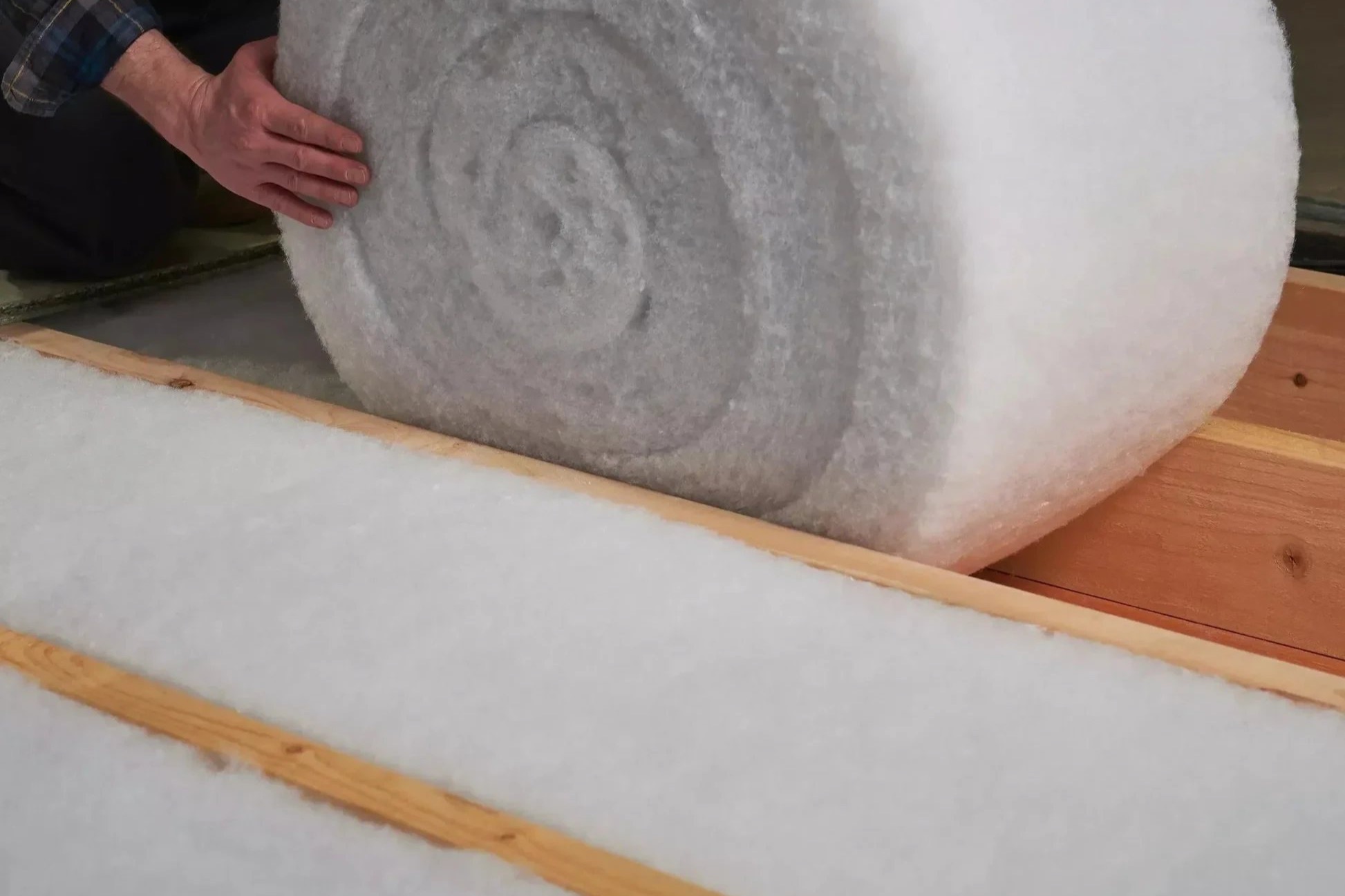
The loft top-up, which is most of it. About half of Wareham was built between the war and the early eighties, the peak falling in the late 1960s and early 1970s, and a loft of that age got one layer of wool between the joists and nothing over them. Forty years of settling has taken the depth out of it, and the joists themselves are a cold bridge running across the whole ceiling. We repair and straighten what is down, then lay eco roll across the joists at right angles, between and over, to a finished depth of around 270mm. That is the depth a loft has to reach for the 0.16 u-value Approved Document L sets for a renovated roof.
Wareham has more terraced housing than anything else, close to a third of it, and an old terrace loft is its own problem. The party wall often stops short of the underside of the roof, so the roof space runs on into next door. Insulation stops at your wall, not in the middle of the run, and where the wall is short it wants building up rather than covering over. The hatch in these houses is usually a small drop-down on a narrow landing, so every roll goes up a ladder in a stairwell.
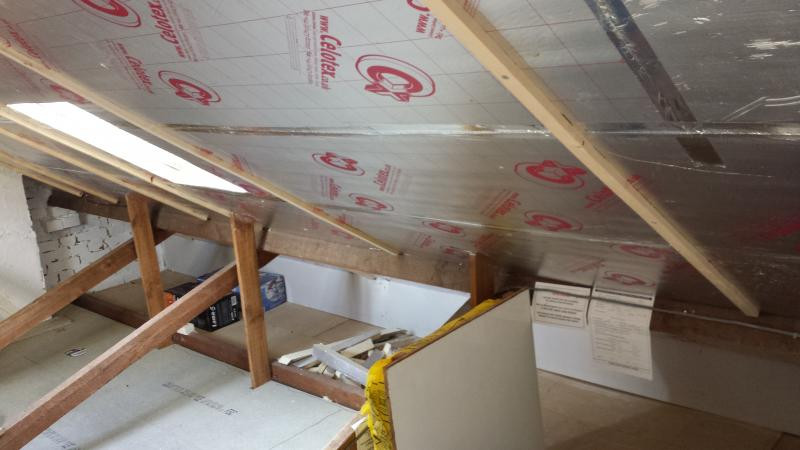
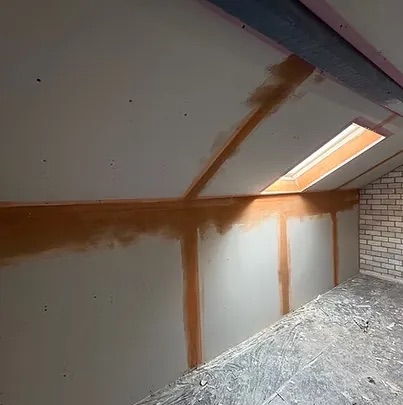
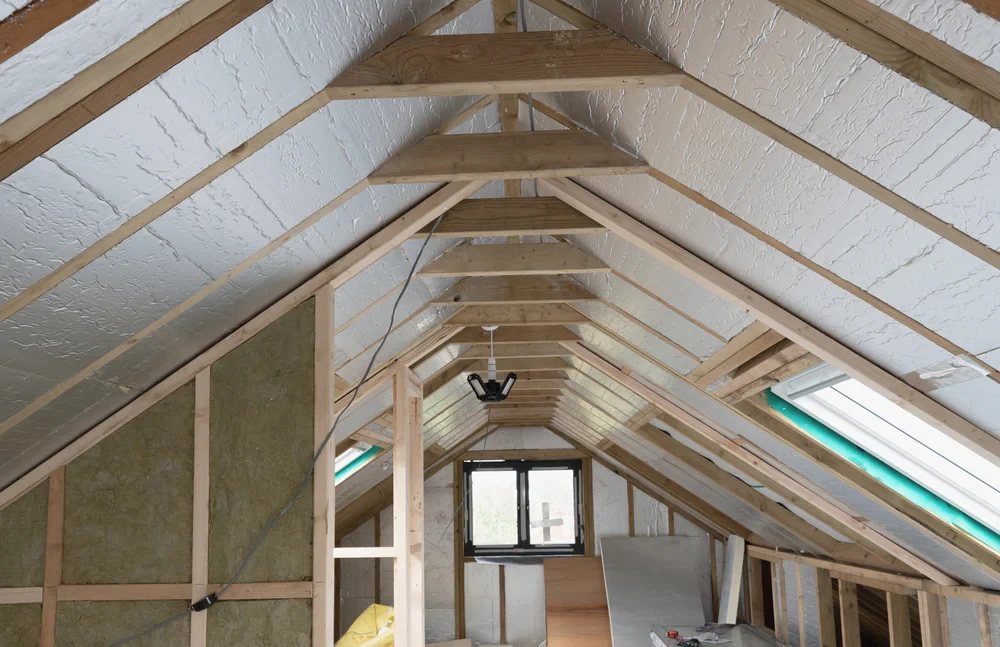
Once a roof space has been made into a room the work moves to rafter level: rigid board, PIR such as Celotex, cut tight between and under the rafters with a clear ventilation gap kept above it, and a vapour control layer before it is boarded and skimmed. On a sloping ceiling or a dormer cheek where the head height is already tight, a multi-layer foil quilt such as TLX gets you performance without losing another inch of room. If the covering is coming off anyway, a warm roof done from above is the better build.
Ground floors, which nobody thinks of. The town sits on low ground in flood zone 3 with the Piddle about 150 metres off, and a lot of the older houses have floorboards over a ventilated void with airbricks in the outside wall. That void is cold and it is meant to be. Insulating between the floor joists cures a genuinely draughty room, and on ground like this it wants closed-cell rigid board rather than wool, because wool that gets wet stays wet. The airbricks stay clear whatever else happens.
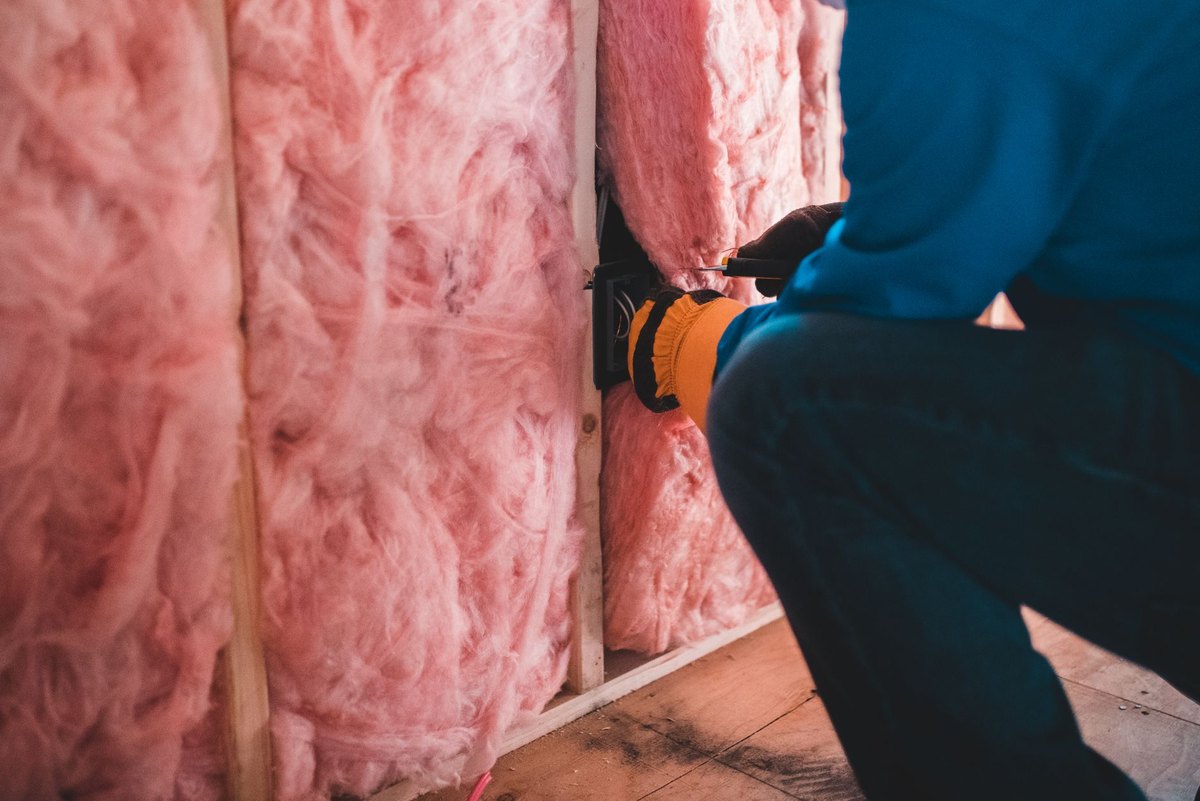
The estate houses have cavity walls and many were filled years ago, so a borescope survey comes before anyone talks about injecting more. The older brick in the centre is solid, which means internal wall insulation or external wall insulation, EWI, and with getting on for two hundred listed entries in the town the front elevation is rarely the place to start. Boarded storage gets lifted and re-decked on legs so the wool is not compressed, the hatch gets a board and a draught seal, the tank and pipework get lagging, and downlighters get covers.
How it runs
From your call to a written price
The quote is itemised: survey, clearing, the material and its depth, ventilation works and disposal on separate lines.
Nothing you do inside a loft needs planning permission, and insulating a wall from the inside is not development at all. Outside is a different matter in the middle of Wareham, where a great many buildings are listed: listed building consent covers work to a listed building inside as well as out, and Planning Portal guidance on insulation sets out the rest. Building control is the part people miss. Regulation 23 of the Building Regulations means that once you renovate more than half of a thermal element, the whole of that element has to be brought up to standard. Dorset Council for both.
Cost
What decides the price of an insulation job
No rate per square metre. A town centre terrace with a small hatch over the stairs, a post-war semi with the loft boarded out, and a bungalow with a hip at every corner are three different mornings before any material is ordered. Old material to bag and take away, and storage to move and put back, come before anything new goes down, and Approved Document L sets what the work has to reach. Comparing quotes, ask what depth is being laid, whether the old material is removed or covered, and whether the hatch and pipework are included.
If it is urgent
Damp, condensation or a room you cannot heat
Ring rather than use the form. Condensation dripping in the loft, mould that keeps coming back, or a room that will not hold heat gets looked at quickly. Insulating a roof space that cannot breathe makes it worse, so the first visit settles which it is. Wareham is a short run for us. If the damp is at skirting level, say so, because that points at the floor and the airbricks.
Worth knowing
Wareham sits low between two rivers, and that changes the materials
The town is on low ground with the Piddle on one side and the Frome on the other, and much of it falls inside flood zone 2 with parts of it in zone 3. You can check your own address on the government flood risk service in a minute. It makes no difference at all to a loft, which is why the loft is the first thing we do here. It makes a great deal of difference to anything you put in a floor or in the bottom of a wall.
What it changes is the material, not whether the work is worth doing. Mineral wool in a suspended floor on ground that has been wet holds water and takes months to dry, and it will still be damp long after the room looks fine. Closed-cell rigid board between the joists dries out and can be lifted and checked.
The other instinct to resist is blocking the airbricks to stop the draught: that void has to keep breathing, and the ventilation standard in Approved Document F is there because a sealed subfloor rots. Insulate the floor properly, leave the ventilation alone, and deal with the draught at the skirtings and around the boards instead.
Who you are dealing with
A local firm you can check
We cover Wareham, Stoborough, Sandford, Ridge and Holton Heath, and the BH20 addresses out towards Wool and Bere Regis, with Dorset Council for planning and building control. Send the postcode if you want to be sure. Bournemouth Roofing & Building Ltd, registered in England and Wales, company number 15471719, which you can look up in a minute. Thomas Hannen's business, and he is the one who comes out to price the job, not a salesman. A verified customer's 10 out of 10 on Checkatrade. The visit and the written quote are both free.
Questions
Wareham questions we get asked
Wareham has nearly two hundred listed entries. Does ours need consent?
Only if it is one of them, or sits within the curtilage of one. Wareham Town carries 196 listed entries, most of them concentrated in the old streets, and the West Street addresses are typical. Inside a listed house, insulation laid over a ceiling is generally accepted as maintenance. Anything that cuts into historic fabric or shows on the outside is not, and Dorset wants asking first.
The ground floor is in a flood zone. Does that affect insulating?
It affects where you put it, not whether you bother. Wareham sits in flood zones 2 and 3 with the Piddle close by, so anything built into a ground floor has to be a material that does not soak up water and does not fall apart once it has. That rules out packing fibre under low level floorboards. Above ceiling level the loft is unaffected and that is where most of the gain is anyway.
Almost a third of Wareham is terraced. Does that simplify the job?
It simplifies the access and complicates the edges. 29.5% of the town is terraced, so most of these lofts are reached off a narrow landing and the van sits on the street rather than a drive, which means everything moves in sealed bags. At each gable end the insulation still has to reach the wall plate, and in an older terrace that corner is the hardest place in the roof to get to.
Half the houses here are post war. What is usually up there already?
Something shallow, laid one direction between the joists. 52.0% of the stock here went up between 1945 and 1982, peaking in the late 1960s and early 1970s, and the depth fitted then was a fraction of what is asked for now. It is nearly always worth keeping rather than clearing, because a dry existing layer is still doing work once you lay a second one across it.
Can you get a van into the old streets to load out?
Usually, though not always where you would like. The streets in the middle of Wareham are tight and parking is limited, so we carry in from the nearest legal spot and seal everything into bags at the hatch, which keeps loose material out of the house. Where loading has to cross a pavement we sort that out on the free site visit rather than on the morning of the work.
Nearby, and next door
Insulation near Wareham
Insulation nearby
Our other trades in Wareham
Everything we do in Wareham Insulation, all areas Every area we cover
Free quote
Get a straight answer on your loft
Free site visit anywhere in Wareham, and a written itemised quote that shows the depth, the material and the ventilation work as separate lines.