
Driveways in Winfrith Newburgh
Drives, parking bays and patios in the village, priced from the ground up and from where the water is going to go.
The site visit is free and so is the written itemised quote. Thomas Hannen prices every job himself.
Last updated
How wet the ground under a Winfrith Newburgh drive or patio stays is the first question, and how little room there is between the front of the house and the street is the second. Settle both on the survey and the surface you lay on top is the straightforward part.
Most problems in Winfrith Newburgh are one of three. Gravel that has rutted into tracks and is washing down towards the road every time it rains. A patio behind an older cottage that has crept up over the years until the finished level is sitting against the wall. Or a house with nowhere to leave a car, and a front garden or a side space that could take one if it were built properly.
We come out, walk the fall of the ground with you, and open a hole to see what is actually under the existing surface instead of guessing at it. We look at where the water goes now and where it would go afterwards, and at how a vehicle gets in and out. The written quote then comes back with the dig, the muck away, the sub-base, the edgings, the surface and the drainage on their own lines, so you can see what you are paying for.
The work
Drives, parking and gravel along the village street
Paths and paving behind an old cottage. A finished level that has climbed is the usual fault here. Slabs get laid over slabs, the ground rises, and the paving ends up level with or above the damp proof course, or hard against a wall that never had one.
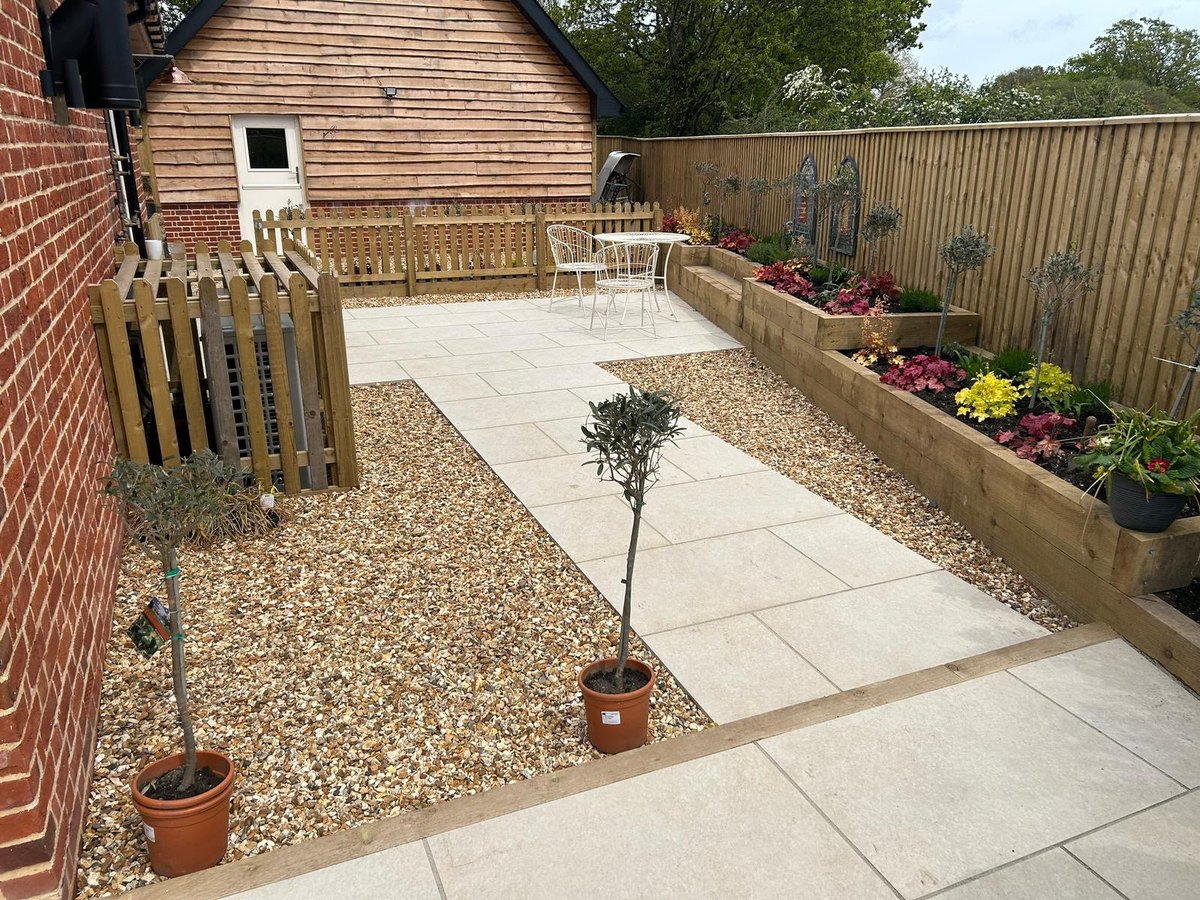
We take the build-up out, drop the level, get the falls running away from the house, and finish with a drainage channel along the wall where the space is too tight to lose the height any other way. Natural stone and porcelain both sit on a full mortar bed for that, and the threshold at the back door is set before anything is cut. For the terrace itself, see patios in Winfrith Newburgh. The village lies in flood zones 2 and 3 with the River Win running through it, so where the water is sent matters more here than the colour of the paving.
Making parking where there is none. Plenty of houses front almost straight onto the street or sit behind a brick and flint boundary wall. Where a bay can be formed out of the front garden it needs an edge restraint or a kerb to hold the surface, a build-up that will carry a car, not just a wheelbarrow, and a route in and out you can use without reversing blind onto the road. If the boundary wall has to be opened up, the new ends are rebuilt and capped, never left raw. A new opening onto the highway also means a crossing, and Planning Portal guidance on dropped kerbs explains how that is applied for.
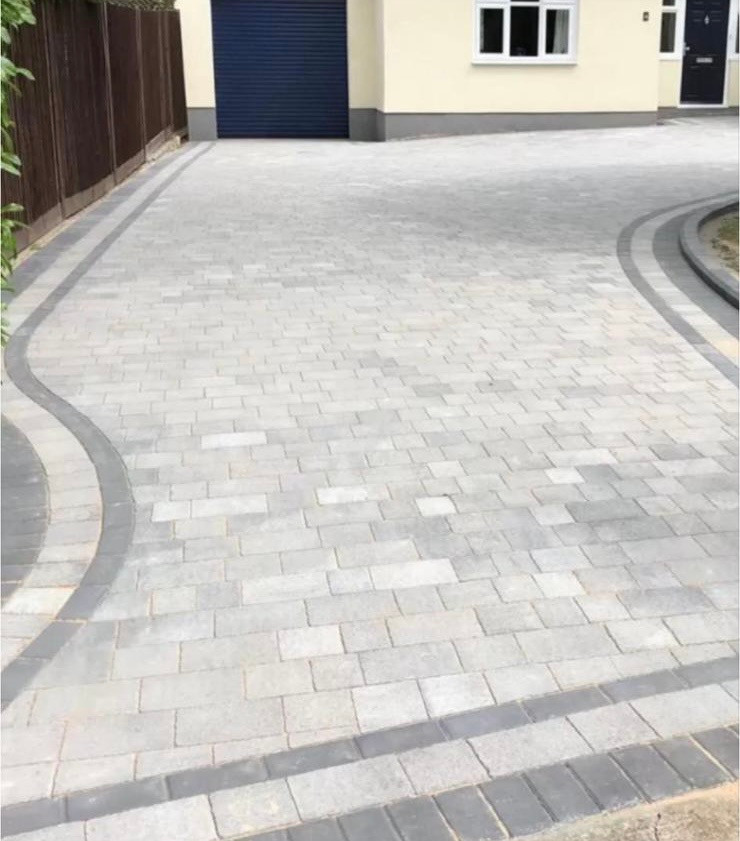
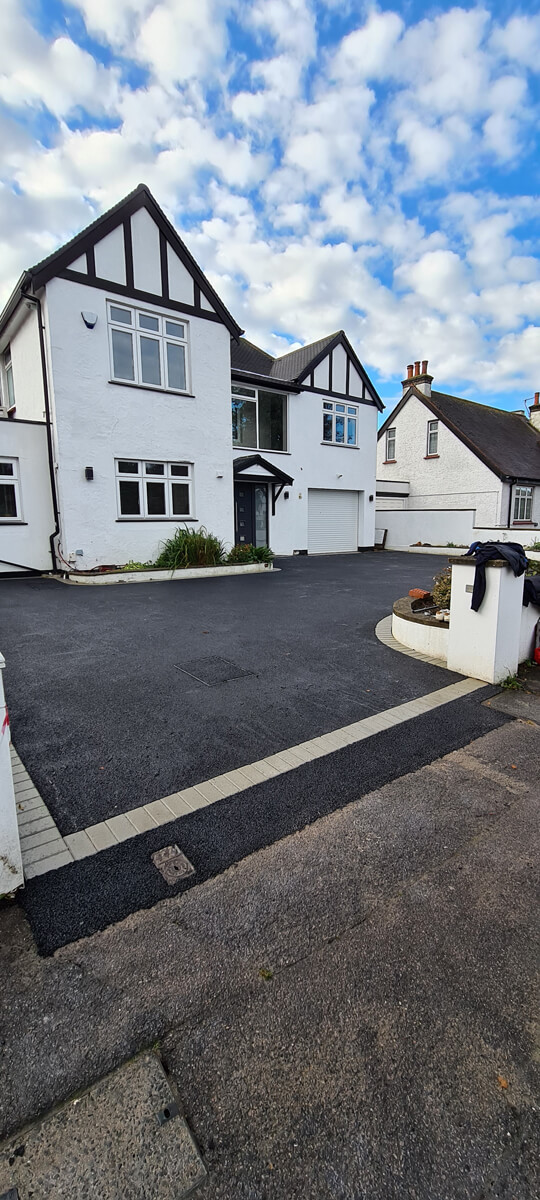
Loose stone suits the village and it works as long as it is contained: a proper formation and a compacted sub-base under a geotextile membrane, an edge to stop it migrating into the borders, and a bound apron for the first couple of metres at the entrance so it is not carried out onto the lane. On anything that slopes we add a channel drain across the top of the fall. Out on the lanes the drives are mostly block paving and concrete, and the faults are predictable: sunken wheel tracks, a bay that ponds, cracked concrete at a day joint, and weed and green staining in the jointing where the kiln dried sand has washed out. Sinking is almost always the base, not the blocks, so we lift, correct the depth, re-compact, relay the same units and re-sand the joints. Tracks shared with a farm want a real stone depth, a crossfall and a passing place, because rutting starts where water runs along the wheel tracks instead of off them, and potholes are cut out square, not filled with planings. If the base under a drive is sound we will say so on the site visit.
How it runs
Laying a drive on chalk and gravel near the River Win
Thomas comes out, measures the drive, looks at where water sits now and checks for drains and service runs. The written price covers digging out, carting the spoil away, the sub-base, edgings, the surface you choose and the drainage, each shown on its own.
Access sets the plan. A cottage fronting the street with no room to turn means small plant and a lot of barrow work. A bungalow with a long gravel drive out towards the fields lets a digger and a grab lorry work freely. We keep the lane clear, protect the verges and sweep the road each day. Soft ground, an old soakaway or roots found in the dig are shown to you with a cost, and we wait for your answer.
Parts of Winfrith Newburgh are in flood zones 2 and 3, which you can check on the government flood risk service, and while the gravel over chalk drains freely higher up, drainage on the low ground is designed in from the start. A new hard surface at the front needs planning permission unless it is permeable or drains to your own ground, as Planning Portal guidance on paving your front garden sets out. Dorset Council is the authority, and where a house is listed listed building consent can cover hard landscaping beside it.
Cost
What decides the price of a driveway here
We do not price by the square metre, because the dig decides more than the finish. Access for machines. A cottage on the street with no turning room, a house behind a brick and flint boundary wall, and a bungalow with a long drive have little in common. Whether a digger and grab lorry can reach, or everything goes through a gate by hand, changes the cost.
Depth of dig. Gravel over chalk is usually a firm formation, but wet ground by the river needs a deeper sub-base with a membrane, so more spoil comes out and more stone goes in. Soft spots are dug out and replaced with stone.
Drainage. Away from the river a soakaway usually drains once a percolation test passes, but on low ground by the Win the water needs permeable paving, a channel to a proper outfall or falls to a planted area. Approved Document H covers where it can go.
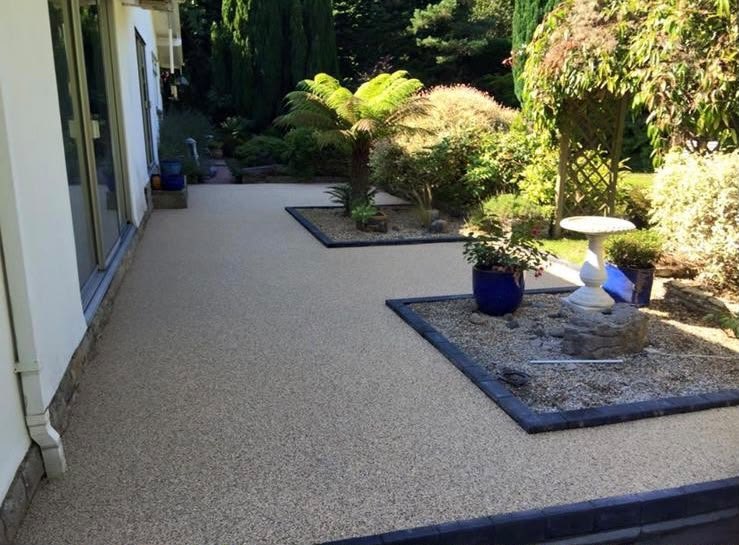
The surface. Gravel, block paving, resin bound and tarmac all differ, as do edgings. Gravel needs a retaining edge to stop it washing into the lane.
Distance. Travel and muck away over a longer run are on the quote.
Ask any other quote how deep the dig is, what sub-base goes in, where the surface water goes and who takes the spoil.
If it is urgent
Standing water at the door or gravel in the lane
Ring us rather than filling in the form. A lifted slab, a bay that has sunk at a doorway or a gully silted up after a storm cannot wait, because someone trips or water runs to the house. Mark the hazard and sweep any washed gravel off the lane.
On the first visit we make the trip safe or clear the gully, then price the permanent work once the ground can be opened. Scheduled work runs Monday to Friday, 8am to 6pm. For something urgent, call us, and if the phone goes unanswered we ring back once we are off site.
Worth knowing
Low ground by the Win, and why levels matter more than surface here
The Win runs through Winfrith Newburgh and low land here falls inside flood zones 2 and 3. You can check your own address in a minute on the government flood risk service, and it is worth doing before you decide anything, because on low ground the design changes.
Raising a patio or a drive on made-up ground is the obvious way to get away from a wet surface, and on a flood plain it is the wrong answer: you take storage away, and water that used to spread out goes somewhere it did not before, often a neighbour's garden. Keep the finished level down, keep the surface permeable where you can, and give the water somewhere to run rather than somewhere to sit.
The practical side is straightforward once you accept it. A soakaway on ground that is wet most of the winter needs a percolation test first, and where it fails the answer is a positive outfall to a ditch or an existing drain instead. A channel drain at the entrance stops road water running down the drive and standing at a doorway.
Falls are set away from the house, never towards it. And expect the dig to be heavier than it looks: wet ground comes out as sloppy spoil, it costs more to cart away, and a formation that is soft has to be dug deeper and stone brought back up rather than rolled and hoped for.
Who you are dealing with
A firm you can check before you book
We lay drives across Winfrith Newburgh and nearby: Crossways, Wool, West Lulworth, Owermoigne and the villages along the Frome valley, 19.8 miles from our Boscombe base, all under Dorset Council. Your contract would be with Bournemouth Roofing & Building Ltd, registered in England and Wales, company number 15471719. Before you book a visit in Winfrith Newburgh, you can read our customers' Google reviews, word for word, on our reviews page.
The firm is Thomas Hannen's, and he measures up and prices the drive in person. Checkatrade has one verified review from a customer, a 10 out of 10. The site visit is free, as is the written quote listing each item.
Planning at a glance
Do you need planning permission in Winfrith Newburgh?
Most repairs in Winfrith Newburgh need no application at all. What decides whether a change to the outside of your house does is who the council is, whether a conservation area or a listing applies, and whether the place sits in a protected landscape.
| Question | In Winfrith Newburgh |
|---|---|
| Who decides | Dorset Council is the planning authority for Winfrith Newburgh. Dorset Council's heritage pages set out what it controls. |
| Conservation area | Yes: Winfrith Newburgh Conservation Area. Check whether your street is inside the boundary before changing anything visible. |
| Listed buildings | Yes, there are listed buildings in and around Winfrith Newburgh. If yours is one, work can need listed building consent. |
| Protected landscape | Inside the Dorset National Landscape (formerly AONB), so anything visible from outside gets more attention. |
Questions
Questions about driveways in Winfrith Newburgh
The stream runs past the garden. Does that limit paving?
The stream governs where the water goes and what you build near the bank. The River Win passes within a metre of some properties at Winfrith Newburgh and the village lies in flood zones 2 and 3, so a surface shedding straight towards the watercourse is the wrong answer, and any discharge into it needs the Environment Agency's view. We keep run off inside the garden and never found an edge on a bank that could be undercut.
Will the conservation area rule out a modern block drive?
Not on its own. The Winfrith Newburgh Conservation Area covers the older part of the village, but at a house a permeable front surface, or one drained to your own ground, is still permitted development there unless an Article 4 direction applies. Gravel, hoggin and stone setts sit best beside the old frontages, and a bright multi coloured block pattern tends to look out of place. With 58 listed entries here, ask us to check yours before choosing.
Can you get out this far for a small job?
Yes. Winfrith Newburgh is just under twenty miles from our Boscombe base, and travel and muck away over that distance appear as their own lines on the written quote. We would rather do the dig, the base and the surface on consecutive days than make three separate trips, and Thomas Hannen looks at the job first.
The ground is soaked all winter. Can a base be laid?
It can, with the sequence altered. On saturated ground we dig and then get the geotextile and stone in on the same day, instead of leaving an open hole to fill and turn the bottom into slurry. Where the subgrade is too soft to compact at all, the fix is a deeper stone layer or a capping layer, not more whacking. That gets settled by a trial hole at Winfrith Newburgh before quoting.
What happens to the turf and topsoil you strip?
Decent topsoil stays on site if you have room for it, banked at the bottom of the garden or spread across a border, because carting it off and buying soil back in is wasted movement. Turf being reused gets lifted and stacked grass to grass in the shade. Anything fouled with old bitumen or rubble goes to a licensed tip and appears on the quote as its own line.
Nearby, and next door
Driveways near Winfrith Newburgh
Nearby places we also cover for driveways, with straight-line distances from Winfrith Newburgh, and the other trades we offer in Winfrith Newburgh itself.
Driveways nearby
Our other trades in Winfrith Newburgh
Driveways and patios guides
Driveway planning permission and where water goes Sunken or ponding driveway: base or drainage Indian sandstone vs porcelain paving: an honest comparisonEverything we do in Wareham Driveways, all areas Every area we cover
Free quote
Free quote for a drive or patio in Winfrith Newburgh
Ring or send a photograph and we will come out and look properly. The visit and the written itemised quote are free.