
Driveways and patios in Owermoigne
Lane entrances, parking that has churned up and patios laid to the right level, priced in writing after a free visit.
The site visit is free and so is the written itemised quote. Thomas Hannen prices every job himself.
We build drives, parking areas and patios in Owermoigne and the DT2 lanes around it. Out here the work usually starts at the road and runs a long way in, so what the ground is doing and where the water finishes up get settled before anybody picks a surface.
Three things bring most of the calls. A gravel entrance that has rutted into two tracks and washes a fan of stone out onto the lane every winter. A patio behind a cottage that has dropped at one corner, holds a puddle for two days and has gone green in the shade. Or a parking area that was fine for one car and has churned up now that two cars, a trailer and the delivery vans all use it.
We come out, open a hole where the drive will take the weight, take levels off the house and look at where the water goes today. On ground that moves with the seasons that matters more than the choice between resin and block paving. If the honest answer is that yours wants lifting and relaying rather than digging out, that is what goes in the written quote.
The work
Lane entrances, cottage thresholds and yards that have churned up
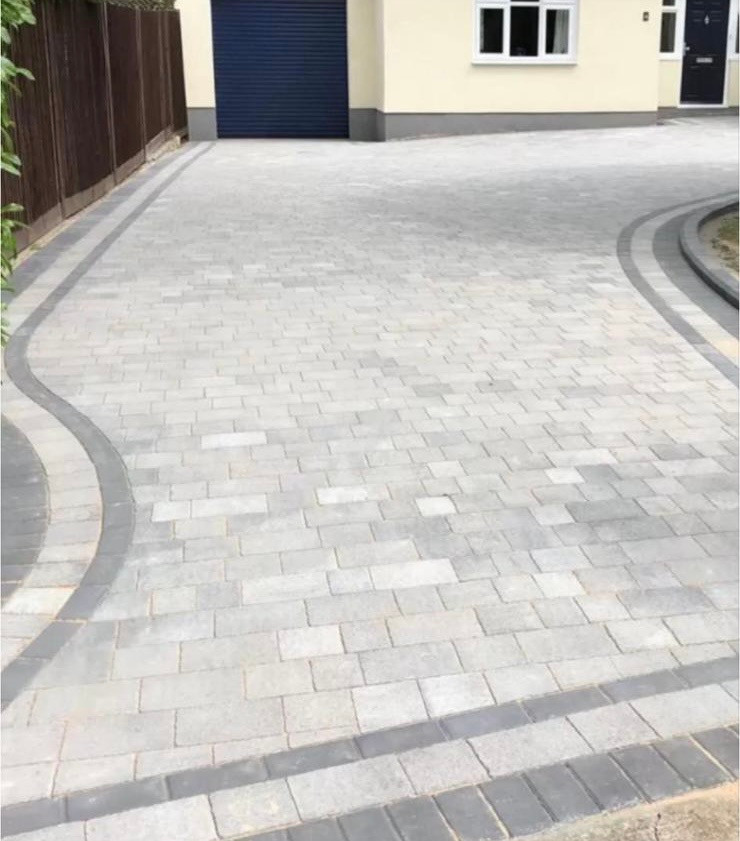
Entrances and long drives off the lane. Most drives here meet a lane with no footway, so the crossing is over a verge rather than a pavement, and the highway authority still has a say in how it is formed. The drive itself fails for one reason: it was spread on topsoil. We excavate to a firm formation, lay a geotextile membrane so the stone cannot pump down into soft ground over a wet winter, then build the sub-base up in compacted layers at a depth set by what the hole shows. Loose gravel wants a real edge restraint, timber or a haunched kerb, or it ends up in the hedge.
Coming out forwards onto a lane is worth more than an extra bay, so we set the turning circle out on site with the car you actually own. Anything taking an oil tanker or a horsebox gets a deeper sub-base under it and either concrete or heavy duty block paving rather than a thin tarmac skin. Access is the one easy part of a village job: a machine can usually work, and the spoil goes straight into a grab lorry instead of a skip.
The finished level is the thing to get right. The ground here shrinks and swells with the weather, so where the rain finishes up beside a wall is a structural question and not only a damp one. Paving sits clear of the damp proof course and falls away from the wall, and where a back door threshold is already low the answer is a channel drain and a positive outfall, not another lift of hardcore against the brickwork. Steps get risers that all match, because the odd one out is what people trip on, and under an eaves with no gutter we leave a gravel strip for the drip line.
How it runs
From your call to a written price
Same team throughout, one person to ring, and an itemised quote with excavation, muck away, sub base, edgings, surface and drainage on separate lines.
Dorset Council is the planning authority, and thirteen listed entries sit around the village, the parish church and Moignes Court among them, so work at a listed frontage is worth a call about listed building consent first. Paving out the front stays permitted development while the water stays on your own ground: more than five square metres of sealed surface draining onto the road needs planning permission, which is the front garden rules. Where the crossing has to be formed or widened, a dropped kerb is a separate application to the highway authority, and it is the slow part.
Cost
What decides the price of a driveway
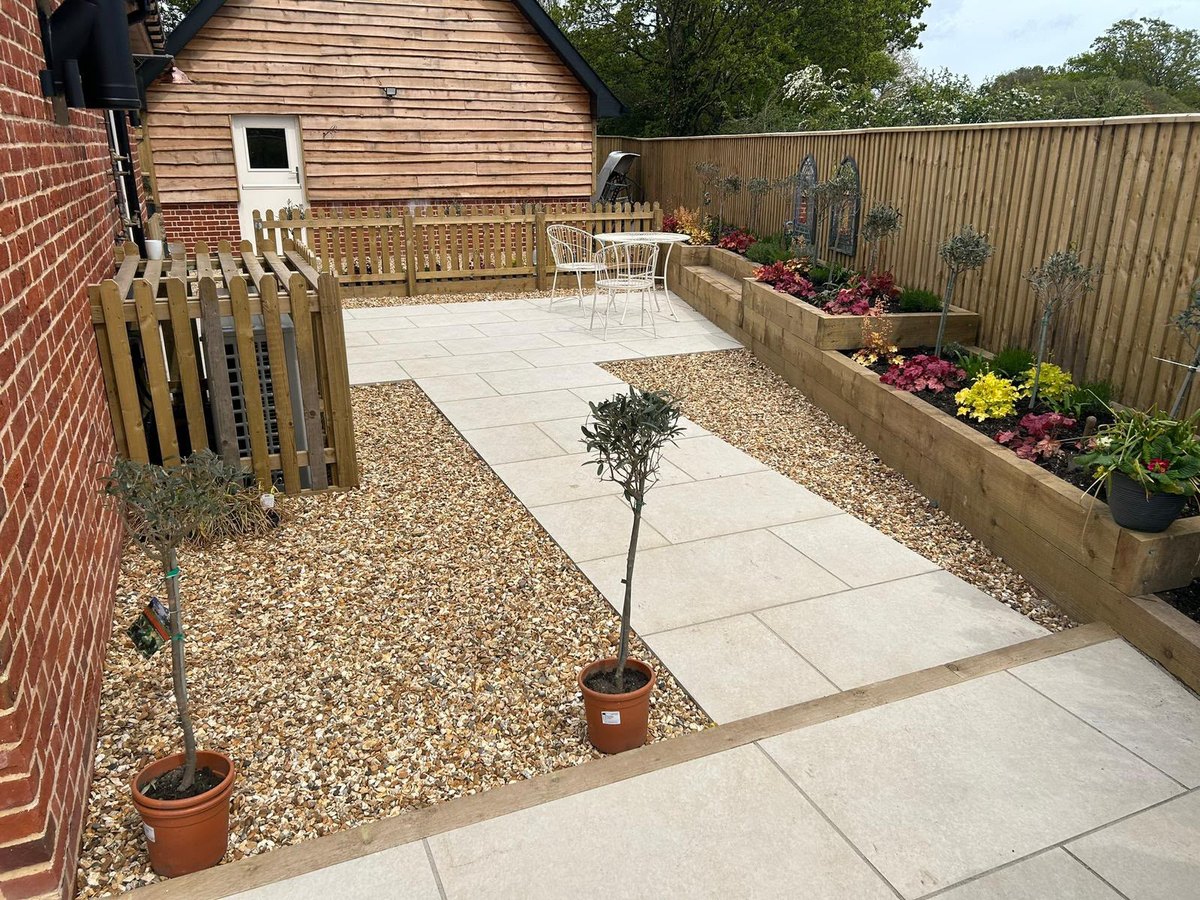
Twenty miles out from us, so the deliveries and the muck away are planned at the survey, not on the morning. A cottage tight on the lane, a house set back behind a long entrance and a bungalow with a gate you can drive through are three different jobs before a machine turns a wheel. The village at least lets a machine work and a grab lorry take the spoil, which is not true everywhere. Ask any quote for the dig depth, the sub base and where the surface water is going.
If it is urgent
A trip hazard, or a drive that floods
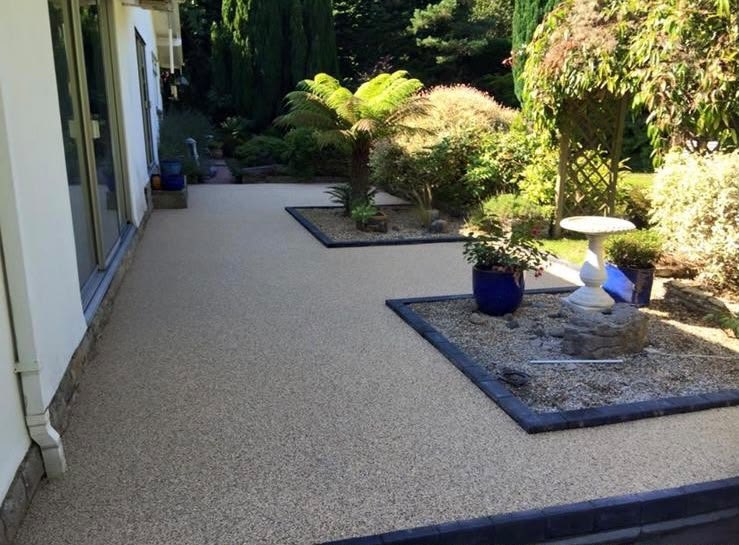
Ring rather than use the form. A lifted slab, a sunken bay by a doorway or a gully that has stopped taking water will not wait. If a bay has dropped by a doorway or water is standing against the house, take a photograph while it is still wet, because where the puddle sits tells us more than any dry survey. Monday to Friday, 8am to 6pm, and anything outside that by arrangement.
The one local thing
Ground that shrinks in summer and swells again in winter
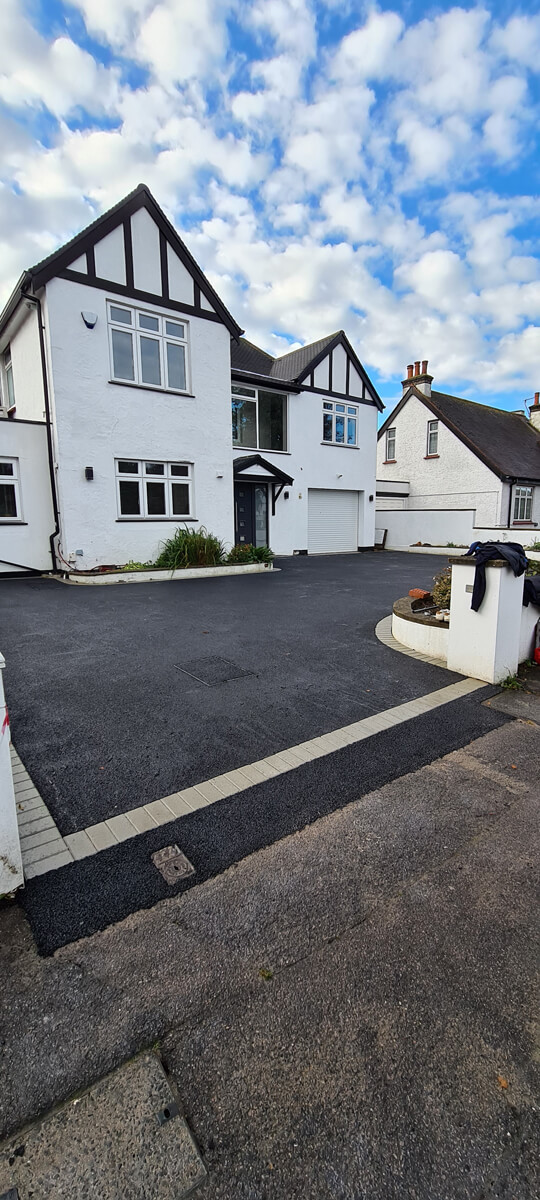
The ground around Owermoigne is cohesive, and cohesive ground moves. It shrinks back in a dry summer and takes up water again through the winter, which is why gate posts lean, why a rigid slab laid straight on the subsoil cracks in its third year, and why where you send your rainwater is a structural question rather than just a damp one. The practical rule is that surface water should never be tipped into the ground next to a wall.
Soakaways go well clear of the building and are sized on a percolation test done at the depth the crate will actually sit, which is how Approved Document H expects it, not on a guess made in July. Where the ground will not take water, we say so and give it a positive outfall instead, agreed with whoever owns the ditch.
It changes the build as much as the drainage. On moving ground we go deeper on the sub-base and compact it in thin layers, because a well built base spreads the movement instead of concentrating it in one crack. We prefer a flexible surface: block paving or permeable paving can be lifted and relaid in a morning if a corner ever settles, while a concrete or tarmac raft has to be broken out.
Trees and hedges matter too. A mature hedge close to the house dries that ground out hard in summer, so a drive laid tight to it in August is being built at the moving ground's smallest, and we allow for that at the edges rather than pretending it will stay still.
Who you are dealing with
A local firm you can check
We work across Owermoigne, Crossways, Warmwell and the villages out towards Wool and Lulworth, about twenty miles from us and an ordinary week's run. Bournemouth Roofing & Building Ltd, registered in England and Wales, company number 15471719, which you can look up in a minute. Thomas Hannen's business, and he is the one who comes out to price the job, not a salesman. A verified customer's 10 out of 10 on Checkatrade. The visit and the written quote are both free.
Questions
Owermoigne questions we get asked
We get more rain out here. Does the build change?
The drainage changes, the paving does not. Owermoigne sits under close to a thousand millimetres of rain a year, so everything is sized for the wet end of the year rather than an average one. That means a definite fall instead of a nominal one, a channel at the low point rather than trusting the edge to shed water, and the downpipe and gully cleared while we are there, since most patio flooding starts at a blocked gully.
Does the old concrete go in a skip or a grab?
A grab lorry on a job this size. Broken concrete and dug soil fill a skip quickly, and a skip then stands somewhere for days, which is awkward at an Owermoigne property with a narrow frontage onto the lane. The grab comes once, lifts the heap and goes. Clean hardcore can often stay on site and be crushed into the base of the new drive, which saves a load going off altogether.
Can you build a patio into a garden that slopes?
Yes, and on the sloping plots around Owermoigne that is more often the job than a flat rectangle. The choice is one level with a retaining edge and steps down, or two smaller terraces following the fall. Two terraces are usually the simpler build and they drain better, because you are not holding a bank of wet soil back on ground that shrinks and swells. We set both out on the ground at the visit.
Twenty miles out. Do you work it in one visit?
In one run wherever the job allows. Twenty miles each way turns into half a day not spent building, so materials come in one delivery and the gang stays on it until that section is done. Extras added halfway through are what drags a job into a second week. If a path, a step or a bin standing is in your mind as well as the drive, get them on the quote at the start.
What can we check ourselves before you come out?
Walk the drive during heavy rain and photograph where water stands, then look at the same spot dry and find the tide mark. See whether the gully by the downpipe is running or silted, and whether the ground beside the wall stays soft. On the larger plots around Owermoigne the answer is usually a fall going the wrong way rather than a worn out surface, and those are two different jobs with two different prices.
Nearby, and next door
Driveways and patios near Owermoigne
Driveways and patios nearby
Our other trades in Owermoigne
Everything we do in Wareham Driveways and patios, all areas Every area we cover
Free quote
Want a straight price for the drive or the patio?
Tell us what the ground does after rain and we will come and look. Free visit, free itemised written quote, no salesman.