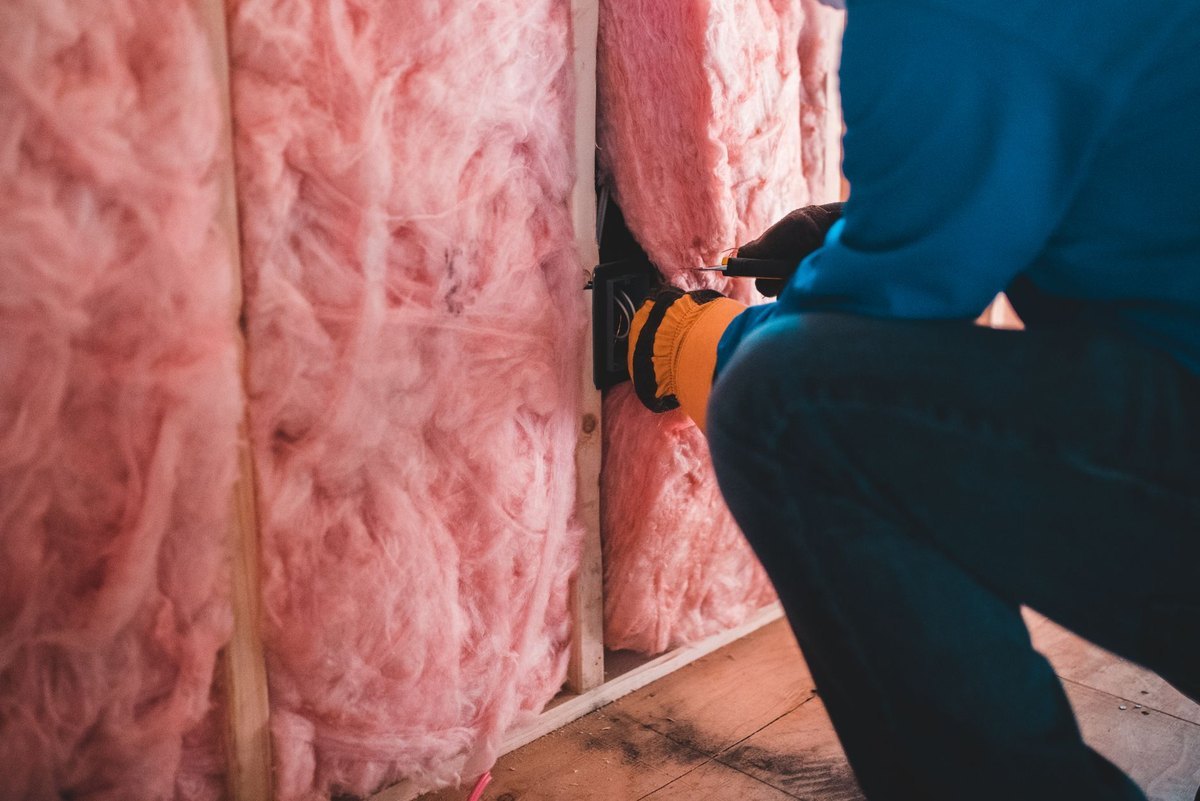
Wall insulation in Owermoigne, in or out
There is no conservation area over this village, so external wall insulation is genuinely on the table, which is unusual round here and changes the whole conversation.
The site visit is free and so is the written itemised quote. Thomas Hannen prices every job himself.
For a solid walled house there are only two real options, line the inside or insulate the outside, and in most of the villages near here the second one is effectively ruled out by the conservation area. Owermoigne has no conservation area over it, so both are available. That makes the choice a building decision rather than a planning one, and the two options are not equal.
The reasons for ringing are usually a cold cottage that swallows oil, mould that returns every winter in the same corner, or damp that turned up after a wall was filled or rendered.
The free site visit works out what the wall is before anything else. Reveal depths, a borescope through one drilled hole where a cavity is possible, moisture readings at the skirting, and a look at the ground levels and the rainwater goods. What comes back is a written itemised quote with the survey, the system and its thickness, the reveals and junctions, the ventilation and the making good on separate lines.
The work
Two ways to warm a solid wall, and how to choose
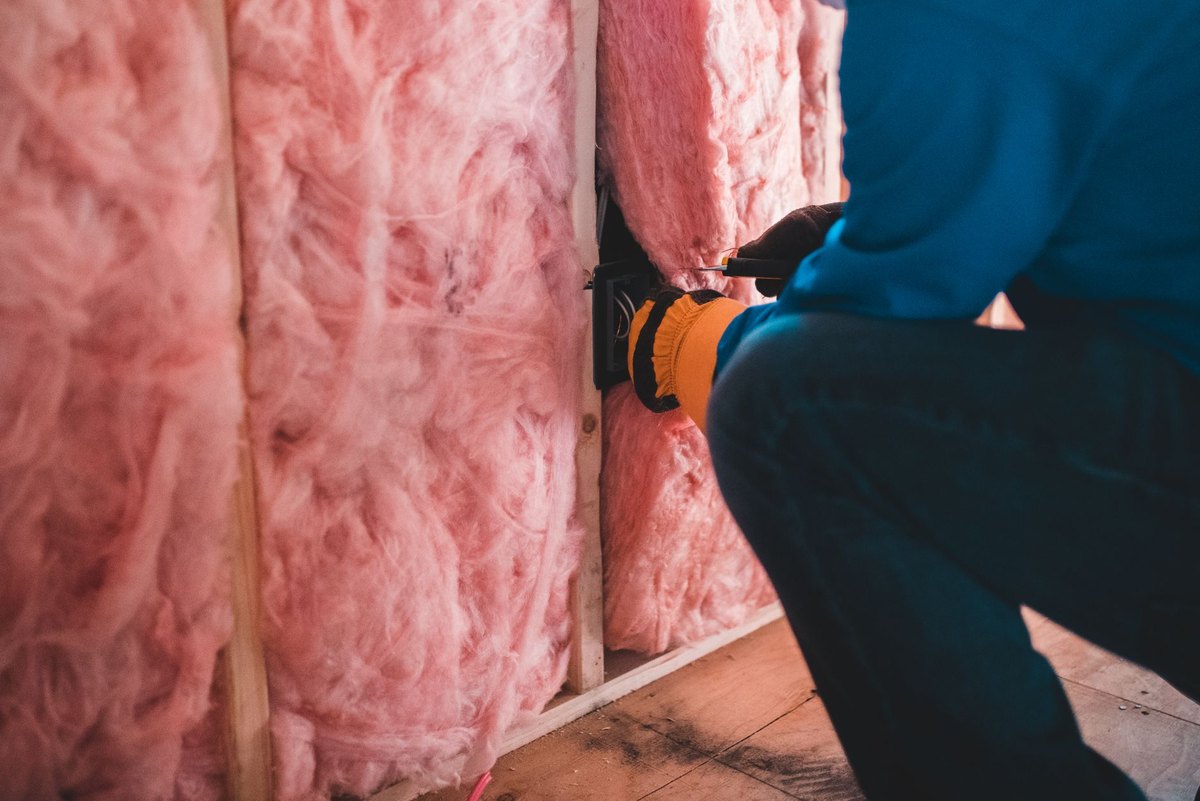
Establishing the wall. Reveal depth and brick bond give the first opinion, the borescope gives the fact. Cavity or not, how wide, clean or bridged with mortar, dry or a wet cavity, empty or already filled and slumped. Where there is a sound cavity the whole discussion stops there, because a fill beats either alternative.
Cavity fill. Bonded bead for a narrow, obstructed or weather facing brick and block wall; blown mineral wool for a wide, clean, sheltered one. Drilled from outside on a grid, blown in, holes pointed to match. One day, the shortest payback of anything here, with Part L setting what the finished wall should reach.
External wall insulation. Board bonded and mechanically fixed to the outside, a mesh reinforced basecoat over it, then a silicone topcoat or a render carrier with a traditional finish. It gives the best U value, keeps your room sizes, keeps the masonry warm and dry, and it is the only one of the two that deals with the thermal bridge at the eaves and at the joist ends. It also takes the sills, the pipework, the meter boxes and the verges with it, and it needs a scaffold.
Internal wall insulation. Insulated plasterboard or PIR such as Celotex or Kingspan on a batten or stud frame with taped joints and a continuous vapour control layer, or wood fibre and lime where the wall is old and must stay breathable so the dew point lands somewhere that can dry. Cheaper, done room by room, and no scaffold, but it costs you 60 to 100mm a wall and it leaves the joist ends and the eaves cold unless they are detailed.
How we would actually choose. If the outside finish is already render and the eaves overhang is generous, external is usually the better building answer. If the house is faced in good brick or flint that would be a shame to bury, if the overhang is tight, or if you only want two cold rooms sorted, internal wins. We say which we would do and why, in writing.
Reveals and junctions. Whichever route, the reveals, the threshold, the floor junction, the eaves and the joist ends are where the cold bridges and the black mould live. Shallow reveals take an aerogel laminate. On an external system the reveals are wrapped in a thinner board so the window is not swallowed.
Ventilation. Trickle vents, extract fans that shift air and air bricks kept clear, to the rates in Approved Document F. Airtightness without ventilation trades a cold house for a damp one.
Failures. Fill that has slumped and left a cold band under the eaves, a wet cavity, render that is cracking and drumming, a lining fitted with no vapour control layer and now black behind. It comes out, the wall is dried, and you get a straight view on doing it again.
How it runs
From your call to a written price
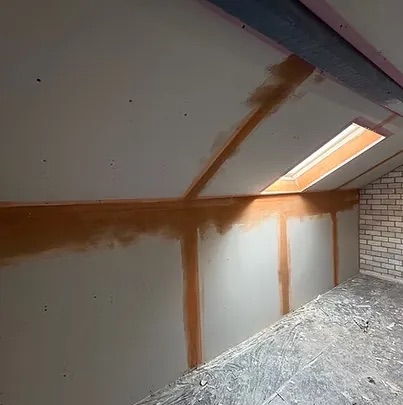
Same team from first visit to last, one person to ring, and no sub-contracting your work out to somebody you have never met. The quote is itemised, not a figure on the back of a card: the survey and any borescope check, the system and its thickness, making good around windows and doors, ventilation works, and disposal on separate lines, so you can compare it properly against anyone else's.
Nothing is left open or unusable overnight. The site is swept at the end of each day rather than the end of the job, and what comes out leaves with us. If something turns up once we start that nobody could have seen, you get a photograph and a price before we carry on.
There is no conservation area over Owermoigne, so external wall insulation on an ordinary house is not blocked in the way it is in the villages either side; it is still worth checking against the rules on external walls. The parish does contain listed buildings, and there consent covers internal work as well as external under section 7 of the 1990 Act; Dorset Council holds the designation records. Regulation 23 brings building control in once more than half a wall is renovated.
Cost
What decides the price of a wall insulation job
No rate per square metre, because the wall area is the easy part; what happens at every window, door and floor junction is not.
Getting to it. A rendered cottage on the village street, a brick house with good facing brickwork and a post-war bungalow are three different jobs, and the render one is the cheapest to do from outside. Cavity fill is drilled from outside and a bungalow comes off a tower where a three storey gable wants a scaffold. Internal lining is worked room by room from inside, so it is your rooms rather than a platform that gets disrupted. The work at height rules still set the platform.
Which wall you actually have. A cavity that is clear and dry can be filled in a day. A solid wall cannot be filled at all, and has to be lined inside or insulated outside, which is a different job at a different price. A borescope through one drilled hole settles it, and no honest quote is written before that.
The junctions, not the field of the wall. Reveals at windows and doors, the floor junction, the eaves and any party wall are where heat escapes and where condensation shows up if the detailing is wrong. That work is slow, it is most of the labour, and it is the first thing a cheap quote leaves out.
Comparing quotes? Ask whether the wall has actually been checked with a borescope or just assumed, what system and what thickness is specified, how the reveals and floor junction are being detailed, whether ventilation is being addressed, and who makes good the plaster and decoration afterwards. Two quotes for the same job are usually two different jobs.
If damp has appeared
Damp or mould after a wall was insulated
Ring rather than use the form. Damp patches or black mould appearing on an outside wall after cavity fill or internal lining usually means water is tracking across the cavity, or warm air is reaching a cold surface at a junction. We look before we take anything out, because the fix depends on which of those it is. Send a photograph of the outside wall as well as the damp patch, because on this kind of job the cause is usually visible from the pavement. The phone is answered 24 hours for emergencies; scheduled work runs Monday to Friday, 8am to 6pm.
Local
The village where the outside face is still your decision
Nearly every village on this side of Dorset has a conservation area over its centre, and inside one of those the outside of your wall is not simply yours to change. Owermoigne does not have one, and that is genuinely useful to know before you get quotes. External wall insulation on an ordinary house here is a normal building job rather than a planning fight, and it is the better technical answer more often than people realise.
The reason is what it does at the edges. An internal lining warms the face of the wall but leaves the joist ends, the eaves and the party wall on the cold side of the insulation, so those become the strips where condensation collects. An external system wraps the whole thing, keeps the masonry warm and dry, and leaves the rooms the size they were. The cost is that it changes how the house looks and it needs a scaffold, so it makes most sense where the wall is already rendered.
There are exceptions and they matter. There are listed buildings in the parish, and on those consent is needed for work inside as well as out, so the easy answer stops applying. And on a house with good facing brick or flint, burying it under render is a decision you cannot undo, whatever the U value says. We will tell you which category you are in on the first visit.
Who you are dealing with
A local firm you can check
We cover Owermoigne, Crossways, Warmwell, Winfrith Newburgh and the villages along the A352 towards Wareham, broadly DT2, under Dorset Council. You are dealing with Bournemouth Roofing & Building, the trading name of Bournemouth Roofing & Building Ltd, registered in England and Wales, company number 15471719, which you can look up in a minute. Thomas Hannen's business, and he is the one who comes out to price the job, not a salesman. A verified customer's 10 out of 10 on Checkatrade. The visit and the written quote are both free.
Questions
Owermoigne questions we get asked
Is external wall insulation better than an internal lining?
Technically, usually yes, because it wraps the joist ends and the eaves that a lining leaves cold and keeps the rooms their original size. It costs more and it changes how the house looks.
Do I need permission for external insulation in this village?
There is no conservation area over Owermoigne, so on an ordinary unlisted house the usual heritage obstacle is not there. A listed building is a different matter and needs consent.
What happens to the pipes, meters and sills?
They come off and go back on extension brackets, and the sills are usually replaced with deeper ones. It belongs on the quote as its own line.
Will external insulation stop damp coming through the wall?
It keeps rain off the masonry, so penetrating damp through a solid wall usually stops. It does nothing for water coming up from the ground, which is a separate job at the base of the wall.
Can I do external insulation on part of the house?
Yes, but the join has to be thought about, because a step in the elevation looks odd and the corner where the two meet becomes a cold bridge unless the insulation is returned.
Nearby, and next door
Wall insulation near Owermoigne
Wall insulation nearby
Our other trades in Owermoigne
Everything we do in Wareham Wall insulation, all areas Every area we cover
Free quote
Find out which of the two your house wants
Thomas comes out, surveys the wall, weighs inside against outside and prices both where it makes sense. The visit and the quote are free.