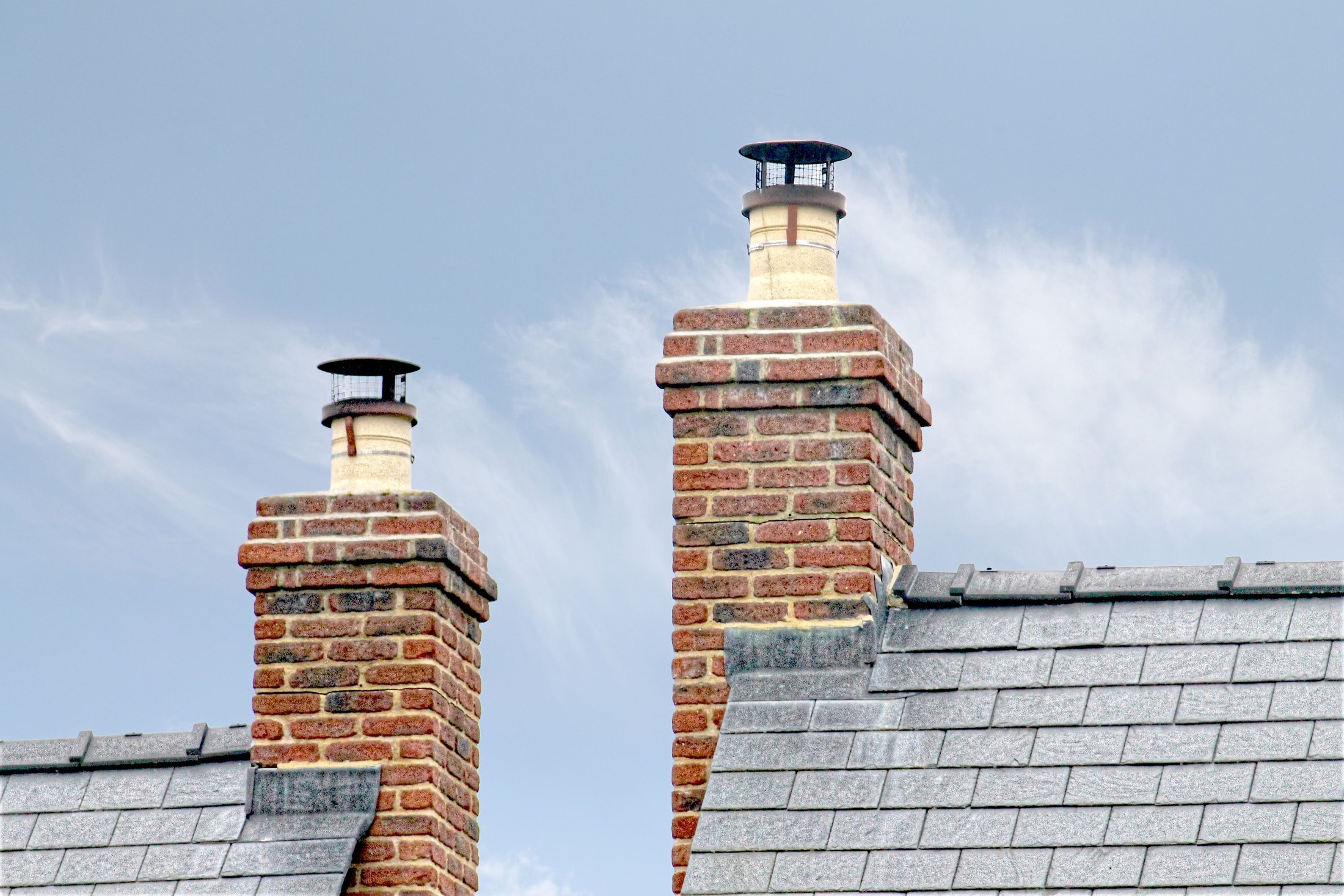
Roofing in Crossways
Bungalow and estate roofs across the village: repairs, dry ridge and verge, full re-covers, flat roofs and leadwork. Free site visit, itemised written quote.
The site visit is free and so is the written itemised quote. Thomas Hannen prices every job himself.
Your covering at Crossways is genuinely your own choice. Nothing in the village is listed and there is no conservation area, so a like for like re-cover needs no application at all. Very little of this patch can say that.
Crossways is a planned village rather than an old one: heathland between Dorchester and Wool that filled up from the 1960s onwards, with a big share of bungalows and a lot of trussed rafter roofs of the same handful of ages. That makes the work predictable.
Roofs here fail at the ridge, the verge and the eaves long before anything happens in the middle of a slope, and the trees on three sides of the village decide how often the gutters need looking at. We come out, get on the roof, put a torch through the loft hatch and photograph what we find. The site visit and the written quote are both free. About twenty miles, and we are down the A35 most weeks.
The work
A big roof on a small footprint, mostly hipped
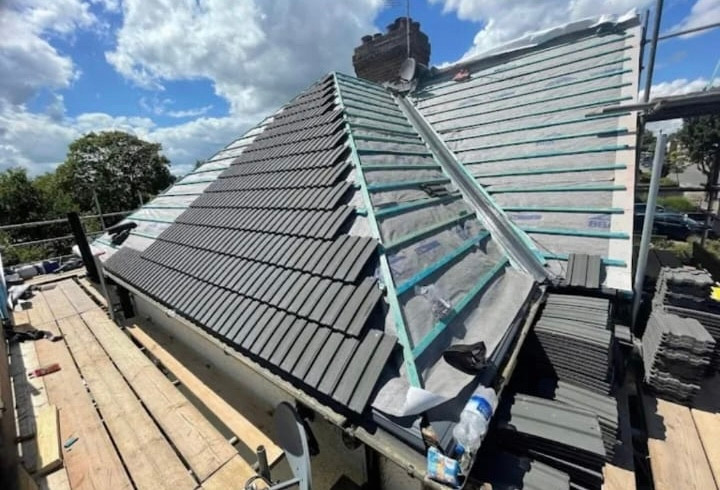
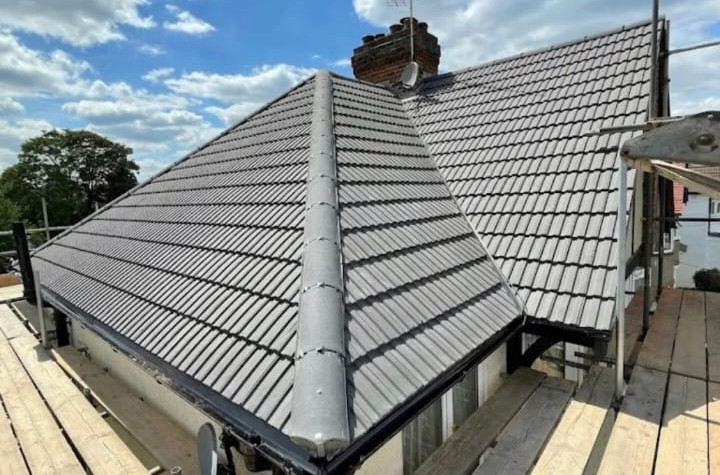
Bungalow roofs. Nearly a quarter of the homes here are bungalows, and a bungalow puts a large roof over a small footprint, so the roof is a bigger share of the building than anywhere else. The upside is height: plenty come off a tower rather than a full scaffold. The catch is that most are hipped, so there is far more hip and ridge per square metre than on a two storey house, and that is where a covering fails first. Everything of this age was bedded and pointed in mortar, and mortar shrinks, cracks, takes in water and lets go. The first sign is usually a ridge tile that rocks or a lump of bedding on the path. We take the old bedding off and fit a dry ridge and dry verge screwed onto a ventilated roll, the mechanical fixing BS 5534 asks for, priced by the metre of edge rather than by the roof.
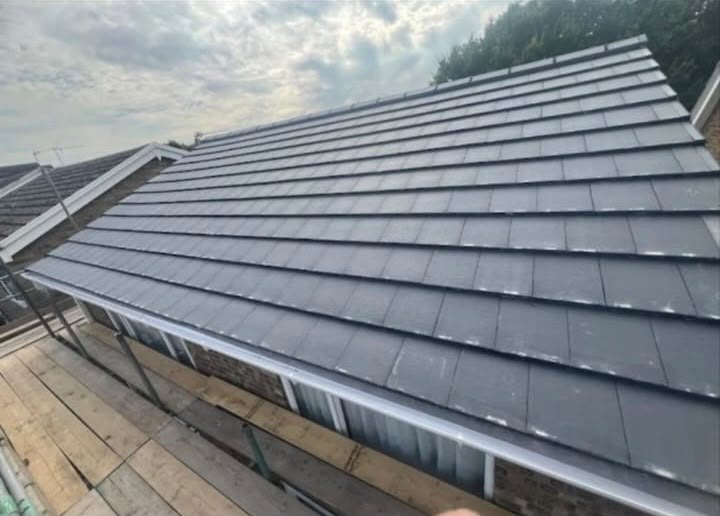
Mostly concrete interlocking tile out here, with clay plain tile and natural slate on the handful of older cottages in the lanes. On a roof this age the covering usually outlives the nails and clips holding it, so we replace with a matched tile and re-fix either side of it. The bitumen felt under these roofs perishes and tears where it laps into the gutter, which is the one place it has to be sound. That tear soaks the fascia and the rafter feet, and it is the reason for most stained ceilings we see here.
When nails, battens and felt have gone together, the covering comes off, soft timber is cut out, and a new roof goes back on breathable membrane and treated battens. One local point on a bungalow: if you want a different covering, the weight has to suit the trusses, and that is worth checking before you fall for a tile.
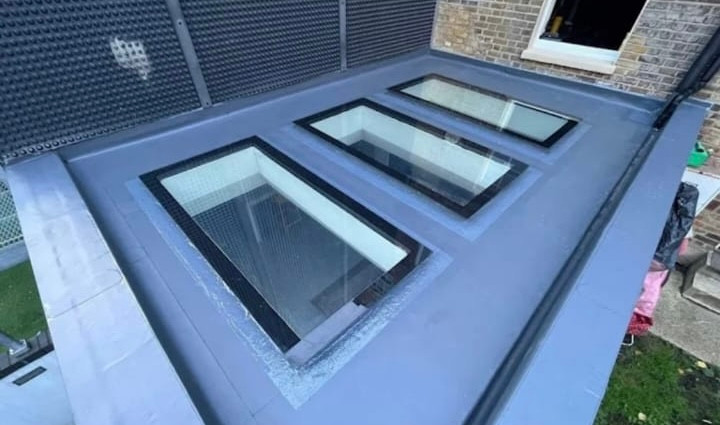
Rear extensions, garages, porches and the flat topped dormers on converted bungalow lofts come in felt, GRP fibreglass or EPDM rubber, deck first, then the falls, upstands and outlet. Heath, pine and birch on three sides means more in the gutters than a town street gets, and needles wash through and pack the downpipe out of sight, so the run has to be emptied and the downpipes flushed. While the covering is off, insulation and eaves ventilation cost far less to sort, and Approved Document L sets the standard a renovated roof has to reach.
How it runs
From your call to a written price
Same team from first visit to last, one person to ring, and no sub-contracting. The quote is itemised line by line, and anything found on the strip gets a photograph and a price before we carry on. On permission this is one of the easy ones. No conservation area, nothing listed at all, so a repair, a like for like re-cover, new rainwater goods and rooflights all run under ordinary householder permitted development, with no planning permission and nothing to apply for, inside the limits Planning Portal guidance sets out: nothing more than 150mm above the roof plane. Renew more than a quarter of a slope and building control does apply, because the insulation comes up with it. Dorset Council for both.
Cost
What decides the price of a roof
No rate per square metre. Crossways is kind here. Plots are open, the roads are wide and modern, there is somewhere for a lorry and a skip, and single storey roofs often need a tower rather than a full scaffold. How long a platform stands still matters as much as its size, and the work at height rules are why it is a priced line rather than an optional extra. Chimneys, valleys and abutments are priced one at a time, because that is where the leadwork hours go. Ask whether the scaffold is in the price and whether battens and membrane are renewed or covered over.
If it is leaking now
Water coming in today
Ring rather than use the form. Anything letting water in goes to the front of the queue, and the first visit makes it safe while you decide. Before we arrive, look along the ridge and the gable verges from the ground rather than at the middle of the slope, and check the path for a lump of mortar bedding. The phone is answered 24 hours for emergencies; scheduled work runs Monday to Friday, 8am to 6pm.
Worth knowing
Nothing here is protected, and that is worth money
Most of the places we work in carry something: a conservation area, a listed cottage next door, a landscape designation that means somebody at the council has a view on your tiles. Crossways carries none of it, and that has two practical effects.
You are not obliged to match what is up there, so a discontinued concrete tile does not send you hunting a reclaim yard, and you can move to a different covering as long as the trusses take the weight. And you are not waiting on anybody: no consent, no application, no fee, no argument about a rooflight.
The one thing that changes the answer is adding a bedroom. A loft conversion creating overnight accommodation lands in the Poole Harbour nutrient catchment and has to be dealt with properly. Re-roofing does not, and nor does a new flat roof over the same extension. So if somebody tells you the roof job needs planning, ask which part of it they mean.
Who you are dealing with
A local firm you can check
Twenty miles out along the A35, covering Crossways, Warmwell, Woodsford, Moreton and the DT2 addresses around them. Dorset Council for planning and building control. Bournemouth Roofing & Building Ltd, registered in England and Wales, company number 15471719, which you can look up in a minute. Thomas Hannen's business, and he is the one who comes out to price the job, not a salesman. A verified customer's 10 out of 10 on Checkatrade. The visit and the written quote are both free.
Questions
Crossways questions we get asked
Nothing in Crossways is listed. Does that make this simpler?
On the appearance side it does. Crossways has no conservation area and no listed entries at all, which is genuinely unusual on this patch. A re-cover is ordinary permitted development and the tile you put back is your own choice rather than a negotiation with Dorset Council. Building regulations still apply to how the work is carried out, and altering the roof shape rather than re-covering it is a different question.
Can I go from concrete tiles to something lighter?
You can, and here there is nothing on the planning side standing in the way. The limit is structural. Rafters sized for heavy concrete will carry a lighter covering without complaint, but doing it the other way round is where people come unstuck. We measure the rafters and check the spans from inside the loft, and if the roof will not take what you have picked we say so before anything is ordered.
My gutters overflow at the same corner every winter. Why?
Usually because the fall has been lost or a joint has dropped, and on the ground at Crossways that is worth putting right rather than living with. The soil is cohesive and moves significantly as it wets and dries, so soaking one patch beside the wall each winter and drying it out each summer works the ground under the foundation. We reset the run, renew the joints and get the discharge into a gully.
Crossways is twenty miles out. Do you actually cover it?
We do, and it gets asked often enough to answer plainly. Crossways is about twenty miles west of the yard, which is a straight run rather than a lane crawl. What the distance changes is scheduling rather than willingness. We would rather bring the scaffold, the materials and the crew in one movement than make three separate trips, so a start date is set once everything is ready to go at once.
Would a tower do instead of a full scaffold?
A tower will do for a single tile at a low bungalow eaves and very little else. It gives you one working position and nowhere safe to stack material, so the day goes on moving it rather than roofing. Roughly a quarter of Crossways homes are bungalows, and even at that height a full slope wants a proper scaffold run with edge protection along the eaves.
Nearby, and next door
Roofing near Crossways
Roofing nearby
Our other trades in Crossways
Roofing guides
Concrete vs clay roof tiles: which is right? Planning, building regs or listed building consent Storm damage to a roof: the first 24 hoursEverything we do in Wareham Roofing, all areas Every area we cover
Free quote
A written price for your Crossways roof
Send the postcode and what you have noticed. We come out, look at the whole roof and put it in writing.