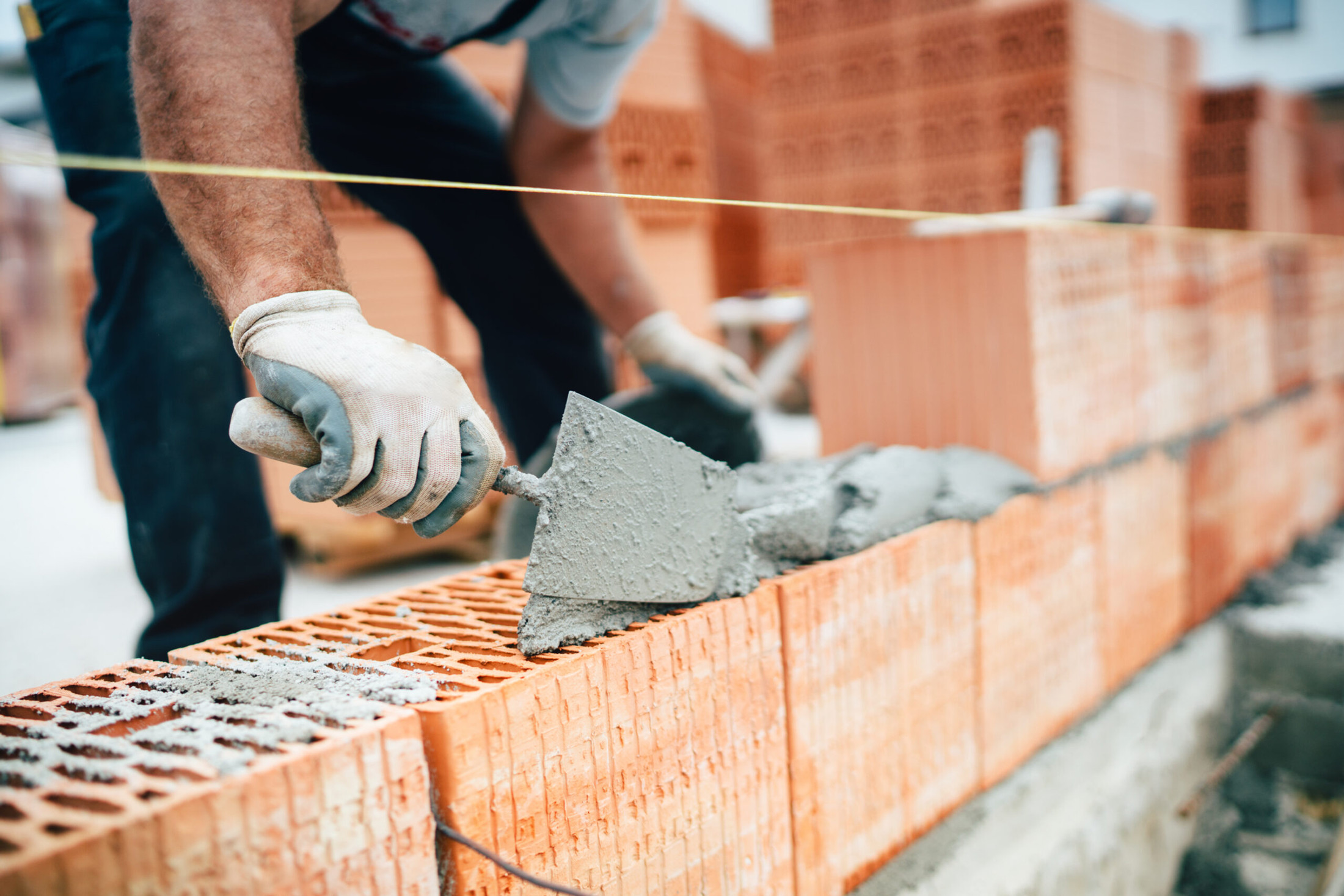
Repointing in Winterborne Kingston
Hand raked joints, a mortar matched to the wall it is going into, and the low courses pointed in something that lets the wall dry out.
The site visit is free and so is the written itemised quote. Thomas Hannen prices every job himself.
Mortar in a village like this fails from the ground up as often as from the top down. Where a wall stands on land that goes wet every winter, the bottom four or five courses give way first, and the mix that goes back into them decides whether you are looking at the same thing again in five years.
Three things bring people here to the phone. Mortar dropping out of the low courses until you can push a finger into the joint. A chalky white bloom on the inside face of an outside wall. And brick faces flaking off after a hard frost, on whichever elevation takes the weather off the open fields.
None of that is a wall coming down. It is mortar. We walk every elevation rather than the one you have noticed, then scrape a joint low down and another at head height on the same wall. Decay that is even all the way up is weathering; decay far worse at the bottom is water. You get it back in writing, elevation by elevation, with the faces we would leave alone marked as such. The visit and the itemised quote are free.
The work
What the walls here are made of, and what each one wants
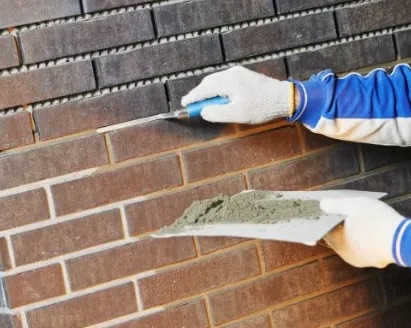
Solid brick, laid in lime. The older houses and cottages in the Winterbornes have no cavity behind the brick. A solid wall keeps water out by letting it soak in and evaporate back out through the joint, so the mortar has to stay softer and more open than the brick. We rake those joints by hand to twice the joint width, never with an angle grinder, and point back in an NHL lime or lime putty mix gauged to the original sand. The finish goes back to the profile the wall carries, usually flush or slightly recessed rather than the weather struck joint on later work.
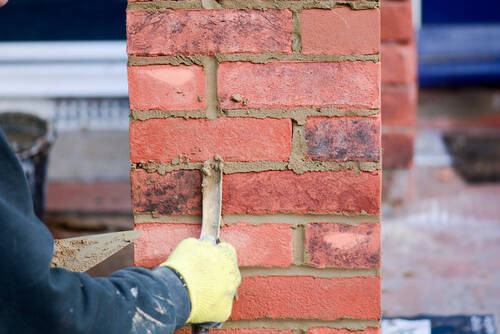
Hard pointing somebody put on later. A great deal of village brickwork was repointed in sand and cement in the last sixty years, and putting that right is the commonest job we get here. A cement joint on a soft brick stops a breathable wall breathing, so the moisture leaves through the brick instead and takes the face with it. The tell is joints standing proud and hard with hollowed bricks between them.
Faces that have already blown. Where the face of a brick has come off we cut it out whole and turn or replace it rather than filling the hollow, which never matches and drops out inside a couple of winters. Matching means a sample off the wall and a trial panel judged in daylight on how it will read once weathered.
Garden walls, yard walls and outbuildings. Half the mortar work in a village is not on the house. A freestanding wall is weathered on two faces and along the top at once, and the coping is nearly always the part that has gone. Stacks are the other one: a chimney takes weather on four sides with nothing warming it, so its joints go friable years ahead of the house walls. That is work at height and wants a scaffold rather than a tower.
One thing we will not do is point over movement. Cracking that repeats every fifth or sixth course is not tired mortar, and filling those joints hides it for a season.
How it runs
From your call to a written price
Same team from first visit to last, one person to ring, and no sub-contracting. The quote is itemised: access, raking out, the mortar mix, the area of each elevation, brick replacement and disposal on separate lines, so you can compare it against anyone else's.
Nothing is left open overnight, the site is swept at the end of each day rather than the end of the job, and what comes out leaves with us. Anything nobody could have foreseen gets a photograph and a price before we carry on.
Repointing like for like is repair rather than development, so there is no planning application and nothing for building control to sign off. Appearance is where it changes. Seven listed entries sit in the parish, the church of St Nicholas among them, and on a listed building the mortar is protected fabric, so listed building consent is needed before a joint is opened, for a change of mix, colour or profile as much as for anything structural. Dorset Council is the authority, and we check an address before a mixer is filled.
Cost
What decides the price of a repointing job
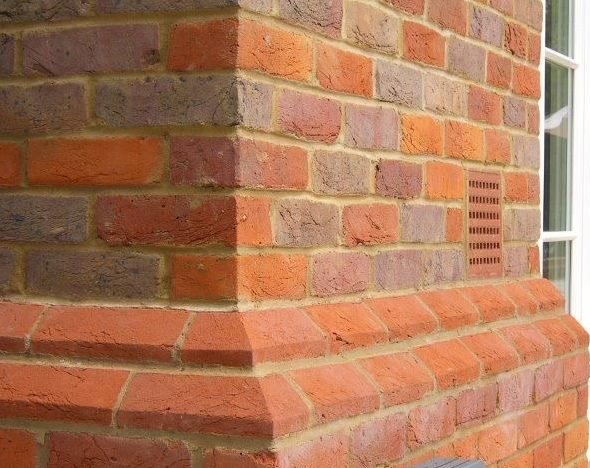
No rate per square metre, because the square metres tell you almost nothing until somebody has looked at the joints.
Getting to it. A brick cottage tight against the village street, a barn gable out in the open and a low wall along a lane are three different set ups before a joint is raked. How long the platform stands matters as much as how big it is, and the work at height rules are why access is a priced line rather than one absorbed into a rate.
The joints decide it, not the wall. Raking out by hand is slow, and on soft brick it is the only safe way. How deep the joints come back, and whether the faces have already spalled, sets the hours far more than the area does.
Matching is the part that shows. Too strong a mix is the classic mistake: cement holds water against a soft brick and the face blows off in the first hard frost. Lime is slower to work and to cure, and it is the right answer on most pre-1919 walls.
Two quotes for the same job are usually two different jobs, so ask each one how deep the joints are raked and whether the scaffold is in the price.
If water is getting in
Open joints, and water coming through the wall
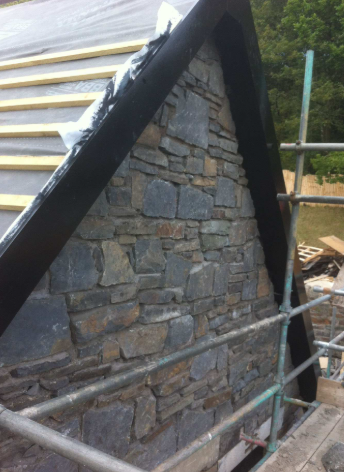
Ring rather than use the form. A wall with the joints washed out lets driven rain through to the inside face, and on a chimney it finds the flashings too. We come and look, sheet or temporarily point the worst of it, and price the elevation once it has dried enough to see what is sound. Around here that is generally the south west gable, taking the weather straight off open ground, or the base of a wall once the land has been wet for weeks. The phone is answered 24 hours for emergencies; scheduled work runs Monday to Friday, 8am to 6pm.
Worth knowing
The winterbourne, and why the bottom of a wall goes first
The stream that gives the village its name is a winterbourne, which is to say it is not there all year. It fills as the chalk beneath it fills, usually around midwinter, runs hard through the spring and is gone by summer. The water table moves with it, and so does the moisture against the bottom of every wall in the village. Parts of Winterborne Kingston also sit inside flood zones 2 and 3, and you can check an address on the government flood risk service.
What that changes is the mix and the order of work. The instinct on a wet, crumbling bottom course is to point it hard. It is the worst thing you can do: a dense cement joint stops the wall drying through the mortar, so the moisture and the salts come out through the brick faces instead. We point the low courses in the softest, most open mix on the building, following the standard guidance on preparing and using lime mortars, and damp the joints down and brush them back so the mix cures rather than flashing off. Timing counts too: low level work goes far better in late spring or summer, once the ground has dropped, than in February with the water still up. Ring us in midwinter about a wet plinth and we will often quote it and book it for the spring.
Who you are dealing with
A local firm you can check
We cover Winterborne Kingston, Winterborne Whitechurch, Milborne St Andrew, Bere Regis and the lanes between them, broadly DT11, under Dorset Council. You are dealing with Bournemouth Roofing & Building, the trading name of Bournemouth Roofing & Building Ltd, registered in England and Wales, company number 15471719. Thomas Hannen's business, and he is the one who comes out to price the job, not a salesman. A verified customer's 10 out of 10 on Checkatrade. The visit and the written quote are both free.
Questions
Winterborne Kingston questions we get asked
Why is the mortar worse at the bottom of our wall than higher up?
Because that is where the water is. A wall with no damp proof course draws moisture out of the ground, and here the ground is wet for much of the winter. The salts carried up with it crystallise in the joint and break it apart. The answer is the softest, most permeable mix on the building along that low band, treated as something you renew rather than seal.
Does a village cottage really need lime, or is that just tradition?
It is how the wall was designed to work. A solid wall sheds water by letting it evaporate back out through the joint, which needs a mortar more open than the brick. Put cement on and the water leaves through the brick faces instead.
Somebody has already pointed our wall in cement. Can that come back off?
Usually, and it is a fair share of what we do here. It comes out by hand, joint by joint, because the cement is often harder than the brick it is bonded to and a disc would take the arris off both sides. That is slower than a wall nobody has touched, so it shows as its own line on the quote.
Do we need consent to repoint a cottage near the church?
Only if the building is listed, or attached to one. Seven listed entries sit in the parish, and on any of them the mortar counts as protected fabric, so a change of mix, colour or joint profile needs listed building consent from Dorset Council first.
Will repointing make the inside of the wall drier?
If the damp is coming through open joints on the weather side, yes, and on a solid wall that is the commonest cause. If the wall is dry at head height and wet along the bottom, the water is coming up rather than through, and pointing alone will not stop it. We look at both faces and at the ground outside first.
Nearby, and next door
Repointing near Winterborne Kingston
Repointing nearby
Our other trades in Winterborne Kingston
Everything we do in Blandford Forum Repointing, all areas Every area we cover
Free quote
Get the joints looked at before the ground comes up
Thomas comes out, scrapes a few joints high and low, photographs each elevation and puts the price in writing, itemised, at no cost to you.