Roofing in Sixpenny Handley
Edge work, repairs, re-covering, leadwork and rainwater goods across Sixpenny Handley and the SP5 downs. Free site visit, free written itemised quote.
The site visit is free and so is the written itemised quote. Thomas Hannen prices every job himself.
Last updated
On high open ground the wind does not take a roof off. It works at the edges. That is why a Sixpenny Handley roof usually needs ridge, hip and verge work, not a full re-cover, and why the two are priced so differently.
The village sits along the top of the downs with very little between it and the weather. After a rough week the damage looks the same. Mortar chippings on the drive and a ridge tile sitting at an angle. A verge cap gone off a gable end. Tiles slipped on the exposed side of a roof while the sheltered side has not moved in forty years. If the wind has opened a gable on the downs and rain is coming in, ring 07435 839745 and we will tell you what to do first.
We come out to Sixpenny Handley, get up on it, put our head into the loft and photograph what we find. The site visit and the written itemised quote are both free. Most of the time the survey ends with a repair and a date. Where the covering genuinely has finished, we show you the photographs that say so. If all you need is one slipped slate put back, a leaking flue sealed or a split valley relaid, that single fault is covered on our page for roof repairs in Sixpenny Handley.
The work
Exposed up here, sheltered two miles away
Ridge, hip and verge are the first weak point on a Sixpenny Handley roof. Mortar bedding along a ridge or a verge has been in the weather since the roof went on, and once it cracks the wind gets under the tile and starts rocking it.
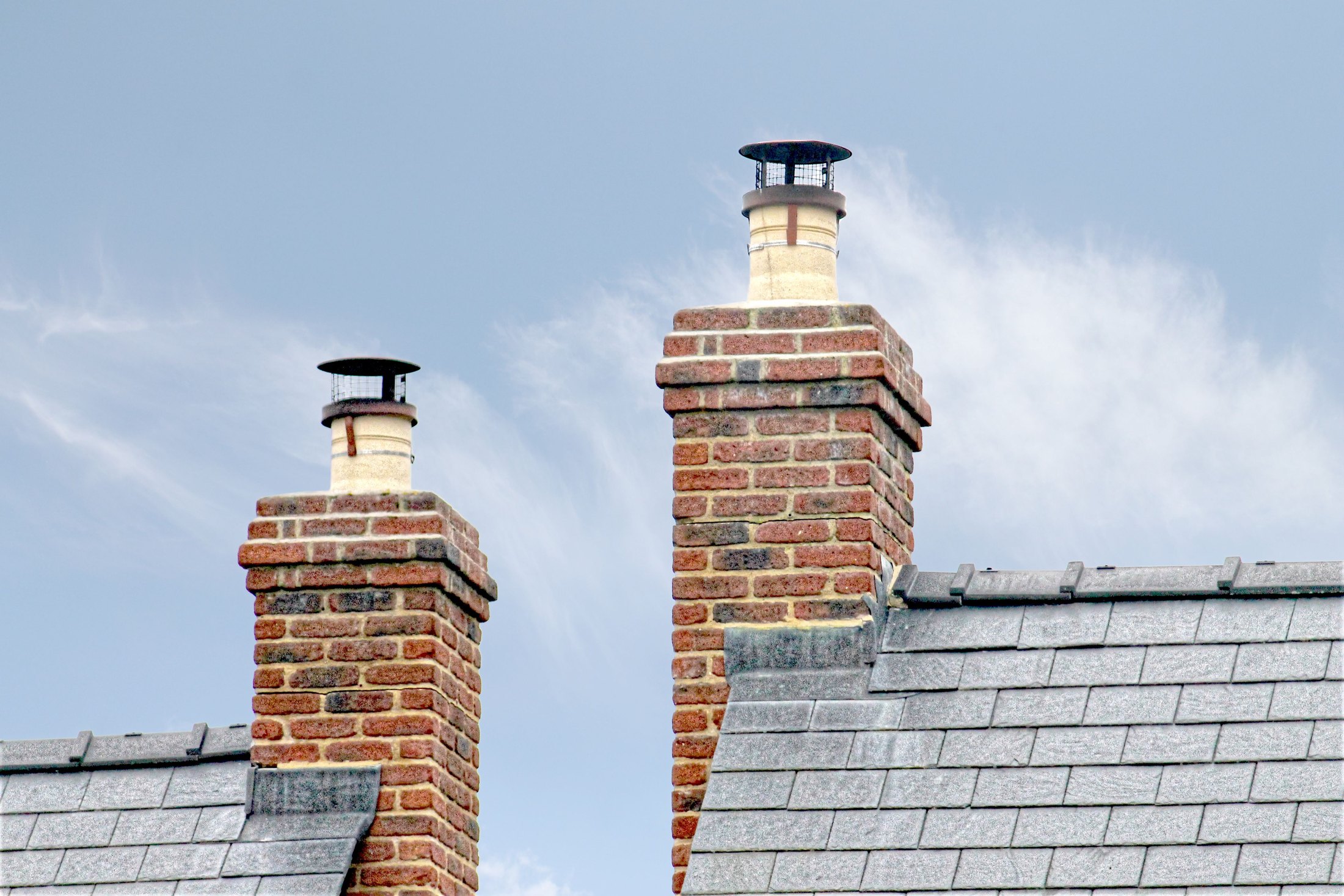
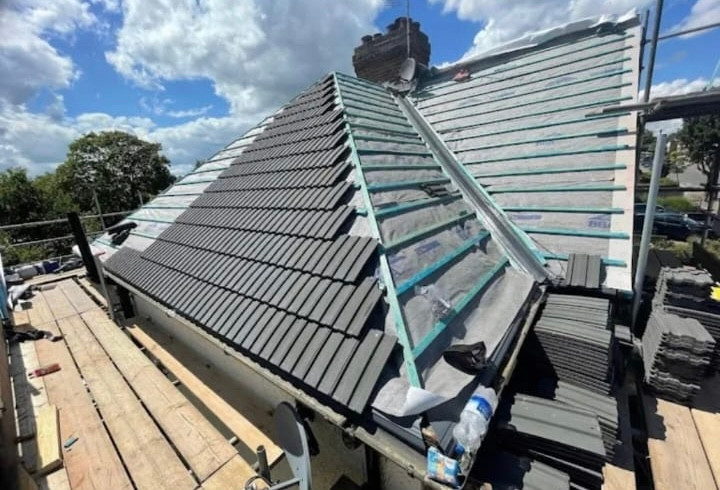
We strip it off and convert to a dry fix system, dry ridge and dry verge screwed onto a ventilated roll, the mechanical fixing BS 5534 expects, which vents the roof space along the ridge into the bargain. It is priced by the metre of edge.
Coverings and junctions. Coverings vary street by street here. Flint and brick cottages in the old part of the village carry plain clay tile and natural slate, the later houses concrete interlocking tile, and there is the odd stone slate roof left on an outbuilding. There is thatch in Sixpenny Handley and we do not touch it, so where a tiled roof abuts a thatched one we work up to the junction, form the lead and leave the thatch to a thatcher. On the older cottages the usual find is a mortar fillet where a flashing should be, and flashings, soakers and valleys go back in code rated lead.
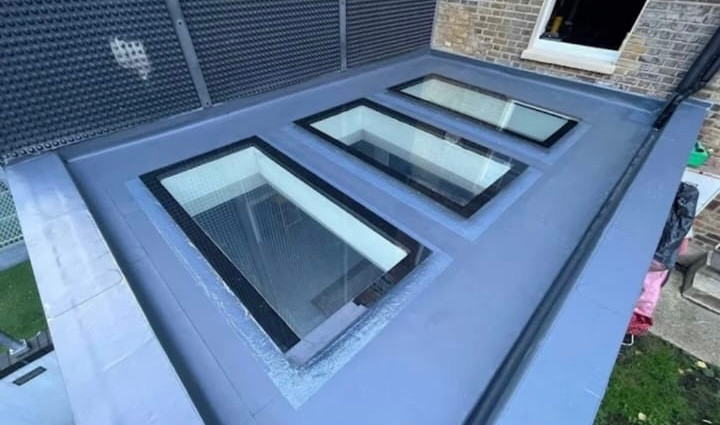
On a strip and re-cover the roof goes back on breathable membrane and treated battens with fixings and clips specified for an exposed pitch, which is not the same specification as a sheltered valley two miles away. There is no sarking board on most roofs in Sixpenny Handley, so the underlay does all of the work behind the tile, and an exposed flat roof wants its edge trim looked at, because that is where wind gets a purchase. Gutters and downpipes fill with debris blown off the fields, and clearing them is what saves the fascia and soffit behind. This is Cranborne Chase, where anything visible attracts design scrutiny, so a change of covering is discussed before it is ordered. With the covering off, insulation and eaves ventilation are cheap to sort, and getting that airflow right is what keeps condensation out of the loft afterwards, with Approved Document L setting the standard a renovated roof is expected to reach.
How it runs
How a roof job on the Chase goes, start to finish
You ring, and Thomas Hannen drives the 17.1 miles up from Boscombe to look at the roof himself. He walks round the outside, goes up a ladder where it is safe, and puts a torch into the loft to see the battens, the underlay and the timbers.
Up here the weather comes across the open downs hard, so he looks closely at the verges, the ridge and the lead flashing round the chimney, because that is where a roof on the Chase lets go first.
The written quote is itemised: the scaffold, stripping and sorting the old tiles or slates, new battens and breathable membrane, the coverings, each lead detail, and the skip. The one quote runs from the first scaffold tube to the last ridge tile. The roof is sheeted every night, the ground under it is raked clear of nails and broken tile every evening, and the waste leaves with us. If stripping turns up a rotten rafter or a soft valley board, you get a photograph and a price, and we wait for your answer.
Sixpenny Handley has no conservation area, so a like for like re-cover on an unlisted house normally sits within permitted development, and Planning Portal guidance sets out the limits. The Church of St Mary and a handful of other buildings are listed, and those need listed building consent from Dorset Council, which also handles building control.
Cost
What moves the price of a roof on exposed downland
A roof on the downland has no rate per square metre, because the area is the least of it. On a roof in this village, these are the things that decide the figure.
The weather on the day. The village sits high on the Chase with open ground around it. A gable facing the wind cannot be stripped in a gale, and the scaffold stands and is paid for whether anyone is working or not. We allow for that in the programme so it is not sprung on you later. The work at height rules set what the scaffold has to be, so it is a line of its own.
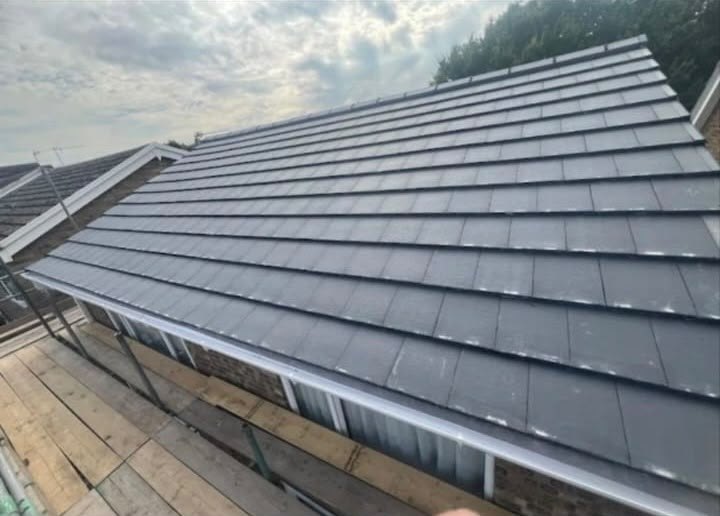
What the roof is made of. Old clay tiles and natural slate on Sixpenny Handley roofs come off by hand, and the sound ones go back, blended with new. Concrete interlocking tiles are quicker to strip and lay. The covering you have, and whether a listed building needs matching material, changes the labour more than the size does.
What is under the tiles. Battens that have rotted, felt that has turned to paper at the eaves, and rafter feet gone soft behind a leaking gutter only show once the roof is open. That is why we price what we can see and photograph anything we find.
Lead. Chimney flashings, valleys and abutments are priced one by one. So ask any other roofer what code of lead is going on the chimney, whether the battens and membrane are being renewed or left, and who pays for the skip.
If it is leaking now
Slipped tiles or a leak after a gale
Put a bowl under the drip, move anything electrical away from it, and stay off the roof. Storm damage on a high, windy site usually shows as tiles gone from the verge or the ridge rather than a hole in the middle.
If a ridge tile has come down, keep people and cars clear of that side of the house, because the next one tends to follow. The first visit is about keeping the water out: loose tiles refixed, a sheet over what cannot be mended straight away, and the leak traced back through the flashings. Scheduled work runs Monday to Friday, 8am to 6pm. For a leak, phone us rather than filling in the form, and if nobody picks up we ring back as soon as we can.
Worth knowing
Everything here is seen from somewhere
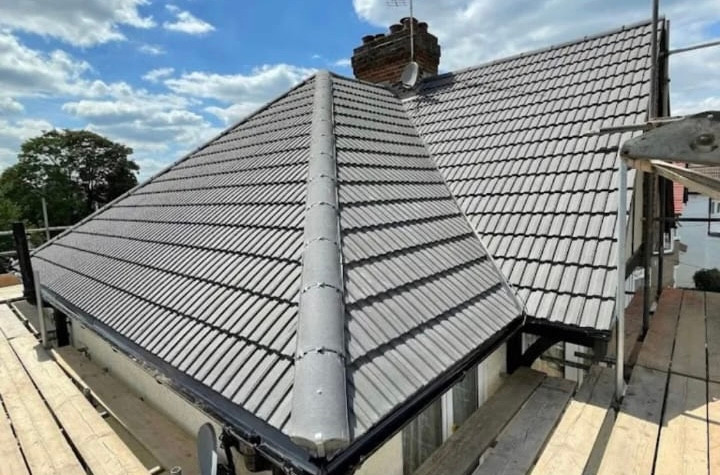
The village sits inside the Cranborne Chase National Landscape, and the practical effect on a roof is not paperwork. It is that a roof up here is visible from a long way off across open downland, so a covering that does not match reads as a mistake from half a mile away as well as from the pavement.
A like for like repair in Sixpenny Handley is unaffected by any of that. What it changes is what happens when the tile on your roof is no longer made. The cheap route substitutes the nearest current product and accepts a patch that never blends. We would rather source a reclaimed match, or lift sound tiles from a rear slope onto the elevation that is seen and put the new ones at the back.
So on a repair here we take a sample tile off and show you the match before anything is ordered.
Who you are dealing with
The roofer who drives up to Sixpenny Handley
Sixpenny Handley sits 17.1 miles up the A354 from our base in Boscombe, on the Chase. Our roofing work here reaches Woodcutts, Deanland, Pentridge and the other SP5 addresses round the village, and the council for planning, building control and listed building consent is Dorset Council.
Bournemouth Roofing & Building Ltd, registered in England and Wales, company number 15471719, is Thomas Hannen's business. He is the one who climbs up, looks at your roof and writes the price. A verified customer gave us 10 out of 10 on Checkatrade. The site visit costs nothing, and neither does the itemised written quote. Before you book a visit in Sixpenny Handley, you can read our customers' Google reviews, word for word, on our reviews page.
Planning at a glance
Do you need planning permission in Sixpenny Handley?
Most repairs in Sixpenny Handley need no application at all. What decides whether a change to the outside of your house does is who the council is, whether a conservation area or a listing applies, and whether the place sits in a protected landscape.
| Question | In Sixpenny Handley |
|---|---|
| Who decides | Dorset Council is the planning authority for Sixpenny Handley. Dorset Council's heritage pages set out what it controls. |
| Conservation area | None covers Sixpenny Handley, so a like-for-like repair is ordinary maintenance. |
| Listed buildings | Yes, there are listed buildings in and around Sixpenny Handley. If yours is one, work can need listed building consent. |
| Protected landscape | Inside the Cranborne Chase & West Wiltshire Downs National Landscape (formerly AONB), so anything visible from outside gets more attention. |
Questions
Questions about roofing in Sixpenny Handley
Does the Cranborne Chase designation control what my roof looks like?
The Cranborne Chase designation brings design scrutiny to any part of a roof that can be seen. Sixpenny Handley sits inside the Cranborne Chase and West Wiltshire Downs landscape designation, which is a policy layer, not a line drawn round the village, and it weighs on colour, profile and finish where a roof reads from open ground. On a like for like repair it changes nothing. On a change of covering, ring Dorset Council first.
Who signs off roof work here, Dorset Council or somebody else?
Dorset Council, and nobody else: there is no district office in this part of the county and no national park boundary over the village, so planning and building control both sit in the same place. The parish takes in seven listed entries, the Church of St Mary among them, and if your building is on that list the consent comes from that same office. Most repairs here need nothing submitted.
Do you charge to come out this far for a look?
The site visit costs nothing and neither does the written itemised quote that follows it. Sixpenny Handley is around seventeen miles from base, so visits out this way get grouped into one day instead of making the trip twice in a week. Thomas does the looking and the pricing himself, so what comes back to you is a proper quote rather than a figure guessed at from an office.
The roof is seen from the fields. Does that limit the tile?
It steers the choice more than it limits it. Where a roof reads across open downland the designation makes colour and surface matter, so a bright interlocking tile on a building visible from the lanes draws attention that the same tile tucked between houses never would. A matt finish close to what came off passes without an argument. We bring samples to the visit and look at them outdoors.
What should I check after a gale before calling you?
Walk the perimeter and look on the ground for pieces first, then look up at the ridge line for a tile sitting out of true. Check the loft for daylight and for damp on the timbers rather than only on the ceiling below. Gutters full of grit mean the covering is shedding its surface. None of that needs a ladder, and a photograph from the ground is enough to work from.
Nearby, and next door
Roofing near Sixpenny Handley
Nearby places we also cover for roofing, with straight-line distances from Sixpenny Handley, and the other trades we offer in Sixpenny Handley itself.
Roofing nearby
Our other trades in Sixpenny Handley
Roofing guides
Concrete vs clay roof tiles: which is right? Planning, building regs or listed building consent Storm damage to a roof: the first 24 hoursEverything we do in Verwood Roofing, all areas Every area we cover
Free quote
Get the Sixpenny Handley roof priced properly
Send the postcode and what you have noticed. We come out, get on the roof and put it in writing, itemised, for nothing.