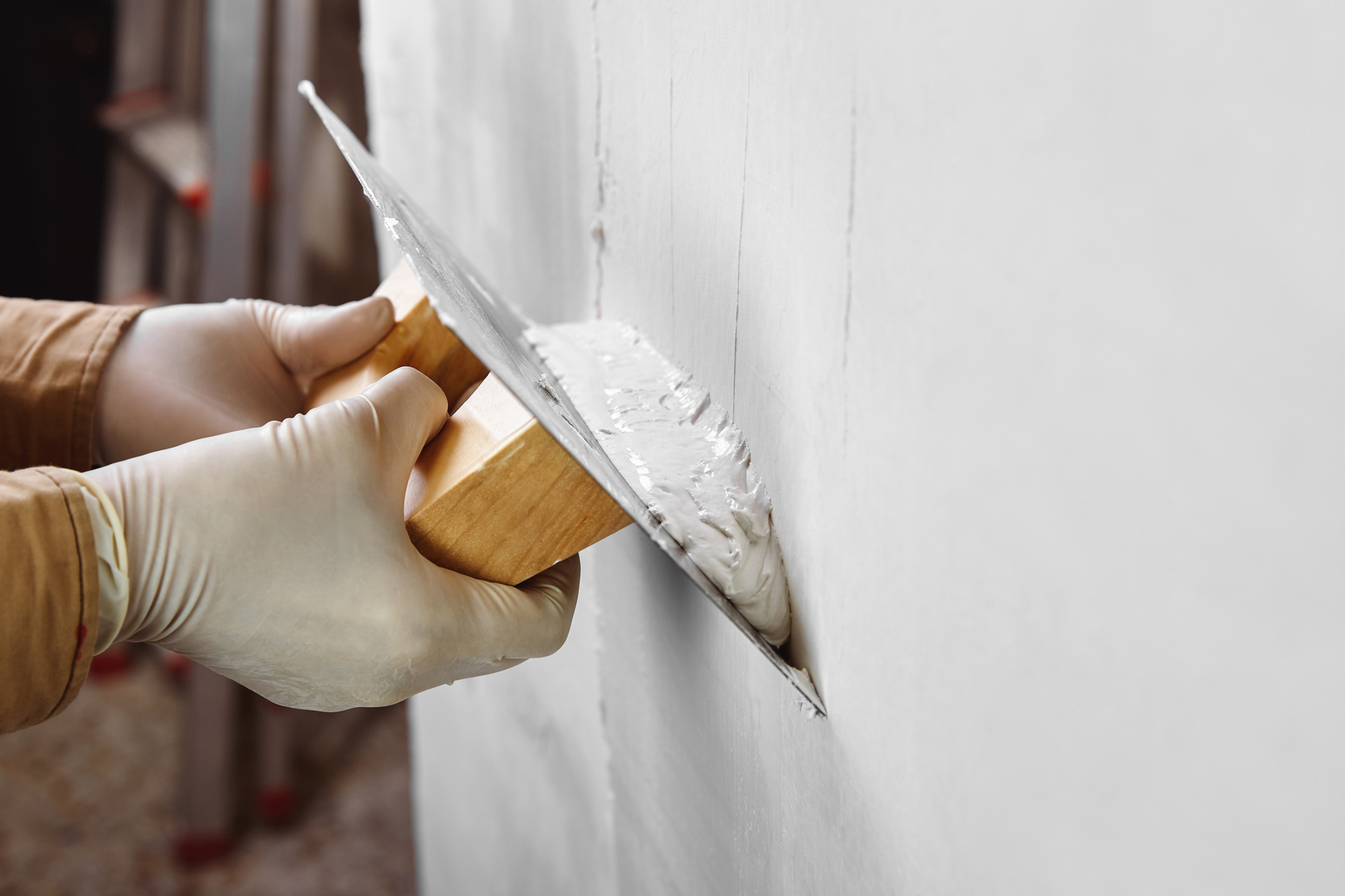
Plastering in Sixpenny Handley
Skimming, re-plastering, ceilings, lime work and external render across Sixpenny Handley and the SP5 villages, out through Woodcutts, Deanland and Pentridge.
The site visit is free and so is the written itemised quote. Thomas Hannen prices every job himself.
The first question on any plastering job in Sixpenny Handley is whether the old surface is sound enough to skim or whether it has to come off first. We tap the walls and ceilings through before pricing anything, tell you which of the two it is, and put that in writing.
Calls from the village start in one of three ways. Wallpaper comes off ahead of decorating and half the face of the plaster comes with it. A damp patch keeps returning through fresh paint on the same wall. Or a ceiling starts to sag and drop grit on the carpet, which in an older cottage means the plaster has parted company with the lath behind it.
What we do about it starts at the bottom rather than the top. Work out why the surface failed, deal with that, then pick the backing coat that suits the wall you actually have. Skimming over a wall that is still wet or already hollow is fast, cheap and back again within two winters. We are seventeen miles up the road, so we come out with what the job needs on the van.
The work
Thirty years of paper takes the finish with it
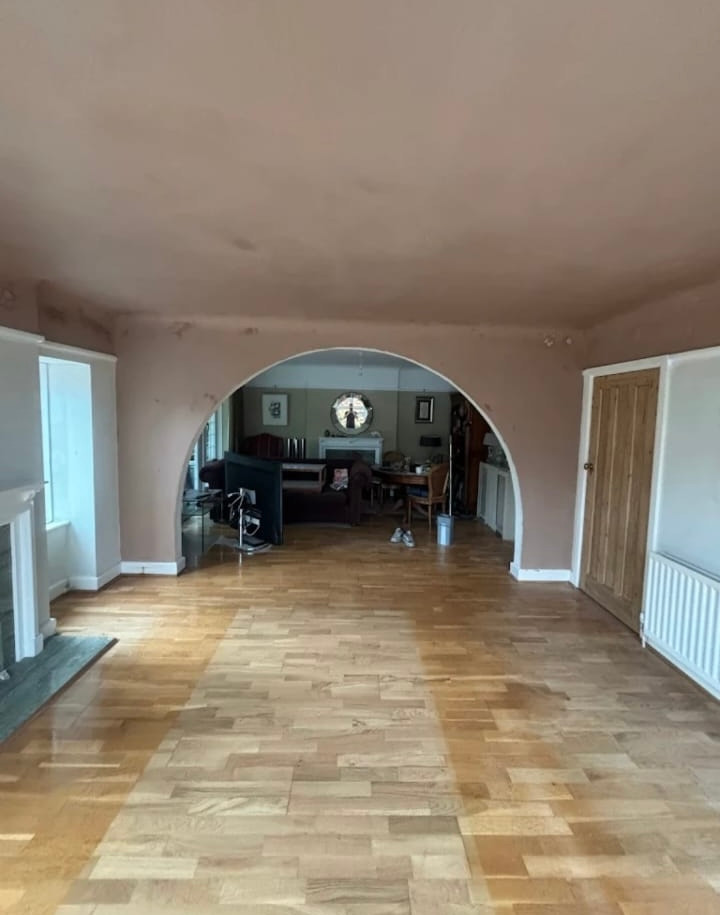
Thirty years of paper takes the finish with it. The commonest job in the village by a distance. Layers of paper come off and take the finish coat with them, leaving a wall that is sound underneath but no longer flat. We prepare and stabilise it, bead any external corner that has been knocked about, and skim it out flat and ready to decorate.
The older cottages here are flint and chalk block, some of them cob, under a soft render. Those are solid walls with no cavity, built to let moisture pass through and dry out again. Put a hard sand and cement render or a gypsum skim across the face and the moisture leaves somewhere else instead, usually as a blown patch a foot further along. They take a lime backing coat and a breathable finish. The ceilings in them are lime pushed through riven lath, and a century and a half of movement snaps the keys off. Where a ceiling is only cracked we overboard and skim, which keeps the original in place. Where it is bellied and moving it comes down, the joists get checked, and it goes back in board, tape and joint, then skim.
Nothing stands between these downland villages and the weather coming across the chalk, and it lands on render. We sound the wall for hollow areas, cut out what has let go, and either patch into the existing or take the elevation back to a scratch coat, a mesh reinforced basecoat, a bell cast bead at the bottom and a silicone thin coat topcoat. Thin coat systems belong on modern blockwork; on a solid old wall it is lime render instead. Farm buildings turned into houses want dry lining rather than wet plaster, and making good the chased and broken edges after new windows or a rewire is what stops the repair showing through the paint.
How it runs
From your call to a written price
Same team from the first visit to the last coat, one person to ring, and no sub-contracting your house out to somebody you have never met. The quote is itemised: prep, anything hacked off, the backing coat, the beads, the skim, making good and disposal on separate lines. Doorways are sealed before anything comes off a wall and the old plaster leaves with us. Outside, this is a Dorset Council area, the parish sits inside the Cranborne Chase National Landscape, and the cottages in the middle of the village need listed building consent. Where a whole elevation is re-rendered, Approved Document L treats that wall as a renovated thermal element.
Cost
What decides the price of a plastering job
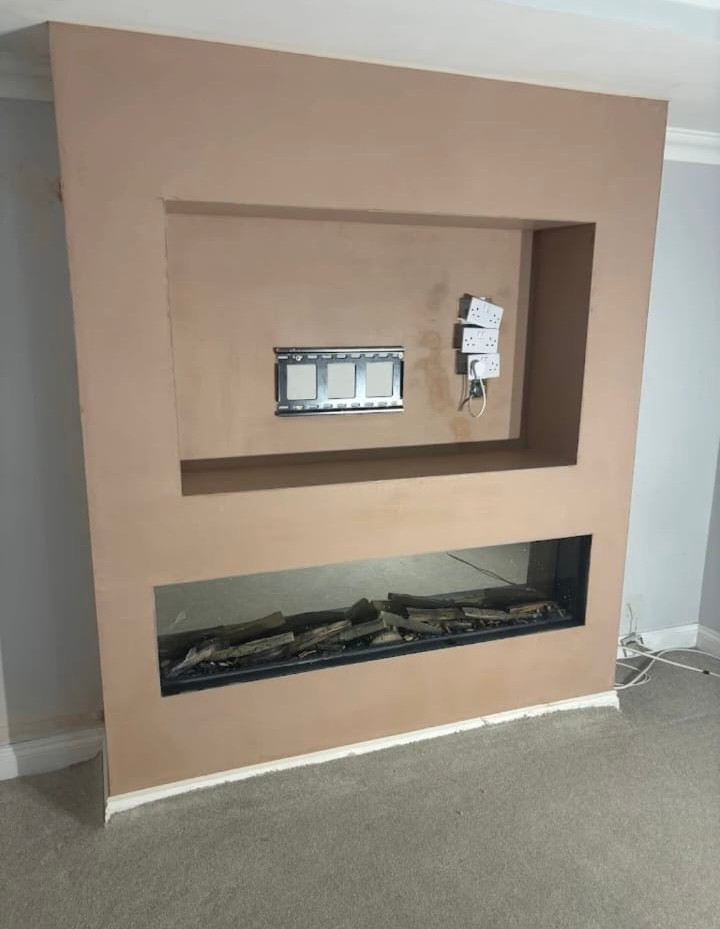
No rate per square metre, because what sits behind the surface decides it. A chalk and flint cottage under an old lime render, a post-war village semi with browning on block, and a converted barn lined out on studs are three different jobs. We tap the old surface before quoting, because anything hollow is already blown. Reveals, bay windows and staircases are where the hours go, since each is a bead cut, fixed and floated true. External render wants a tower or a scaffold, and out here the weather sets the programme. Ask whether it is a skim or a replaster back to the brick.
If it has come down
Plaster blown or a ceiling down today
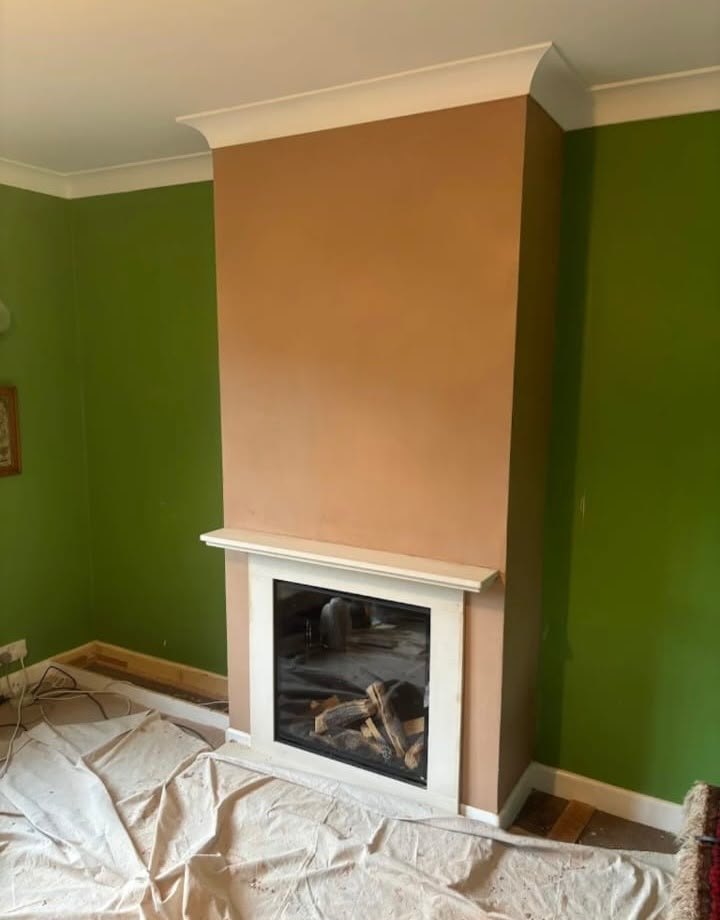
Ring rather than use the form. A ceiling that has started to sag, or plaster blown off a wall after a leak, goes to the front of the queue. Keep out of the room and get anything you value out from under it. Out here it is a seventeen mile run, so you get a fixed time rather than a vague morning.
Worth knowing
Outside work gets looked at harder than inside work
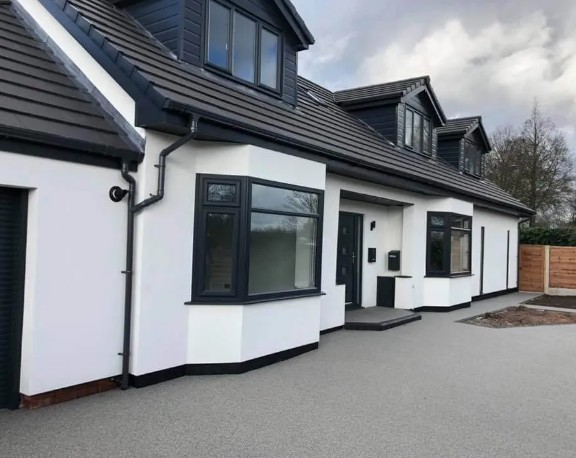
Sixpenny Handley sits inside the Cranborne Chase National Landscape, and there are listed cottages in the older part of the village. Neither of those stops you plastering your own front room. What they change is the outside.
Swapping pebbledash for a smooth painted thin coat, or rendering over a wall that has always been bare flint, changes how a building reads from the lane, and in a designated landscape that is the sort of alteration the planning department takes an interest in. Repairing and matching what is on the wall is maintenance. Replacing it with something that looks different is not always.
If the cottage is listed the rule is stricter and it reaches indoors. Listed building consent covers internal fabric as well as elevations, so stripping old lime plaster off a wall, or taking down a lath and plaster ceiling that could be repaired, can need consent even where nobody outside would see it.
Dorset Council holds the record for your address and will tell you what applies before you commit. We quote the repair and the replacement as two separate options so you can see what the careful route costs, and where consent is needed we work to what has been approved.
Who you are dealing with
A local firm you can check
We cover Sixpenny Handley and the SP5 addresses around it, out through Woodcutts, Deanland, Pentridge, Gussage and Cranborne, under Dorset Council. Bournemouth Roofing & Building Ltd, registered in England and Wales, company number 15471719, which you can look up in a minute. Thomas Hannen's business, and he is the one who comes out to price the job, not a salesman. A verified customer's 10 out of 10 on Checkatrade. The visit and the written quote are both free.
Questions
Sixpenny Handley questions we get asked
Sixpenny Handley is in Cranborne Chase. Does that limit rendering?
It puts design scrutiny on anything you can see from outside. The village sits within the Cranborne Chase and West Wiltshire Downs landscape designation, so Dorset Council looks harder at a change of external finish or colour here than it would on an unprotected street. There is no conservation area over the village itself, so a like-for-like re-render on an unlisted house is normally maintenance. A different material or a markedly different colour is the part worth asking about first.
Sixpenny Handley has seven listed entries. Could ours be one?
Probably not, but it is worth ten minutes to check. Sixpenny Handley has seven listed entries, the Church of St Mary among them, so the odds are that an ordinary house in the village is unlisted and internal replastering is simply repair. If you are joined to one of the seven, the listing can reach your side of the party wall. I look the entry up before quoting anything that involves taking a surface off.
How do you work out what is behind the wallpaper?
I take a small area off in a corner where it will not be missed. Under the paper there is either a solid backing coat, a soft lime and hair mix, or plasterboard sat on dabs, and each one wants different preparation and comes out at a different figure. That is why the visit happens before the quote rather than after it. Thomas Hannen does that himself, free, and the written quote lists what he found as well as what it comes to.
How much of the house do we need to empty?
The room being worked on, and a clear route through to it. Furniture that cannot leave goes into the middle under sheeting, floors get covered, and doorways get taped off so the mixing dust stays on one side of the house. Radiators come off the wall where plaster runs behind them and go back on afterwards. Being seventeen miles out we set up once and work straight through, so the disruption is concentrated rather than spread over weeks.
Does an exposed downland site change when you render outside?
It changes the day we pick more than it changes the specification. Up on the Cranborne Chase downs there is little shelter, and wind dries a fresh render coat far faster on the windward face than the sheltered one, which is what leaves shrinkage cracking on a single elevation. We sheet the scaffold to slow it down and work the leeward side while the wind is up. Rain in the first day after a coat is the other one to avoid.
Nearby, and next door
Plastering and rendering near Sixpenny Handley
Plastering and rendering nearby
Our other trades in Sixpenny Handley
Everything we do in Verwood Plastering and rendering, all areas Every area we cover
Free quote
Find out whether your walls want a skim or a re-plaster
We will tap the room through, look behind anything already loose, and give you a free written itemised price for the work it actually needs.