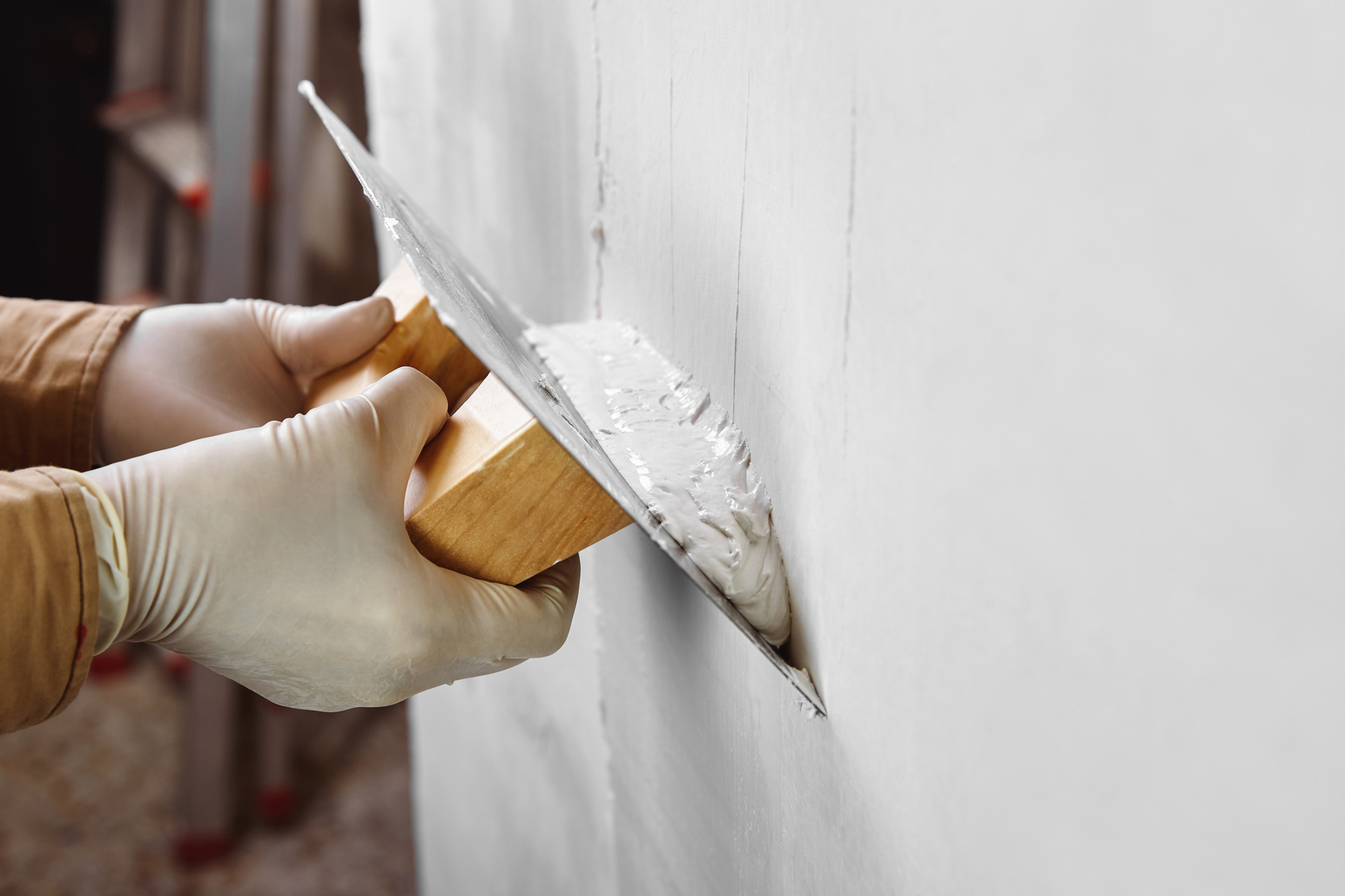
Plastering in Verwood
Ceilings, cracked joints, dab-lined walls and render across Verwood, priced from a proper look rather than a guess at the door.
The site visit is free and so is the written itemised quote. Thomas Hannen prices every job himself.
In Verwood the ceilings are the job. Most of the town is bungalows, which puts the whole floor area of the house on one level with a cold loft directly above it, so there is roughly twice as much ceiling per home as in a two-storey house and every bit of it is on the weather side of the insulation.
Three things bring people to the phone. A crack has opened where the ceiling meets the wall, or along a line of board joints, and filling it has stopped working. A ceiling is stained, sagging or shedding after something got wet in the loft. Or the house is being decorated and the walls have had enough coats of paint that every joint, screw head and old repair now shows.
The visit is the same each time. We get in the loft where the ceiling is the problem, knock every wall and ceiling in the room, and work out whether we are looking at movement, a failed fixing or plaster that has genuinely let go. Then it goes on one written price with the making good itemised. The site visit and the quote are free.
The work
Getting board up a bungalow staircase is half the job
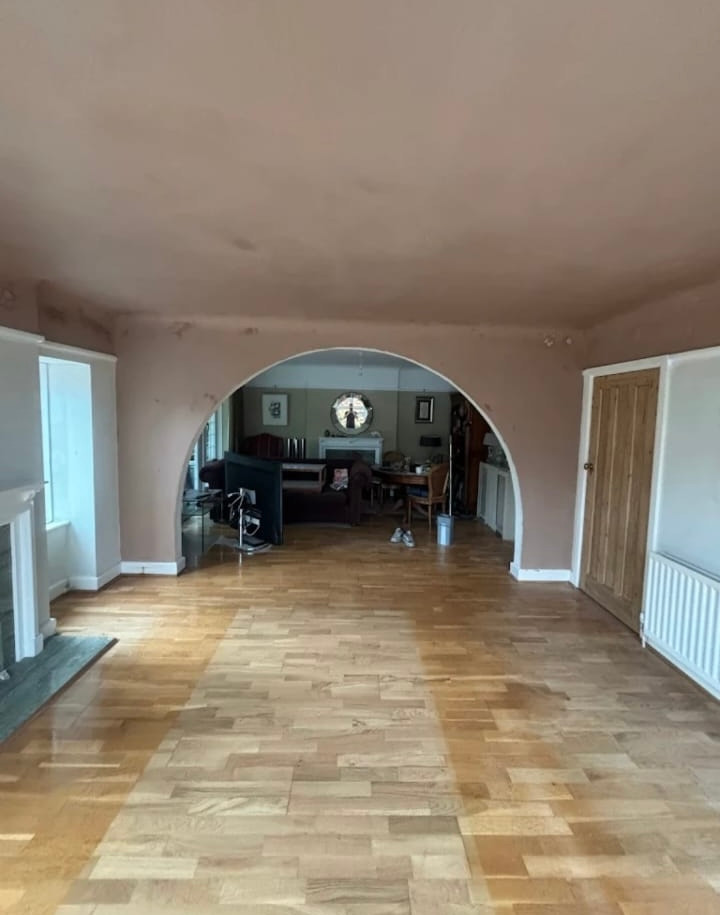
Ceilings, and a lot of them. With better than four homes in ten here being bungalows, ceilings are the bulk of what we do. They are plasterboard fixed to the joists or to the underside of a trussed roof, and the usual faults are cracking along the board joints, screw and nail heads popping through the finish, brown staining where something has leaked, and a slow sag between fixings. Where the board is sound the answer is to re-tape, refix and skim. Where it has been wet or the fixings have gone, overboarding on the existing joists is quicker and cleaner than taking a ceiling down over your furniture.
Dab-lined walls on the eighties estates. Over half the housing in Verwood was built from the mid-eighties onwards, which is the point at which walls in this town stopped being floated in wet plaster and started being dry lining: board fixed to the blockwork on dabs or screwed to a stud, joints taped, then a skim or a tape and joint finish. Those walls drum right across when you tap them and that is how they were built. A repair means cutting back to a sound edge or a stud, fitting a new piece the same thickness, taping the joint and skimming out wide. Hacking at one the way you would at a floated wall only makes the hole bigger.
A third of the town is older than that, from between the war and the early eighties, floated and set onto a block inner leaf. That plaster is usually still gripping and only the surface has gone, so it takes two passes of finish coat rather than a strip out. Dust sheets go down first, the background is prepared and PVA goes on where it is dusty. A hollow patch with a definite edge is different, and that part comes off back to the block for a backing coat: bonding on a dense or painted face with no suction, browning or hardwall where the block will pull water out of the mix.
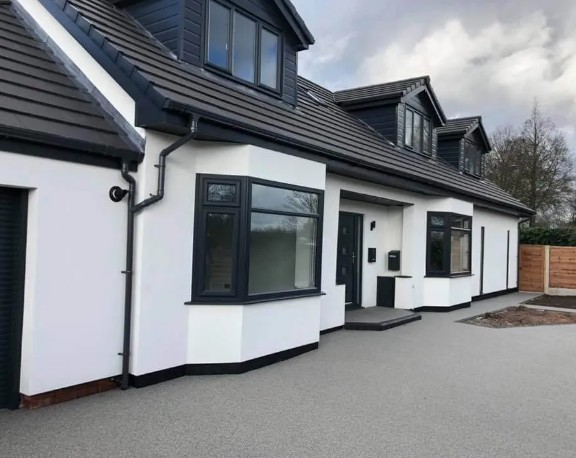
A lot of the bungalows here have had the loft turned into a bedroom, which is its own kind of plastering: board fixed to the rafters and to studwork, sloping ceilings meeting flat ones, a dormer cheek to line, an angle bead on every external corner and a stop bead at each reveal, and long internal angles that have to be scrimmed properly because that is where a room in the roof cracks first. Getting full sheets up a bungalow staircase is half the work, so it is priced as its own item. Outside, the rendered gables and pebbledash are sand and cement of the same age as the estates, and go back as a like-for-like patch, or a strip to the masonry and a scratch coat, a mesh reinforced basecoat, a primer and a silicone thin coat or monocouche topcoat.
How it runs
From your call to a written price
The quote is itemised rather than one figure on the back of a card: protection, board, backing coat, beads, finish and disposal on separate lines. There is no conservation area over Verwood and nine entries in the parish are listed, so on the great majority of houses here the outside finish is your own decision. Re-rendering an elevation in a similar material is maintenance rather than development, and Planning Portal guidance on external walls sets out where that stops. On one of the nine, a change of plaster or render needs listed building consent however ordinary it looks from the pavement. Where render comes off across most of an elevation, Approved Document L asks whether the wall should be insulated while it is open. Dorset Council handles both.
Cost
What decides the price
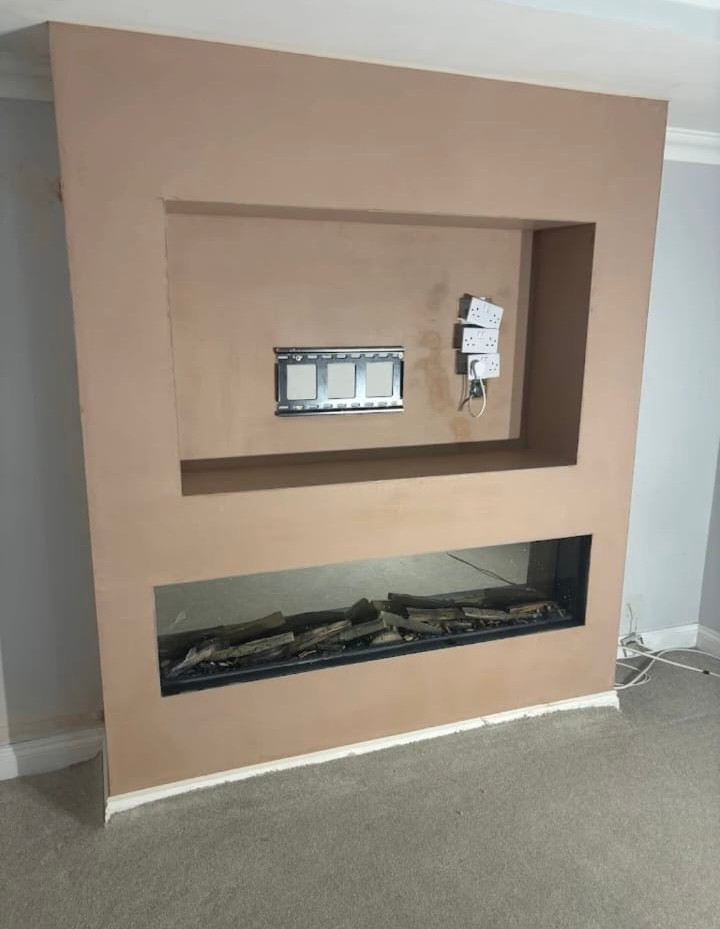
No rate per square metre: what is behind the surface decides it, and ceilings cost more than walls because everything is worked overhead. Access in Verwood is usually a bungalow with a drive and a garage to keep the mixer dry, a detached house on one of the eighties closes where the van gets to the door, or a bungalow with a room in the roof where every sheet of board goes up a narrow staircase by hand. Comparing quotes, ask whether it is a skim or a full replaster, whether beads and making good are in the figure, and who takes the waste away. Outside, a tower does for a low gable and a full elevation wants a scaffold.
If it has come down
A ceiling dropping, or a wall gone damp
Ring rather than use the form. A ceiling that has cracked and dropped, plaster coming off in sheets, or a wet patch spreading across a wall goes to the front of the queue. We are about eleven miles away, so a same-day look is usually possible, and if the ceiling is wet we will want to see the loft on that visit rather than come back for it.
Worth knowing
The ceiling crack that keeps coming back
If you have filled the same line where the ceiling meets the wall two or three times and it has opened again each winter, it is not bad filling. Most houses in Verwood have a trussed roof, which means the ceiling is fixed to the underside of the trusses and the internal walls below carry nothing.
As the loft warms and dries in summer and cools and dampens in winter, the truss lifts and settles by a millimetre or two, the ceiling goes with it and the wall does not. A neat straight crack opens along the top of the internal walls, closes up in the warm months, and no amount of filler will hold it because the joint is designed to move. The same thing shows along board joints that were only filled when the house was built instead of being taped.
So stop filling it. Where it is a board joint, the fix is to rake it out, scrim the joint properly and skim it, and it stays shut. Where it is the wall and ceiling junction, the honest answer is to give the movement somewhere to go: coving bedded so it is fixed to the ceiling and free at the wall, or a clean shadow gap detail.
If the whole ceiling has gone crazed, overboarding and skimming settles it in one go. And if the crack is stepped, wider at one end than the other, or carries on down the wall, that is not truss movement and we will tell you that instead of plastering over it.
Who you are dealing with
A local firm you can check
About eleven miles from us, covering Verwood, Three Legged Cross, West Moors and the BH31 addresses, with Dorset Council for planning and building control. Bournemouth Roofing & Building Ltd, registered in England and Wales, company number 15471719, which you can look up in a minute. Thomas Hannen's business, and he is the one who comes out to price the job, not a salesman. A verified customer's 10 out of 10 on Checkatrade. The visit and the written quote are both free.
Questions
Verwood questions we get asked
Why do so many Verwood ceilings crack along the same lines?
Because they are jointed boards, not solid plaster. 55.6% of Verwood went up between 1983 and 2008, with the peak in the 1980s, so most ceilings here are plasterboard nailed to joists with scrim and filler across the joints. Timber moves as the heating season turns and the joint opens on the same line every time. Filling it again fixes nothing. Taping properly, or a full set over the whole board, stops it returning.
Our bungalow ceiling is right under the loft. Does that matter?
It does, and it is the common job here, given 44.4% of Verwood dwellings are bungalows. A bungalow ceiling has cold loft directly above every room, so any gap at a hatch, a downlight or a pipe lets warm air through and the plaster above it cools and stains. When a ceiling comes down we sort the insulation and seal those gaps while the joists are open. Doing it the other way round wastes the access.
Should the ceilings be overboarded or taken down?
On 1980s Verwood stock, overboarding is usually the sensible call. The existing board is sound, screwed to joists at regular centres, and a fresh board screwed through into those joists gives a flat surface without a day of dirt and a skip. Take-down is for ceilings that are sagging, water damaged, or hiding wiring and insulation work you want done anyway. We check the joists and the existing fixings before deciding either way.
Can we change the render colour on a Verwood house?
In most cases nothing here stops you. Verwood has no conservation area of its own and nine listed entries across the whole settlement, so the great majority of houses sit outside both listed building control and area appearance control. Rendering or recolouring an unlisted house outside a designated area is normally permitted development. If yours is one of the nine, or the deeds carry a covenant on external finishes, that is a different conversation.
How quickly can you get out to Verwood from Bournemouth?
Verwood is about eleven miles from where we are based, so looking at a ceiling or a wall is a straightforward morning run rather than a special trip. Thomas comes out himself, walks the rooms and takes the measurements, and the written itemised quote follows afterwards. The site visit and the quote both cost nothing. Small patch work we usually tie in with a bigger job already running in the same postcode.
Nearby, and next door
Plastering and rendering near Verwood
Plastering and rendering nearby
Our other trades in Verwood
Everything we do in Verwood Plastering and rendering, all areas Every area we cover
Free quote
Get your Verwood ceiling looked at from both sides
A free site visit that includes the loft where it matters, and an itemised written quote that separates a skim from an overboard.