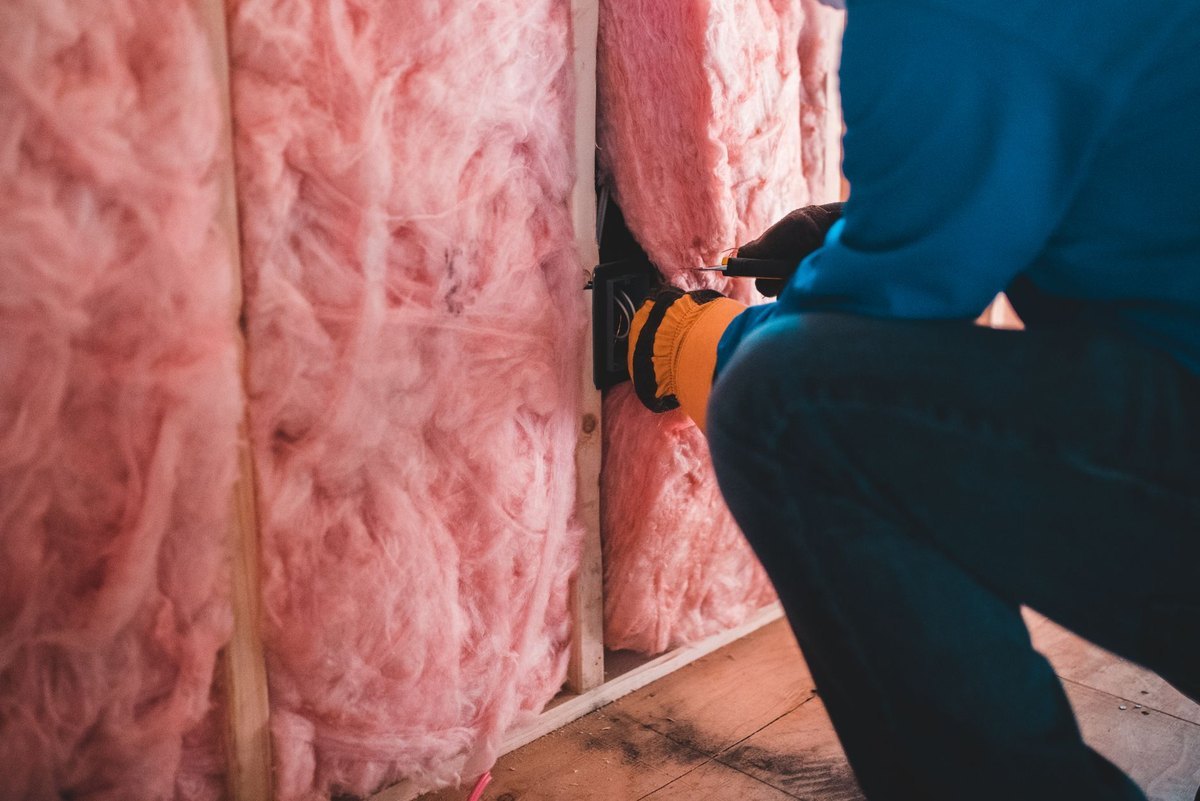
Wall insulation in Verwood
Bungalow cavities closed off at the eaves before anything is injected, old fill checked with a camera and solid walls lined from inside, across Verwood and BH31.
The site visit is free and so is the written itemised quote. Thomas Hannen prices every job himself.
Verwood is bungalow country, with something over four in ten homes single storey, and on a bungalow the detail that decides a cavity fill is the eaves. The top of the wall meets the loft only a few courses above the ceiling, and if the cavity is not closed off up there the bead goes straight into the roof space instead of staying in the wall.
The calls that come in are a cold room at one end of a bungalow, mould in the corner of a bedroom that shares the outside wall with the eaves, and people who found insulation in the loft that they never asked for.
We check the wall with a borescope and the loft with our own eyes before quoting. Then the work goes into a free written itemised quote, with the survey, the system and its thickness, the reveals and the making good on separate lines.
The work
Low eaves, single storey walls and the fill that stays put
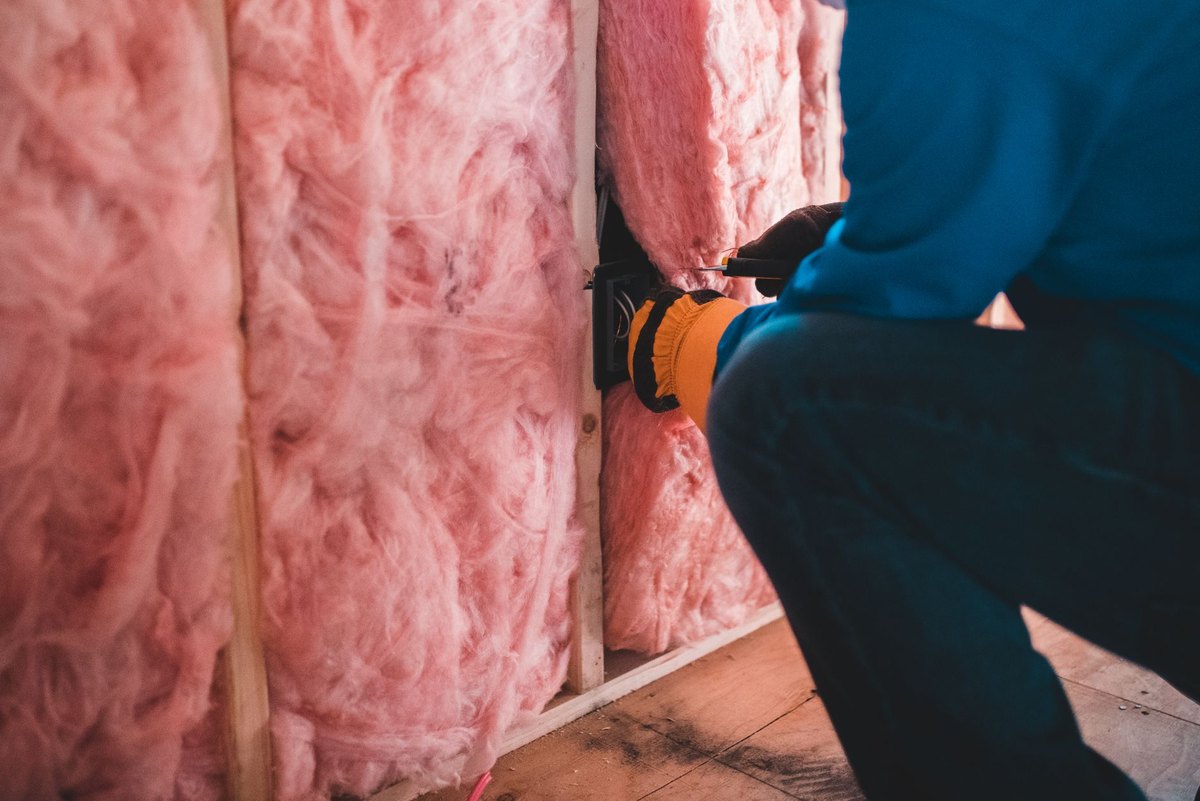
The borescope, and the loft. One hole in a mortar joint tells us the cavity width, what is in it and whether the outer leaf is wet. Then we put a head into the loft and look at the wall plate, because on a bungalow that is where a fill either stops or does not. Most of Verwood is 1980s brick and block and the cavity is usually a decent width.
Closing the top of the wall. Before a bead goes in, the cavity is closed at the eaves with a sock or a physical closer, the reveals at every window and door are checked and any hole cut for a soil pipe or a flue is sleeved. Skip that on a bungalow and the first you know is a drift of bead across the loft insulation and a wall that is half empty at the top.
Cavity fill. A clear, dry cavity takes bonded polystyrene bead or blown mineral wool, drilled on a pattern and injected under control, holes made good in matching mortar. Bead flows better into a narrow or partly bridged cavity and does not slump. It roughly halves the U value of the wall and the payback is short. A fill is normally covered by an independent scheme run separately from the installer.
Failed and slumped fill. Where a bungalow was filled decades ago the camera often shows an empty band under the eaves and a compacted mass at the bottom, which is the worst possible arrangement because the cold band sits right at ceiling level where the warm air collects. Extraction through a drilled pattern with a vacuum, bagged and taken away, then a refill in bead once the wall is dry.
Solid walls. The older properties around the edges of the town are nine inch solid brick with nothing to fill. Internal wall insulation, IWI, means insulated plasterboard fixed back or a stud and batten frame with mineral wool or PIR board such as Celotex or Kingspan between it, with an aerogel backed board where a reveal or a threshold has no room to give. External wall insulation, boards and a render carrier under a thin coat finish, is the alternative and on a bungalow it is a cheap wall to reach.
Junctions and draughts. Reveals returned, the floor junction carried down, joist ends thought about and a breathable vapour control layer taped so the dew point cannot sit in the build up as interstitial condensation. The wall to ceiling junction gets particular attention on a single storey house, because that thermal bridge runs the whole way round.
Ventilation. Extract in the kitchen and bathroom, trickle vents in the windows and air bricks kept clear. Approved Document F sets what the ventilation has to achieve once airtightness improves.
How it runs
From your call to a written price
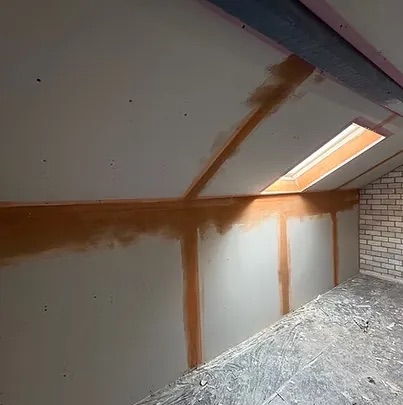
Same team from first visit to last, one person to ring, and no sub-contracting your work out to somebody you have never met. The quote is itemised, not a figure on the back of a card: the survey and any borescope check, the system and its thickness, making good around windows and doors, ventilation works, and disposal on separate lines, so you can compare it properly against anyone else's.
Nothing is left open or unusable overnight. The site is swept at the end of each day rather than the end of the job, and what comes out leaves with us. If something turns up once we start that nobody could have seen, you get a photograph and a price before we carry on.
Dorset Council is the planning authority for Verwood. There is no conservation area over the town and only nine listed entries, so almost nothing here needs listed building consent. Internal lining needs no planning permission at all, which the Planning Portal page on insulation confirms, and external wall insulation is the one that can, under the Planning Portal guidance on external walls. Building control applies through regulation 23, which sets the Part L target in Approved Document L, and the work in a home is currently zero rated for VAT.
Cost
What decides the price of a wall insulation job
No rate per square metre, because the wall area is the easy part; what happens at every window, door and floor junction is not.
Getting to it. A 1980s detached bungalow, a two storey house on the newer estates and an older cottage on the edge of the heath are three different jobs. Cavity fill is drilled from outside and a bungalow comes off a tower where a three storey gable wants a scaffold. Internal lining is worked room by room from inside, so it is your rooms rather than a platform that gets disrupted. The work at height rules still set the platform.
Which wall you actually have. A cavity that is clear and dry can be filled in a day. A solid wall cannot be filled at all, and has to be lined inside or insulated outside, which is a different job at a different price. A borescope through one drilled hole settles it, and no honest quote is written before that.
The junctions, not the field of the wall. Reveals at windows and doors, the floor junction, the eaves and any party wall are where heat escapes and where condensation shows up if the detailing is wrong. That work is slow, it is most of the labour, and it is the first thing a cheap quote leaves out.
Comparing quotes? Ask whether the wall has actually been checked with a borescope or just assumed, what system and what thickness is specified, how the reveals and floor junction are being detailed, whether ventilation is being addressed, and who makes good the plaster and decoration afterwards. Two quotes for the same job are usually two different jobs.
If damp has appeared
Damp or mould after a wall was insulated
Ring rather than use the form. Damp patches or black mould appearing on an outside wall after cavity fill or internal lining usually means water is tracking across the cavity, or warm air is reaching a cold surface at a junction. We look before we take anything out, because the fix depends on which of those it is. Verwood is around eleven miles from us and we are up that way most weeks. The phone is answered 24 hours for emergencies; scheduled work runs Monday to Friday, 8am to 6pm.
Worth knowing
On a bungalow the loft tells you if the fill went in properly
A bungalow is the easiest kind of house to fill and the easiest to fill badly, and the reason is the same in both cases: the top of the wall is only a few brick courses above head height inside the roof space. On a two storey house the cavity has to be closed at the eaves as well, but it is a long way from anything anybody looks at. On a single storey house it is directly above the loft hatch.
Bead is small, light and free flowing. That is why it works in an awkward cavity and why it goes wherever it is allowed to. If nobody closes the cavity at the wall plate before injection, some of it spills over the top onto the loft insulation and the top of the wall is left empty. Nobody sees it, and the owner is left with a cold strip at ceiling level around the whole house.
The test is free and takes two minutes. Open the loft hatch and look along the wall plate on each elevation. Loose bead scattered on the loft insulation means the cavity was not closed off, so the heat loss at the top of the wall is much as it was, whatever the EPC says. It is the first thing we look at on a bungalow that has supposedly been done and is still cold at ceiling level.
Who you are dealing with
A local firm you can check
We cover Verwood, Three Legged Cross, West Moors, Alderholt and the BH31 addresses around them, with Dorset Council for planning and building control. You are dealing with Bournemouth Roofing & Building, the trading name of Bournemouth Roofing & Building Ltd, registered in England and Wales, company number 15471719, which you can look up in a minute. Thomas Hannen's business, and he is the one who comes out to price the job, not a salesman. A verified customer's 10 out of 10 on Checkatrade. The visit and the written quote are both free.
Questions
Verwood questions we get asked
There is loose bead in our loft. What does that mean?
That the cavity was not closed off at the wall plate before it was filled. Some of the material has spilled over the top, so the wall is probably empty at the top. It is worth re-checking with a camera.
Why is the top of a bungalow wall the important bit?
Because warm air collects at ceiling level, so a cold strip there loses more than the same strip lower down. It is also where the wall meets the roof, which is a cold bridge in its own right.
Does a single storey wall cost less to get at?
The access is, since a tower reaches the whole wall and no scaffold is needed. The wall area per room is larger though, so it is not automatically a smaller job, and the draughts still need doing.
Can external wall insulation go on a bungalow?
It is one of the better candidates, because everything is reachable and there is no room lost inside. It changes the appearance, so it is a planning check first and the eaves detail has to be right.
Our bungalow was filled in the 1980s. Is it still working?
Sometimes. Loose fibre of that age often settles, leaving an empty band under the eaves. One hole and a borescope will tell you whether yours has, and whether it is worth extracting.
Nearby, and next door
Wall insulation near Verwood
Wall insulation nearby
Our other trades in Verwood
Everything we do in Verwood Wall insulation, all areas Every area we cover
Free quote
Check the eaves before the wall gets filled
Thomas comes out, looks in the wall and in the loft, and prices the job so the bead stays where it is meant to. The visit and the written quote are both free.