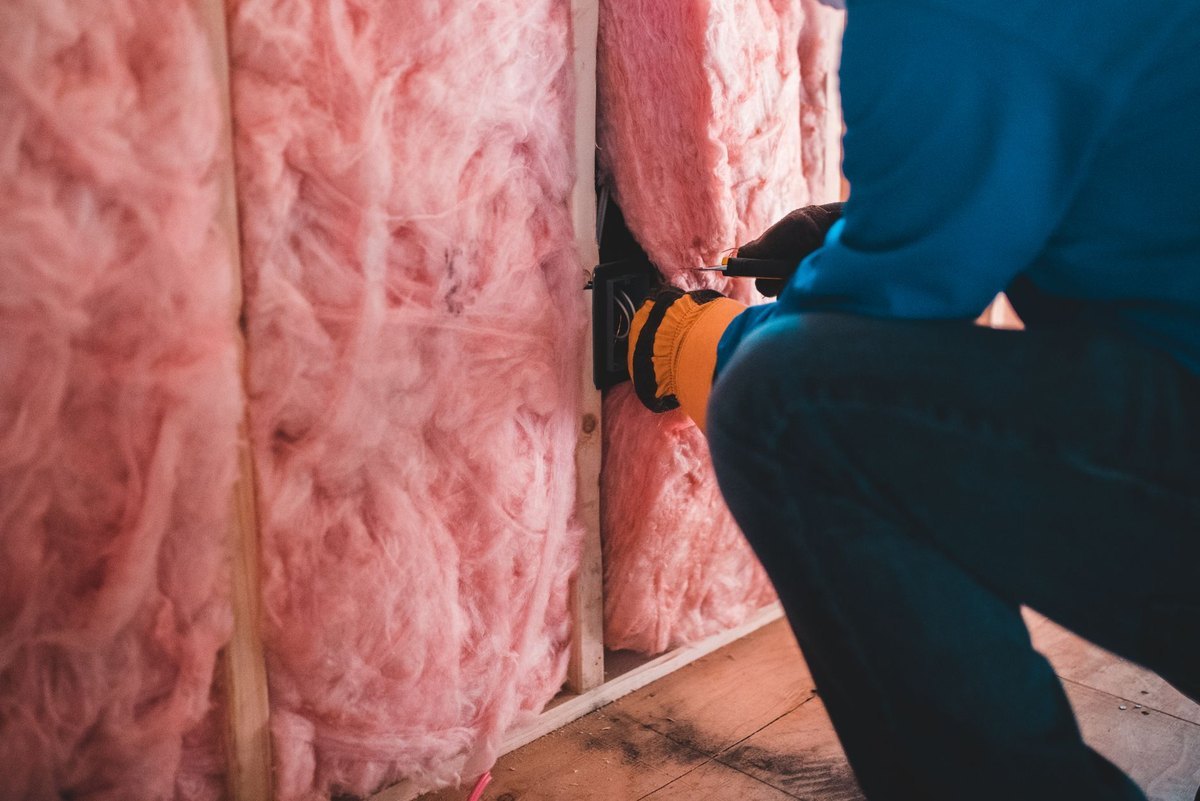
Wall insulation in Three Legged Cross, and where the moisture goes
Warm the walls in an already tight house without sorting the ventilation and the condensation simply moves to the next cold surface.
The site visit is free and so is the written itemised quote. Thomas Hannen prices every job himself.
Somebody has already been at this house. Four in ten homes at Three Legged Cross went up between 1983 and 2008, and hardly one of them still stands exactly as the builder handed it over. New windows. A cavity pumped under some scheme or other. A noisy fan taken out and never replaced. Each of those choices is still sitting in the fabric, and each changes what ought to happen to the walls now. Houses of that generation were reasonably tight to begin with; tighten them further and moisture has fewer ways out than heat does.
Hence the calls. Mould returning on a bedroom's outside wall quicker than anyone can wash it off. Windows running with water every morning from November through to March. A cavity pumped some years back, a wall damp ever since.
What we survey is the house as it stands, not as it was drawn. A borescope through one small hole reports the cavity, its width and its contents. After that, the fans, the vents and the air bricks, since those govern whether work on a wall leaves the place better or worse. Neither the visit nor the itemised written quote carries a charge.
What is already there
Whatever the last owner did, and what it leaves you holding
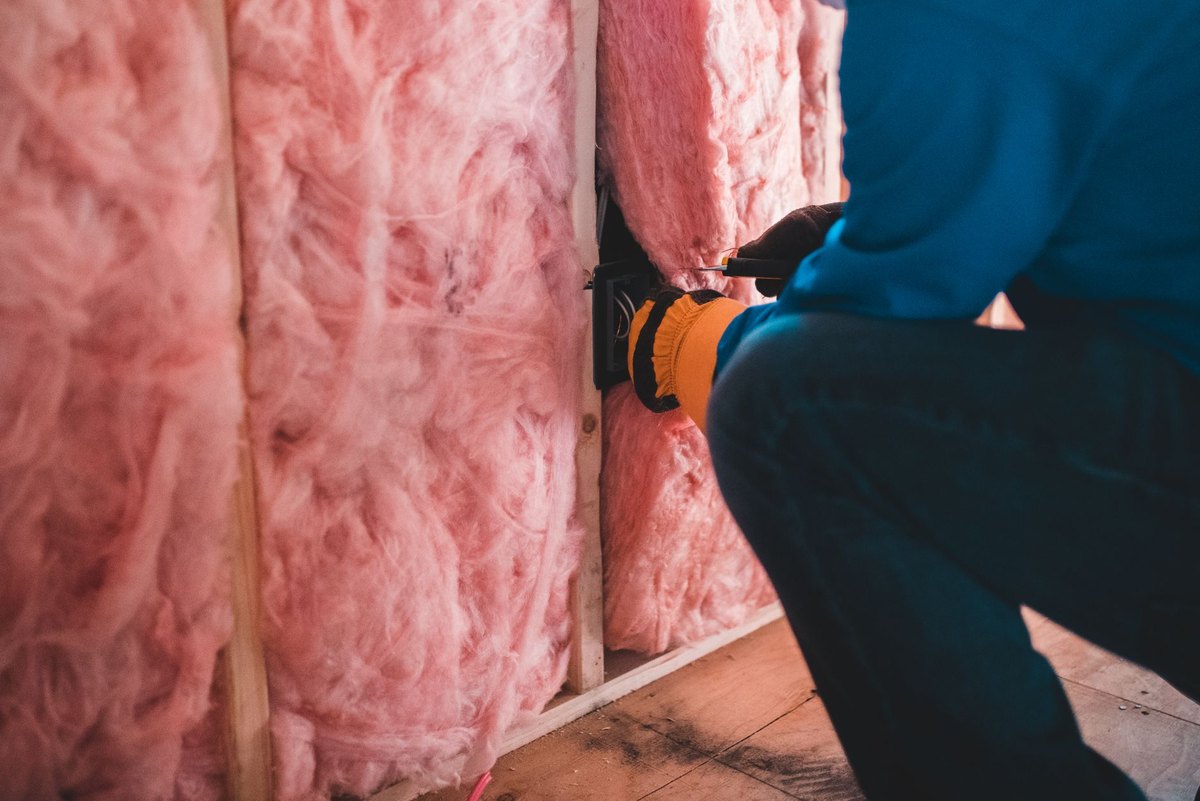
What the original builder chose. Late eighties and nineties walls were often put up part filled, with boards already fixed against the inner leaf and a residual gap in front of them. Down a borescope that is unmistakable. It is also a wall to leave alone. Pump a partial fill and the bead ends up in the gap that was designed to stay clear, so the borescope earns its keep by stopping a job as often as starting one.
A cavity somebody had pumped. Common enough out here, and the question is only whether it is still doing anything. Slumped wool leaves a cold band under the eaves and a matching line of black mould on the bedroom wall inside. Fill gone wet, or water crossing on a bridged tie, throws damp patches that follow the weather rather than the seasons. Failed fill comes out and gets vacuumed away before a single thing is decided.
A clear gap nobody has touched. Wide enough, dry, no snots on the ties: that one gets drilled on a pattern, pumped and made good inside a day. Bonded polystyrene bead runs round the ties and settles where it is put. Blown mineral wool remains sound in a clean, sheltered cavity. Mortar for the holes is matched to the face of the wall.
Whoever fitted the replacement windows. New frames tend to sit forward in the opening, which shortens the reveal and leaves barely 40mm to insulate at the very place heat leaves fastest. A cold bridge, or thermal bridge, at a reveal will collect condensation whatever the u value of the wall beside it, and in a tight house it does so quickly. Aerogel or a thin high performance board is the answer there.
The extension, the conservatory, the converted garage. Rooms brought inside the heated envelope years after the fact usually have a wall the rest of the house does not: solid brick and block, or a cavity too narrow to fill. Those get lined internally, IWI, with insulated plasterboard bonded on or a batten and stud frame packed with mineral wool. PIR laminate, Celotex or Kingspan, gets there shallowest, vapour control taped so damp air cannot slip behind the board, per BS 8000-8.
Whoever pulled the noisy fan out. Or ducted it into a loft void. Or rendered across an air brick. Every one of those is undone before the walls are touched: vents in the frames that open, extraction over the hob and in the bathroom that discharges through the wall to outside, air bricks clear. Approved Document F sets the expectation, and this is the half of the trade most often skipped, because it is never what the customer rang about.
Nobody at all touched the junctions. They rarely do. Threshold, floor junction, eaves, joist ends, and the party wall, which wants a cavity barrier rather than loose fill blowing through into next door. External wall insulation, EWI, boards under a render carrier and a render finish, is the one route that settles the joist ends and the floor junction together, at the cost of changing how the house looks from the road.
How it runs
From your call to a written price
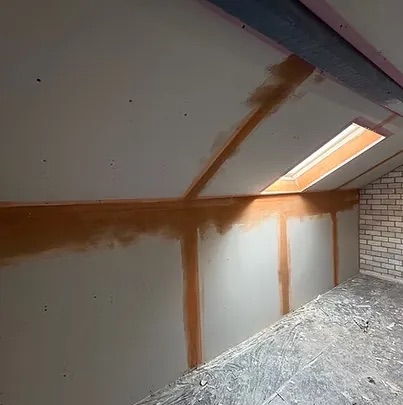
Same team from first visit to last, one person to ring, and no sub-contracting your work out to somebody you have never met. The quote is itemised, not a figure on the back of a card: the survey and any borescope check, the system and its thickness, making good around windows and doors, ventilation works, and disposal on separate lines, so you can compare it properly against anyone else's.
Nothing is left open or unusable overnight. The site is swept at the end of each day rather than the end of the job, and what comes out leaves with us. If something turns up once we start that nobody could have seen, you get a photograph and a price before we carry on.
Three Legged Cross sits in Verwood parish, under Dorset Council. One listed entry, no conservation area over the village, so nearly all of this answers to building control rather than to planning. Permission does enter into it for an external system on some houses, and those exceptions are set out on the Planning Portal page about external walls. Upgrade an existing wall and regulation 23 fixes what the finished element has to reach under Part L.
Cost
What decides the price of a wall insulation job
No rate per square metre, because the wall area is the easy part; what happens at every window, door and floor junction is not.
Getting to it. A 1990s detached house on one of the closes, an older cottage on the crossroads and a bungalow on a deep plot are three different jobs before a hole is drilled. Cavity fill is drilled from outside and a bungalow comes off a tower where a three storey gable wants a scaffold. Internal lining is worked room by room from inside, so it is your rooms rather than a platform that gets disrupted. The work at height rules still set the platform.
Which wall you actually have. A cavity that is clear and dry can be filled in a day. A solid wall cannot be filled at all, and has to be lined inside or insulated outside, which is a different job at a different price. A borescope through one drilled hole settles it, and no honest quote is written before that.
The junctions, not the field of the wall. Reveals at windows and doors, the floor junction, the eaves and any party wall are where heat escapes and where condensation shows up if the detailing is wrong. That work is slow, it is most of the labour, and it is the first thing a cheap quote leaves out.
Comparing quotes? Ask whether the wall has actually been checked with a borescope or just assumed, what system and what thickness is specified, how the reveals and floor junction are being detailed, whether ventilation is being addressed, and who makes good the plaster and decoration afterwards. Two quotes for the same job are usually two different jobs.
If damp has appeared
Damp or mould after a wall was insulated
Ring rather than use the form. Damp patches or black mould appearing on an outside wall after cavity fill or internal lining usually means water is tracking across the cavity, or warm air is reaching a cold surface at a junction. We look before we take anything out, because the fix depends on which of those it is. We are nine miles away through Verwood, so an address at Three Legged Cross is normally looked at within a couple of days. The phone is answered 24 hours for emergencies; scheduled work runs Monday to Friday, 8am to 6pm.
Worth knowing
Tighten a house and the water in it has to go somewhere
Cooking, washing, drying clothes indoors, breathing: a household pushes a startling quantity of water into its own air every day. A draughty house loses most of it without anybody noticing. Now warm the walls, fit tight frames, seal the gaps. The water does not leave. It hunts down the coldest surface still available and lands on it. Behind a wardrobe. In the corner of a north bedroom. Around a window frame. Never out in the open where it would be spotted early.
Two halves, then, to any honest specification on a house of this age. Warm the surfaces: fill or line the wall, and carry the insulation into the reveals so no cold frame is left standing. Give the water a route out: vents that open, extraction that genuinely shifts air and discharges outdoors, air bricks nobody has blocked or rendered across. Buy the first half by itself and what you own afterwards is a tighter, warmer house holding exactly as much moisture as before with fewer places to put it. This is not a theoretical risk. It is the single most common complaint in the trade.
Who you are dealing with
A local firm you can check
We cover Three Legged Cross, Ringwood Road, Woolsbridge and the Verwood side, broadly BH21, under Dorset Council. You are dealing with Bournemouth Roofing & Building, the trading name of Bournemouth Roofing & Building Ltd, registered in England and Wales, company number 15471719, which you can look up in a minute. Thomas Hannen's business, and he is the one who comes out to price the job, not a salesman. A verified customer's 10 out of 10 on Checkatrade. The visit and the written quote are both free.
Questions
Three Legged Cross questions we get asked
Will insulating the walls stop my windows streaming?
By itself, no. Warm the walls and the moisture simply stops condensing on them, which sends it to whatever surface is now coldest. The glass often is. Ventilation has to improve in the same job.
What counts as decent ventilation in a house like this?
Trickle vents that actually open. Extraction over the hob and in the bathroom that discharges through the wall to outside, not into a loft. Air bricks nobody has blocked up or rendered across.
My house is from the 1990s. Is the cavity already insulated?
Possibly part filled, with boards fixed against the inner leaf when it was built. That is a wall best left alone. One drilled hole and a borescope tells you which sort you own.
What is involved on the day the wall is filled?
How long it takes on an ordinary house with clear access is a day. Drilling and pumping happen from outside, and the holes are closed afterwards with mortar matched to the face of the wall.
Is black mould in the corner a wall problem or a damp problem?
Nine times in ten it is condensation settling on a cold surface, not water coming in from outside. Warm that surface and improve the ventilation together and it stops coming back.
Nearby, and next door
Wall insulation near Three Legged Cross
Wall insulation nearby
Our other trades in Three Legged Cross
Everything we do in Verwood Wall insulation, all areas Every area we cover
Free quote
Get the walls and the ventilation looked at together
Thomas comes out, reads the cavity, checks the vents and fans and prices both halves in writing. The visit and the quote are free.