Exterior cleaning in Three Legged Cross
Roof moss, streaked gutters and fascia, green render and weedy block paving cleaned across the village, without pressure where pressure does damage.
The site visit is free and so is the written itemised quote. Thomas Hannen prices every job himself.
Last updated
Three Legged Cross is mostly newer housing, so a clean here is usually a roof, a run of gutter and a block paved drive, all of it reachable from the ground. The part that gets damaged most often is the white plastic: fascia, soffit, gutter and conservatory frames do not want pressure, they want a treatment and a soft wash.
A familiar sight on these lanes is black streaks running down the front of white gutters and fascia. It looks like dirt off the roof and it mostly is, and it stays there because nothing that runs down a plastic face ever quite dries. After that it is the drive, weeded up along the edges and slippery where the cars stand, and then the roof slope facing away from the sun that has gone properly green.
None of that is urgent and none of it is complicated, but the order matters and so does the method. We clear the inside of the rainwater goods first because that is what puts water down the wall, then the surfaces. The site visit is free, the written quote puts each surface on its own line, and if the drive genuinely has two more winters in it before it needs doing, we will say so.
The work
Concrete tile, block paving and a lot of white plastic
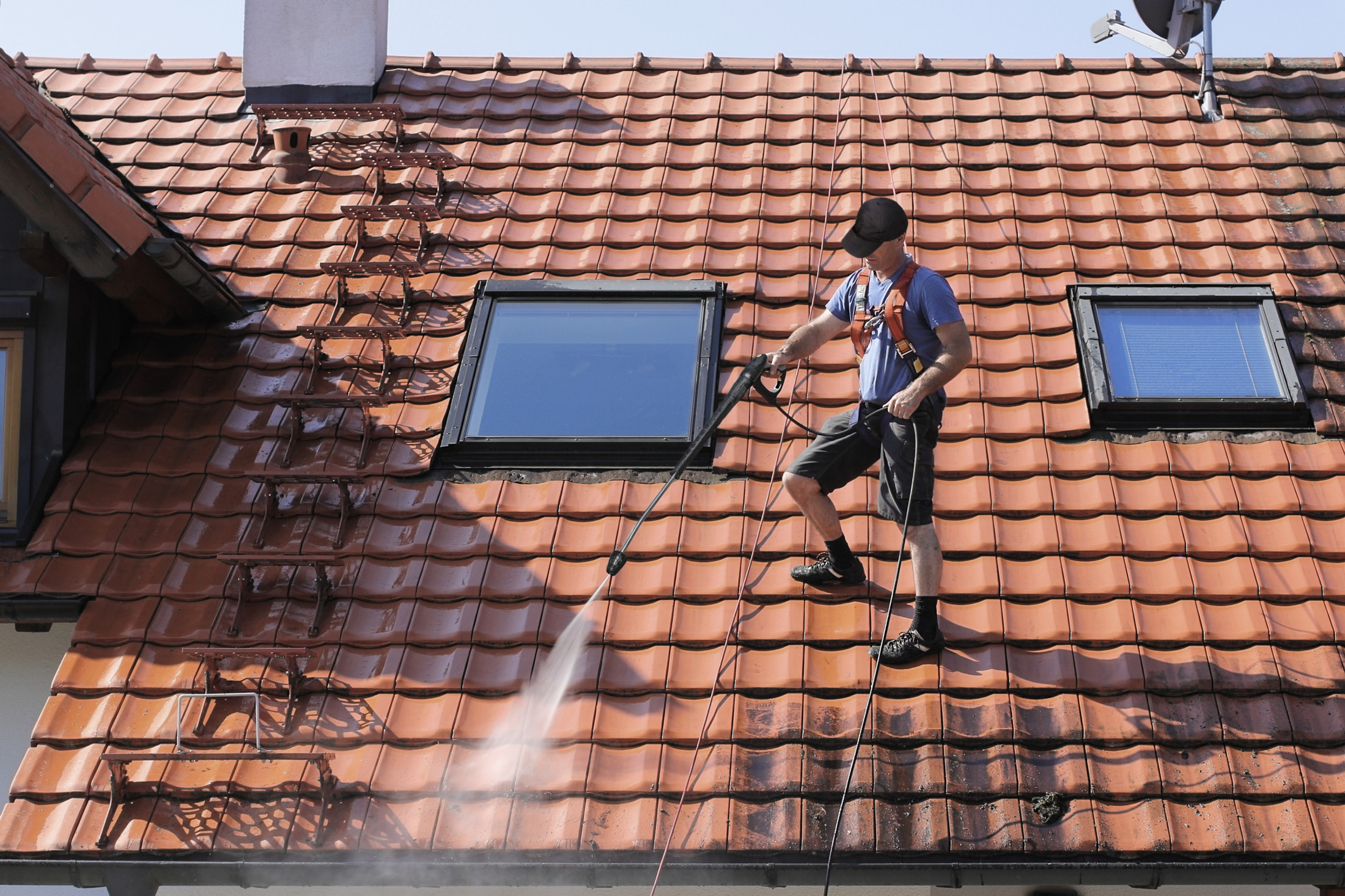
Concrete tile, and the easiest covering to ruin. Nearly everything in Three Legged Cross is post-war, so the roof is concrete interlocking tile. Moss comes off dry, scraped and brushed down the slope so nothing is pushed up under the laps, the ridge and any valley are cleared, then an approved biocide goes on so the spores die back and the regrowth is slow.
What we do not do is jet wash it. A lance takes the sand and cement face off a concrete tile, leaves it rough and porous, and the roof is greener two years later than it was before you paid for it.
White plastic is the other half of the job. On a house built in the last forty years the fascia, soffit and cladding are plastic, and they are the surfaces most often wrecked by a cleaning job. Close range pressure scars the face, drives water up behind the soffit into the eaves and can blow the vent strips out of it. So they get a treatment, a soft wash through a wide nozzle, and a rinse, which takes the green and the streaks off. It does not take the chalky fade off, because that is oxidised plastic and no wash restores it, whatever anybody promises you. Conservatory panels go green at the overlaps, and the box gutter where the conservatory meets the house wall is the bit nobody can see and the bit that leaks, so it is worth adding a gutter clear to the visit.
Drives. Block paving gets the weed out, the black spot off, then kiln dried sand brushed back in, which is what locks the blocks together, and re-sanding is the part most often skipped. Sealing afterwards is a separate decision and not one we push. Tarmac gets low pressure only, since a lance pulls the chippings out of it.
How it runs
Washing a roof, walls or drive, and where the water goes
Thomas Hannen comes out, looks at each surface and prices it himself. On the concrete tiles common here it is usually moss and lichen. On render it is green algae, and on drives and patios it is weeds, moss and black spots. The quote is itemised by surface: method, protection of plants and windows, access, biocide treatment, and where the wash water and debris go, because run off is a pollution question we answer before we start.
Every surface is then washed and treated to that plan. Roofs are cleaned by hand and brush, not pressure washed, which can damage the tiles. Render gets a low pressure wash and a biocide under the rules on biocides. Drives get a pressure wash and resanding if the joints wash out. Moss and debris are bagged and taken away, not left in your gutters. Where cleaning uncovers a cracked tile or blown render, we photograph it and tell you the cost of putting it right.
No permission is needed to wash a building. Three Legged Cross is outside any conservation area and has one listed entry, so what you do to the outside afterwards is largely your choice, and the Planning Portal explains the few limits on external walls. Dorset Council is the authority.
Cost
Surface, access and treatment: pricing a clean
No rate per square metre, because the same area can take twenty minutes or two hours depending on the surface.
The way round the house. A bungalow you can walk right round is simpler. A terraced house where every hose and barrow goes through one side gate takes longer. A newer detached with a conservatory across the back needs protection and care.
Height. A bungalow roof and walls can mostly be done from the ground with a pole. A two storey roof needs a platform, and the work at height rules decide when a pole is not enough.
What is growing. Light green algae on render washes off. Thick moss on concrete tiles takes longer to scrape. Black lichen needs a biocide and time to work.
Treatment. A rinse only makes it look clean for a while. A biocide wash, used under the biocides regime the HSE administers, slows the regrowth.
Run off. Where the wash water goes matters. On clay ground it drains slowly, so protecting drains and borders is part of the job.
Ask whether a biocide is included or it is only a rinse, how the roof will be cleaned, and where the water ends up.
If there is a date
Cleaning to a date: a sale, a survey or a tenancy
None of this is emergency work, but if there is a sale, a survey or the end of a tenancy coming, tell us the date when you ring. We are about nine miles away, so we can look at it before you commit to anything.
Some treatments need dry weather and a few days to work, so the earlier you call, the better. Booked work runs Monday to Friday, 8am to 6pm. An unanswered call is returned as soon as we are able.
Worth knowing
A newer village means plastic, and plastic is the easy thing to spoil
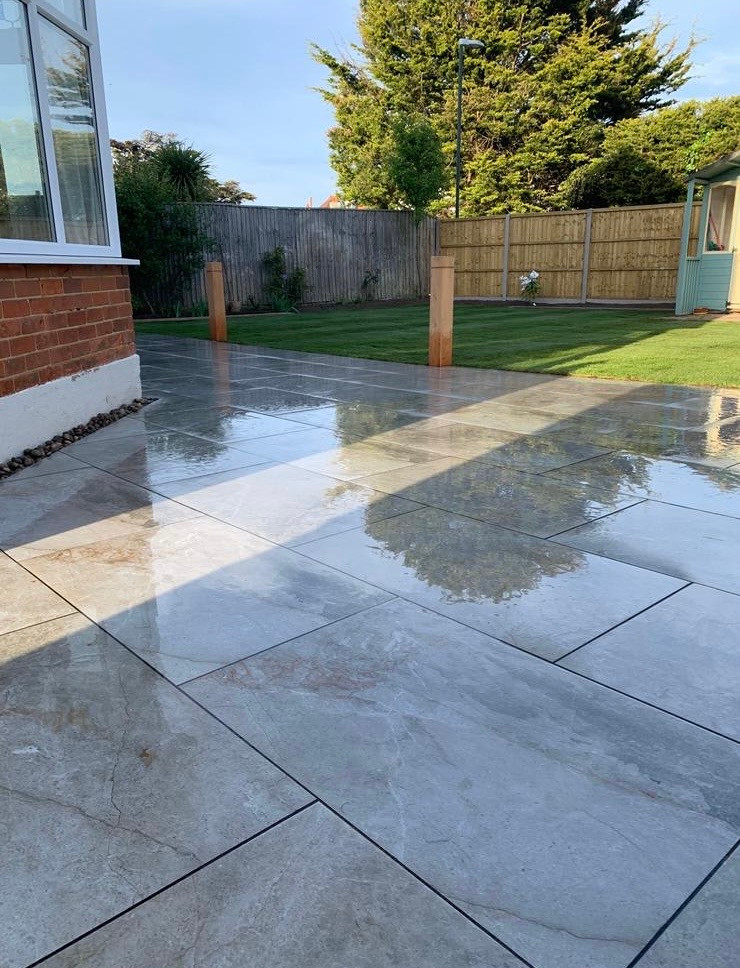
Most homes in Three Legged Cross are post war, many of them from the eighties on. On a house of that age the eaves are not painted timber, they are plastic: gutter, fascia, soffit, often cladding on the gable and the frames of a conservatory across the back. That matters because plastic is the part of the outside of your house most commonly damaged by cleaning, and it goes wrong through too much pressure or too strong a product.
Too much pressure at close range marks the surface and forces water up behind the soffit into the roof space, where you will not see what it has done for a year. Too strong a product left too long on a warm afternoon takes the shine off and leaves a patchy face that then holds dirt worse than it did.
The useful thing to take from that is what to ask before you accept a price. Ask whether the outside faces of the gutter and the fascia are included or whether the quote only covers clearing the inside of the gutter, because those are two different jobs and people assume they are one. Ask what is going on the plastic and at what pressure.
And be a little wary of anyone promising to bring white plastic back to new: green, black streaking and general grime all come off, but the chalky, faded look of thirty year old plastic is the surface itself breaking down in sunlight, and honest work gets it clean rather than new. If a fascia has reached that state, replacing the boards is the real answer and it is a joinery job, not a cleaning one.
Who you are dealing with
Exterior cleaning in the BH21 lanes
We clean houses in Three Legged Cross, Verwood and the BH21 lanes across to West Moors, Ashley Heath, Alderholt and Woodlands. Our base in Boscombe is about nine miles away, and the local authority is Dorset Council.
The company, Bournemouth Roofing & Building Ltd, is registered in England and Wales, company number 15471719, and Thomas Hannen owns it. He looks at your roof, walls and drive and prices the clean himself. Checkatrade shows a verified customer's 10 out of 10 for us. The visit and the written quote, broken down by surface, cost you nothing. Before you book a visit in Three Legged Cross, you can read our customers' Google reviews, word for word, on our reviews page.
Planning at a glance
Do you need planning permission in Three Legged Cross?
Most repairs in Three Legged Cross need no application at all. What decides whether a change to the outside of your house does is who the council is, whether a conservation area or a listing applies, and whether the place sits in a protected landscape.
| Question | In Three Legged Cross |
|---|---|
| Who decides | Dorset Council is the planning authority for Three Legged Cross. Dorset Council's heritage pages set out what it controls. |
| Conservation area | None covers Three Legged Cross, so a like-for-like repair is ordinary maintenance. |
| Listed buildings | Yes, there are listed buildings in and around Three Legged Cross. If yours is one, work can need listed building consent. |
| Protected landscape | No National Park or National Landscape covers Three Legged Cross. |
Questions
Questions about exterior cleaning in Three Legged Cross
Only one building here is listed. Do we need any permission?
A clean needs no permission. Three Legged Cross has no conservation area over it and one listed entry in total, so washing the walls, roof, gutters or drive is maintenance and needs nothing from Dorset Council. The green belt designation here applies to new buildings and extensions, not to washing an existing one. The only thing that changes the picture is a plan to coat or paint a surface once it is clean.
Can you get black streaks off white fascia and gutters?
Yes, and it is one of the more satisfying jobs round here. Many houses in Three Legged Cross date from the eighties onwards, when white plastic fascia and gutter became standard, and the streaking is oxidised plastic with dirt bonded into it, not dirt sitting on the surface. It wants a chemical clean and a hand wipe, not a pressure washer, which polishes lines into the face. The gutter tops get done at the same time.
Our block paving sinks and greens in the low corner. Why?
Because the water has nowhere to go. The ground at Three Legged Cross is naturally wet, so the low corner of a drive stays saturated, sand washes out of the joints, and the blocks settle and green over ahead of the rest. Cleaning will look right for a season and then that corner goes again. We will clean it and tell you plainly that the answer is a drainage channel or a relaid section, which is a different job.
Will you clean a conservatory roof without walking on it?
Nothing goes on a conservatory roof. Plenty of the bungalows in Three Legged Cross have a conservatory or sunroom on the back, so the glazing bars and the panels are done with a pole and a soft brush from ground level, working downwards. The gutter above it is cleared first, otherwise everything just cleaned gets rinsed over with whatever comes out of that gutter.
What order do you work in on a house and drive together?
Roof first, then gutters, then walls, then the hard surfaces last of all. Everything runs downhill, so doing a drive before the roof means doing the drive twice. On a typical Three Legged Cross bungalow with the parking across the front, that means the front is the last thing to come right and the whole job looks half finished until near the end. Worth knowing before you look out of the window at lunchtime.
Nearby, and next door
Exterior cleaning near Three Legged Cross
Nearby places we also cover for exterior cleaning, with straight-line distances from Three Legged Cross, and the other trades we offer in Three Legged Cross itself.
Exterior cleaning nearby
Our other trades in Three Legged Cross
Exterior cleaning guides
Soft washing vs pressure washing: safe for a roof? How to clean a patio without damaging it Moss on a roof: does it need removing?Everything we do in Verwood Exterior cleaning, all areas Every area we cover
Free quote
Get a written price for your Three Legged Cross clean
Send the postcode and tell us what is bothering you. We come out, look at the roof, the rainwater goods, the walls and the drive, and put the price in writing.