How to clean a patio without damaging it: a guide by surface
The right method depends on what the patio is made of, and the wrong one can do more damage than years of dirt.
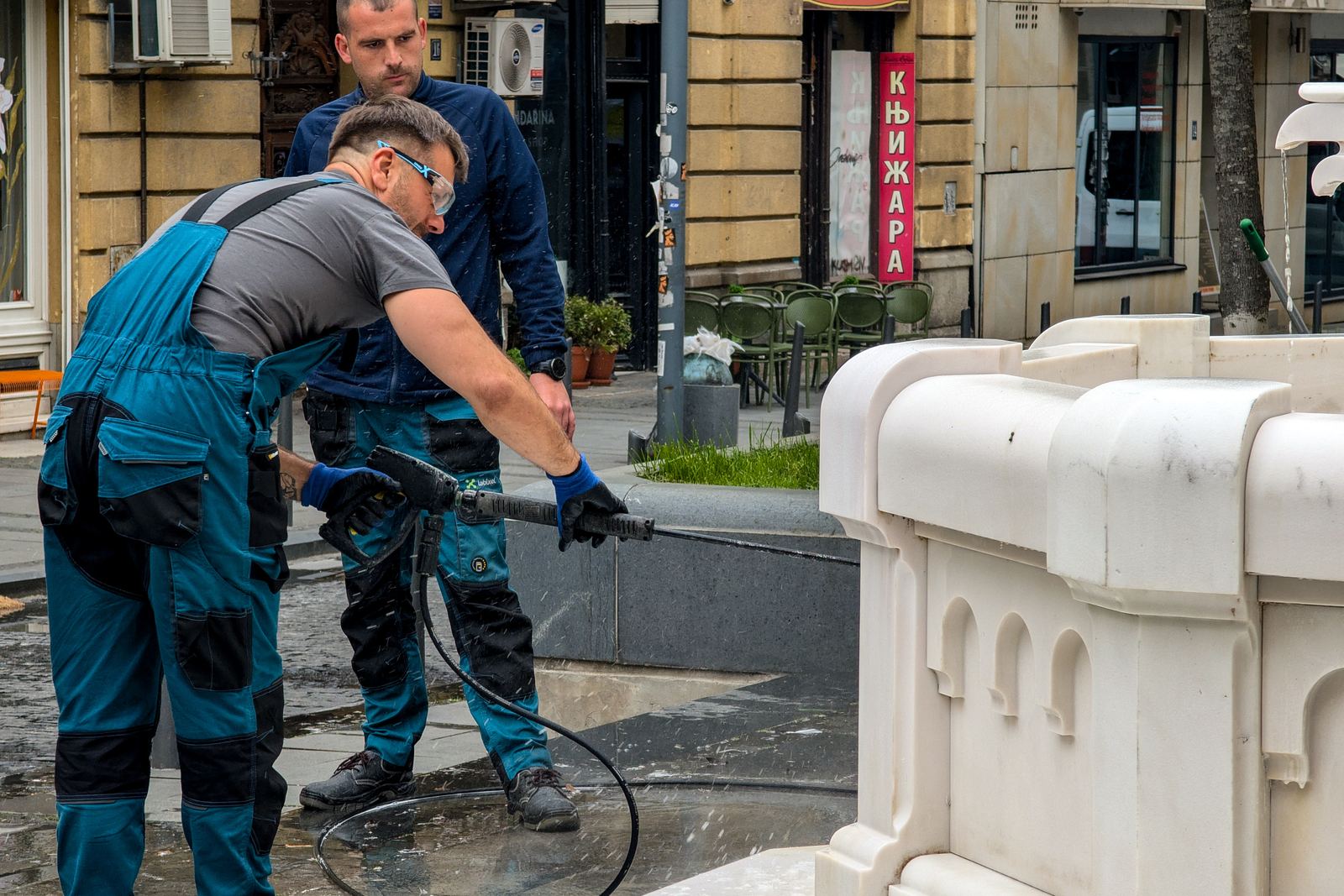
Clean a patio according to what it is made of. Sweep, wet and scrub it with water first. Block paving and concrete can take a pressure washer, sandstone and limestone want low pressure and no acid, and porcelain rarely needs more than a brush. GOV.UK guidance for businesses says only clean water should go into a surface water drain.
The short version
- Find out what the patio is before you buy anything. The same lance and the same bottle that do no harm to concrete blocks can etch limestone and strip the face off soft sandstone.
- Pressure washing block paving is fine, but it takes the sand out of the joints. Sweep dry kiln dried sand back in once the surface has dried, or the blocks start to move.
- The black spots on stone paving are lichen. A jet strong enough to shift them usually damages the stone, so they are treated and left to weather off, not blasted.
- A product sold to kill lichen or algae on paving needs approval or authorisation from the HSE, and one that claims to kill moss also needs authorisation under plant protection law. Use one meant for the public, and follow the label.
- Most patio cleaning is a job you can do yourself. It is ground level, the tools can be hired, and the bigger risk is usually to the paving, though a lance can still cut skin, so wear boots and eye protection.
Start here
Work out what the patio is made of first
Every bit of advice on cleaning a patio depends on the surface, so identify it before you hire a pressure washer or buy a cleaner. Most UK patios are one of four things, and you can usually tell which by looking.
- Concrete slabs. Uniform colour all the way through a chipped corner, often with a moulded riven or textured face that repeats from slab to slab. Cheap, tough, and the most forgiving surface to clean.
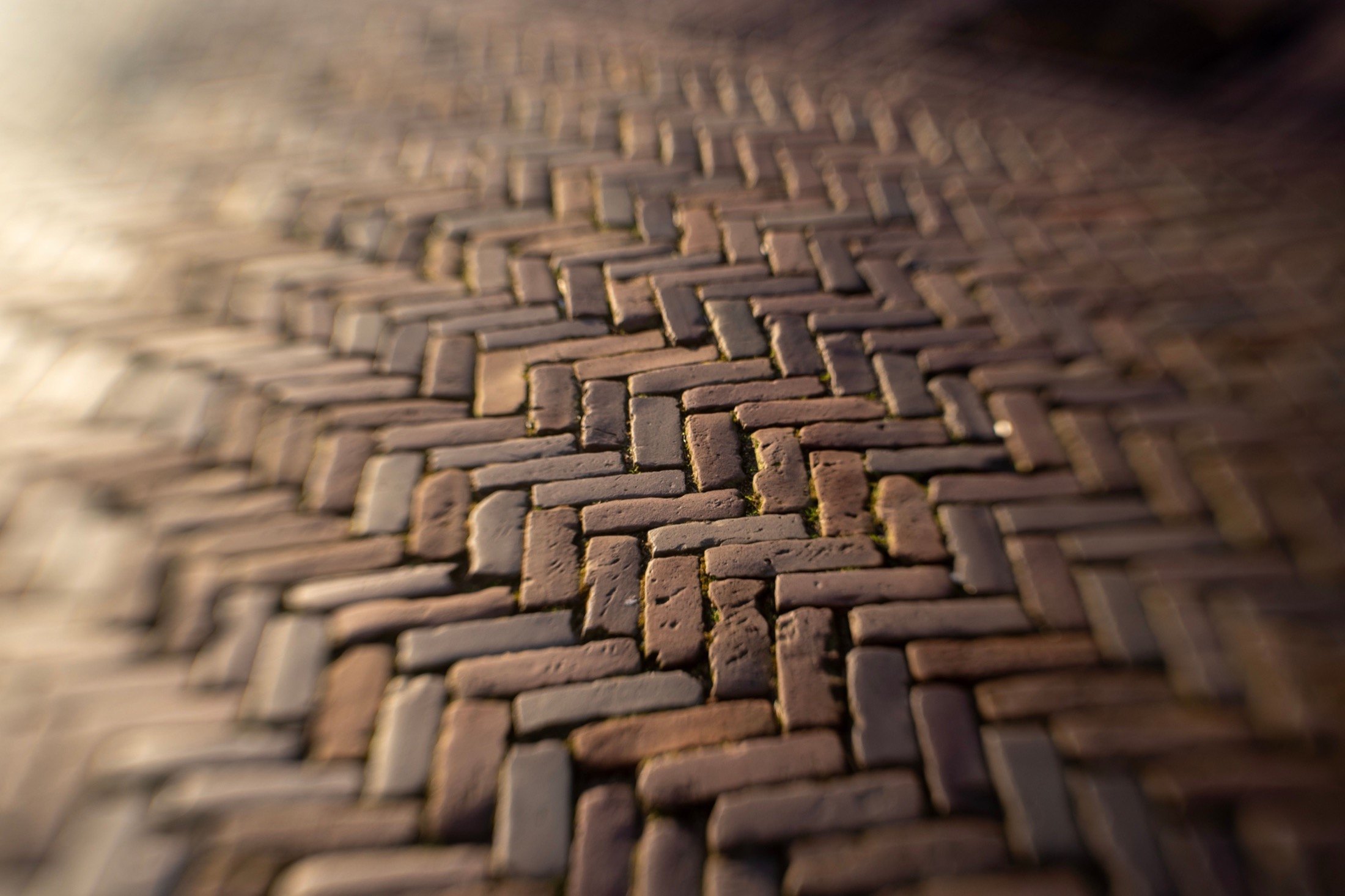
- Block paving. Small rectangular blocks, usually concrete, sometimes clay, laid tight with sand brushed into narrow joints. The blocks are tough. The joints are the weak point.
- Natural stone. Colour that varies across each flag, irregular riven layers, sometimes visible bedding lines. A lot of the stone paving sold in the UK is sandstone. Limestone is smoother and paler, often grey or buff. Both are softer and more porous than concrete.
- Porcelain. Thin, very flat, often printed to look like stone or wood, with a pattern that repeats exactly. It absorbs almost no water, so dirt and algae sit on top rather than in it.
If you are not sure, drip a little water on a clean, dry flag in an out-of-the-way spot. If it darkens and soaks in within a minute, treat it as porous stone or concrete. If it beads and sits there, it is porcelain or a sealed surface.
Side by side
What each surface will and will not take
This is the comparison the rest of the post explains. Read across the row for your patio.
| Surface | Pressure washer | Acid or bleach cleaners | The weak point | Afterwards |
|---|---|---|---|---|
| Concrete slabs | Yes, with a fan nozzle or a rotary patio attachment, held at a steady distance | Only products labelled for concrete. Acid etches the cement face | Mortar joints and a worn surface that exposes the aggregate | Check and repoint any joints the jet opened |
| Block paving | Yes. The blocks cope well | Rarely needed. Water and a stiff brush do most of it | Jointing sand, which the jet removes | Re-sand with kiln dried sand once dry |
| Sandstone | Low pressure only, from a distance, or not at all | Avoid both. Either can stain or bleach it | The face itself, which can flake or roughen | Expect it to green again faster if the face was opened |
| Limestone | Low pressure only | Never acid. Limestone dissolves in it | The face, which etches and loses its finish | Rinse well so no cleaner is left on it |
| Porcelain | Rarely needed. Keep the jet off the joints | Usually unnecessary on the tile. Check the joint material | The joints, not the tile | Nothing, unless the joints have opened |
Pressure
What a pressure washer does to joints and to sandstone
A pressure washer cleans by removing the top of whatever it hits. On a dense concrete block that is a film of dirt and algae. On a soft or porous surface it is the surface itself, and the damage is permanent.
Joints
Whatever fills the gaps between the flags or blocks is softer than the paving, so it goes first. Sand comes straight out of block paving joints. Old or weak mortar between slabs breaks up and washes away, and on a patio laid on spots of mortar the water then gets underneath. Keep the lance moving along the flags rather than down the joints, and if a joint crumbles as you pass, stop and treat that area by hand.
Sandstone
Riven sandstone is made of thin layers of grains held together by a natural cement, and close up a jet can lift those layers, wash out loose grains and leave a rougher, more open face. That face holds water and dirt better than the one you started with, so the patio looks clean for a season and goes green faster afterwards. Pale stone can also come out patchy where the jet lingered. If you use a pressure washer on stone at all, use the lowest setting and a wide fan, keep the nozzle well back, and test it on a flag behind a pot first.
On a roof the case against pressure washing is stronger again, because there water is driven up under the laps. Soft washing against pressure washing covers that comparison, so this post sticks to the ground.
Block paving
Re-sanding block paving after you wash it
If you pressure wash block paving, plan to re-sand it. The sand in the joints is not filler. It wedges the blocks against each other so a load on one is shared with its neighbours, and blocks with empty joints start to rock, spread at the edges and let weeds root in the gaps.
- Wash the paving and let it dry completely. Damp sand clogs at the top of the joint and never reaches the bottom.
- Use kiln dried paving sand, which is fine, dry and flows into narrow joints. Building sand is usually too damp and clayey to run into narrow joints.
- Spread it over the surface and brush it into the joints from several directions.
- On a driveway, a plate compactor with a rubber mat run over the blocks settles the sand down the joint. On a small patio, brushing in, waiting a few days and topping up does much of the same job.
- Brush off the surplus and check the joints again after the first heavy rain.
Re-sanding sets the joints back to where they were. It will not fix blocks that have already sunk, rutted or spread, which is a problem with the base underneath, and our post on a sunken or ponding driveway explains how to tell base failure from drainage. Sealing is the other job people consider once the blocks are clean and the joints are filled. A sealer can help hold the jointing sand and slow the return of stains, but it goes on clean, dry paving only, and it is a decision in its own right rather than a step in cleaning. Whether it suits your block paving is worth thinking about separately.
Black spots and green
Black spot lichen, algae and the rules on the products
Green slime and black spots are different organisms, and they need different treatment. Green is algae. It lives on the surface, a stiff brush and water shift most of it, and a pressure washer removes it from concrete and block paving straight away.
The small black dots that stay after everything else has been washed off are lichen, gripping into the surface of the stone or concrete. A pressure washer strong enough to remove them will usually take the surface away with them, which is how sandstone patios get ruined. The approach that works is a product made for lichen, applied as the label says and left. The spots die and weather off over weeks or months, not in an afternoon, which is also why a stone patio cleaned properly can look worse before it looks better.
Patio products are regulated, and that tells you what to buy. The HSE lists surface biocides used to remove lichen, mould or mildew from masonry and tiles as products that need approval from the HSE before they can be sold or used, and the same page says that any product making claims against moss also has to be authorised under the separate plant protection products rules. The HSE’s conditions for approved products say it is an offence to use a non-approved product, that you must only apply a product to the area intended to be treated, and that you should not mix two or more products unless both labels and approvals allow it. Never mix bleach with another cleaner.
Two practical rules follow. If you are doing it yourself, the HSE’s guidance on using biocides says members of the public should only use products intended for the general public, never professional-only ones. If you are paying somebody, ask them to name the product they will use. Someone who uses it every week will have the label to hand.
Runoff
Where the washing water goes, and why it matters
Find out where your patio drains before you put a chemical on it. Most patios fall towards a gully, a channel drain or the garden, and that gully may be connected to a surface water drain, which takes rainwater to the nearest stream, river or the sea without treatment.
GOV.UK’s pollution prevention guidance, published by Defra and the Environment Agency, says surface water drains discharge directly to the environment, that only clean water should go into a surface water drain or soakaway, and it lists yard cleaning among the activities that can produce contaminated water. That guidance is written for businesses, so it is aimed at anyone you pay to clean the patio. The law behind it is broader: regulation 12 of the Environmental Permitting Regulations says a person must not cause or knowingly permit a water discharge activity without a permit, and a water discharge activity includes letting polluting matter enter inland or coastal waters.
At home, rinsing loosened dirt off with plain water onto the garden is the simplest option. A paid cleaner working to the GOV.UK guidance should treat the wash water as contaminated and keep it out of a surface water gully. Cleaner, biocide and bleach rinse should never go down one. Block or cover the gully while a product is working, let it soak into the paving as the label intends, keep it off lawns and beds, and use only as much as the job needs. Leftover product and empty containers go by the label’s disposal instructions, not down the drain.
Next steps
When DIY is completely fine, and when to call someone
For most patios, do it yourself. It is ground-level work, a pressure washer and a patio attachment can be hired, and a stiff broom with water does more than people expect. You do not need anyone else for:
- Concrete slabs or block paving with ordinary green algae and dirt.
- Porcelain of any kind, which mostly needs a brush, water and a mild detergent.
- Re-sanding block paving joints after you have washed it.
- Applying a lichen or algae product sold for the public, following the label.
It is worth getting someone in when the job is really a repair rather than a clean, or when the surface is one you cannot replace.
- A natural stone patio you care about, especially pale sandstone or limestone, where a mistake with pressure or acid shows for years.
- Joints that wash out as soon as the water touches them, or flags that rock. That is repointing or relaying, and our patio work covers it.
- Block paving that has sunk or spread, where cleaning would be cosmetic work over a base problem.
- Paving that keeps cracking or lifting after winter. Our post on frost damage to paving explains why that shows up in spring.
If you would rather not do it, cleaning paving is part of our exterior cleaning, alongside the wider driveway and patio work. Thomas Hannen comes out and looks at the surface and the joints himself, and you get a free written itemised quote. If the patio only needs a brush and a hired pressure washer, you do not need us.
Questions
Common questions
What is the best way to clean a patio?
Sweep it, wet it and scrub it with water and a stiff brush first, then decide whether it needs more. Concrete slabs and block paving can take a pressure washer. Sandstone and limestone need low pressure and no acid. Porcelain rarely needs more than a brush and a mild detergent.
Is it OK to pressure wash a patio?
On concrete and block paving, yes, as long as you keep the jet off weak mortar joints and re-sand block paving afterwards. On sandstone and limestone use the lowest setting from a distance, or avoid it, because a close jet can roughen or flake the face of the stone.
How do you get black spots off a patio?
The black spots are lichen, and pressure washing hard enough to remove them usually damages the stone. Use a product sold for lichen on paving, follow the label, and let the spots die and weather off over weeks or months.
Do you need to re-sand block paving after jet washing?
Yes. Pressure washing takes the sand out of the joints, and the blocks rely on it to stay locked together. Let the paving dry completely, then brush kiln dried sand into the joints and top it up after the first heavy rain.
Can I wash patio cleaner down the drain?
Not into a surface water drain. GOV.UK guidance says those drains discharge directly to the environment and should take only clean water. At home, rinsing loosened dirt off with plain water onto the garden is the simplest option. A paid cleaner should treat the wash water as contaminated and keep it out of a surface water gully, and cleaner, biocide and bleach rinse should never go down one. Follow the label for disposal.
Read next
Related advice
The guides below pick up where this one leaves off, and the exterior cleaning page covers the work itself and the places we cover, if you would rather have the job looked at.
Who wrote this
Thomas Hannen
Thomas owns Bournemouth Roofing & Building and prices every job himself instead of sending somebody else. The company is Bournemouth Roofing & Building Ltd, number 15471719, registered in England and Wales. If you want to talk something through before you commit to anything, the site visit and the written itemised quote are both free.
Free quote
Not sure whether your patio needs cleaning or repairing?
Thomas comes out, looks at the paving and the joints, and puts what he found in a written, itemised quote. If the patio only needs a brush and a hired pressure washer, you do not need us.