Frost damage to brickwork and paving: why it shows up after the thaw
The cold snap did not do it. Whatever has been soaking that wall for years did, and that is the cheaper thing to fix.
Frost does not damage dry brick. It damages brick that was already soaked, usually by a failed gutter, a blocked downpipe or ground piled above the damp proof course. The face blows off from the inside as the ice expands, and it normally drops when the wall thaws, not during the cold snap. Fix the water first.
The short version
- The cold is not the cause. Whatever keeps that wall wet is, and it is usually a gutter joint, a downpipe or a bridged damp proof course.
- It is not the coldest winter that does the damage, it is the one with the most crossings of zero on saturated masonry.
- The loose face is often held on by ice and drops on the thaw, which is why it turns up in February and gets blamed on a cold snap weeks earlier.
- BS EN 771-1 grades clay bricks for freeze and thaw resistance, and a wall failing only at the plinth or under a coping usually has the wrong grade in the wrong place.
- Do not seal it, jet wash it or render over it. Once the water is fixed, much of this is cosmetic and stable.
The mechanism
Frost does not damage dry brick
A brick that is dry when the temperature drops does not spall. Brick is porous by design, and in a wall drying normally most of those tiny voids hold air. Fill them with water and it becomes a different material. Water expands as it freezes, and once the pores are full enough the ice has nowhere to go. The pressure works outward against the fired face until, after enough cycles, that face comes away in plates.
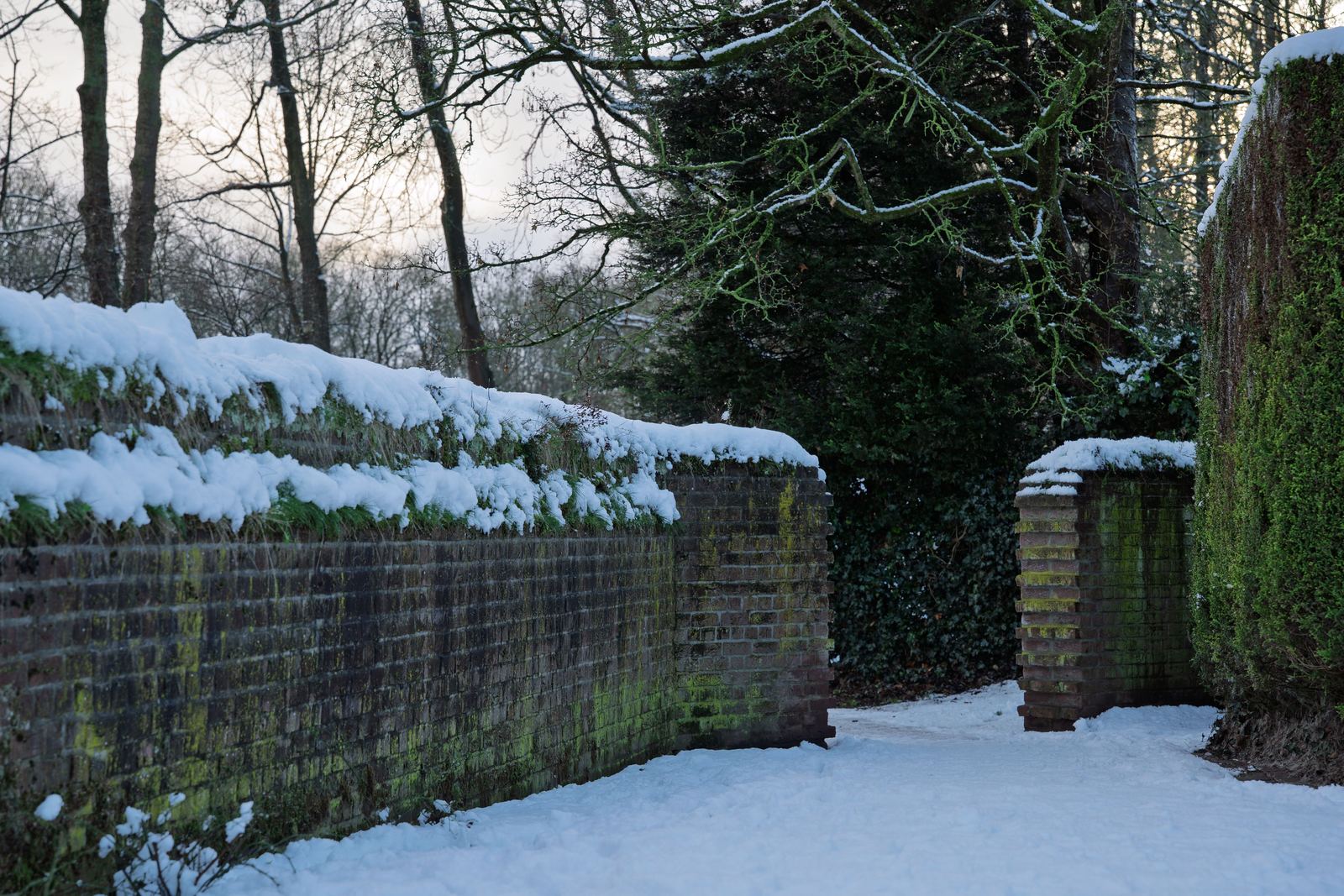
So the damage is never scattered randomly. It sits where the wall gets wet: under a running gutter joint, down the line of a blocked downpipe, in the courses above a raised border, on a coping, a parapet, a chimney. Stand back far enough to see the whole elevation and the missing faces draw you a map of the water, the same map as damp at the bottom of a wall.
The useful question is not how cold it got in January but what has been wetting that wall every time it rains. Fix that and the frost mostly stops mattering, which is why clearing the gutters before winter is a masonry job as much as a rainwater one.
The timing
The face usually falls on the thaw, not in the freeze
People find spalled brick in February and assume the cold snap did it three weeks late, and something close to that is true. The damage builds through the freeze, but the loosened plate of face is often held on by the ice in the joint behind it. When the wall thaws, the ice lets go and the plate drops into the border. The first mild weekend after a cold spell is when this gets found.
The other half of the timing matters more. It is not the coldest winter that wrecks brickwork, it is the one with the most crossings of freezing point on masonry that is already wet. A deep freeze is one event. Six weeks of nights hovering either side of zero, on a shaded wall under a leaking gutter, is thirty or forty, and each drives the same wedge further. A mild damp winter on the south coast can take more off a saturated wall than a harder, drier one inland. If you found damage this spring, the fault has been there several winters.
Diagnosis, part one
Find the water before you touch the brick
Work the damage backwards to a source, in the rain if you can. Most of it is visible from the ground.
- The gutter and downpipe above it. A dripping joint, a length dropped out of level, or a gutter that overflows at the back in heavy rain. The back is the worst of the three: the water goes into the masonry and nobody sees it happen.
- Ground level. Measure it. Approved Document C works on the damp proof course sitting at least 150mm above the adjoining ground, and a raised bed, a gravel border or a drive that has been overlaid rather than dug out will bridge it. Masonry below a bridge never dries, so it goes into every frost fully charged. Check which way the ground falls too: paving falling towards the house puts every downpour against the foot of the wall.
- On a stack or a parapet, look at the top. Cracked flaunching, a missing or open-jointed coping, a failed tray. Masonry wetted from above stays wet all the way through, which is why chimneys spall when the rest of the house does not.
Do not price brickwork until this is answered. Bricks replaced into a wall still being soaked buy the same failure again.
Diagnosis, part two
Frost damage, salts, sulphates or plain wear
Four things get called frost damage and only one is. Settle it before anybody quotes: the work differs in each case.
| What it might be | How to tell | What it means |
|---|---|---|
| Frost spalling | The fired face has come away in flakes, exposing a softer, paler core. The damage maps onto wet spots and stops where the wall is dry. | The water source is the fault, not the brick. Find it and fix it first. |
| Efflorescence | White powder on the surface. A dry stiff brush takes it off and the face underneath is sound. Common on new brickwork or a wall that has just dried. | Soluble salts carried out by drying water. Harmless, and it stops when the wall finishes drying. Brush it off dry; washing carries the salts back in. |
| Sulphate attack | The mortar is failing, not the brick. Bed joints going soft and widening, cracking along the horizontal, a garden wall or chimney visibly leaning. | Salts in persistently wet masonry reacting with cement mortar, which expands. Still a water problem, but repointing alone will not hold it. |
| Lost fired skin | Uniform loss across a whole area with no relationship to wet spots, on a wall that was jet washed, sandblasted or chemically cleaned. | The fired surface has gone and the brick is a sponge. It will spall for real within a winter or two. |
One more pattern looks like a brick fault and is not. If the joints stand proud and hard while the faces have gone, a soft brick has been pointed in a strong cement mortar, and the water the wall must evaporate is going out through the face instead of the joint. That is the argument behind choosing lime or cement for repointing. If you cannot tell which you have, BRE sets out how dampness is separated by diagnosis rather than guesswork.
Exposure
Why one elevation goes and the wall round the corner does not
Two things decide it: how much water lands on that face, and how fast it leaves. Driving rain here comes mostly on the south-westerly, so the south-west elevation takes the most water. It also gets the most sun and wind, so it dries, and on a clear February night it may never drop below zero.
The one that fails is the elevation that gets wet and cannot dry: a north or east wall shaded by a hedge, an internal corner, the shaded side of a stack. BS 8104 sets out how to assess a wall's exposure to wind-driven rain, naming durability and weathering in its own scope.
F2, F1 and F0, and the wrong brick in the wrong place
Clay bricks are not all meant to survive a wet frost, and the standard says so. BS EN 771-1, the specification for clay masonry units, grades them in three freeze and thaw categories. F2 is for severe exposure, F1 for moderate, and F0 is not freeze and thaw resistant at all, with no business outside unless it is fully protected from saturation.
F2 belongs below the damp proof course, in plinths, chimneys, copings and cappings, sills, free-standing garden walls and retaining walls, all of them places where the masonry cannot shed water off a single face because it is soaked from two or three sides at once.
That gives you a test. A wall that has failed at the plinth and nowhere else, or under a missing coping, or on a sill, usually has the wrong grade of brick in the wrong position rather than bad luck with the weather. It changes what goes back, because the same brick buys the same failure, and it is the first thing to check before choosing reclaimed brick over new: a reclaimed brick out of an internal wall may never have been rated for outside use at all.
Paving, and anything laid flat
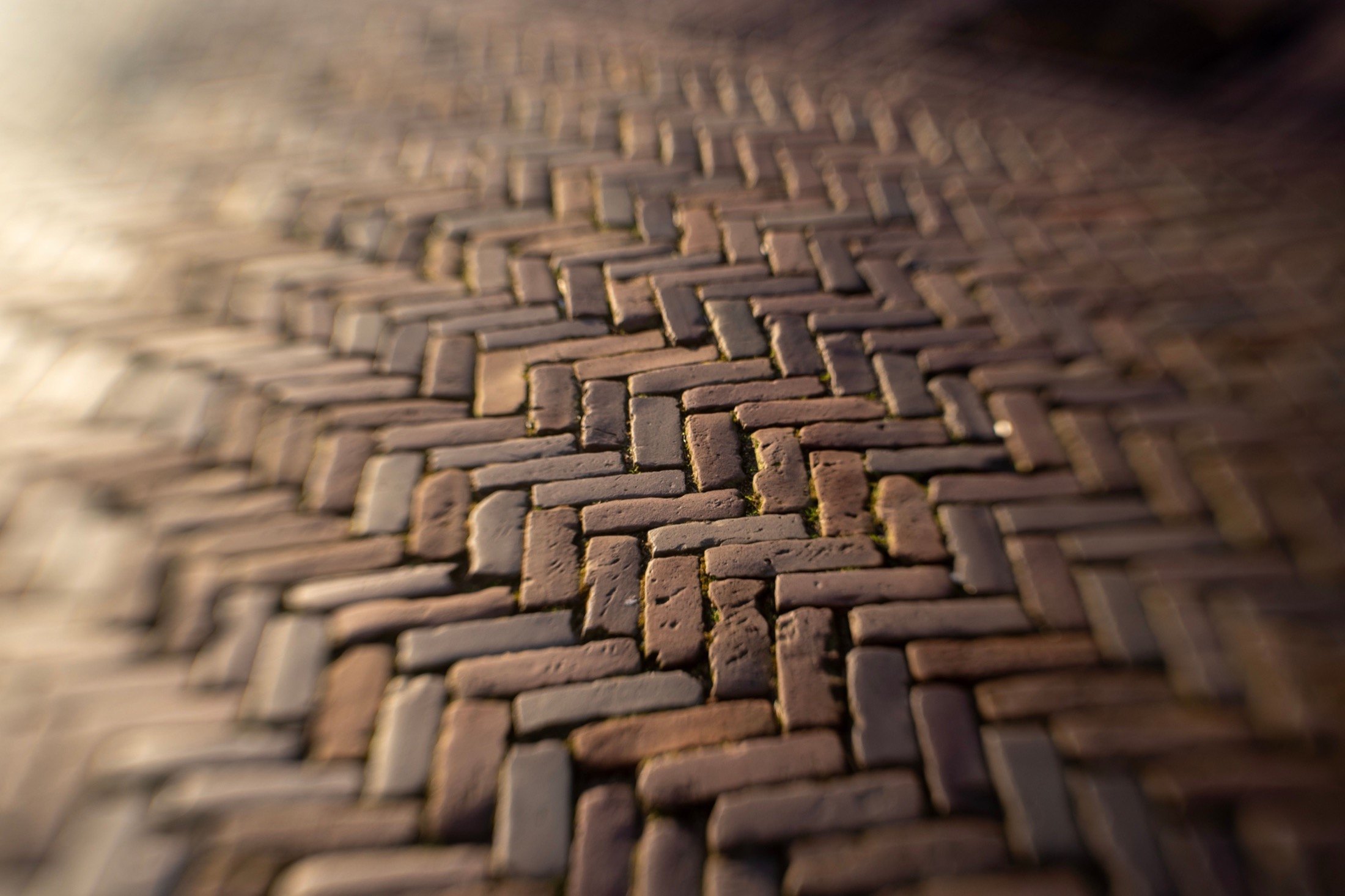
A flat surface holds water instead of shedding it, so paving is a harder job for a clay unit than a wall. A brick that stood in an elevation for a century can flake within two winters laid flat as a path. Clay pavers are made for that duty and facing bricks are not. On a drive, separate two failures that look related and are not: flaking on individual units is a material and water problem, while whole units lifting or opening at the joints is a base problem, the same fault behind a sunken or ponding driveway. Rock salt makes scaling worse, so use grit.
Putting it right
What actually fixes it, and three things that make it worse
Water, then time, then a decision, and rushing the middle step is what turns a small job into a repeated one. Fix the water source, then leave the wall through a summer and look again.
A wall soaked for years takes months to dry, and much of what looks alarming in March is stable once the masonry behind it is dry. If the face has gone back a few millimetres, the wall is dry and the gutter is sorted, the honest answer is to leave it alone. It weathers in.
Cutting out and replacing individual bricks is right where the loss has real depth, where it has gone through into the perforations, or where it is structural: a stack, a parapet, a pier, a coping, brickwork carrying a lintel. Match what is there and point in a mortar no stronger than the brick around it. That is the core of bricklaying and repointing repair after a wet winter.
Before you climb up to look. A few blown faces on a garden wall are cosmetic. Brickwork losing real depth on a chimney stack or a parapet is structural, and it is at height, where HSE sets out the duties on work at height. Look at a stack from the ground with binoculars, not off a ladder. If it leans or shows daylight through a joint, keep people away from the base of it.
Three things that make it worse
- Do not seal it or paint a water repellent on it. Water still gets in through joints, cracks, the top and the back of a wall. A coating on the face does not stop that, it stops the wall drying. The next frost has more water to work with, not less.
- Do not jet wash it and do not have it sandblasted. The fired skin is the only weather-resistant part of the brick and it does not grow back. Blasting a soft wall clean is how a sound elevation becomes a spalling one two winters later. That is our own exterior cleaning work we are talking you out of.
- Do not render over it to hide it. Render bonds to the face of the brick, and on a spalled wall that face is what has already let go. It also shuts the damp in. If you want render for its own sake, the choice between silicone and sand and cement render matters far less than what is underneath it.
Next steps
What to do next
After a frost, photograph the damage, watch the gutter above it in heavy rain, measure the damp proof course height and brush a patch to test for salts. Those first four cost nothing, and fixing the water comes before deciding about the brickwork.
- Photograph the whole elevation from far enough back to see the pattern, then the worst area close up with something in shot for scale.
- Watch the gutter and downpipe above the damage in the next heavy shower. The cause is usually running down the wall in front of you.
- Measure from the damp proof course to the ground, all round. Anything under 150mm wants digging back.
- Brush a small patch dry. If it powders off and the face underneath is sound, it is salts rather than frost.
- Fix the water, then leave the wall a summer before deciding about the brickwork, unless it is a stack, a parapet or a pier.
- When you get quotes, ask for the water source and the brickwork as separate lines, and ask what grade of brick and what mix are going back in. A quote that prices bricks and says nothing about why the wall was wet is not a repair.
If you want it looked at, that is what a free written itemised quote covers. Thomas Hannen comes out and prices the job himself, and if what he finds is a gutter joint and a wall best left alone, that is what it will say.
Questions
Common questions
Why did my brickwork only start crumbling weeks after the cold weather?
The damage happens during the freeze, but the loosened face is often held on by ice in the joint behind it. When the wall thaws, the ice lets go and the plate of brick face drops off. That is why spalling gets found in February and March, not during the cold snap itself.
Should I put a water repellent sealer on spalling brickwork?
No, water gets into a wall through joints, cracks, the top and the back of it, and a coating on the face does not stop that. What it does stop is the wall drying out again. On masonry that is already saturated a repellent leaves more water in the wall going into the next frost, not less.
How do I tell frost damage from efflorescence?
Brush it with a dry stiff brush. Efflorescence is white powder sitting on the surface and it comes off cleanly, leaving a sound face underneath. Frost damage is the face itself flaking away and exposing a softer, paler core, and no amount of brushing changes it.
Can I just render over spalled brickwork?
It is the wrong answer. Render bonds to the face of the brick, and on a spalled wall that face has already failed, so the render is keying into something that is letting go. It also traps the damp that caused the spalling. Fix the water and repair the brickwork first.
Is spalled brickwork a structural problem?
Usually not on a house wall or a garden wall, where a few blown faces are cosmetic once the wall is dry. It is different where bricks are losing real depth on a chimney stack, a parapet, a pier or under a coping, because those are slender elements carrying load and they need looking at properly.
Read next
Related advice
The guides below pick up where this one leaves off, and the bricklaying and repointing page covers the work itself and the places we cover, if you would rather have the job looked at.
- Lime mortar or cement mortar for repointing?
- Damp at the bottom of a wall
- Autumn gutter clearing: when to do it
- Reclaimed brick or new brick?
Bricklaying and repointing, and where we cover All advice articles
Who wrote this
Thomas Hannen
Thomas owns Bournemouth Roofing & Building and prices every job himself instead of sending somebody else. The company is Bournemouth Roofing & Building Ltd, number 15471719, registered in England and Wales. If you want to talk something through before you commit to anything, the site visit and the written itemised quote are both free.
Free quote
Brick faces coming off after the winter?
Thomas comes out, works out what has been wetting the wall and puts it in writing. If the answer is a gutter joint and no brickwork at all, that is what he will tell you.