Insulation in Sixpenny Handley
Top-ups over what is already up there, rafter work in the barn conversions, and honest advice about which walls are worth lining.
The site visit is free and so is the written itemised quote. Thomas Hannen prices every job himself.
Three things decide a Sixpenny Handley loft: whether the insulation is deep enough, whether it still reaches the edges, and whether the roof space above it can breathe once you make it colder underneath. Nearly all of them already have something in them. We come and measure all three, free, before anybody talks about a price.
Three things bring people here to the phone. An oil tank that seems to empty faster every winter. A back bedroom in an old cottage that never warms up whatever the heating does. And a loft that was done once, years ago, where the roll has gone flat and grey and stops a foot short of the wall on every side.
None of those is fixed by ordering more material and pushing it up through the hatch. A downland roof space is a windier, draughtier place than a sheltered one, and it behaves differently the moment you make it colder underneath.
So the visit is a proper look: what is up there and what it actually measures with a rule in it, whether the eaves are still open, what the roof is covered with and whether there is anything under it, where the tank and the pipe runs sit, and how you get to the awkward end of it. The written itemised quote comes off the back of that, with the method on it as well as the number.
The work
A cavity wall quote here is a quote for another house
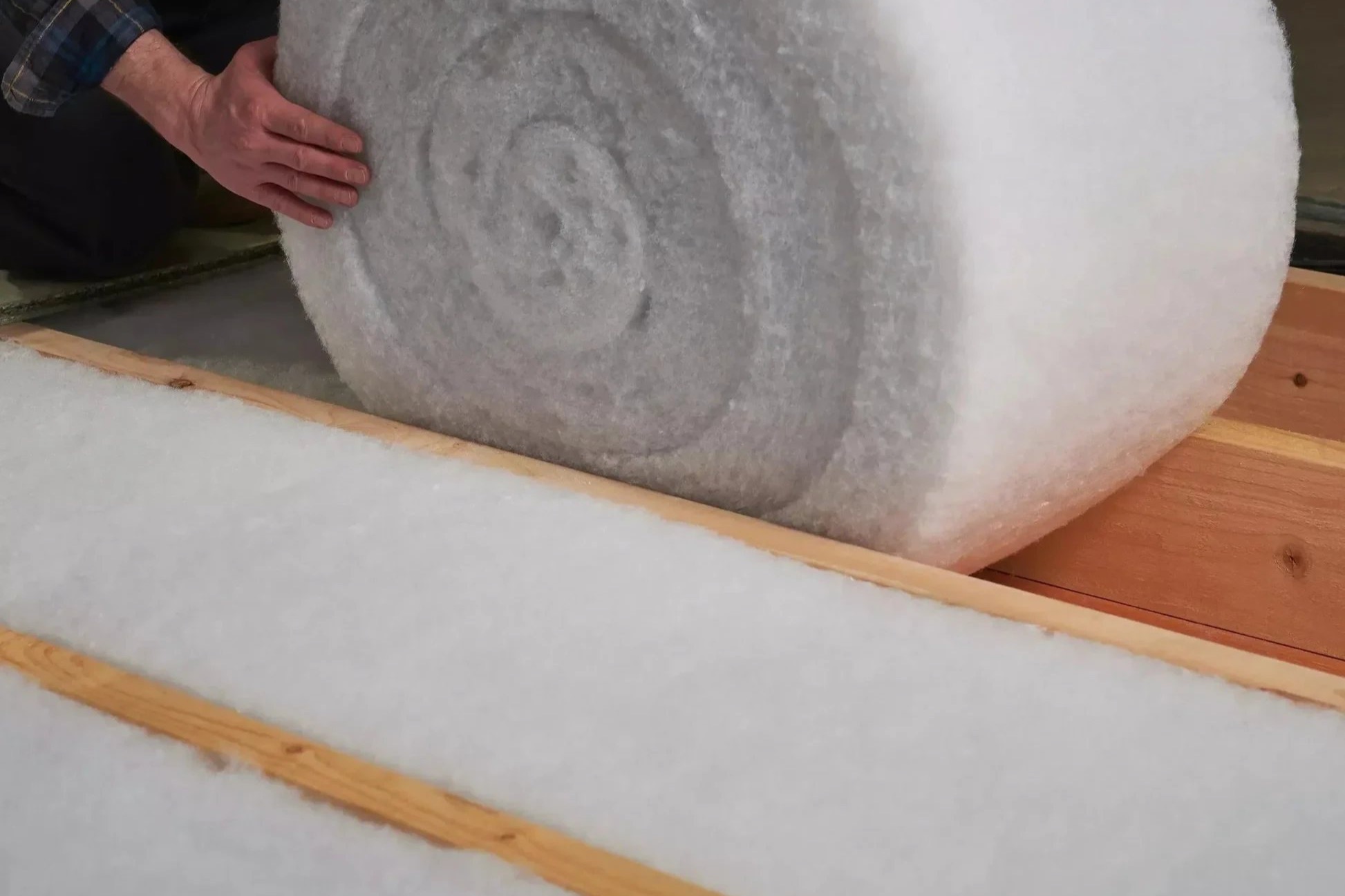
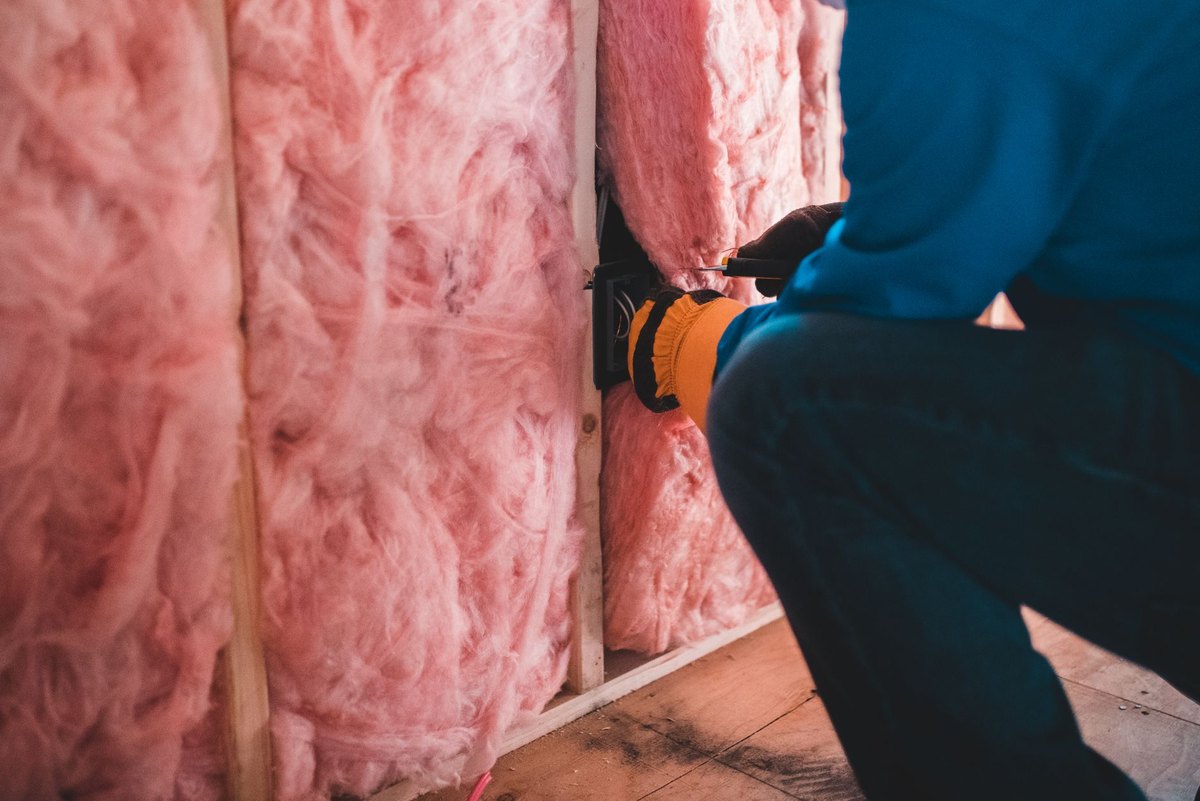
Topping up a loft that was done once. Most lofts in the village have a layer in them from an earlier scheme, laid one way between the joists and never touched again. Twenty years of standing on it and stacking things on it leaves it compressed, settled into the gaps and short of the perimeter. We lift it and look rather than assume. If the old mineral wool is dry and intact it stays and a fresh roll goes over the top at right angles, between and over, so no joist is left bridging the cold. A renovated ceiling is expected to reach a U-value of 0.16, which in ordinary mineral wool is nearer 270mm than the 250 people remember. If it is wet, mouse eaten or crushed flat it comes out, gets bagged and leaves with us.
The older houses in and around the village have no cavity in them at all, so a cavity wall quote on one of them is a quote for a different house. What works is internal wall insulation built to breathe: a wood fibre or mineral board with a lime finish rather than a sealed plastic sandwich. External wall insulation changes the outside face of the building, which up on the Chase is a planning conversation before it is a technical one. Where there is thatch there is usually no usable roof space, and we will not pack foil quilt against the underside of it.
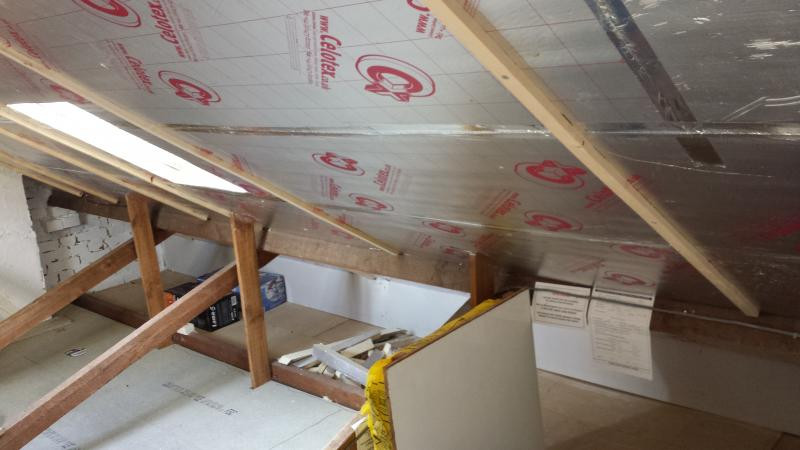
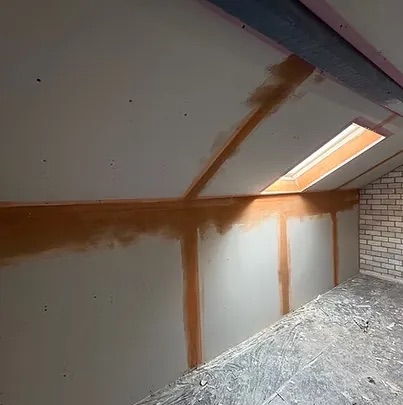
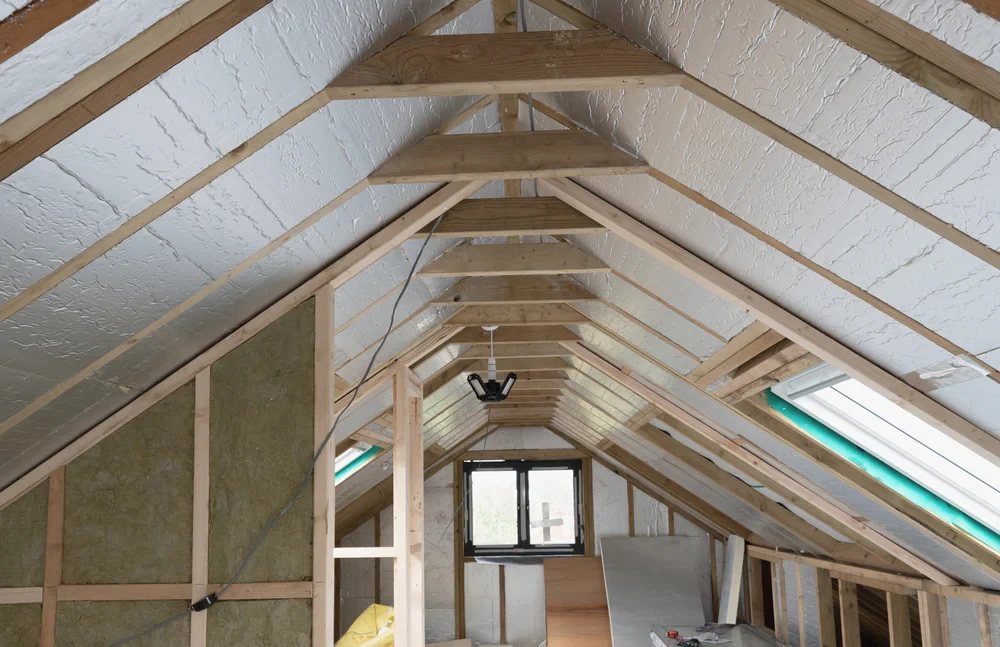
A good deal of the accommodation on the farms around here is converted outbuildings, and in a room in roof there is no loft left. That is rigid board: PIR such as Celotex between the rafters with a clear air gap above, a foil faced board under the sloping ceiling, or a multi-layer quilt like TLX where a dormer cheek has no depth to give. The post-war bungalows are the straightforward ones and most are a single day. Out here the pipework matters more than most places, because a colder loft is a loft where an unlagged pipe freezes, so the tank and every run above the new layer gets lagged, and any downlighter cut into the ceiling below gets a fire rated cover before the boarding goes back.
How it runs
From your call to a written price
Laying insulation in a loft or lining a wall on the inside is an improvement rather than development, so it needs no planning permission and sits inside permitted development. The Planning Portal sets out where that stops. Building control is engaged once a thermal element is renovated or the loft becomes a room, and the Building Regulations then set the standard the finished work has to reach. The village has no conservation area of its own, but there are seven listed entries here, and on any of those listed building consent reaches inside as well as out. This is also Cranborne Chase National Landscape, so anything that changes the outside face of a building is a question for Dorset Council first.
Cost
What decides the price of an insulation job
No rate per square metre. A flint and brick cottage with a small hatch over the stairs, a downland bungalow with a wide open loft and a ladder already in it, and a barn conversion where the roof space is the room are three different days before a roll is opened. Old material that has to be bagged and taken away is a cost before anything new goes down. Approved Document L sets what the finished work has to reach. Ask any quote what depth is going down, whether the eaves are being kept clear, and whether the tank and pipework are included.
If it is urgent
Damp, condensation or a room you cannot heat
Ring rather than use the form. A loft dripping with condensation, mould that keeps coming back, or a room that will not hold heat gets looked at quickly. Sixpenny Handley is a run up the A354 and out across the chalk, so you get an honest day rather than a promised hour we would miss. If it is pipework in a cold loft worrying you, we will tell you what to do first.
Worth knowing
Off the gas main, and what that changes
Most houses here are off the gas main, on oil or on electricity, because the main does not come out this far. That changes nothing about how a loft is insulated. It changes what the loft is worth. When you buy heat by the tank load, or on a meter, every degree that goes out through the ceiling was paid for in advance, and the same depth laid over the same joists holds on to more of your heating bill in a house here than it does in one on the gas.
It also changes the order things should be done in. If a new boiler or a heat pump is anywhere on your list, the fabric goes first, because the size of the thing you end up buying is set by the heat loss of the house as it stands on the day it is specified. Insulate afterwards and you have paid for capacity you no longer need, and it will run badly on top of that.
Energy saving materials fitted in a home currently carry a zero rate of VAT, and HMRC VAT Notice 708/6 sets out what qualifies, which is worth reading before you compare one quote against another. We do not touch the heating side. We do the fabric, and we will tell you which walls in your house are worth lining and which are honestly not.
Who you are dealing with
A local firm you can check
We cover Sixpenny Handley and Pentridge, Cranborne, Ashmore and Tollard Royal on SP5 and the Chase villages either side of the county line, and Dorset Council is the planning and building control authority for this address. Bournemouth Roofing & Building Ltd, registered in England and Wales, company number 15471719, which you can look up in a minute. Thomas Hannen's business, and he is the one who comes out to price the job, not a salesman. A verified customer's 10 out of 10 on Checkatrade. The visit and the written quote are both free.
Questions
Sixpenny Handley questions we get asked
We are on storage heaters. Which job comes first?
The ceiling, before anything else. In Sixpenny Handley 43.2% of households heat with oil and 22.1% with electricity, and electricity is the least forgiving fuel to lose through a ceiling. Get the depth right across the whole loft, then chase the draughts at the hatch and the doors. Only after that is there a sensible argument to have about the walls or about changing the heating.
You are the far side of the Chase. Do you come out?
We do. Sixpenny Handley is about 17 miles from us and we are up that way regularly, so getting eyes on the job is straightforward. Thomas comes out himself, gets into the loft and prices it, and the site visit costs you nothing. What helps is knowing the age of the house and roughly what is up there already, so the right kit comes on the first trip.
What is actually written on the quote?
The material and the depth it will be laid to, the area it covers, what happens at the eaves and at the hatch, whether vent trays are needed, and what becomes of the old material. It is itemised and it is written, so you can hand it to somebody else and get a like for like comparison. Nothing appears later because it was mentioned on the doorstep.
Where does the old material end up?
In bags, in the van, and off site the same day. Old mineral quilt is filthy and it breaks up the moment it is disturbed, so it goes into sealed bags in the loft rather than being carried loose down the stairs. Floors are sheeted from the hatch to the front door. Out at Sixpenny Handley there is no skip left on the verge unless you have asked for one.
Does the Cranborne Chase designation affect what we can do?
Only where something can be seen. The Cranborne Chase and West Wiltshire Downs landscape designation puts scrutiny on anything visible from open ground, so external cladding, a change of covering or a rooflight on a prominent slope will get looked at. Material between joists is seen by nobody. There are seven listed entries in the parish, the Church of St Mary among them, and listing is what reaches indoors.
Nearby, and next door
Insulation near Sixpenny Handley
Insulation nearby
Our other trades in Sixpenny Handley
Everything we do in Verwood Insulation, all areas Every area we cover
Free quote
Start with a look in the loft
A free site visit in Sixpenny Handley, a rule put in whatever is already up there, and a written itemised quote with the method on it as well as the number.