Insulation in Cranborne
Loft, floor and rafter insulation on old village houses, done with build-ups that let the building carry on breathing.
The site visit is free and so is the written itemised quote. Thomas Hannen prices every job himself.
A full depth roof on its own leaves half the heat in an older Cranborne cottage going out below your feet and through the front door. These houses have solid walls, suspended timber floors over a ventilated void and a lot of gaps. The loft is still where the work starts, but it is not usually where it ends, so we look at the roof, the floor and the draughts together and tell you the order to do them in.
People ring us for two reasons out here. A house that swallows a tank of oil far faster than it should and still has rooms nobody sits in during the winter. And a cold, damp feeling that has settled into a downstairs room, with mould appearing in the corners and behind furniture on the outside walls.
Both are heat loss problems and neither is fixed by turning the heating up. The visit is about finding where the heat is actually going: depth measured in the roof space, floors checked from below where there is access, walls identified as solid or cavity, and the obvious draught paths found. Free site visit, free written itemised quote, and an honest running order.
The work
Nobody should be filling a thatched roof solid
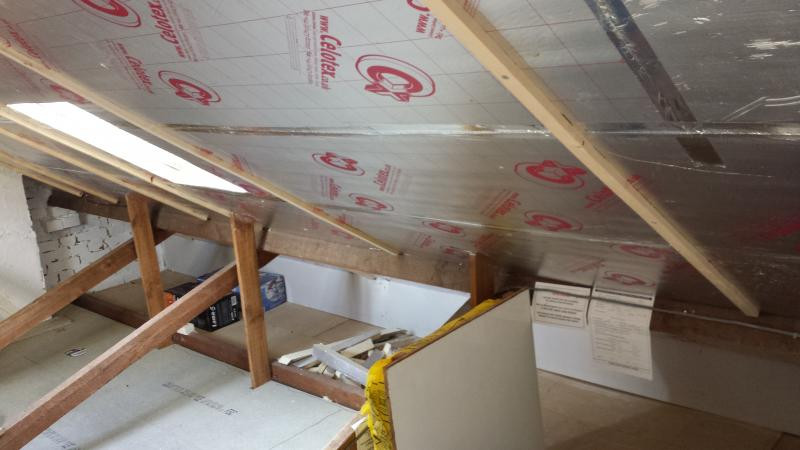
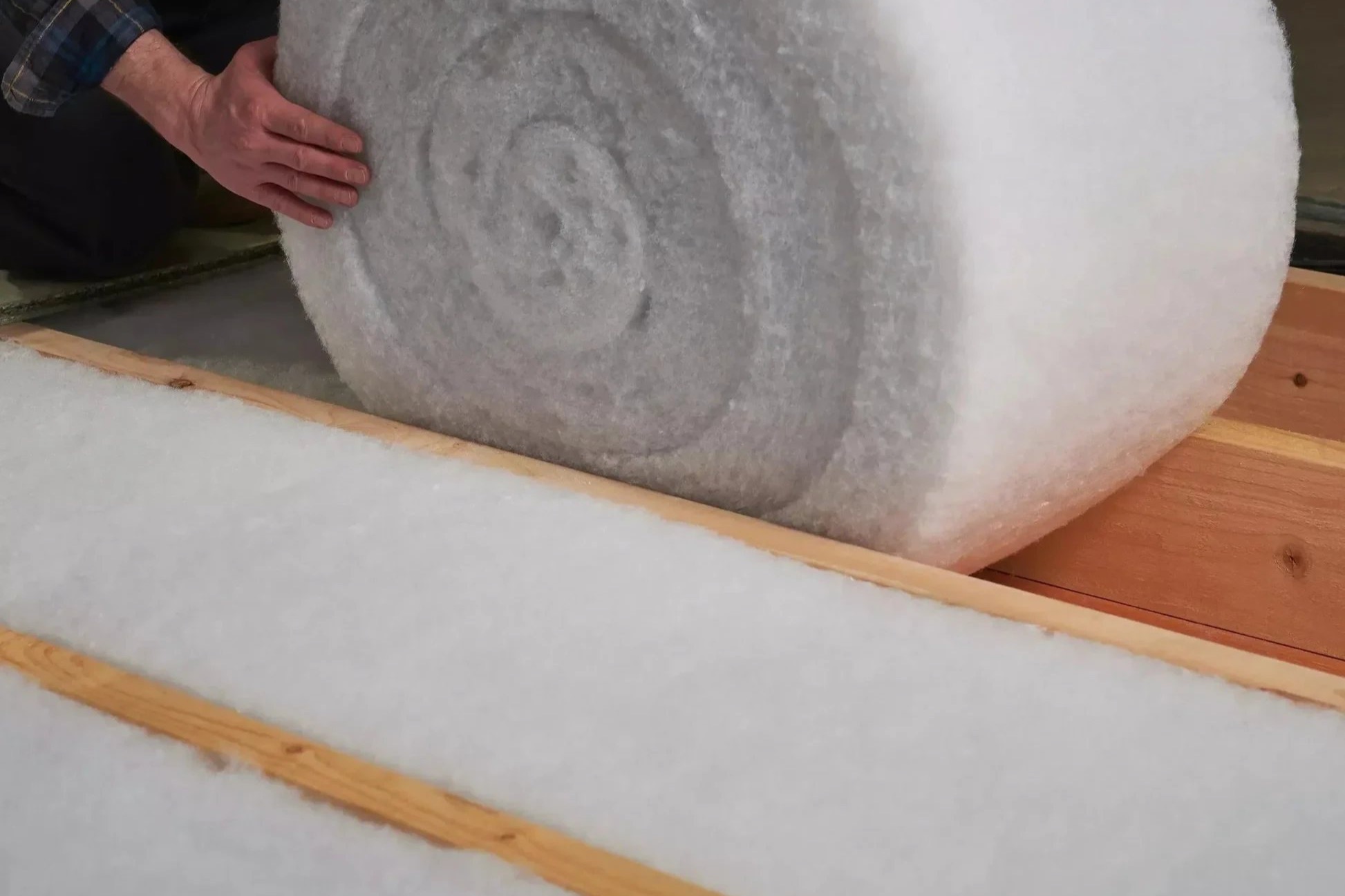
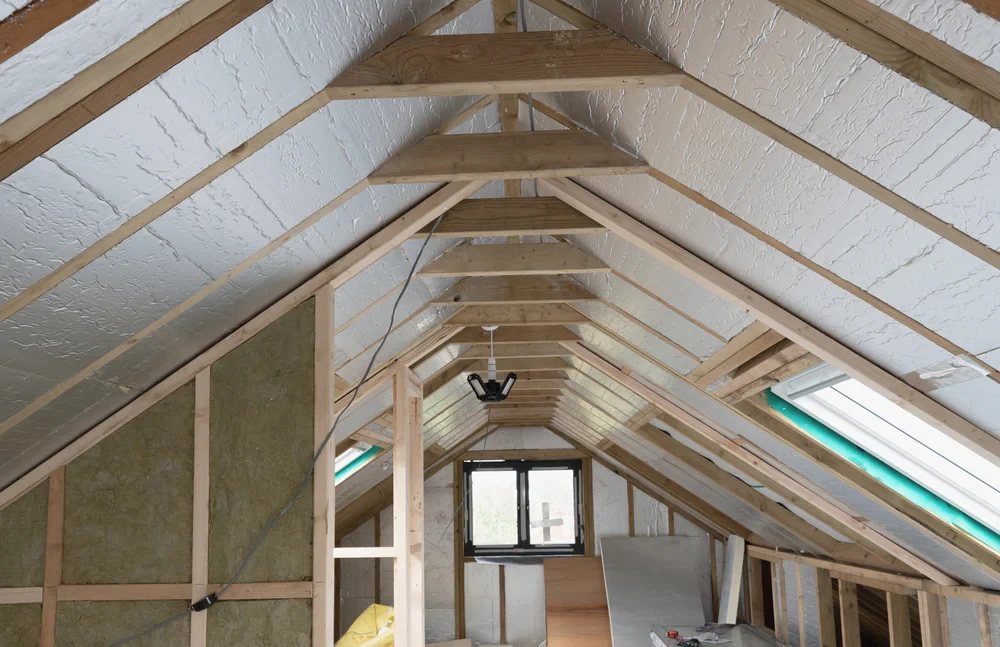
The roof space, first and always. Mineral wool, ordinary eco roll, between the ceiling joists and then a second layer across them, around 250 to 270mm all in, which takes a roof close to the 0.16 u-value expected when a thermal element is renovated. In these cottages the difficulty is never the middle of the loft. It is the low eaves, the purlins in the way, the lath and plaster ceiling you cannot stand on, and getting depth right out to the wall plate instead of stopping where it is comfortable. Where a corner has been boarded out for storage we lift it and raise it on legs so the depth runs underneath. Where a cottage has a room in the roof the work goes to rafter level: rigid board, foil faced PIR, between and under the rafters, or a multi-layer foil quilt such as TLX where a sloping ceiling has no depth to lose.
Where there is thatch, the rules change. A thatched roof needs its roof space to stay ventilated and dry, so insulation goes at ceiling level with a clear ventilated void above it, not packed tight against the underside of the thatch. Anyone offering to fill a thatched roof solid should be shown the door.
There is no cavity wall to fill in the older part of the village, so it is internal wall insulation, and the build-up wants to be vapour open, wood fibre and lime rather than a foil faced board sealed to the wall, because a brick and flint wall has always dried by letting moisture move through it. With nearly half the households here off the gas main and on oil, the fabric is what decides how much of it you buy.
Vent trays go in at the eaves so the wool is not choking the air path, and Approved Document F is the standard for the ventilation half of it. Lagging on the tank and on pipework now sitting above the warm layer matters more out here, where a burst is a long wait for help.
How it runs
From your call to a written price
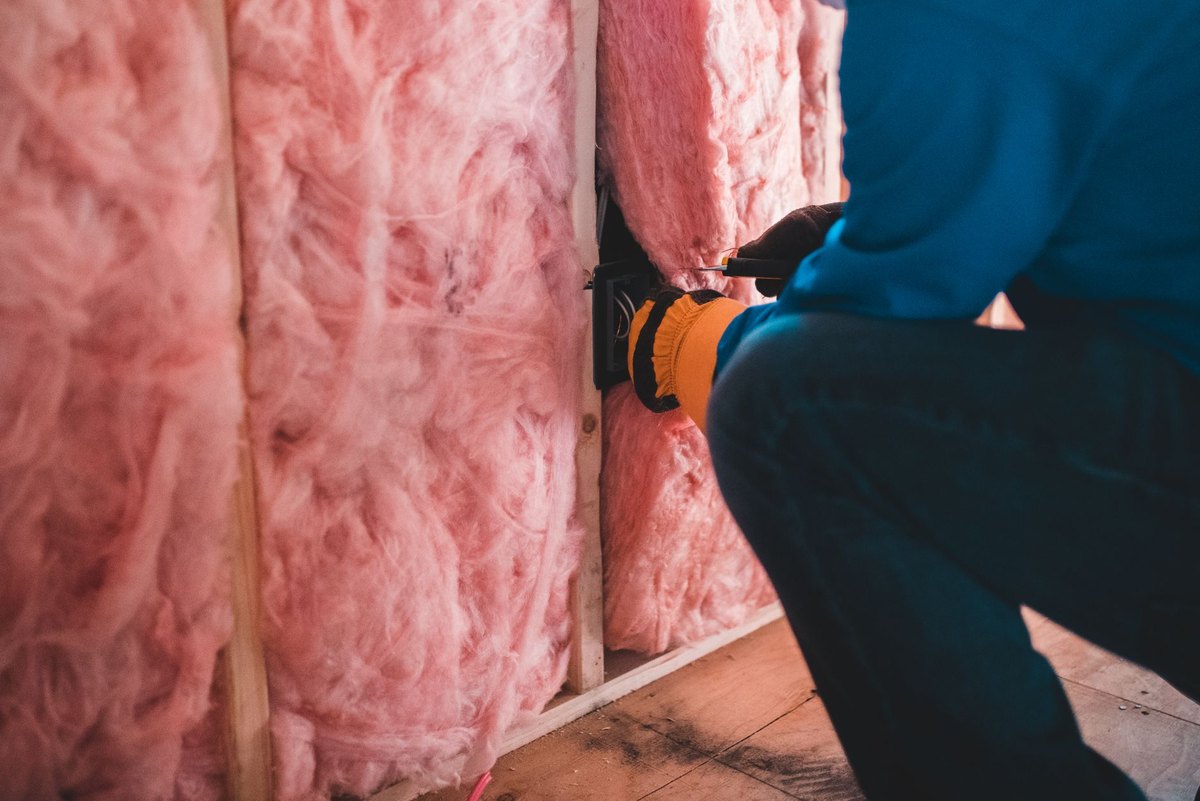
One person to ring, and the quote itemised: survey, clearing, the material and its depth, ventilation works and disposal on separate lines rather than a single figure.
Loft work and internal linings are invisible from the street and need no permission. Cranborne has its own conservation area with a couple of dozen listed entries inside it, so anything that changes the outside face of a building, external wall insulation or EWI above all, is an application here, and on a listed building listed building consent can be needed even for internal work that affects the character. Turning a roof space into a room is building control work on top of that, and we raise both at the survey rather than on the morning.
Cost
What decides the price of an insulation job
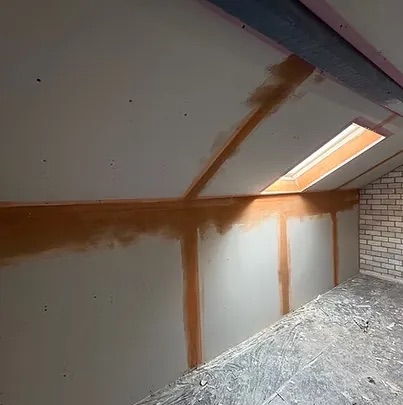
A brick and flint cottage with a hatch you can barely get your shoulders through, a converted outbuilding with the rooms already in the roof, and a post-war house at the edge of the village with a proper ladder are three different mornings. Old material to bag and take away, storage to move and put back, and eaves that must stay clear all come first, and Approved Document L sets what the work has to reach. Comparing quotes, ask what depth is being laid, whether the old material is removed or covered, and whether the hatch and pipework are included.
If it is urgent
Damp, condensation or a room you cannot heat
Ring rather than use the form. A loft dripping with condensation, mould coming back faster than you can wash it off, or a room that will not hold heat before a cold snap gets looked at quickly. Insulating a roof space that cannot breathe makes it worse, so the first visit settles which of the two you have. We are out this way regularly, so it is not worth leaving until spring.
The one local thing
Off the gas main, so every unit you keep is worth more
Close to half the households around Cranborne heat with oil, and a further slice run on electricity. That single fact changes the maths of everything on this page. On mains gas you buy heat cheaply and continuously and barely notice it leaving. On oil you buy it in advance, by the tankful, at a price that moves between one delivery and the next, and on electric heating you pay the most per unit of anybody.
The heat you fail to lose is therefore worth more here than it is in town, which is why fabric work out in these villages tends to be the better spend and why we will nearly always tell you to do the roof, the floor and the draughts before you touch the heating itself. The VAT treatment of energy saving materials is set out in HMRC VAT Notice 708/6 and is worth a look before you commit to anything.
There is a second reason to take that order seriously. Boilers and heat pumps are sized on how much heat a house loses, and if you replace the heating first you get a machine sized for the house you have rather than the house you are about to have. That means paying for capacity you then insulate away, and with a heat pump it matters more again, because a low heat loss house lets one run at a low flow temperature where a leaky one will not.
So if a new heating system is anywhere on your list, insulate first, have the heat loss worked out afterwards, and let the fabric decide the size. It is the one bit of sequencing that saves people real money out here and it costs nothing to get right.
Who you are dealing with
A local firm you can check
We cover Cranborne and the villages around it, Alderholt, Edmondsham, Wimborne St Giles, Sixpenny Handley and out towards Verwood, and the BH21 addresses between them. Bournemouth Roofing & Building Ltd, registered in England and Wales, company number 15471719, which you can look up in a minute. Thomas Hannen's business, and he is the one who comes out to price the job, not a salesman. A verified customer's 10 out of 10 on Checkatrade. The visit and the written quote are both free.
Questions
Cranborne questions we get asked
Nearly half of Cranborne is on oil. Does insulation help?
It helps most where the heat arrives by tanker, and 46.4% of households in Cranborne are on oil. The fabric decides how many litres you burn; the tank only decides when you notice. A loft top up changes nothing about the boiler, but a ceiling that holds heat means the burner cycles less and a tank lasts further into the winter. That is why we start with the fabric.
Our cottage is in the Cranborne conservation area. What applies?
The controls are on what can be seen. Inside the Cranborne Conservation Area, Dorset Council look at a change of covering or material, not at quilt sitting on your ceiling joists. There are twenty five listed entries in the village as well, and if yours is one of them, consent covers the inside too, including anything fixed to a historic ceiling. We check the designation before we write the quote.
Does the Cranborne Chase designation restrict what we can do?
It puts design scrutiny on anything visible, which is a planning matter rather than a building one. Cranborne Chase and West Wiltshire Downs covers this area, so a solar panel, a rooflight or a change of tile gets looked at on how it reads in the landscape. Insulation under the roof covering is not visible and is not affected. External wall insulation on a front elevation would be.
What is the quickest way to ruin an old Cranborne cottage?
Seal it. Old buildings in a village like this were built to let moisture pass through the walls and out through a ventilated roof, and a lot of the damage we are called to started with foam, foil and impermeable paint. Insulation that breathes, laid loose, with the eaves left open, does the same job without trapping water in the timber. That is the whole difference.
What happens on the visit before you price the job?
Thomas comes out, goes into the roof, measures the depth of what is already there and looks at the eaves, the hatch and the state of the timbers. In Cranborne he will also check whether the address is listed or inside the conservation area, because that decides what can be specified. Then you get a written quote, itemised, with no charge for either the visit or the paperwork.
Nearby, and next door
Insulation near Cranborne
Insulation nearby
Our other trades in Cranborne
Everything we do in Verwood Insulation, all areas Every area we cover
Free quote
Find out where the heat is really going
A free site visit that looks at the roof, the floor and the draughts, then a written itemised quote in a sensible order.