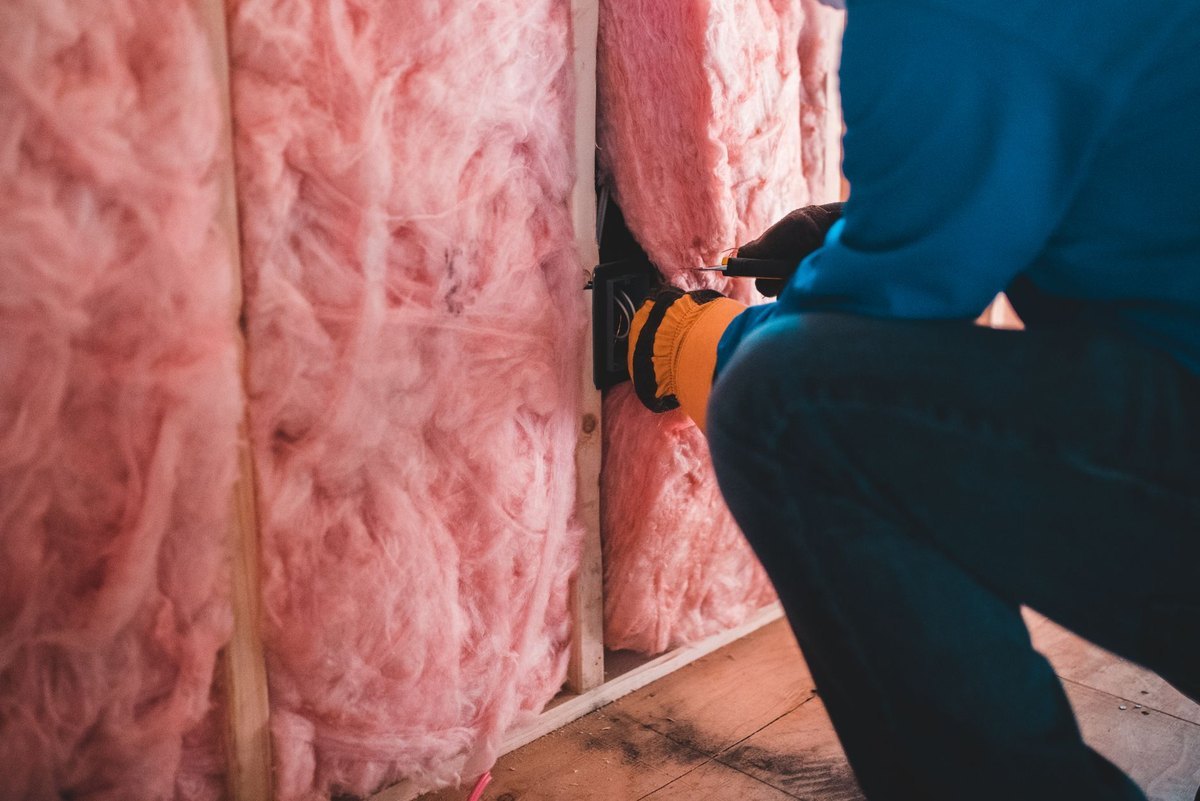
Wall insulation in Tarrant Monkton
On a cob wall the wrong lining does not just underperform, it rots the wall, so what goes on the inside face matters more than how thick it is.
The site visit is free and so is the written itemised quote. Thomas Hannen prices every job himself.
If your walls are cob, the single most important thing about insulating them is that they must go on drying. Cob is earth. It survives because moisture moves through it and evaporates from both faces. Seal the inside with a foil backed board and a vapour barrier and the water stops leaving, the base of the wall softens and the timbers built into it rot.
So the calls from this valley are often not about heat at all. Somebody has been quoted for insulated plasterboard on a cottage and wants a second opinion. Somebody else has a cold, damp room and has been told to line and skim it. And on the newer houses, an ordinary question about the cavity.
So we come and find out what the wall actually is. Thickness, whether it is cob, brick, flint or brick and block, what the render or the plaster is made of, and where the floor joists bed into it. One drilled hole and a borescope settles the cavity question on anything modern. Then a written itemised quote, with the survey, the system, the junctions and the ventilation on separate lines. The visit and the quote are free.
The work here
Cob, brick, flint, and the newer walls along the lane
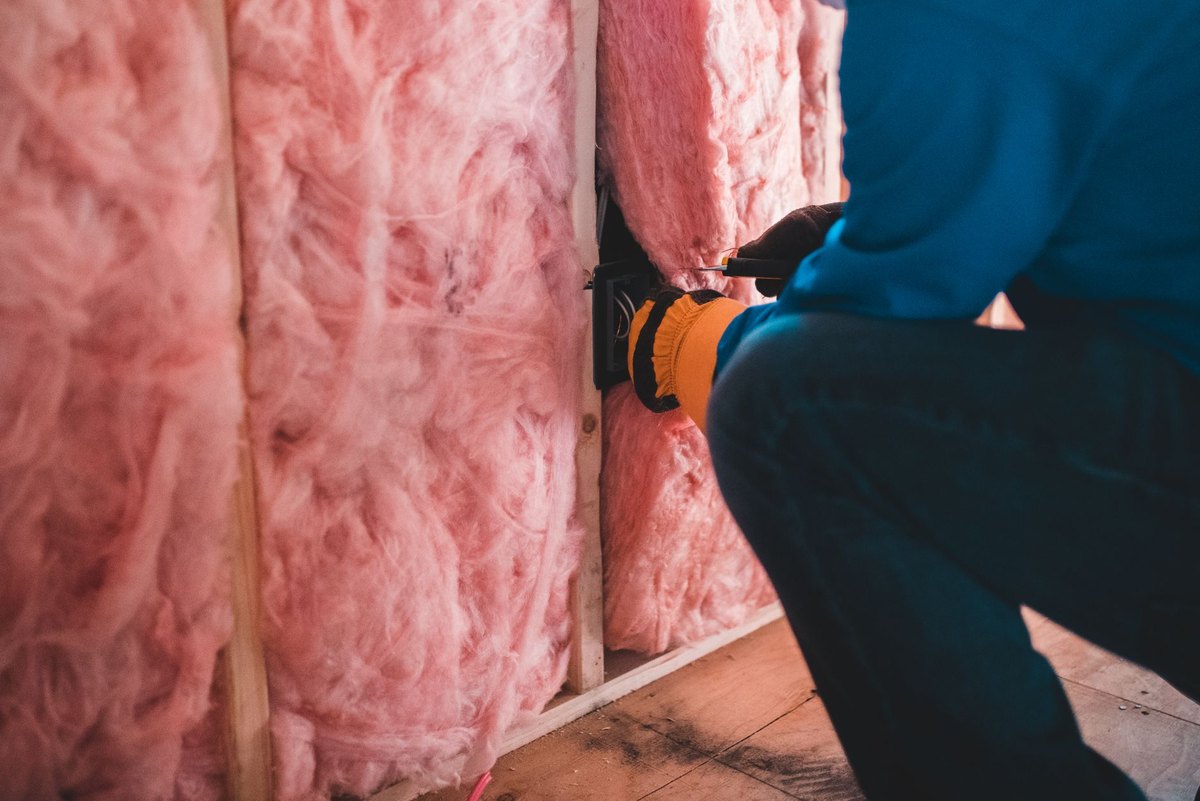
Cob, and what it will and will not take. A cob wall cannot be filled and must not be sealed. Where it needs insulating, the lining is vapour open throughout: wood fibre board bedded in lime, finished in a lime plaster, with no plastic sheet anywhere in the build up. It performs less per millimetre than a plastic foam board, and it is the only build up that leaves the wall able to dry.
What we would talk you out of. Insulated plasterboard, PIR, Celotex or Kingspan against a cob or rubble wall, and any coating that seals the outside face. Cement render on cob is the same mistake made from the other side. If the answer for your cottage is draughtproofing, better curtains and a warm floor rather than a lining, we will say so.
Brick and flint solid walls. A nine inch brick wall or a flint and brick banded one has no cavity to fill either. A hard fired brick wall in good condition will take a more conventional internal wall insulation build up than cob will, boards on battens or a timber stud, but the vapour question still has to be answered rather than ignored. External wall insulation, EWI, is the other route on a solid wall and here it is a conservation area application rather than a given.
The junctions, which decide it. Reveals at windows and doors, the threshold, the floor junction, the eaves and the joist ends. In an old wall the joist ends are the risk: the lining makes the masonry around them colder and damper, so they stay ventilated rather than being boxed in. A shallow reveal takes a thin aerogel board.
Cold bridging. Anywhere the lining stops, at a chimney breast, a party wall or a ceiling, is a thermal bridge, and that is where the dew point lands and black mould starts.
Cavity fill on the modern houses. Where there is a proper cavity, bonded polystyrene bead or blown mineral wool through a drilled pattern, holes made good in a matched mortar, usually a single day. If the borescope shows a wet cavity, a narrow or bridged one, an outer leaf cracking or blown, or a fill that has failed and slumped, we say so instead of quoting.
Ventilation. Trickle vents, a working extract in the kitchen and bathroom, and air bricks kept clear. Approved Document F sets the expectation, and in a house with earth walls the moisture has to have a way out.
How it runs
From your call to a written price
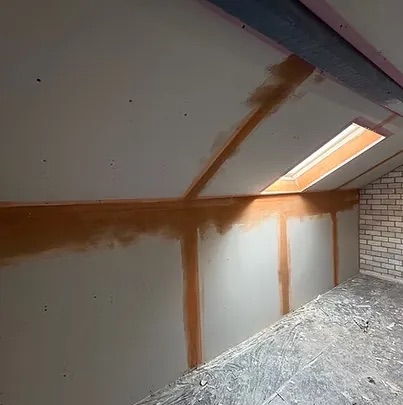
Same team from first visit to last, one person to ring, and no sub-contracting your work out to somebody you have never met. The quote is itemised, not a figure on the back of a card: the survey and any borescope check, the system and its thickness, making good around windows and doors, ventilation works, and disposal on separate lines, so you can compare it properly against anyone else's.
Nothing is left open or unusable overnight. The site is swept at the end of each day rather than the end of the job, and what comes out leaves with us. If something turns up once we start that nobody could have seen, you get a photograph and a price before we carry on.
Dorset Council is the planning authority and the village lies in the Tarrant Valley Conservation Area, where external appearance is controlled, so an outside system is an application rather than a given and the council's heritage pages are where to check. There are 27 listed entries around the parish, All Saints among them, and on a listed building consent covers internal work too. Lining the inside of an unlisted house needs no planning permission. Building control comes in under regulation 23 once a thermal element is renovated, and Part L sets the U value.
Cost
What decides the price of a wall insulation job
No rate per square metre, because the wall area is the easy part; what happens at every window, door and floor junction is not.
Getting to it. A thatched cob cottage on the street, a brick and flint house behind it and a modern brick and block house on the lane are three different jobs before anything is opened up. Cavity fill is drilled from outside and a bungalow comes off a tower where a three storey gable wants a scaffold. Internal lining is worked room by room from inside, so it is your rooms rather than a platform that gets disrupted. The work at height rules still set the platform.
Which wall you actually have. A cavity that is clear and dry can be filled in a day. A solid wall cannot be filled at all, and has to be lined inside or insulated outside, which is a different job at a different price. A borescope through one drilled hole settles it, and no honest quote is written before that.
The junctions, not the field of the wall. Reveals at windows and doors, the floor junction, the eaves and any party wall are where heat escapes and where condensation shows up if the detailing is wrong. That work is slow, it is most of the labour, and it is the first thing a cheap quote leaves out.
Comparing quotes? Ask whether the wall has actually been checked with a borescope or just assumed, what system and what thickness is specified, how the reveals and floor junction are being detailed, whether ventilation is being addressed, and who makes good the plaster and decoration afterwards. Two quotes for the same job are usually two different jobs.
If damp has appeared
Damp or mould after a wall was insulated
Ring rather than use the form. Damp patches or black mould appearing on an outside wall after cavity fill or internal lining usually means water is tracking across the cavity, or warm air is reaching a cold surface at a junction. We look before we take anything out, because the fix depends on which of those it is. On an earth or rubble wall ring us before anything is stripped off, because taking a lining down badly can do more harm than leaving it. The phone is answered 24 hours for emergencies; scheduled work runs Monday to Friday, 8am to 6pm.
Worth knowing
What a vapour tight lining does to a cob wall
Cob is subsoil, chalk, straw and water, built up in lifts and left to dry, and there are walls of it in this valley that have stood for centuries. They last because they can always lose moisture. Rain wets the outside and it evaporates. Cooking and washing push moisture into the inside face and it passes into the wall and away.
Line the inside with a foil faced board and a sealed vapour control layer and you stop half of that exchange. The wall behind the board is now colder, because the heat from the room no longer reaches it, and it is wetter, because nothing is drying it from that side. Moisture gathers behind the board, which is interstitial condensation, worst at the bottom of the wall and around any timber built into it. Cob that stays wet loses its strength, and joist ends sitting in wet earth rot.
So a breathable build up is not a preference here, it is the specification. Wood fibre and lime, no plastic, ventilation dealt with at the same time, and honesty about how much you gain. Heat loss through an earth wall is real, but the payback on a breathable lining is slower than a salesman will tell you and it will not transform an EPC on its own. On some cottages the right advice is a modest lining on one or two walls. On others it is to leave them alone and seal the draughts instead.
Who you are dealing with
A local firm you can check
We cover Tarrant Monkton, the Tarrant villages, Blandford St Mary and the lanes towards Blandford, broadly DT11, under Dorset Council. You are dealing with Bournemouth Roofing & Building, the trading name of Bournemouth Roofing & Building Ltd, registered in England and Wales, company number 15471719, which you can look up in a minute. Thomas Hannen's business, and he is the one who comes out to price the job, not a salesman. A verified customer's 10 out of 10 on Checkatrade. The visit and the written quote are both free.
Questions
Tarrant Monkton questions we get asked
Is there any safe way to insulate cob?
Yes, but only with a vapour open build up. Wood fibre bedded in lime and finished in lime plaster, with nothing plastic in it. Anything sealed will hold water in the earth behind it.
What is wrong with insulated plasterboard on an old cottage?
It seals the inside face. The wall gets colder and wetter, moisture gathers behind the board, and the timbers built into the wall are the first thing to suffer.
How can I tell whether my walls are cob?
Thickness and the way the surface undulates are the usual signs, and a lime plaster rather than a hard cement one. We can tell you within a few minutes at the visit.
Would you ever advise doing nothing to the walls?
Yes, and on some cottages that is the right answer. Draughtproofing, a warmer floor and better ventilation can do more than a lining, without putting the wall at risk.
Is the newer housing along the lane a different job?
Completely. Those are brick and block with a real cavity, and where the borescope shows it is clear and dry a bead fill is usually a day's work.
Nearby, and next door
Wall insulation near Tarrant Monkton
Wall insulation nearby
Our other trades in Tarrant Monkton
Everything we do in Blandford Forum Wall insulation, all areas Every area we cover
Free quote
Find out what your walls are made of first
Thomas comes out, works out whether the wall is cob, brick or cavity and prices the right build up in writing. The visit and the quote are free.