Insulation in Holt
Loft depth, solid wall work, floors and draughts around Holt and BH21, surveyed as one job before anything is priced.
The site visit is free and so is the written itemised quote. Thomas Hannen prices every job himself.
If you heat a house at Holt with oil or electricity, the fabric is worth more to you than it is to somebody on the gas main, because every unit of heat you lose through the ceiling was bought up front. Start with the loft, finish with the walls, and do the draughts on the way past.
The calls we get here follow a pattern. A house that eats a tank of oil faster than it used to. A back bedroom or a converted roof space that will not hold heat whatever the thermostat says. Or a cottage where the walls feel cold to the hand and the corners go black over winter.
None of those are one problem with one answer, so we survey the whole envelope rather than quoting for the first thing you mention. You get photographs of what is actually up there and behind it, a written quote that names the material and the depth, and an order of work that puts the cheapest heat first rather than the biggest invoice.
The work
Heat you paid a delivery charge for
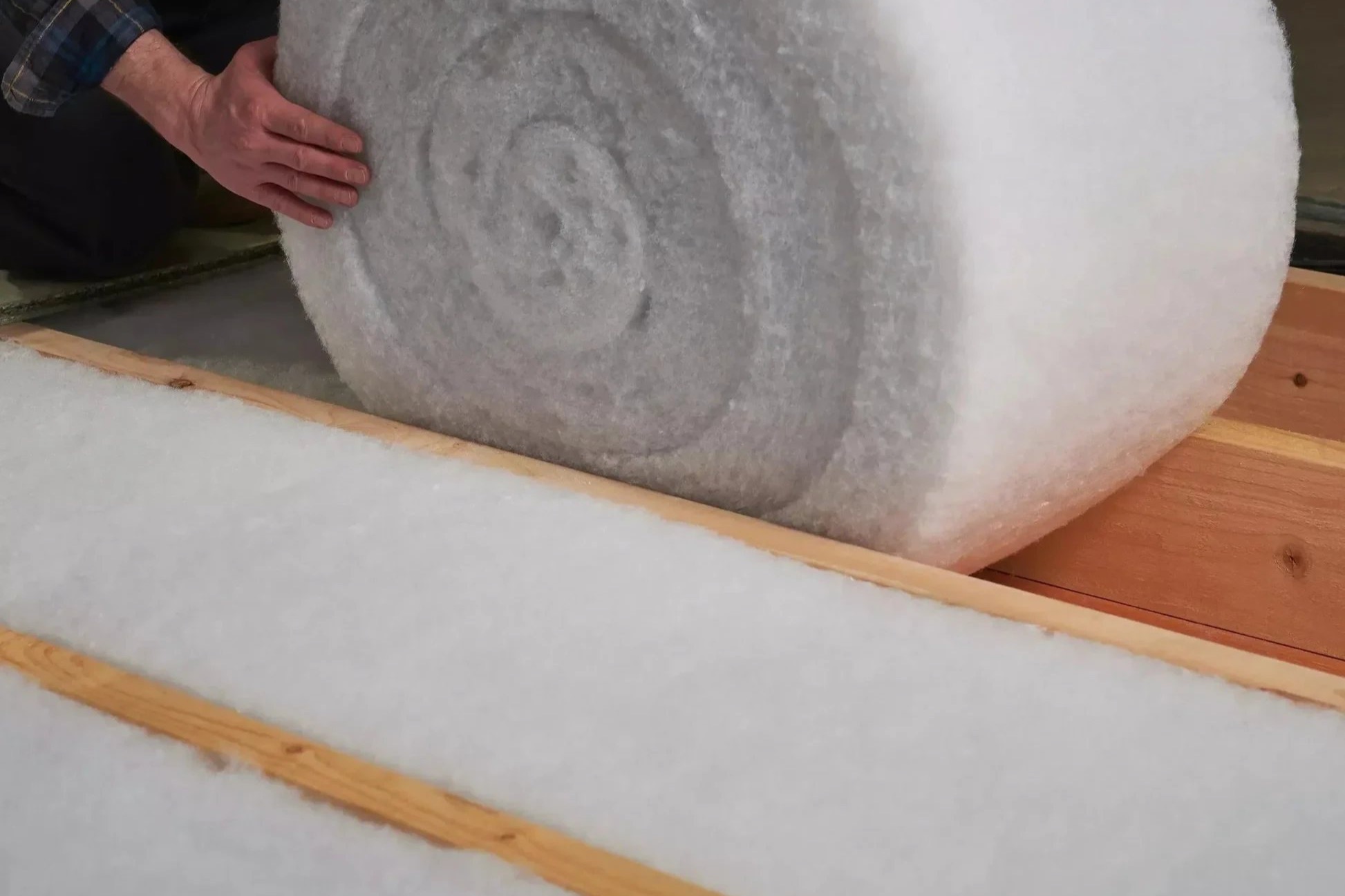
The loft, and it is nearly always first. A lot of homes out here are off the gas main, and a loft is worth more in a house heated on oil or electricity than in one on the mains. Most lofts we open have something in them and it has settled, so we lift it, straighten it, take out anything wet or full of debris, and build back up: one layer between the joists, a second run across the top so the timbers stop being cold stripes on the ceiling. Aim at 270mm of mineral wool laid as a full width eco roll, and an even 250mm carried out to the wall plate is worth more than a deeper heap in the middle, with 0.16 the u-value a renovated roof is expected to reach. Vent trays go in at the perimeter first so the material can be carried right out over the wall head without shutting the eaves.
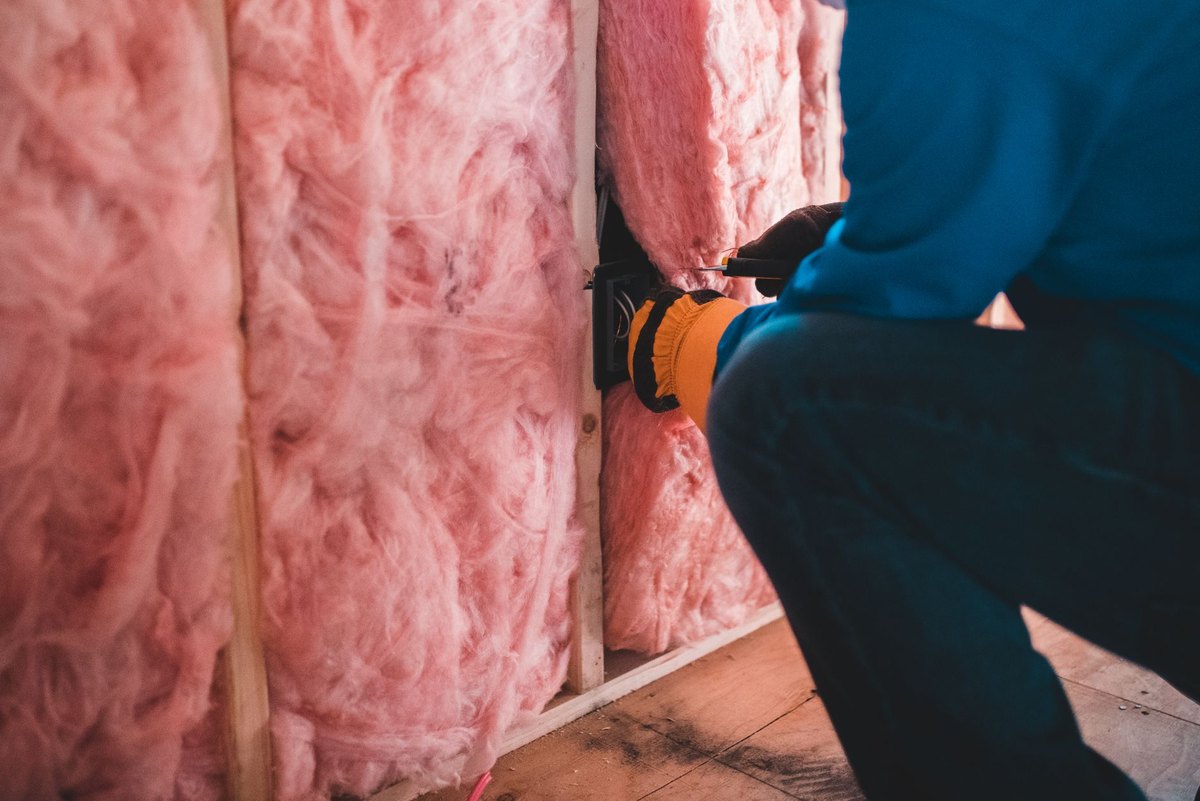
The tank, the cylinder and every metre of pipe. This is the part that gets left off other quotes and it matters more in an oil or electrically heated house. A cold water tank in the roof wants lagging on its sides and lid, with the ceiling directly beneath it left clear so it does not freeze. The cylinder wants a proper jacket over whatever foam it came with, and the pipework wants lagging on every run, including the awkward bends everybody skips.
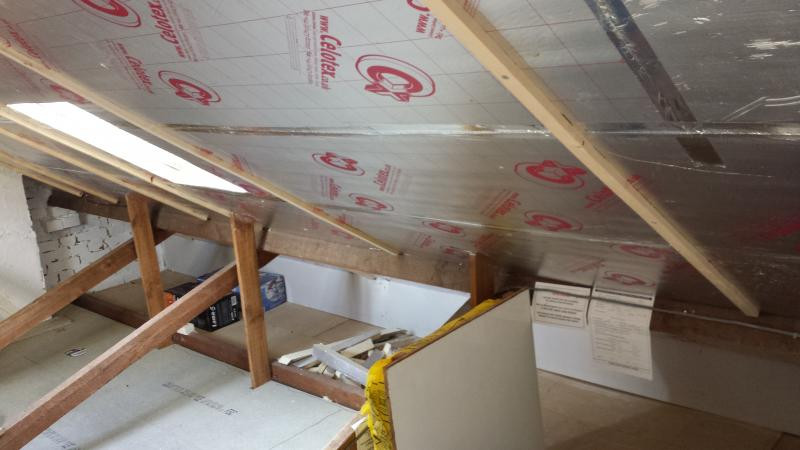
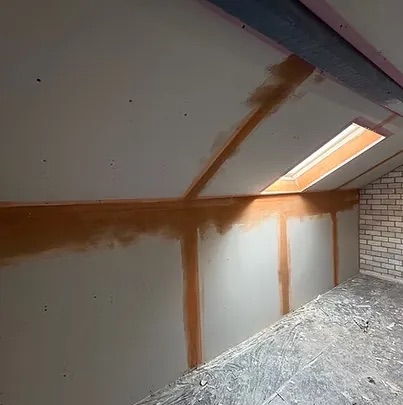
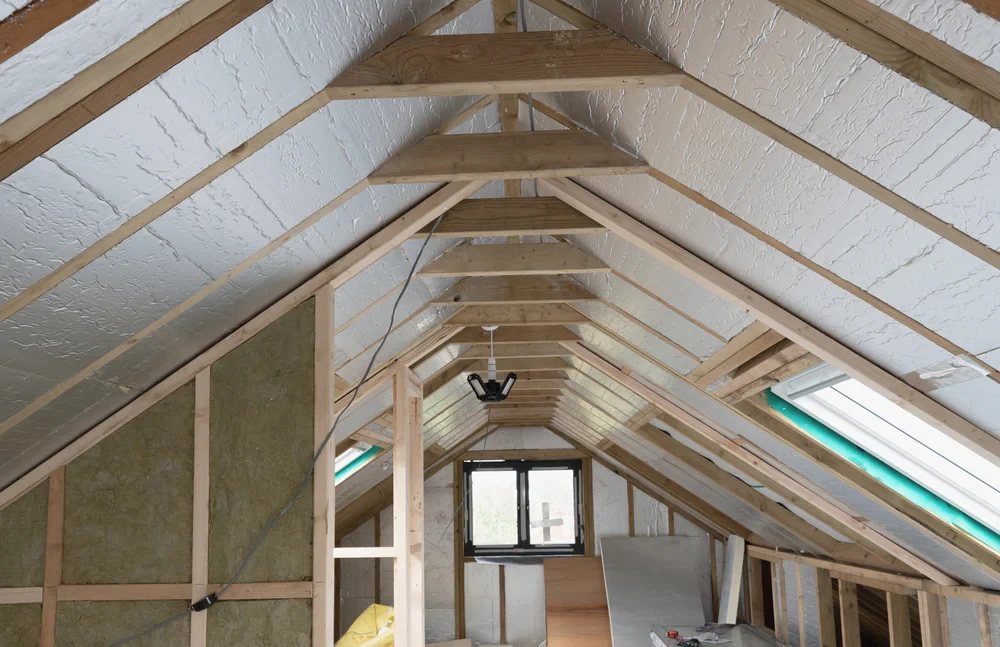
There are listed cottages and farm buildings around Holt, and none of that fabric has a cavity to fill. The choice is internal wall insulation on the coldest elevations or external wall insulation, and on an old wall the build-up has to let the wall dry rather than seal it: a vapour tight board taken straight onto damp solid brick shows up as damp at skirting level a winter later. Where a barn or a cottage has a room in the roof there is no floor to lay into and the work goes to rafter level: rigid board, foil faced PIR, between and under the rafters, or a multi-layer foil quilt such as TLX where a sloping ceiling has no depth to lose. Where there is a cavity, a borescope goes in and somebody looks before anybody quotes a fill.
How it runs
From your call to a written price
One team, one person to ring, nothing sub-contracted out. The quote is itemised line by line: survey, clearing, material and depth, ventilation and disposal. What comes out leaves with us. Insulating a loft, filling a cavity and lining a wall on the inside are all permitted development, so there is nothing to apply for. External wall insulation changes what the building looks like and is the exception, which the Planning Portal sets out. There are listed cottages and farm buildings around Holt, and on a listed one even internal work needs listed building consent from Dorset Council.
Cost
What decides the price of an insulation job
No rate per square metre: the area is the easy part. A cottage with a low loft over a lath and plaster ceiling, a converted barn with no loft at all, and a newer house with a hatch and a fitted ladder are three different jobs before any material comes off the van. Boarding that comes up and goes back is time before a roll is laid. Approved Document L sets what the work is expected to reach. The comparison to make is finished depth laid, old material out or buried, and whether the tank and pipe runs are on the list.
If it is urgent
Damp, condensation or a room you cannot heat
Ring rather than use the form. We are nine miles away, so a loft that has gone wet, or a house you cannot warm with a cold spell forecast and the oil tank low, gets looked at quickly rather than booked for the new year. The first visit is about whether the problem is insulation, ventilation or both. The phone is answered 24 hours for emergencies; scheduled work runs Monday to Friday, 8am to 6pm.
Worth knowing
Insulating a house that is not on the gas main
A large share of Holt buys its heat rather than metering it: oil for most, direct electric for a smaller number. That does not change the work, but it changes what the work is worth and the order you should do it in. On the mains, heat arrives quietly and the bill turns up later.
On oil you pay for a tank before you burn any of it, and a house that leaks warmth is a house that empties the tank early, in the middle of winter, at whatever the going rate happens to be that week. So the cheap fabric jobs, loft depth, eaves, hatch, cylinder and pipe lagging and draughts, pay back faster here than they do a few miles away in town.
It also matters if a heat pump is anywhere in your thinking, and off the gas main it usually is eventually. A heat pump runs at a much lower flow temperature than an oil boiler, which means it only behaves well in a house whose heat loss has already been brought down. Fabric first, plant second, in that order, or you end up buying a bigger unit to feed the same holes.
One practical note while you are planning: insulation sits on HMRC's list of energy saving materials and is treated differently from ordinary building work for VAT, with the notice covering it public and worth a read. Whatever the position is when we quote, it appears as its own line so you can see it.
Who you are dealing with
A local firm you can check
We cover Holt, Furzehill, Colehill, Wimborne Minster, Three Legged Cross and the rest of BH21, from a base about nine miles away. Bournemouth Roofing & Building Ltd, registered in England and Wales, company number 15471719, which you can look up in a minute. Thomas Hannen's business, and he is the one who comes out to price the job, not a salesman. A verified customer's 10 out of 10 on Checkatrade. The visit and the written quote are both free.
Questions
Holt questions we get asked
Nearly half of Holt is on oil. Where do we start?
In the roof, before the tank. Oil heats 47.6% of households in Holt and another 5.6% run on electricity, so the heat leaving through your ceiling has already been bought and is standing in a tank in the garden. The fabric decides how much you burn. Getting the ceiling right is the one job that gives something back on every fill rather than on a monthly bill.
Why are the ground floor rooms colder than upstairs here?
Because the ground under Holt drains badly and a suspended timber floor sits in cold damp air all winter. The airbricks have to stay clear for that void to dry, so the work is material between the floor joists with the ventilation left running, not vents blocked up. I lift a board and look before quoting, because a wet void changes what can go in there.
Is there anything the council needs to see?
Not for improving a house you already own. Dorset Council is the authority here, and Holt has 13 listed entries and no conservation area of its own, so unless yours is on that list nothing goes in for approval. A listed cottage is different, because the ceilings and the wall linings are usually part of what is protected and consent has to come before the work.
How soon could you come and look at ours?
Holt is under nine miles from the yard, so getting over is easy and it is normally within the week. Thomas Hannen comes himself, gets into the roof space, measures the depth in more than one place and looks at the hatch and the vents. A written itemised quote follows that lists each part separately, and neither the visit nor the quote is charged for.
Our loft hatch is tiny. Is that a problem?
It slows the job down and it is worth widening while we are there. A small opening means material goes up in compressed bales and gets opened out inside, which works, but you will never make use of the space above it. The bigger issue is the flap: a sheet of ply with no seal round the edge leaks warm air out of the landing all winter.
Nearby, and next door
Insulation near Holt
Insulation nearby
Our other trades in Holt
Everything we do in Ferndown Insulation, all areas Every area we cover
Free quote
Get the whole envelope looked at, not just the loft
Tell us what the house does in cold weather and we will come and see it. Free site visit, free written itemised quote, and the work in the order it pays.