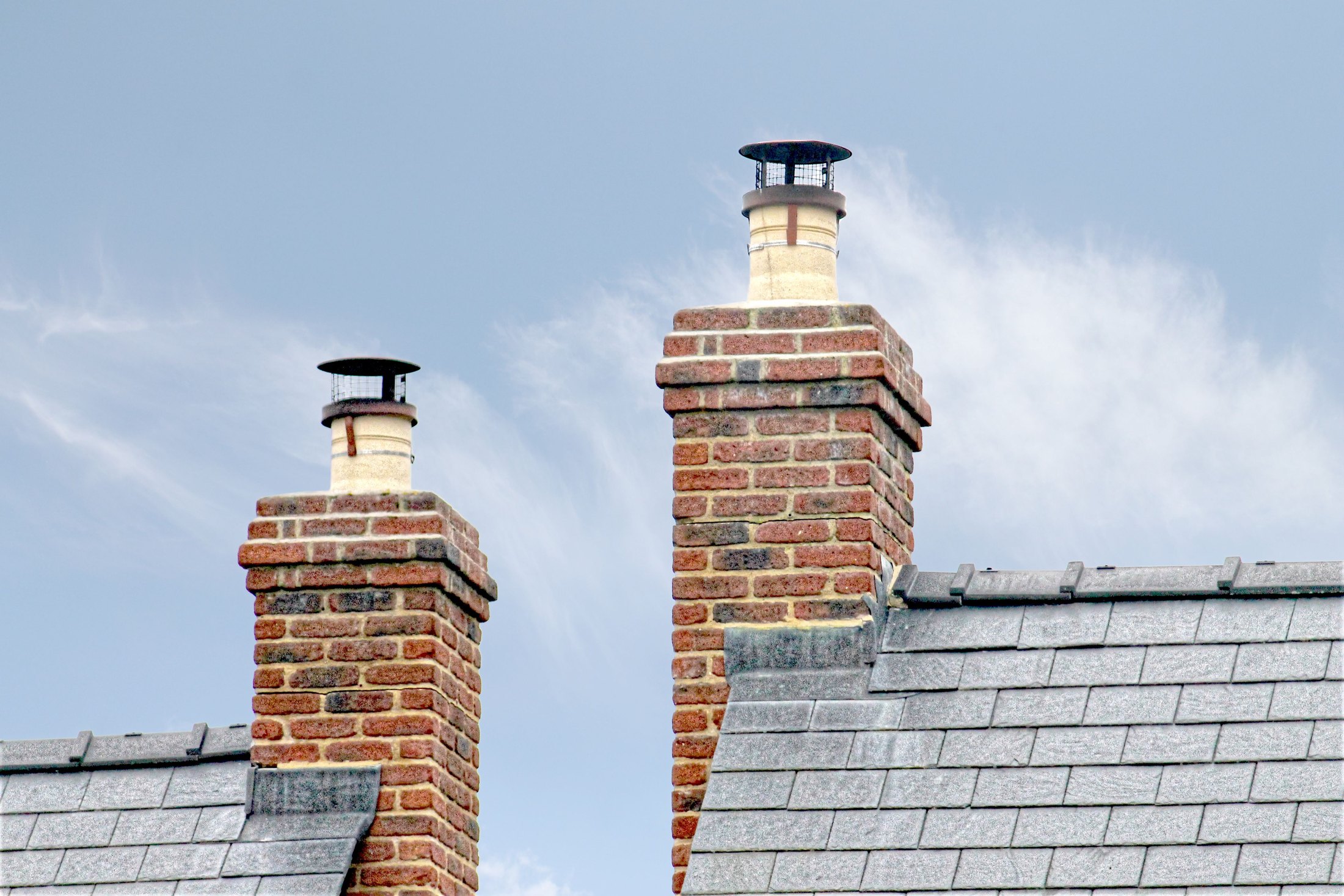
Roofing in Holt
Repairs, re-covering, leadwork and flat roofs on the houses, farm buildings and outbuildings around Holt and Holt Heath.
The site visit is free and so is the written itemised quote. Thomas Hannen prices every job himself.
Last updated
Holt is not one village but a scatter of houses, farms and cottages along lanes and around greens. So the first question on any roof here is not what is on it, it is where the lorry and the scaffold are going to stand.
Out in Holt the trouble tends to start with the weather. Something has slipped or blown off and you have found it on the grass. A ceiling or a chimney breast has stained and nobody can tell you where the water is getting in. Or you have been told the roof is past it and you want somebody to look at it properly before you spend anything.
We come out, walk the roof, get into the roof space where there is a hatch, and photograph what we find so you can see it. Then you get it in writing, line by line. If rain is getting into a farmhouse or cottage off one of the Holt lanes right now, ring 07435 839745 and tell us where you are. It is eight and a half miles from us, so coming back out is not a problem.
The work
The outbuildings count as much as the house
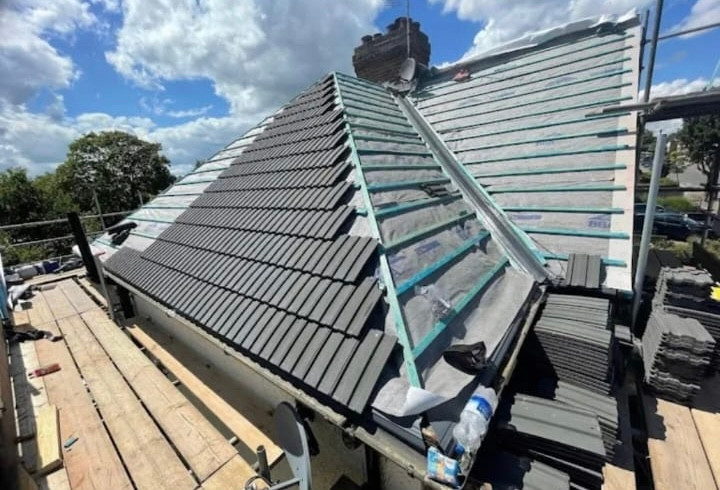
Plenty of roofs out in Holt are not on the house. Garages, stables, workshops, stores and single storey extensions, usually flat or shallow pitched, in felt, GRP fibreglass or EPDM rubber.
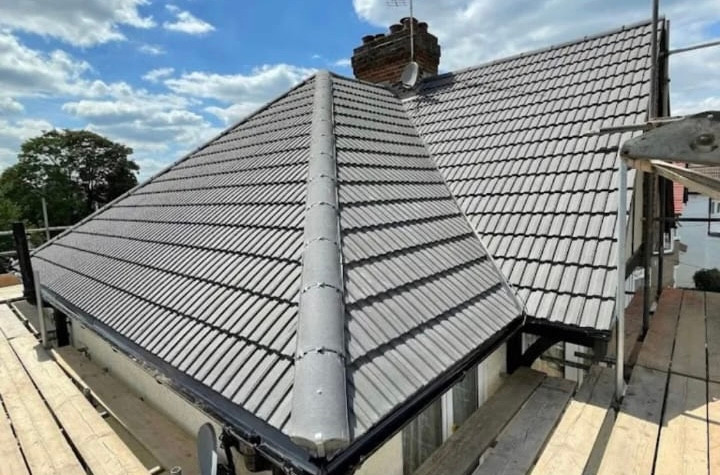
All three last when the deck is sound and the falls, upstands and outlet are right, and on a building nobody goes into it is the outlet that has quietly failed, so we look at the deck before quoting anything. On the house it is slipped, cracked and missing tiles, a ridge tile that rocks under your hand, a verge that has lost its bedding, and leaks traced back to where water genuinely enters and not just patched where the stain shows. Coverings vary plot to plot: plain clay tile and natural slate on the older cottages, interlocking concrete tile on the later houses. Under all of it sit the battens, the underlay and the rafter feet, and with no sarking board on most roofs in Holt, a corroded nail or clip is usually what let go. Whatever is over you, the fault is nearly always a fixing or a junction rather than the covering, so most repairs take hours, not days. Where it is one fault on its own, such as a cracked tile over the porch or a drip by the stack that needs tracing, our page on roof repairs in Holt deals with it.
Open ground with fields and heath on the windward side means the wind gets a proper run at a roof, and it works at the edges first. We convert cracked mortar bedding to a dry fixed ridge screwed onto a ventilated roll, which is the mechanical fixing BS 5534 asks for, with dry verge units at the gable, measured by the metre of edge. Chimney flashings, soakers, back gutters, valleys and the abutments where a roof meets a wall go back in code rated lead cut so it can move. Long gutter runs on low buildings, with heath, pine and oak dropping into them all year, so clearing that debris out is regular work here, and a fair share of apparent roof leaks turn out to be a gutter running over or a downpipe discharging into thin air. With the covering off, insulation and eaves ventilation are far cheaper to sort, and Approved Document L sets the standard a renovated roof is expected to reach.
How it runs
A roof job down a Holt lane, from survey to ridge
Thomas walks round the house and outbuildings, then looks through the loft hatch to see the timbers, the felt and the back of the tiles. After that he writes the price, with separate lines for access, stripping, new battens with breathable membrane, the tiles or slates, ridge and verge, lead flashing at the chimney and any abutment, and disposal. You deal with one firm from start to end.
Out in Holt the question is where things can go. Many lanes have no pavement and soft verges, so we check where the scaffold lorry can unload and turn, whether the ground by the house will take a tower or needs boarding, and where a skip can sit. A skip on your own drive needs nothing; one on the lane needs a permit from Dorset Council.
Tiles and battens come off into the skip, not onto your lawn, and the site is swept every evening. If rotten rafters or a perished valley show up once the roof is open, Thomas sends you a photo, prices the extra, and waits for your go-ahead.
On an unlisted house, repairs, re-covering in the same material, new rainwater goods and rooflights all count as permitted development, but re-covering more than a quarter of the roof is building regulations work, signed off by building control or a competent person scheme; Planning Portal guidance gives the detail. There is no conservation area over Holt. Listed buildings in the parish need listed building consent for any roof work. Green Belt affects a new outbuilding, not a repair.
Cost
Access, outbuildings and what is under the tiles
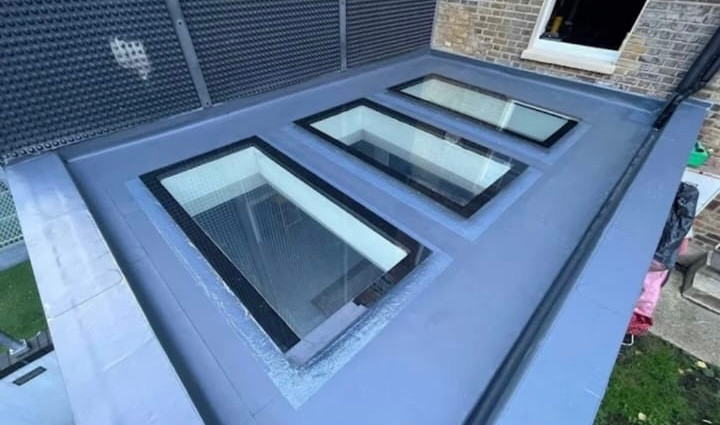
We do not price roofs by the square metre. Out in the lanes the biggest differences are getting there and getting up.
The platform. Where the scaffold stands, whether a lorry can reach and turn, and whether soft ground needs boarding out are all settled at the first visit. The work at height rules are why the platform is a line of its own, not an extra that appears later.
How many roofs. A house with a garage, a store and a stable block has four roofs. Doing the ones that need it under one scaffold and one skip costs less than doing them a winter apart.
The covering. Clay plain tiles, concrete interlocking tiles and natural slate weigh different amounts, fix differently and cost differently to replace. Changing from one to another can mean checking the rafters first.
Under the tiles. Old roofs may have no underlay at all, or bitumen felt that has perished, over battens gone soft. New battens and a breathable membrane are part of a proper re-cover.
Listed or not. On a listed building, the tiles have to match, and reclaimed clay may be needed, with lime pointing at the verges, never cement.
Trees. Branches over a roof keep valleys and gutters full of debris and moss, and they may need cutting back before a scaffold goes up.
Ask anyone quoting whether access is in the price, whether new battens and membrane are part of it, and who takes the waste away.
If it is leaking now
A leak through the ceiling, and what to do first
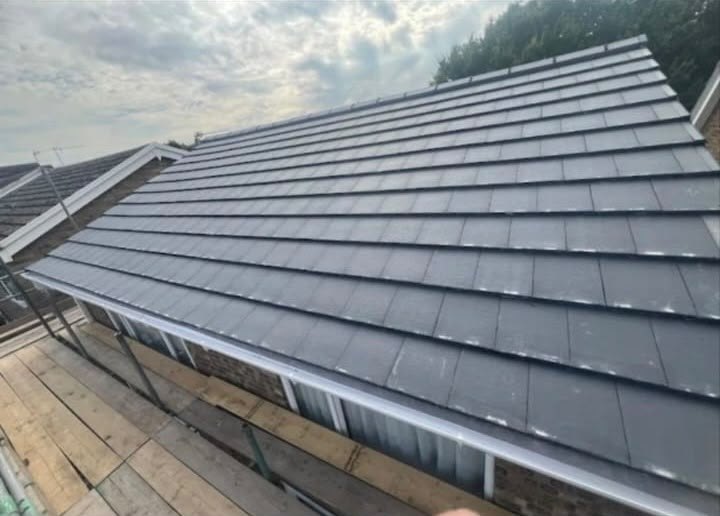
Put a bucket under the drip, move anything electrical away from it, and take a photograph of the wet patch on the ceiling. Do not go up a ladder yourself, especially in wind or rain. When you ring, say whether it is dripping or running, and whether it is the house or an outbuilding.
The first visit is about making the roof watertight: slipped tiles refixed, a sheet over the gap if needed, and a look at the flashings and valley to find where the water is really getting in. For a leak, skip the enquiry form and ring. If we cannot get to the phone, your call is returned as soon as possible. Booked roofing work runs Monday to Friday, 8am to 6pm.
Worth knowing
Clay ground, and where your roof water ends up
The ground under Holt is clay, slow draining and prone to shrinking and swelling with the seasons. That is not a roofing problem until you notice that everything the roof collects gets delivered to one or two spots at the bottom of a downpipe.
It matters in two directions. A soakaway dug into this ground will usually fail its percolation test, so roof water wants a positive outfall to a drain or a ditch rather than a pit that fills and stays full. And a downpipe discharging into a cracked gully or straight onto a border is putting a roof's worth of rainwater beside a foundation in ground that moves.
When we quote a roof we look at where the water leaves it as well: Approved Document H sets out where it is supposed to end up, and sorting a gully or a shoe while the scaffold is up is a small job rather than a separate one.
Who you are dealing with
Who comes out to Holt Heath and Bothenwood
Holt is 8.6 miles from our base on Wolverton Road, Boscombe. We take on roofs in Holt, Holt Heath and Bothenwood and along the lanes towards Wimborne and West Moors, and Dorset Council is the planning and building control authority.
The owner, Thomas Hannen, drives out, gets up to look at your roof and puts the price together. Checkatrade carries a verified customer's 10 out of 10 for us. Coming out is free, and so is the written quote, with each part priced on its own. Companies House lists us as Bournemouth Roofing & Building Ltd, registered in England and Wales, company number 15471719. Before you book a visit in Holt, you can read our customers' Google reviews, word for word, on our reviews page.
Planning at a glance
Do you need planning permission in Holt?
Most repairs in Holt need no application at all. What decides whether a change to the outside of your house does is who the council is, whether a conservation area or a listing applies, and whether the place sits in a protected landscape.
| Question | In Holt |
|---|---|
| Who decides | Dorset Council is the planning authority for Holt. Dorset Council's heritage pages set out what it controls. |
| Conservation area | None covers Holt, so a like-for-like repair is ordinary maintenance. |
| Listed buildings | Yes, there are listed buildings in and around Holt. If yours is one, work can need listed building consent. |
| Protected landscape | No National Park or National Landscape covers Holt. |
Questions
Questions about roofing in Holt
Can you get a scaffold lorry to Holt?
Usually, with the delivery planned ahead. We walk the approach on the site visit and agree where the lorry can stand, where the scaffold goes up and where a skip can sit without blocking anybody. Holt is 8.6 miles from our base, so coming back for a second look before the start date costs nothing and saves a wasted delivery. If the only standing space is a neighbour's frontage, that gets asked beforehand, not on the morning.
Is anything at Holt inside a conservation area?
Holt has no conservation area of its own, so that is one control you can put aside. There are 13 listed entries in the area, and those are the buildings where consent has to be in place before the covering is touched at all. On an unlisted house here, putting back what is already on the roof is maintenance and needs no application to Dorset Council. Change the material or the profile and it is worth a call to them first.
Why does water stand in the same spot every downpour?
Because it is arriving faster than the ground will take it away. The subsoil around Holt is cohesive with a significant shrink and swell rating, so it holds water and swells instead of draining, and a gutter that overflows in one place loads that same ground beside your wall every winter. That is a foundation issue as much as a roofing one. We look at the fall on the gutter, the size of the outlet and where the downpipe finally discharges.
What do you check on a chimney while you are up there?
The flashing first, because a lead apron that has lifted or a stepped flashing raked out of the joint is behind most chimney leaks. Then the pointing on the stack, the flaunching around the pots and whether the stack is still plumb. A stack takes weather on every face and dries out slowly, so it fails ahead of the slope around it. With scaffold up for the roof anyway, doing the stack at the same time saves erecting it twice.
How many days will you be on site?
It depends on what is under the tiles, which is why the written quote sets out the days as well as the work. A single repair is normally one visit. Edge work such as ridge, hips and verges runs to a few days including the scaffold going up and coming down again. A full strip and re-cover is a longer run than that, and you get the dates before you accept the job rather than afterwards.
Nearby, and next door
Roofing near Holt
Nearby places we also cover for roofing, with straight-line distances from Holt, and the other trades we offer in Holt itself.
Roofing nearby
Our other trades in Holt
Roofing guides
Concrete vs clay roof tiles: which is right? Planning, building regs or listed building consent Storm damage to a roof: the first 24 hoursEverything we do in Ferndown Roofing, all areas Every area we cover
Free quote
Get a written price for your roof at Holt
Tell us the lane and what the roof is doing. We come out, look at all of it and put an itemised price in writing.