Roofing in Furzehill
Roof repairs, dry ridge and verge, re-covering and flat roofs across Furzehill, Holt and Colehill. Same team throughout and an itemised written quote.
The site visit is free and so is the written itemised quote. Thomas Hannen prices every job himself.
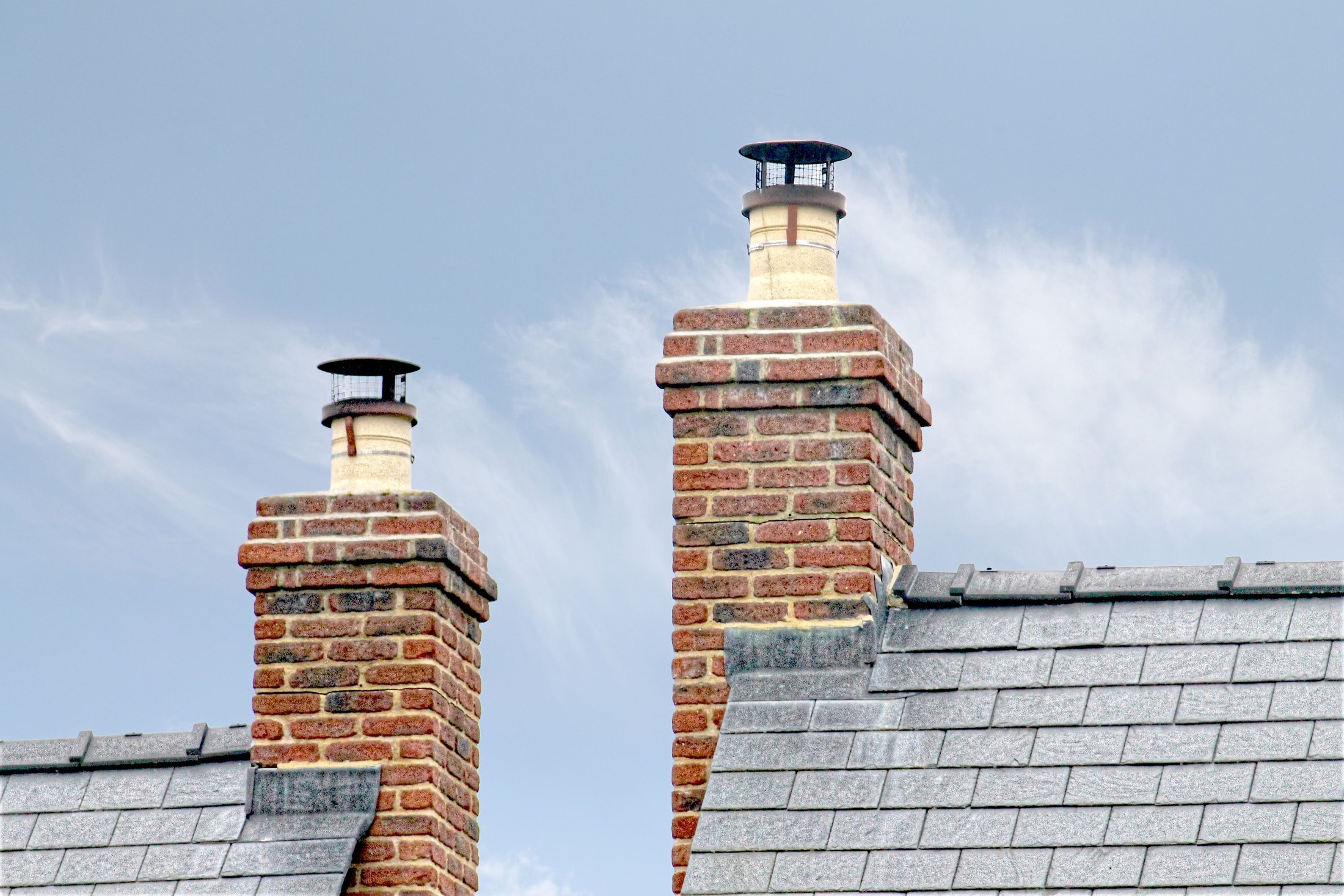
Most roofs around Furzehill are the same age and the same build: concrete interlocking tile on a trussed rafter roof, put up between the late sixties and the early eighties. On those, the covering is rarely what has failed. The mortar at the ridge and verge, the nails, and the underlay at the eaves are.
The calls come in three shapes. Mortar and bits of bedding turning up on the drive after a windy week. A wet patch at the top of a wall or a soaked fascia board with no obvious hole above it. Or a roof that has never been touched since the house was built and is now the oldest thing on the property.
We come out for a free site visit, get on the roof, put our head into the loft and photograph what is there. The survey is the part that decides everything else, because on a roof of this age the fault and the stain are rarely in the same place.
The work
Never put a saw through a trussed rafter
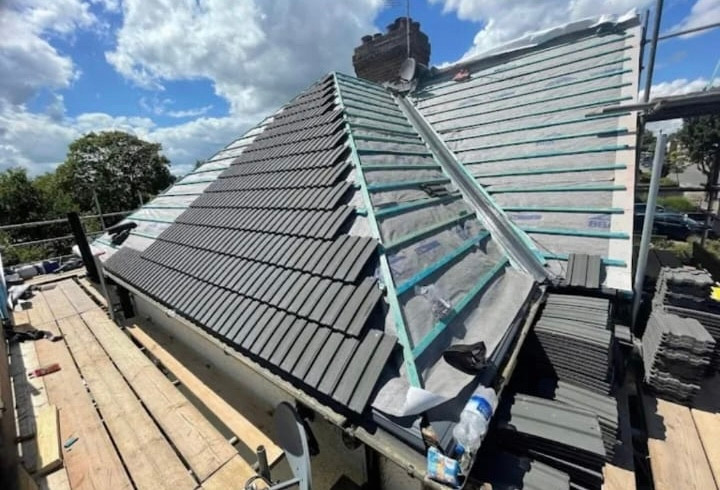
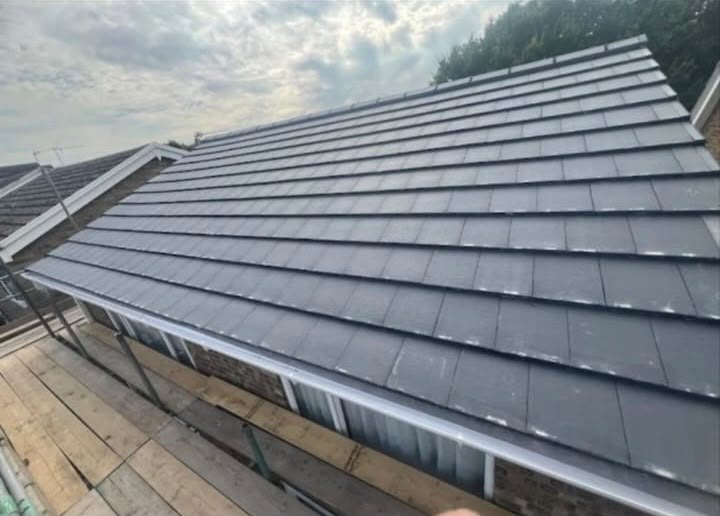
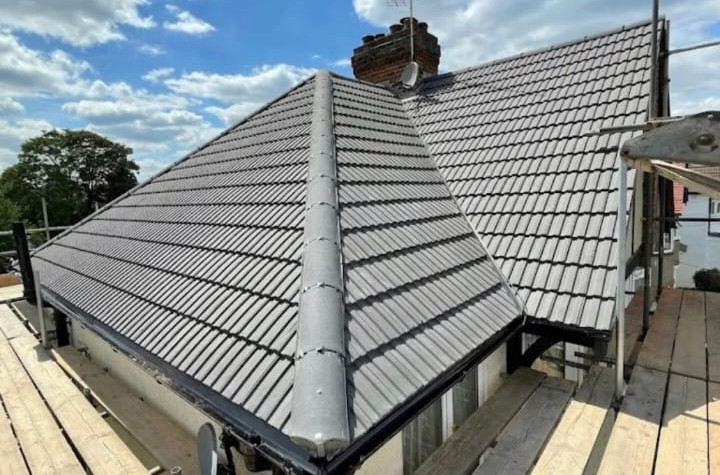
Ridge and verge, in mortar. The default detail on every roof of this vintage and the first thing to fail. Ridge tiles bedded in sand and cement crack along the joint, water gets behind, and the bedding lets go in pieces. Gable verges here almost all sit on a mortar undercloak that drops off in slabs. We strip the mortar and convert to dry ridge and dry verge screwed onto a ventilated roll, which is the mechanical fixing BS 5534 expects and vents the roof space along the ridge while it is at it. Nearly half the dwellings went up between 1945 and 1982, most of them in the late sixties and early seventies, and that stock is concrete interlocking tile laid to a shallow pitch, which is fine until a single tile lifts. The older properties towards Holt carry plain tile, clay tile and natural slate on battens with no sarking behind them. Stone slate is a Purbeck thing and you will not find it this side of Wimborne.
Never put a saw through a trussed rafter. Roofs of this era are almost all trussed rafter, a factory made web of thin timbers that only works as a whole. Cutting one for a loft ladder, a tank platform or extra headroom takes the strength out of it. If you want a boarded loft or a room up there, that is an engineer's drawing and new structure, not a saw, and we will say so rather than quietly do it. The other hidden fault on a seventies roof is the underlay at the eaves: the original bitumen has gone brittle and tears exactly where it laps into the gutter, the one place it has to be sound, which is what soaks a fascia with no tile out of place anywhere.
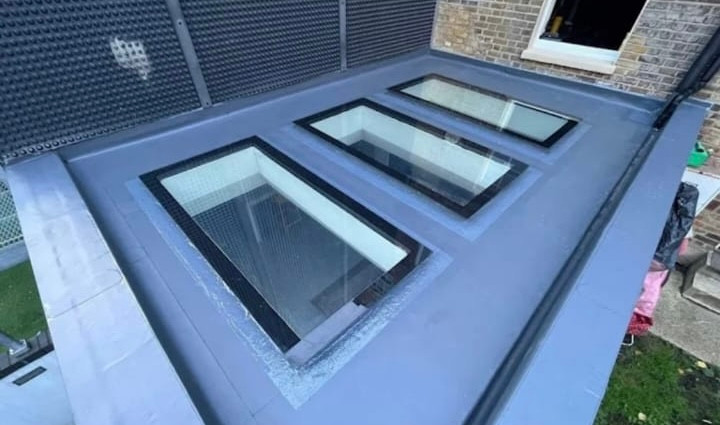
When nails, battens and membrane have gone together the covering comes off, soft timber and rafter feet are replaced, and it goes back on breathable membrane and treated battens with ridges and hips screwed rather than bedded. The integral garage, porch canopy and rear extension are felt, GRP fibreglass or EPDM rubber, deck checked before the falls, upstands and outlet. Cement fillets instead of lead are common here and they all crack, so they come out and code rated lead goes in. The ground here is cohesive and holds water, so where a downpipe discharges is a structural question as well as a damp one. With the covering off, insulation and eaves ventilation are far cheaper to put right, and Approved Document L sets the standard a renovated roof is expected to reach.
How it runs
From your call to a written price
One team, one person to ring, and a quote itemised line by line so you can compare it properly. Furzehill has no conservation area, so on an unlisted house a repair, a like for like re-cover, new rainwater goods and rooflights all run under ordinary householder permitted development: no planning permission, no application, no building control sign-off, provided nothing stands more than 150mm above the roof plane, and the Planning Portal sets out the limits. Green Belt covers part of the parish, which matters for an outbuilding and not at all for a roof repair. A handful of buildings in Holt parish are listed and those need consent whatever the work. Dorset Council for both.
Cost
What decides the price of a roof
Plots here are generous, so there is usually room for a scaffold and a lorry, but the ground is cohesive and it holds water. After a wet spell a scaffold wants sole boards and a skip wants boarding out, or you buy yourself a rutted lawn along with a roof. How long a platform stands matters as much as its size, and the work at height rules are why it goes on the quote as its own line rather than an optional extra. Ask whether the scaffold is in it, whether battens and membrane are renewed or covered over, and who takes the old tiles away.
If it is leaking now
Water coming in today
Ring rather than use the form. Anything letting water in goes to the front of the queue, and the first visit makes it safe and watertight. While you wait, look at the gully at the foot of each downpipe rather than up at the roof. On this ground a blocked gully backs water up the pipe and over the gutter. The phone is answered 24 hours for emergencies; scheduled work runs Monday to Friday, 8am to 6pm.
Worth knowing
On this ground, roof water is a foundation question
The ground around Furzehill is cohesive and it shrinks and swells with the seasons. That turns a bit of roof drainage from a damp nuisance into something structural, because water repeatedly soaking into clay beside a foundation, or repeatedly being taken away from it, is what moves a wall.
So on this ground we do not treat the gutter as an afterthought at the end of a roof job. A downpipe has to discharge into something that carries water away from the building, not onto a flowerbed against the wall and not into a gully that has silted up.
A soakaway needs to be a sensible distance from the house and it has to pass a percolation test, which on this ground plenty of them do not, so a positive connection to a drain is often the honest answer. Approved Document H covers where the water is allowed to go.
The practical version: have the rainwater goods and the gullies looked at in the same visit as the roof, while the scaffold is already up.
Who you are dealing with
A local firm you can check
About eight miles from us, covering Furzehill, Holt, Colehill and the BH21 addresses around Wimborne, with Dorset Council for planning and building control. Bournemouth Roofing & Building Ltd, registered in England and Wales, company number 15471719, which you can look up in a minute. Thomas Hannen's business, and he is the one who comes out to price the job. A verified customer's 10 out of 10 on Checkatrade. Site visit and written itemised quote both free.
Questions
Furzehill questions we get asked
We are in the Green Belt. Does that block roof work?
No. Green Belt controls what gets built and how big it grows, not what covering sits on a roof that is already there. A repair, a re-bed or a full strip and re-cover on your house is unaffected by it. Where it does bite is a new outbuilding, a garage or an extension, because those add volume in open countryside. If the plan is a roof over something new rather than over something old, that is the conversation to have first.
Do detached houses here need more scaffold than a terrace?
Usually less awkward scaffold, not more. Detached houses are 35.5 per cent of Furzehill and most of them have a side gap and a driveway, so the scaffold can be built off your own ground and there is somewhere sensible to stand the skip. That keeps the whole job out of the road. Where it does get tight is a boundary hedge or a conservatory hard against the back wall, which is why we walk the full perimeter before pricing.
The downpipe soaks away right against the house. Is that a problem?
On the ground around Furzehill it is worth sorting out. Cohesive subsoil with a significant shrink and swell rating moves as it wets and dries, so water discharging beside a wall season after season becomes a structural question and not only a damp one. Getting the gutter to fall properly and taking the discharge away from the footing is a small piece of work next to what it prevents. We note where every downpipe ends when we survey.
My Furzehill house is early 1970s. What goes first?
The mortar, then the underlay. Nearly half the housing here, 46.8 per cent, went up between 1945 and 1982, and the late 1960s and early 1970s alone account for 15.5 per cent of the village. Roofs of that vintage sit on bedded ridges and verges that have taken every winter since, and once the mortar cracks it holds water in the joint and lifts. That is edge work most of the time, not a reason to strip a sound slope.
Can you make a leak safe before the full job?
Often, yes. A holding repair buys time: a slipped tile put back, a torn valley dressed, a chimney flashing wedged and sealed until the weather lets us do it properly. Furzehill is 8.1 miles from where we are based, so getting a van out to look at something is not a day lost for anybody. What we will not do is sell you a patch that hides a fault you are then going to pay for twice.
Nearby, and next door
Roofing near Furzehill
Roofing nearby
Our other trades in Furzehill
Roofing guides
Concrete vs clay roof tiles: which is right? Planning, building regs or listed building consent Storm damage to a roof: the first 24 hoursEverything we do in Corfe Mullen Roofing, all areas Every area we cover
Free quote
Find out what your Furzehill roof actually needs
A free site visit, a look in the loft as well as on the roof, and an itemised written quote you can compare line by line.