Driveways and patios in Furzehill
Drives, patios and paths across Furzehill and BH21, built from the bottom of the hole up rather than laid over whatever is already there.
The site visit is free and so is the written itemised quote. Thomas Hannen prices every job himself.
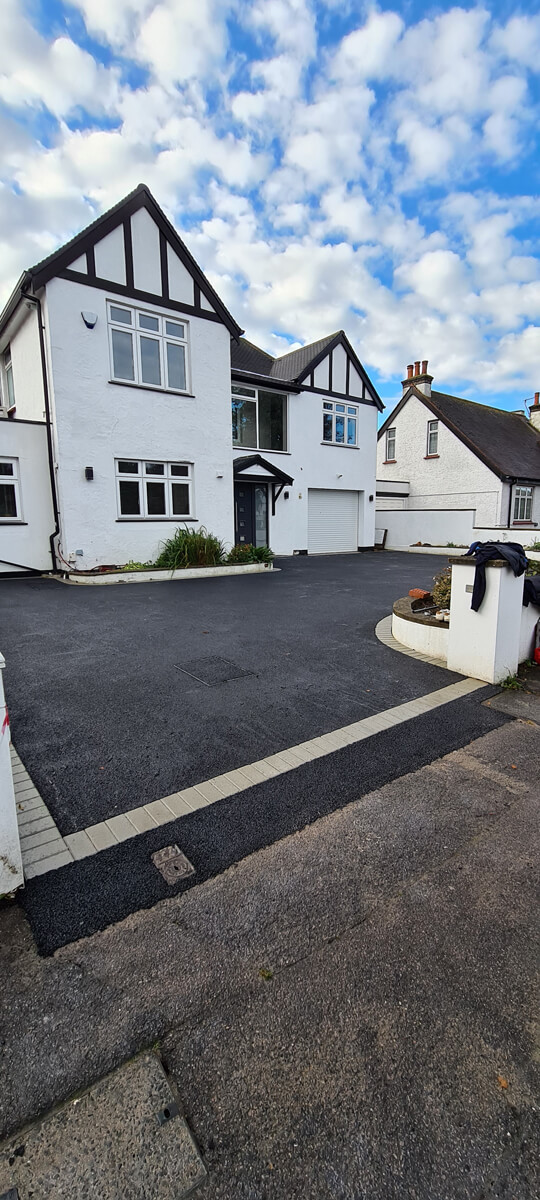
Most Furzehill drives that have sunk, cracked or started holding water have not worn out on top. The sub-base under them was never built to carry a car, and that is the part we price to put right.
People ring us here for three reasons. A drive that went down when the house was built has finally given up, and there is a dip in the wheel tracks where the car sits. A patio has greened over, started rocking underfoot and crept up the back wall. Or a bungalow needs a level, non slip way in from the road for somebody who is not as steady as they were.
All three start the same way. We open a trial hole at the site visit rather than guess from the pavement, because what is under a surface decides far more about the job than the surface going on top of it. You get told what we find, including when the honest answer is that the drive you have is worth keeping and a lift and relay will do.
The work
What we get called out to on Furzehill frontages
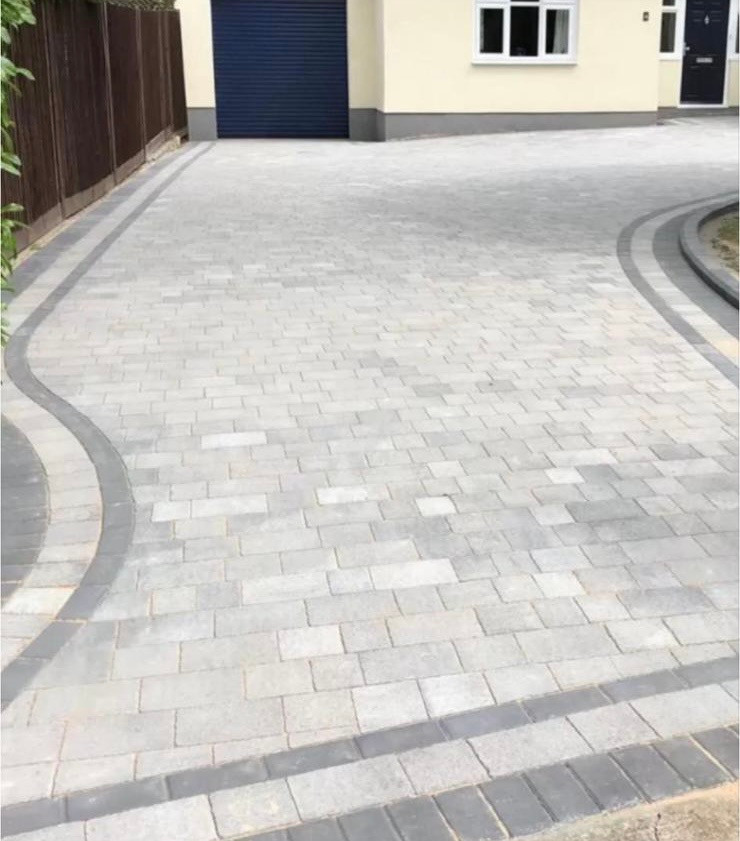
Concrete drives from the sixties and seventies. Getting on for half the housing around Furzehill went up between 1945 and 1982, with the peak in the late sixties and early seventies, and plenty of those houses still have the original in situ concrete drive with the garage down the side. Concrete of that age cracks along its joints, tips at the edges where roots have got under it, and holds water in the low corner. Breaking it out is a day with a machine and a grab lorry. Where the slab is still flat and sound we will say so and leave it, because laying block paving over sound concrete puts the finished level two courses closer to the damp proof course than you want it.
Bungalow thresholds. Bungalows are about a quarter of the housing around Furzehill and nearly all of them have a shallow step at the door. Every surface laid over the last one takes the level up again. We take the finished level down instead, keep a clear gap below the damp proof course, and run a channel drain or a gravel border across the threshold where the ground will not allow the drop. That single detail is what stops a new patio making the inside wall damp.
The ground here is slow to drain, so infiltration is not the default answer. A soakaway wants a percolation test rather than an assumption and may need a positive outfall instead, and that is settled before a surface is chosen. The concrete flag and crazy paving terraces out the back are usually sitting on five blobs of mortar with nothing under the middle. They rock, they pond, and they turn slippery through a wet autumn. Relaying on a full mortar bed over a compacted sub-base ends it.
Sunken bays, rutting in the wheel tracks and weed growth up the joints are nearly always the same two faults: the edge restraint stopped at the gate, and the jointing sand washed out years ago. Blocks hold each other up by pushing sideways, so once the perimeter goes the middle follows. Lifting and relaying the affected area, running a haunched kerb round the outside and doing a full re-sand with kiln dried sand costs a fraction of a new drive, and we will always price that option first where it is genuinely available. On anything built new, the depth of the sub-base is set by what the hole tells us rather than by a standard detail.
How it runs
From your call to a written price
One person to ring, and an itemised quote: excavation, muck away, sub base, edgings, the surface and the drainage on separate lines. Paving a front garden stays permitted development for as long as the water is dealt with on your own land. Put down more than five square metres of new hard surface that drains onto the road and you need planning permission, which is what the Planning Portal guidance on paving a front garden sets out. Widening the opening onto the road is a dropped kerb application to Dorset Council as highway authority. Where a forecourt, boundary wall or gate pier belongs to a listed building such as Wilksworth Farmhouse, you need listed building consent before it changes.
Cost
What decides the price of a driveway
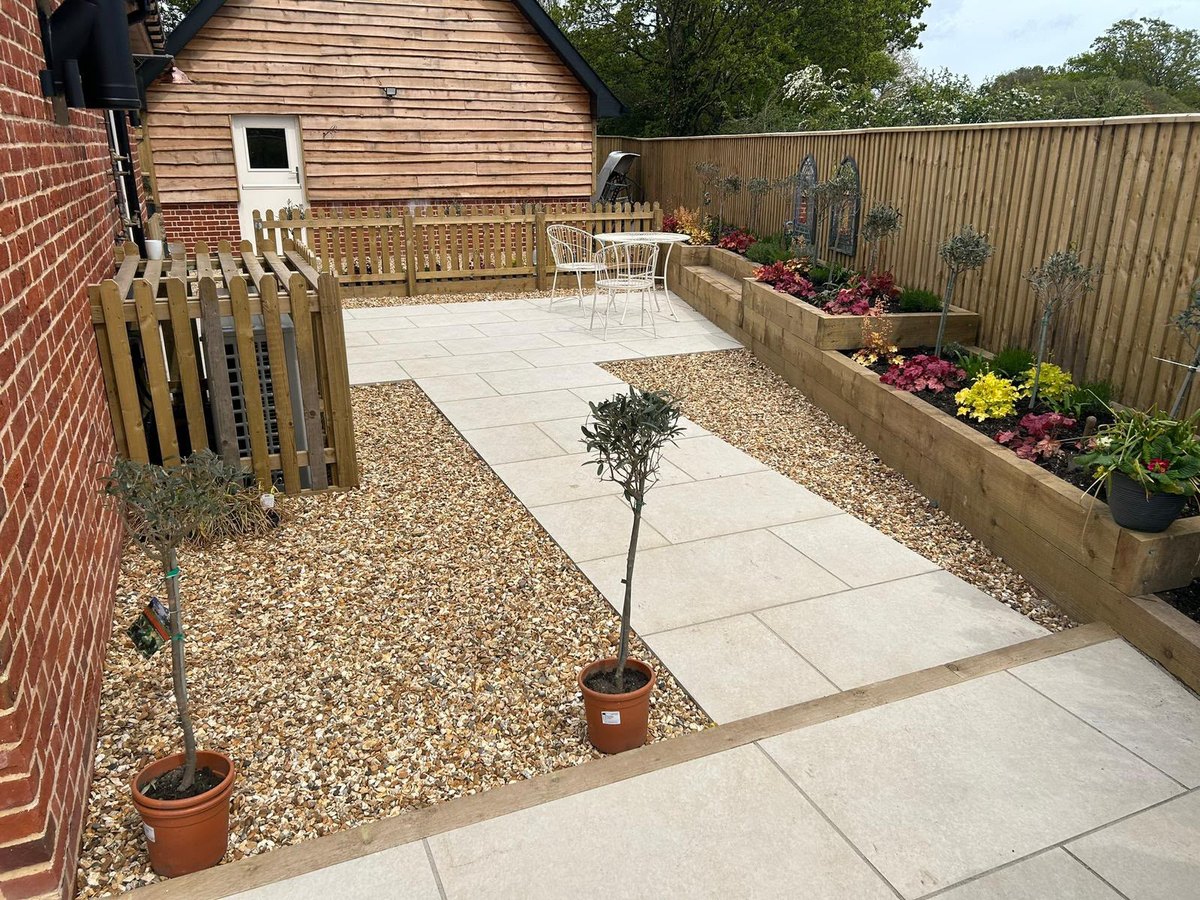
No rate per square metre. What is under it decides more of the cost than what goes on top. A bungalow with a wide frontage on a seventies estate road, a detached house with the garage down the side, and a flat with a share of a communal parking area are three different jobs. The ground here is slow to drain, so where the water ends up is a design decision with a cost. Ask any quote how deep the dig is, what sub base goes in, where the water goes, and who takes the spoil.
If it is urgent
A trip hazard, or a drive that floods
Ring rather than use the form. A lifted slab, a sunken bay by a doorway or a gully that has stopped taking water will not wait. The first visit is about making it safe and getting the water going somewhere. If the entrance apron has failed and water now runs off your frontage into the road, say so. The phone is answered 24 hours for emergencies; scheduled work runs Monday to Friday, 8am to 6pm.
The one local thing
Ground here moves with the weather
The ground under this side of Wimborne is cohesive, and it shrinks and swells with the seasons. It gives up water and contracts through a dry summer, then takes it back and expands over winter.
Anything rigid laid straight onto that will crack, which is why the old concrete drives here tend to fail along a line rather than break up all over. A flexible build up, blocks or slabs bedded over a compacted sub-base, moves with the ground and stays flat. It is the main reason we specify what we specify on these plots.
It also changes where the water is allowed to go. On ground that drains slowly a soakaway is not the default answer. It needs a percolation test before anyone draws it, and where the test fails the water wants a positive outfall to a surface water drain or a ditch instead. Approved Document H sets out how surface water is meant to be dealt with.
Get the falls wrong and the run off ends up ponding against the house, and on ground that swells, water sitting beside a foundation is a structural question rather than just a damp one. We set the falls away from the building, and keeping the water on your own land is what SuDS means once you take the acronym off it.
Who you are dealing with
A local firm you can check
We cover Furzehill and the rest of BH21, out through Colehill and Wimborne Minster to Holt, West Moors and Three Legged Cross. Bournemouth Roofing & Building Ltd, registered in England and Wales, company number 15471719, which you can look up in a minute. Thomas Hannen's business, and he is the one who comes out to price the job, not a salesman. A verified customer's 10 out of 10 on Checkatrade. The visit and the written quote are both free.
Questions
Furzehill questions we get asked
Why does water sit on our drive after rain?
Because the ground under Furzehill has impeded drainage, so once the top few inches are saturated the rest has nowhere to go and it backs up through the joints. Adding a gully on its own rarely fixes that. The base has to be a clean open stone that holds water while it moves, laid to a fall, with an outlet going somewhere real rather than into a pit that is already full.
Will a new drive near the house cause movement?
It can if the water ends up in the wrong place. The ground on this side of Wimborne shrinks and swells with the seasons, so a soakaway put in close to a foundation is a structural question rather than only a damp one. We keep infiltration well away from the wall, or where the garden is tight we pipe the water to an outfall and let the ground beside the house stay as it is.
Can we bring the drive out to meet the road?
Widening onto the highway is a separate matter from the drive itself, because the crossing over the verge and the kerb belongs to Dorset rather than to you. The application and the works on the public side go through the council, and we build up to the boundary and no further until that is settled. Getting the two in the right order saves you laying a surface that then comes up again.
Does the broken concrete have to leave the site?
Not all of it. Broken concrete and old kerb crushes down into a useful sub base, so where the drive is being raised or a soft spot needs filling we put it back in rather than carting it off and buying stone to replace it. What cannot be reused goes out by grab lorry or skip depending on how much room there is at the front. The quote shows which we allowed for.
Does Green Belt stop us doing anything out here?
Not a drive or a patio. Green Belt policy is aimed at new buildings and at what gets put up in the open, so it matters if you are talking about an outbuilding or an extension, not when you are resurfacing what is already there. Dorset will still look at surface water where a front garden goes from soft to hard, and that is the part worth planning for early.
Nearby, and next door
Driveways and patios near Furzehill
Driveways and patios nearby
Our other trades in Furzehill
Everything we do in Corfe Mullen Driveways and patios, all areas Every area we cover
Free quote
Want a straight answer on your drive?
Tell us the address and what you have noticed. We come out, open a trial hole, and put an itemised written quote in front of you. Both are free.