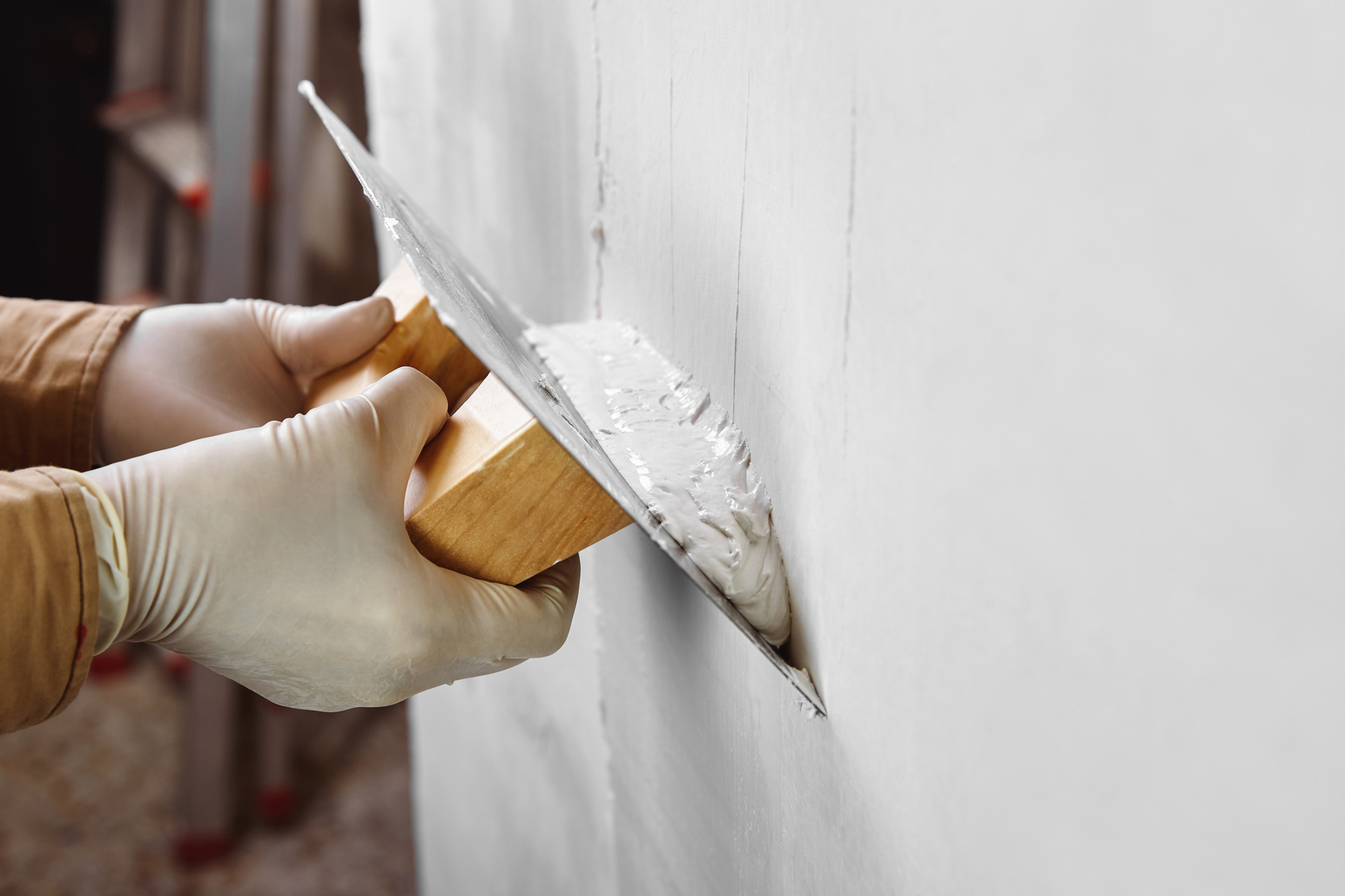
Plastering and rendering in Furzehill
Skimming, ceilings, patching and external render across Furzehill and BH21. We knock on every wall before anybody talks about money.
The site visit is free and so is the written itemised quote. Thomas Hannen prices every job himself.
Most Furzehill rooms want a skim, not a strip out. Where the plaster underneath is still firm and only the surface is tired, we board what has to be boarded, skim the lot to one flat surface, and you are decorating inside the week. A wall only goes back to the blockwork when it has genuinely let go, and we show you why before it does.
People here ring us for one of three things. A ceiling has gone patchy and cracked and the decorator will not paint it until somebody has had a proper look at it. A wall has come away with the radiator, or behind the tiles that came off the kitchen, and there is bare block staring at you.
Or the render on a gable has crazed and greened and you want a straight answer on whether it can be patched or wants doing properly. All three want somebody to touch the wall rather than look at a photograph of it. We knock along every wall in the room, get a bolster behind the loose bits, and tell you which of the two jobs it is.
The work
Knock along the skirting and listen for the dull note
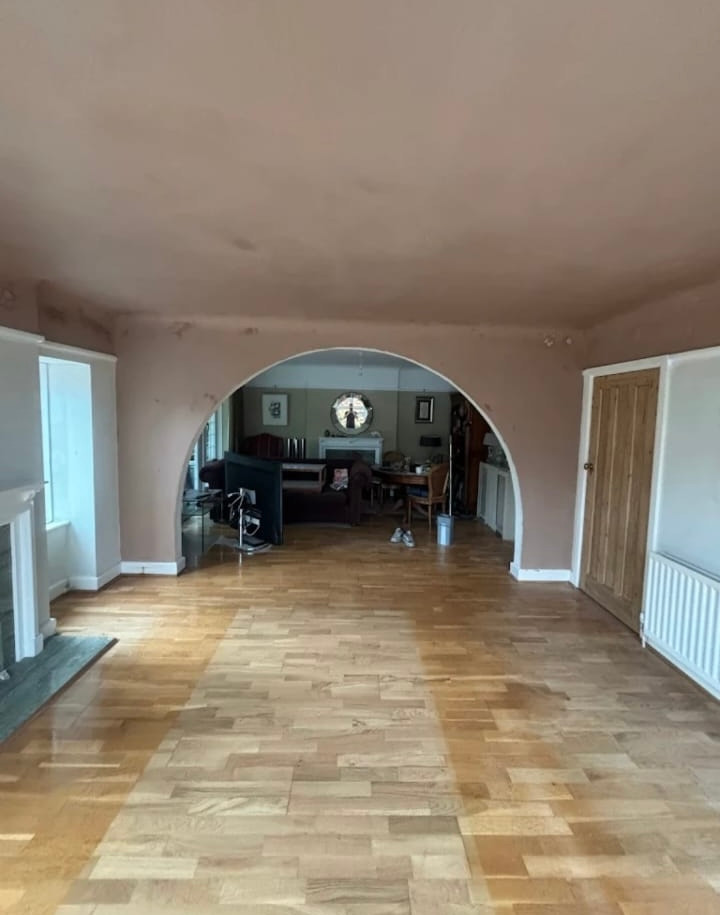
Knock along the skirting and listen. Behind the paint in the houses built here through the sixties and seventies is a backing coat, browning or hardwall floated onto blockwork, with a thin finish trowelled over it. Knock along the skirting and under a window. A dull, hollow note means the backing has let go of the block, and no filler puts that back. We hack that wall off, cut it back to a clean edge, re-float with bonding where the background will not hold anything else, set fresh beads, and skim the whole room to one surface so the repair does not read as a patch when low sun comes across it.
Ceilings in most Furzehill houses are plasterboard nailed to the joists with scrim over the joints, and plenty of them had a textured coating rolled over the top later on. If you want it flat, a fresh board goes over the whole ceiling and gets skimmed. We do not sand or scrape artex: anything put up before the turn of the century can hold asbestos fibre, and overboarding leaves it where it is.
A good half of the calls here are small: new windows leaving the reveals broken out, a radiator taking the plaster with it, a stud wall wanting tape and joint, a chimney breast out and a hole left behind. Angle bead on every external corner, stop bead where plaster meets a frame, and the patch feathered in rather than left standing proud. New work gets dry lining, board on dabs or screwed to a stud, taped, then skimmed. Where an old garage wall is a single skin, insulated board goes on in place of plain board, and the moment you do that you are altering a thermal element, so building control want to see it and Approved Document L sets what it has to reach.
The older walls are a different animal. The brick and flint cottages and farm buildings around Furzehill are solid wall with no cavity, lime plaster on lath inside and a lime render coat outside, and they stay breathable or they hold damp. The sign somebody got that wrong already is a band of blown, salty plaster low down under gypsum. Most of the render round here is sand and cement, often dashed, and it crazes a long while before it lets go. What goes back is a primer, a mesh reinforced basecoat and a silicone thin coat topcoat with a bell cast bead along the bottom, or monocouche or K Render where the colour runs through the topcoat and there is nothing to paint.
How it runs
From your call to a written price
Same team from the first visit to the last, one person to ring, and the quote itemised: protection and preparation, any board or backing coat, the beads, the finish coat, making good and disposal on separate lines. The old plaster leaves with us. Inside your own walls nobody is interested, and rendering is usually permitted development. It changes on the listed farmhouses and cottages around Furzehill, Wilksworth Farmhouse among them, where a change of render or the loss of an old lime ceiling needs listed building consent before a trowel is picked up. Furzehill has no conservation area of its own, so that hurdle is not one you have here.
Cost
What decides the price
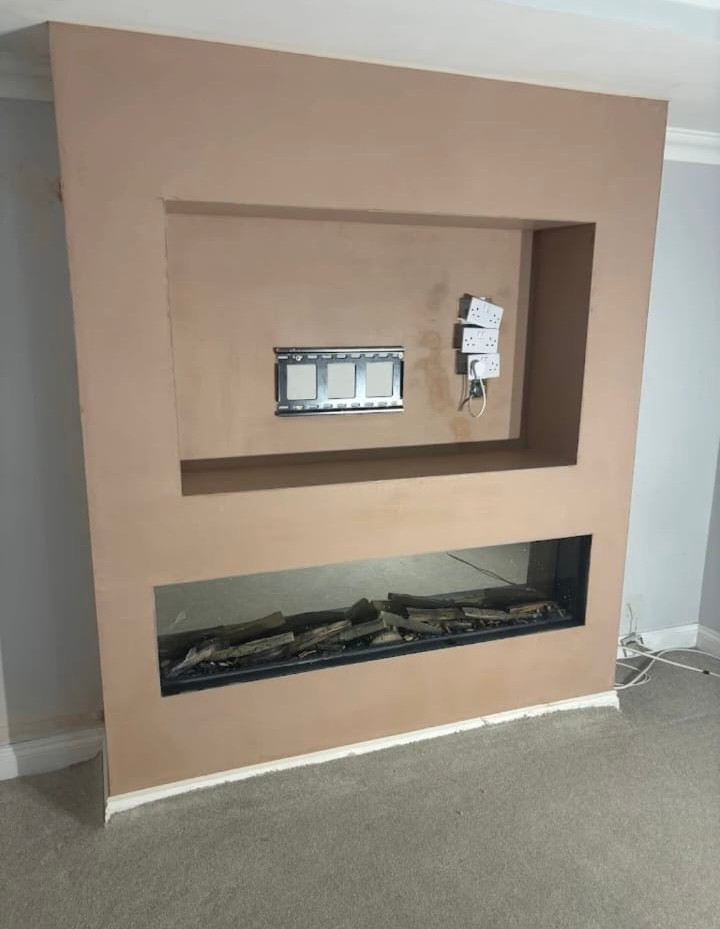
No rate per square metre. A back bedroom in one of the seventies detached houses is a barrow, a dust sheet and a door kept shut; a bungalow having all its ceilings done is a whole house worked room by room; a rendered gable on a two storey semi is a scaffold before it is anything else. A sound wall that only wants a skim is a different job from one where the backing coat has blown and has to come off back to the block. Ask whether it is a skim or a full replaster, and who takes the waste away.
If it has come down
A ceiling down, or plaster blown off the wall
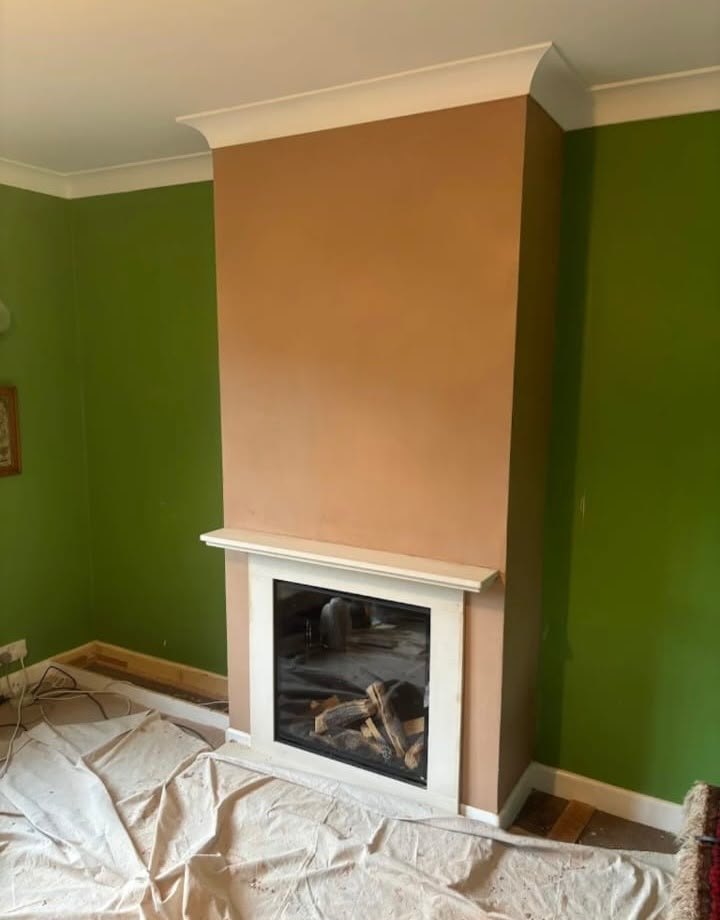
Ring rather than use the form. A ceiling that has cracked and dropped, or a wet patch spreading across a wall, goes to the front of the queue. Furzehill is a short run out through Wimborne, so a first look is usually the same day or the next morning. The first visit gets the loose material down safely. The phone is answered 24 hours for emergencies; scheduled work runs Monday to Friday, 8am to 6pm.
The one local thing
Why so many Furzehill walls sound hollow
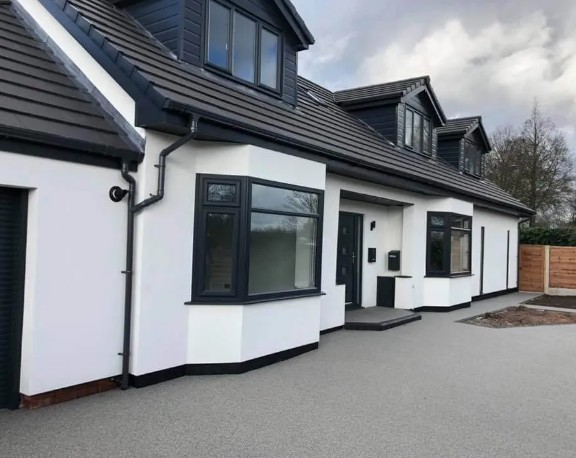
Knock on a wall in a newer Furzehill house, or in an extension of any age, and it sounds hollow. That is not a fault. It is dry lining: plasterboard stuck to the blockwork on dabs of adhesive with an air gap behind it, then skimmed. What matters is what it means when the wall gets damaged.
On an old wet plastered wall a knock chips the finish coat and filler puts it back. On a dabbed wall the finish is a couple of millimetres of skim over paper, so the same knock goes straight through to the board, and filler over the top of it shows through the paint sooner or later.
So before you ring anybody, press rather than tap. A dabbed wall that sounds hollow but does not move is sound, and the damage only wants cutting back to board and skimming. A wall that gives under your palm has lost its dabs, and that one wants taking off and re-boarding, which is a different price and a different number of days. It matters for fixings too: a screw has to reach the block behind rather than stop in the board, which is why a heavy mirror pulls out of a hollow wall.
Who you are dealing with
A local firm you can check
We cover Furzehill, Colehill, Wimborne Minster, Holt, Stone and the rest of BH21, and the wider Dorset Council area, out of Bournemouth. Bournemouth Roofing & Building Ltd, registered in England and Wales, company number 15471719, which you can look up in a minute. Thomas Hannen's business, and he is the one who comes out to price the job, not a salesman. A verified customer's 10 out of 10 on Checkatrade. The visit and the written quote are both free.
Questions
Furzehill questions we get asked
Is a late 1960s wall solid plaster or plasterboard?
Solid, more often than not. The peak building period in Furzehill was the late 1960s and early 1970s at 15.5%, and 46.8% of the housing went up between 1945 and 1982, which is before dry lining took over. Expect a browning or sand and cement backing on block with a thin finish over it. That matters, because a solid wall can be cut out and re-skimmed where a failed dry lined wall usually comes off and gets reboarded.
We are in the Green Belt. Does that stop us rendering?
It does not. Green Belt policy controls where new building goes, not what finish sits on a house that is already standing, so re-rendering or repairing an elevation is untouched by it. Where it starts to matter is an extension, a garden room or a new outbuilding, and that is a Dorset Council planning question rather than a plastering one. Nothing about the specification changes because of the designation.
Detached house, four walls to reach. Where do you start?
On the elevation that is failing, not all four at once. Detached houses are 35.5% of the stock in Furzehill, so most jobs here have open ground on every side and scaffold can stand on your own land without a licence or a neighbour's agreement. That makes it straightforward to price one face, do it, and leave the others until they need doing rather than committing to the whole envelope.
Where does the old plaster and rubble end up?
In a skip or grab bags on the drive, which is one advantage of houses with their own frontage. Stripping a room produces far more weight than people expect, and it is dirty rather than dusty once it is bagged. Old boards and backing coat come out through the nearest door over sheeting, floors stay covered, and the room is swept and vacuumed before new work starts. Removal is written into the quote.
Wilksworth Farmhouse is listed. Could our house be too?
Almost certainly not. There are only 14 listed entries in the whole of Furzehill, Wilksworth Farmhouse among them, and they are old buildings rather than post-war housing. Furzehill has no conservation area of its own either, so for most houses here nothing external needs consent from Dorset Council. You can check any address on the national list in a couple of minutes, and if it does come back listed we work to lime and matched materials.
Nearby, and next door
Plastering and rendering near Furzehill
Plastering and rendering nearby
Our other trades in Furzehill
Everything we do in Corfe Mullen Plastering and rendering, all areas Every area we cover
Free quote
Get a price for the room, not a guess
Tell us the room and what has gone wrong with it. We come out, go round every wall, and put a written itemised price in front of you.