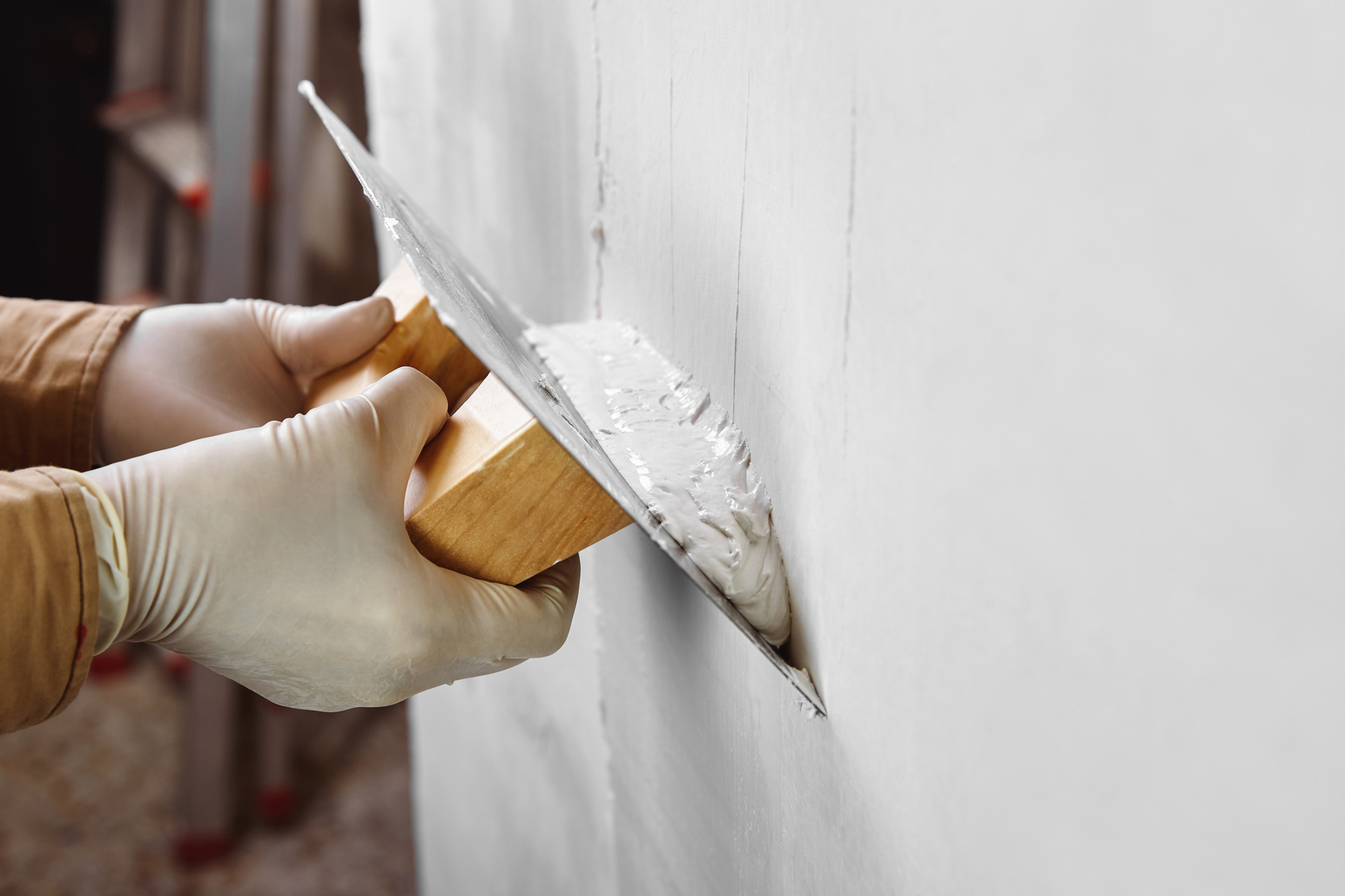
Plastering in Stone
Ceilings, re-skims, dry lining and render for houses, cottages and flats around Stone, Pamphill and the BH21 lanes west of Wimborne.
The site visit is free and so is the written itemised quote. Thomas Hannen prices every job himself.
Two questions settle most plastering jobs around Stone. Is the surface sound enough to skim, and are you the person who can instruct the work? In a flat or a maisonette the second one decides everything, so we ask it on the phone rather than on the doorstep.
The jobs themselves are ordinary enough. A ceiling stained and sagging after water came through from above. A wall that sounds hollow when you knock it and has everyone worried. A room stripped for decorating where the plaster has come away with the paper. An extension or a converted outbuilding that needs boarding and skimming before anyone can paint it.
What changes here is who owns the surface in front of you. Between the old brick cottages along the Pamphill lanes and the flats and maisonettes on the Wimborne side, we work for homeowners, landlords and managing agents in the same week, and the written quote has to suit whichever of those is paying. Eight miles from us, so looking costs nothing.
The work
Re-skimming a stairwell that has to stay open
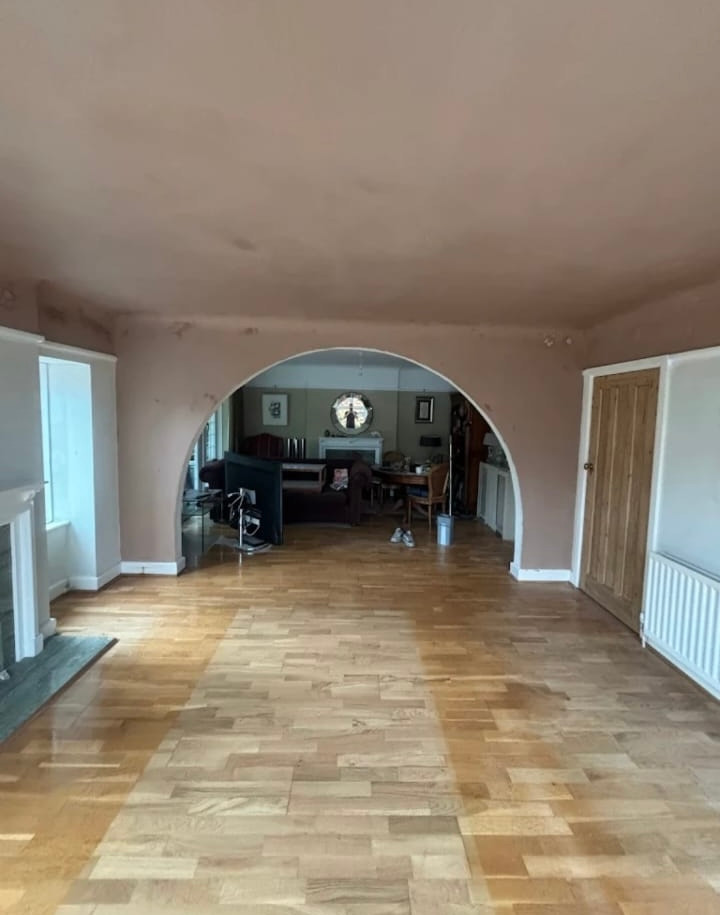
Ceilings after a leak from the flat above. Nearly a third of the homes here are flats or maisonettes, so this is the commonest call we get. A washing machine, a shower tray or a failed seal upstairs, and the ceiling below goes brown, then soft, then starts to drop. We take out what is wet rather than skimming over a stain, let it dry, then patch in board, scrim the joints and skim the whole ceiling so the repair does not read as a square through the emulsion.
Hollow walls that are not actually blown. A lot of the housing here went up in the 1980s and later, and that means dry lining: plasterboard stuck to the blockwork on dabs of adhesive, then a skim or a taped joint. A wall like that sounds hollow because it is hollow, by design. Knowing the difference between a dabbed wall doing its job and a backing coat that has let go of the brick is most of what a proper look is for, and it decides whether you need a skim or a strip out. Where wet plaster goes back it is browning or hardwall where the block pulls, bonding on a dense face.
Re-skimming a stairwell in an occupied block is a different job from a front room: the access has to stay open, the dust has to stay inside the sheeting, and the work has to be priced so a managing agent can put it in front of the leaseholders. We work in sections and leave the route in and out usable at the end of every day. Dust sheets go down first and the background is prepared, with PVA where it is dusty.
A fifth of the parish predates 1919 and there are ninety-one listed entries in it, most of them the old brick cottages along the lanes: solid walls with lime plaster on them and lath ceilings above. Those want a lime backing coat and a breathable finish rather than gypsum, and a lath ceiling that is only cracked is usually worth overboarding and skimming rather than pulling down.
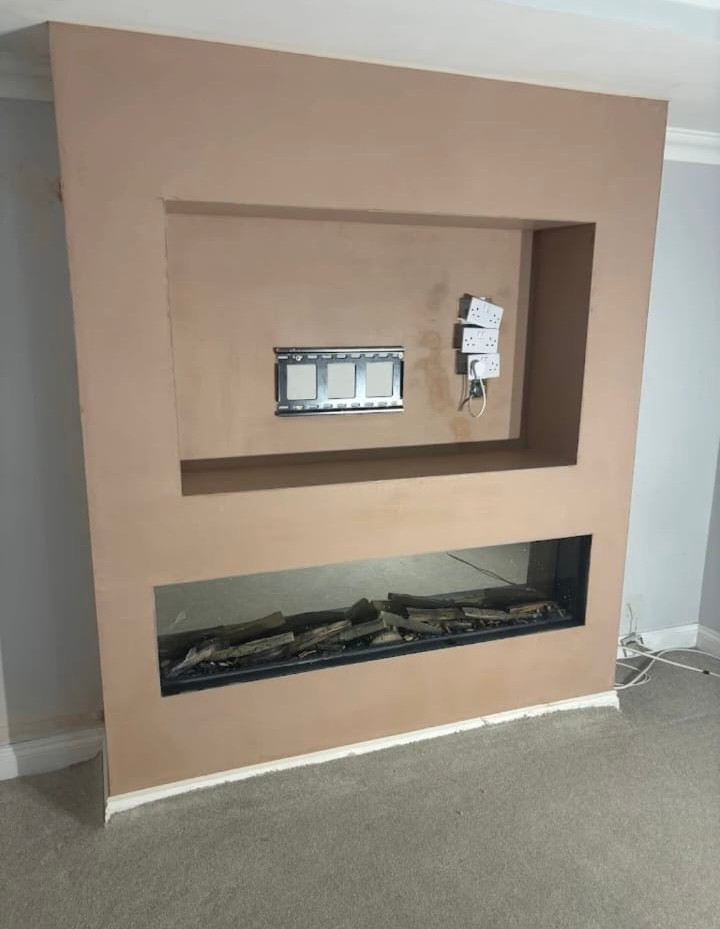
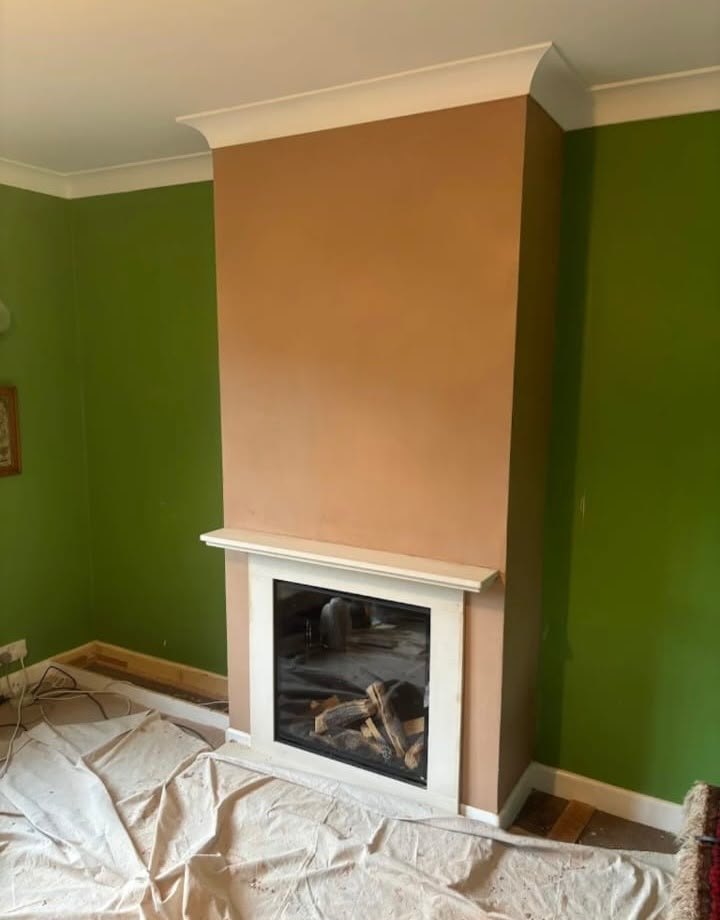
New work is boarded on studs or on dabs, taped and jointed or fully skimmed, with an angle bead on every corner and a stop bead at every reveal. Where a new opening meets old plaster, the join is floated out wide rather than filled tight, which is what stops a line appearing there next summer. Outside, render is patched into sound work where that is honest, or taken back to a scratch coat, a render coat, a mesh reinforced basecoat, a bell cast bead and a silicone thin coat topcoat. The old sand and cement and pebbledash come off harder than people expect. Thin coat systems suit modern blockwork; on old solid brick it is lime render instead.
How it runs
From your call to a written price
Same team from the first visit to the last coat, one person to ring, and no sub-contracting your house out to somebody you have never met. The quote is itemised: prep, anything hacked off, the backing coat, the beads, the skim, making good and disposal on separate lines. A great many buildings in this parish need listed building consent, and that consent covers internal fabric as well as elevations, so a lime plastered wall or a lath ceiling in one of the older cottages wants a call to Dorset Council before anything comes off. Re-rendering a whole elevation brings Approved Document L and building control in.
Cost
What decides the price of a plastering job
No rate per square metre, because what sits behind the surface decides it. A maisonette ceiling that has been rained on from above, an eighties house lined out on dabs, and an old brick cottage with lime plaster on solid walls are three different jobs before anyone lifts a trowel. We tap the old surface before quoting, because anything hollow is already blown. Reveals, chimney breasts and staircases are where the hours go, since each is a bead cut, fixed and floated true. In a block, protecting the common parts and carrying waste down a shared stair is real time and goes in the price. Outside, a tower does for low work and a gable wants a scaffold.
If it has come down
Plaster blown or a ceiling down today
Ring rather than use the form. A ceiling that has started to sag, or plaster blown off a wall after a leak, goes to the front of the queue. Keep out of the room and turn the circuit off at the consumer unit. If it is a flat, ring us anyway and we will tell you whether this is yours to instruct or the freeholder's, which saves you a fortnight.
Worth knowing
In a flat, the first call may not be a plasterer
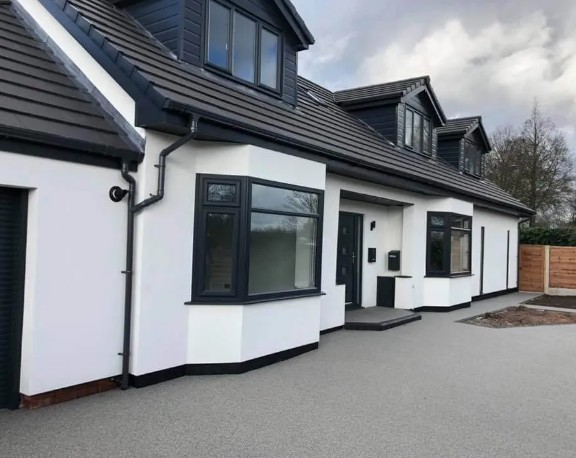
Around a third of the homes on this side of Wimborne are flats or maisonettes, and that changes who can order the work. Inside a leasehold flat the decorative surfaces are usually yours. The structure, the external walls and everything in the common parts normally belong to the freeholder and are paid for out of the service charge.
So a ceiling brought down by a leak from the flat above is often not your repair to instruct at all, and ringing a plasterer first can leave you paying for something the building was going to pay for. Check your lease, then speak to the managing agent, then ring us.
Where the freeholder is paying it goes slower and the paperwork matters. Section 20 of the Landlord and Tenant Act 1985 means a landlord has to consult leaseholders before major works where any one leaseholder would be charged more than £250, so the quote has to be itemised clearly enough to be circulated and compared.
That is how we write them anyway. We are happy to price the inside of your flat and the communal side as two separate documents, so nobody spends three months arguing about which half of a ceiling belongs to whom.
Who you are dealing with
A local firm you can check
We cover Stone, Pamphill and the BH21 addresses around them, out through Cowgrove, Wimborne Minster, Colehill and Corfe Mullen, under Dorset Council. Bournemouth Roofing & Building Ltd, registered in England and Wales, company number 15471719, which you can look up in a minute. Thomas Hannen's business, and he is the one who comes out to price the job, not a salesman. A verified customer's 10 out of 10 on Checkatrade. The visit and the written quote are both free.
Questions
Stone questions we get asked
A third of Stone is flats. Can a leaseholder just book us?
Often not for anything outside the flat itself. Flats and maisonettes are 32.1% of the dwellings in Stone, and on those the external walls and the structure stay with the freeholder and are managed through the service charge, so the person living there cannot instruct external render or a structural ceiling repair on their own. Inside your own demise a re-skim is normally yours to arrange. I put the quote in whichever name the lease requires.
What do we send the managing agent to get this approved?
A written itemised quote with the surfaces broken out line by line, which is what an agent needs before consulting the other leaseholders. Thomas Hannen measures and writes it himself and there is no charge for the visit or for the quote. Flats being a third of the housing round here, we are used to a quote sitting with an agent for weeks before anyone rings back, and we do not chase you while it does.
Pamphill has a lot of listed buildings. Does ours count?
Worth checking before anything comes off a wall. The parish carries 91 listed entries, Pamphill Manor House and the Chapel of St Margaret and St Anthony among them, which is a great many for an area this size, and about a fifth of the housing predates 1919. On a listed interior the historic plaster is part of what is protected, so taking a ceiling back to the lath is a consent matter rather than a decision made on the day.
Our eighties house has hollow walls. Was it built wrong?
It was built that way on purpose. The largest single band in Stone is 1980s stock, and by then plasterboard was being stuck to blockwork on dabs rather than floated on wet, so there is an air gap behind most of the board and the whole wall drums when you tap it. It only matters where the board has come away from the dabs, and that shows as movement under hand pressure rather than as sound alone.
How do you get boards up to a second floor flat?
By hand, in smaller sheets, up the communal stairs. A full size plasterboard will not turn on most landings in a converted flat, and with a third of Stone's housing in flats that is a normal day here rather than an awkward one. We cut down to a size that will turn and accept the extra joints, which get taped and filled in any case, then protect the common parts and clear them the same evening.
Nearby, and next door
Plastering and rendering near Stone
Plastering and rendering nearby
Our other trades in Stone
Everything we do in Corfe Mullen Plastering and rendering, all areas Every area we cover
Free quote
Get the ceiling or the wall priced properly in writing
We will look at it, tell you whether it is a skim or a strip out, and give you a free itemised written quote a managing agent or an insurer can work from.