
Bricklaying in Stone
Cracked brickwork, lime repointing, chimney stacks and boundary walls in Stone, Pamphill and around Wimborne.
The site visit is free and so is the written itemised quote. Thomas Hannen prices every job himself.
Last updated
The work
Cracked brickwork around Stone: what we do first
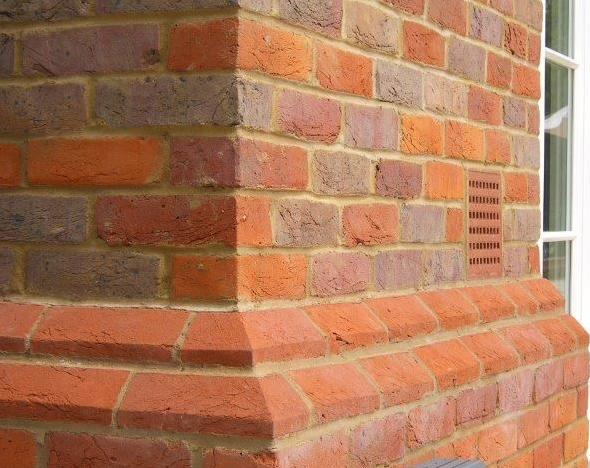
The ground along this stretch of the Blandford road shrinks in a dry summer and swells again over winter, and brickwork built on it moves with it. So on any cracked wall at Stone the first job is telling seasonal movement from something that is actually going somewhere. Point a moving crack and you will be pointing it again next autumn.
A wall at Stone needs looking at once it cracks, loses its joints or starts to belly. A stepped crack through the brickwork by a corner or a window, usually noticed at the end of a long dry spell. Joints on an older elevation washed back until the brick edges stand proud. And a boundary wall that has bellied out, lost its coping, or been shoved by a root.
We come and look at the wall, get behind it and under it where we can, and tell you plainly whether you are looking at mortar, at water in the wrong place or at the ground. You get a survey in ordinary words, a note of what will keep for a couple of years, and an itemised written price for the part that will not. The site visit and the quote are both free, and we would rather tell you to watch a crack for a year than take money for the wrong repair.
The work
Brickwork jobs around Stone
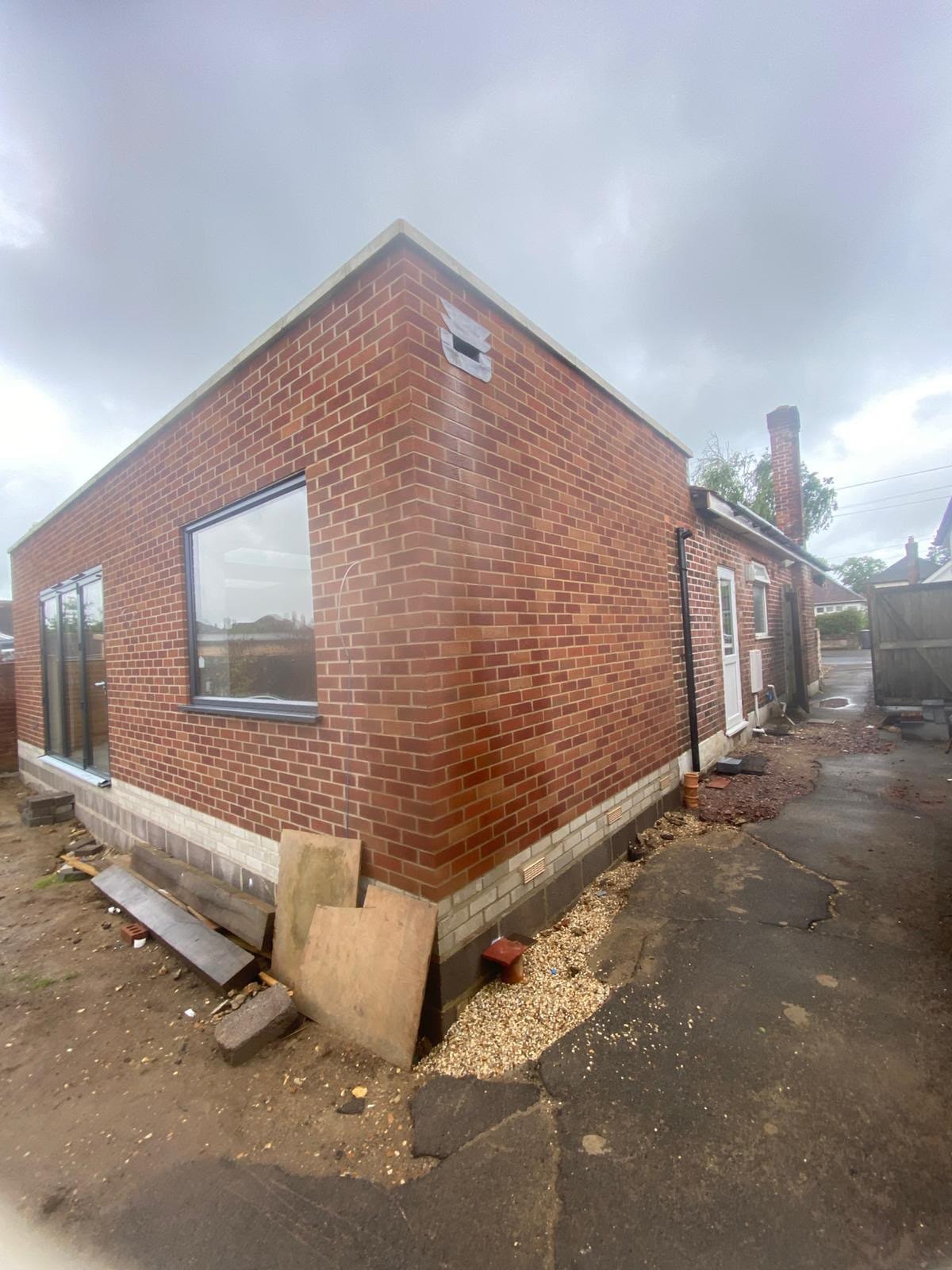
Reading a crack before repairing it. Width, direction and where it stops tell you most of it. A stepped crack that follows the bed and perp joints, opens in late summer and closes again by February is seasonal ground movement, and the ground around Stone shrinks and swells.
A crack that runs straight through the brick faces, keeps widening whatever the season, and throws a door or a window out of square is a different animal and wants a structural engineer before a bricklayer. We say which one you have, and we will not quote a cosmetic repair on the second sort.
Where the movement has settled down, the repair is to cut the damaged bricks out course by course, bed helical bars into the bed joints across the crack to tie the two sides together, replace the brick and repoint so the repair does not read as a patch. Done properly you should not be able to find it from the garden a year later. Done as a smear of mortar over the crack, it reappears by the next dry summer.
Lime on the period fabric. Plenty of the parish predates 1919, and there are ninety one listed entries around Pamphill and the Blandford road to show for it. Those walls are solid, soft brick laid in lime, and they have to stay breathable, so they get an NHL lime mix matched on sand for colour and grain, raked out by hand and finished in the profile the wall already has, flush or weather struck rather than a modern bucket handle.
The long walls along the lanes in Stone fail from the top down. Once the coping is loose, water gets into the core, freezes and pushes the two faces apart, and the wall bows. We rebuild bowed lengths, reinstate brick on edge or tile creasing, rebuild gate piers pushed by a vehicle or by roots, and set a damp proof course in at the base where the wall will take one. Stacks bring cracked flaunching, soft top courses and a lean: we rebuild course for course and re-form the flaunching so it sheds water instead of holding it, working at height off a tower or a scaffold under work at height rules and priced as its own line. On new work, the part that matters here is under the ground. Foundation depth on shrinkable clay is a building control question, it is deeper than most people expect, and deeper again near a mature tree.
How it runs
Brick repairs from the first look to the last joint
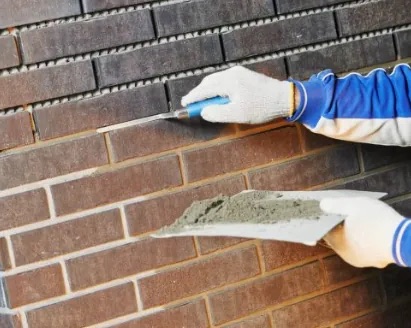
Thomas comes out, looks at the wall with you, and rakes out a little mortar to see how soft it is and what it was made with. In Stone you find eighties brick houses in cement mortar, blocks of flats with long elevations, and older cottages and boundary walls laid in lime, and the mix has to follow what is there.
Your quote is itemised by elevation: access, raking out, the mortar mix, bricks cut out and replaced, any footings, and disposal. One company sees it through. On a block, the quote goes to the freeholder or the agent, and we leave a clear way to every front door. Paths are swept each day, and old mortar and broken brick leave with us. If a crack runs deeper than it looked, or a footing has moved, work pauses while you look at a photo and a price for it.
No conservation area covers the settlement, so ordinary repointing and brick repair is maintenance and needs no planning permission from Dorset Council. On a listed building or its garden wall, repointing counts as alteration and needs listed building consent. A new or raised boundary wall has height limits in Planning Portal guidance on garden walls, footings go through building control, and a shared boundary brings in the Party Wall etc. Act 1996.
Cost
Walls, footings and lime in a brickwork quote
Ground that moves. Stone sits on clay with a significant shrink-swell rating. A crack that opens in a dry summer and closes again in winter is often the ground rather than the bricks, so we check where the water from the downpipes and gullies ends up before pricing. On anything structural, the depth of the footings can move the price more than the brickwork above them.
The mix. Eighties houses take a sand and cement mortar. Older cottages and boundary walls were laid in lime and need lime again, because hard cement traps water in soft brick and the face blows in the frost.
Getting at it. A cottage tight on the Blandford road, a house set back across a lawn and a block of flats with a parking court along the front need three different platforms. Work at height rules turn access into its own priced item, and how long the scaffold stands matters as much as its size.
Matching brick. Finding a match for a particular house takes time, and reclaimed brick for an older wall costs more than new.
Who is paying. The walls of a block are the freeholder's, so the agent may need the quote in a form the leaseholders can follow.
Ask any competing quote how deep the joints are raked, what mix goes back, and what is being dug for the footings.
If something has moved
A wall bulging, cracked or dropping bricks
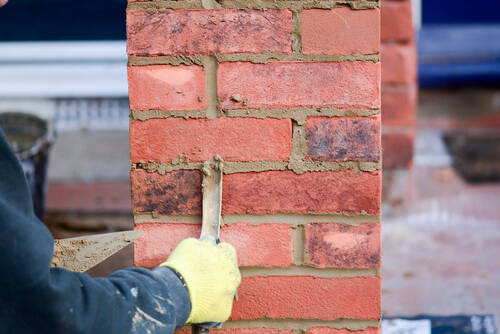
If a boundary wall has bellied out over the winter, a crack has opened suddenly, or bricks are coming off a chimney, keep people away from underneath and do not try to push it back. Call us rather than sending the form.
We prop or take down anything unsafe on that first visit and check whether the movement is still going on; the permanent repair is priced once that is clear. Planned brickwork runs Monday to Friday, 8am to 6pm. Something urgent needs a phone call, and if you cannot get hold of us we will ring back the moment we are able.
The one local thing
The ground moves here, so where your rainwater goes is a structural question
The ground under this part of Stone is cohesive and carries a significant shrink and swell rating, which in plain terms means it takes up water and expands, then gives it up in a dry summer and shrinks.
Brickwork sitting on it rides up and down slightly with the seasons, and where one part of a building is on a shallower footing than another, or a thirsty tree is drinking from one corner, the two parts move by different amounts and the wall cracks at the weakest line. That is why so many cracks around Stone appear in September and look better by spring.
What follows from it is unglamorous and genuinely useful. Keep water away from the footings: a downpipe discharging onto the ground beside a wall, a gully that has stopped taking water, or a soakaway sited close to the house all put a wet spot right where the ground is most sensitive, and Approved Document H covers where surface water is supposed to go.
Check the trees, because a large one within its own height of the building is a common cause and felling it suddenly can be worse than leaving it. And if a crack has just appeared, mark the ends with a pencil and a date, or fit a simple tell-tale, and watch it across a full year before anyone repairs it. A crack that closes in winter needs a bricklayer. One that does not needs an engineer first, and we will say so.
Who you are dealing with
Who you are hiring for brickwork in Stone
We cover Stone, Pamphill, Wimborne Minster, Corfe Mullen and the BH21 villages, and Stone lies about nine miles out from our Boscombe base. Dorset Council handles planning and building control. We trade as Bournemouth Roofing & Building Ltd, a company registered in England and Wales, number 15471719. Before you book a visit in Stone, you can read our customers' Google reviews, word for word, on our reviews page.
Thomas Hannen runs it, and it is Thomas who comes to see the wall and prices it. A verified Checkatrade customer marked us 10 out of 10. The visit and the itemised written quote cost you nothing.
Planning at a glance
Do you need planning permission in Stone?
Most repairs in Stone need no application at all. What decides whether a change to the outside of your house does is who the council is, whether a conservation area or a listing applies, and whether the place sits in a protected landscape.
| Question | In Stone |
|---|---|
| Who decides | Dorset Council is the planning authority for Stone. Dorset Council's heritage pages set out what it controls. |
| Conservation area | None covers Stone, so a like-for-like repair is ordinary maintenance. |
| Listed buildings | Yes, there are listed buildings in and around Stone. If yours is one, work can need listed building consent. |
| Protected landscape | No National Park or National Landscape covers Stone. |
Questions
Questions about bricklaying in Stone
The crack over our door steps through the joints. Why?
Because mortar is weaker than brick and gives way first, which is how it is meant to behave. What causes the movement is the ground: Stone sits on cohesive soil with a significant shrink swell rating, so it takes up water through winter and gives it back in a dry summer, and anything near a large tree or a leaking drain moves with it. Mark the crack with a pencil line and watch the width for a season.
Pamphill has a lot of listed buildings. Are we likely one?
It is worth checking instead of assuming. The parish carries 91 listed entries, Pamphill Manor House and the Chapel of St Margaret and St Anthony among them, and a fair number of older cottages and their boundary walls are covered too. Stone has no conservation area, so on an unlisted house nobody is looking at your mortar at all. On a listed one, consent covers the mortar and the joint as much as the brick.
Our house dates from the eighties. Is it too new to point?
Not at all: a bucket handle joint in cement mortar from the 1980s has had forty winters at it. The outer few millimetres weathers back, the joint stops shedding water and the wall starts holding it instead. What that needs is a shallow repoint on the weather elevation, not the full depth work an older solid wall would want.
Should the guttering be sorted before the pointing?
Always, or you are paying to point a wall that is about to get soaked again. A leaking gutter joint puts a constant stripe of water down one line of brickwork, and that stripe is where the mortar goes first, where the moss grows and where frost damage shows up. Repairing the joints under it without fixing the leak buys a couple of seasons at most. Thomas checks the gutters and downpipes on a Stone job before pricing a single length of joint.
Can a bulged section of wall be rebuilt rather than replaced?
A bulge means the outer skin has lost its connection to what is behind it, so pointing over the face achieves nothing. We prop where needed, take the loose area down course by course, keep the sound bricks back for reuse, and rebuild to the original bond with proper ties into the inner skin. On a boundary wall it is often a failed coping that let the water in and started the whole thing.
Nearby, and next door
Bricklaying near Stone
Nearby places we also cover for bricklaying, with straight-line distances from Stone, and the other trades we offer in Stone itself.
Bricklaying nearby
Our other trades in Stone
Brickwork and repointing guides
Lime or cement mortar: which do you need? Single storey extension: planning and building regs Subsidence cracks: which ones matterEverything we do in Corfe Mullen Bricklaying, all areas Every area we cover
Free quote
Get a written price for your brickwork in Stone
Send a photograph of the crack or the wall and we will come and look properly. Free visit, itemised written quote, honest answer about whether it needs doing yet.