
Bricklaying in Merley
Wall tie repairs, repointing, brick replacement, lintels over garage openings and front walls, across Merley and Canford Magna.
The site visit is free and so is the written itemised quote. Thomas Hannen prices every job himself.
Last updated
The work
Brickwork in Merley: what we do, and what fails first here
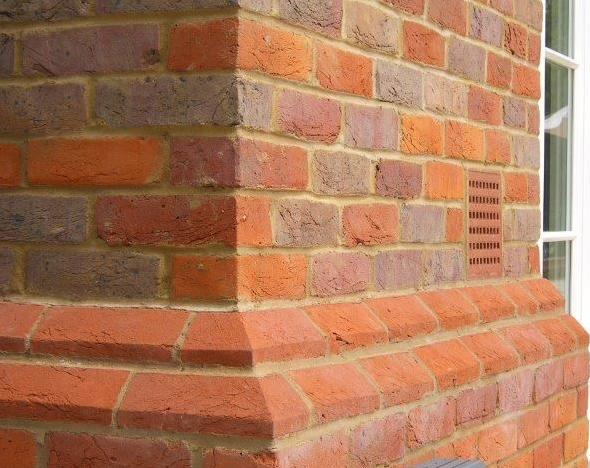
Merley brickwork is nearly all cavity work of a similar age, so the same faults come up again and again: joints weathered back on the windward wall, a crack running level along one course where the wall ties have rusted, and a sagging brick course over a garage opening. All three are repairs. None of them means the wall has to come down.
Brickwork in Merley shows its trouble in one of three sights. Mortar that has gone back behind the brick face on one elevation, usually the one with nothing in front of it. A horizontal crack that runs along a line of bricks instead of stepping up through the joints. Or a front wall, planter or entrance pier that has cracked, leaned or been clipped by a car.
We come out and look at the building, not at a photograph, because on this sort of house what looks like tired pointing and what looks like structural movement are often the other way round. You get a straight view of what needs doing now, what can wait, and an itemised written price if you want one. The site visit and the quote are free.
The work
Brickwork jobs in Merley
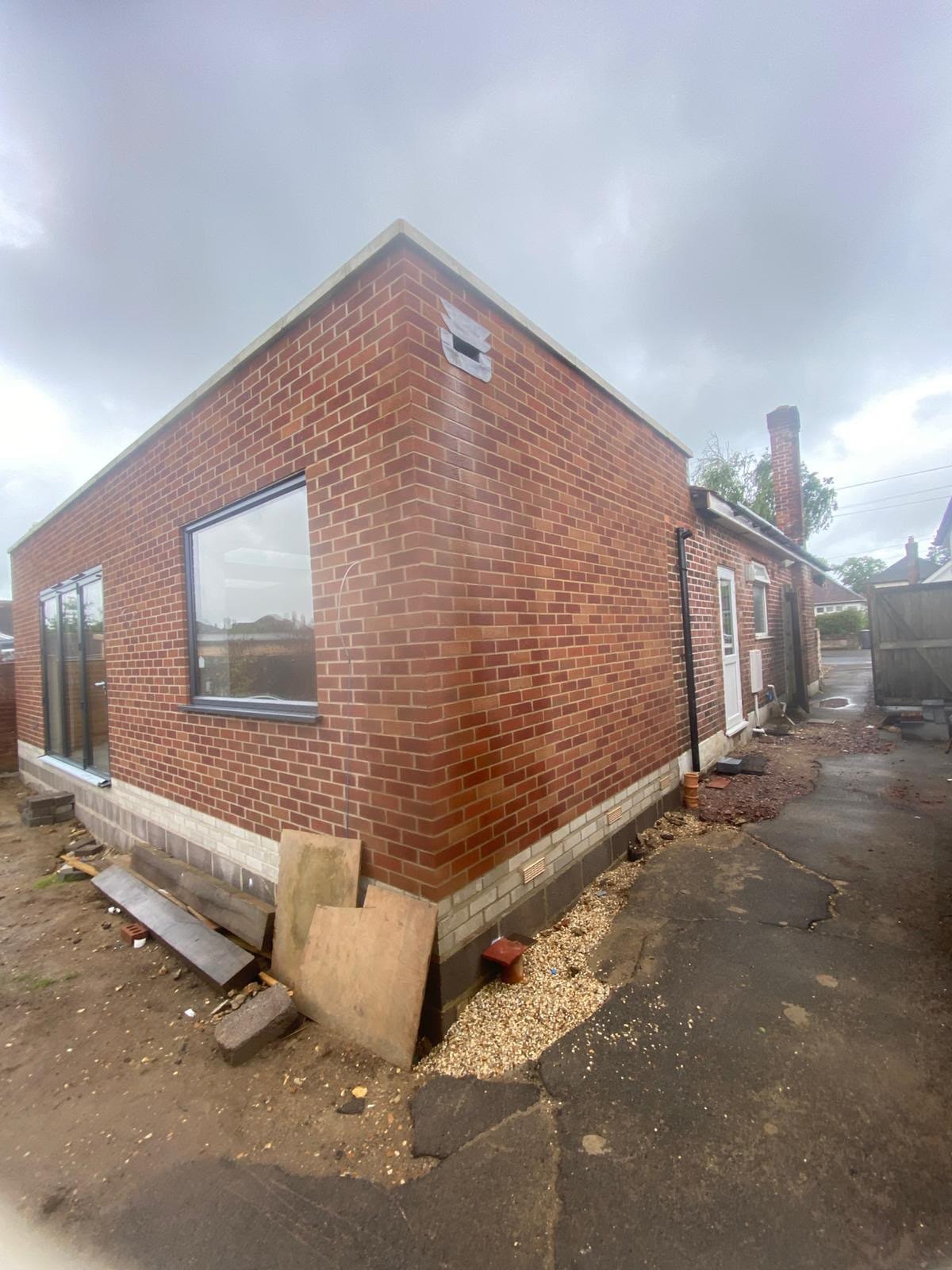
Wall tie repairs. The structural repair to expect on houses of this age, and Merley is one cohort ageing together: better than three quarters of it went up between 1945 and 1982, half of that in the 1970s and early 1980s.
Ties across the cavity corrode, the rust takes up more room than the steel did, and they jack the outer leaf apart. You see it as a crack running level along the same course rather than stepping up through the joints, often on the gable and at regular intervals up the wall. Remedial ties go in through small holes, the leaf is stitched where it has cracked, and the holes are made good with matched mortar. It is a day or two of work rather than a rebuild, and it stops a wall that would otherwise keep opening.
Merley walls were built with a hard mix and a thin, neat joint. Once the weather has taken that joint back behind the brick face, water sits in it and a frost lifts the face off. We cut out to sound mortar, match the mix and the sand so the colour sits right, and put the profile back as the wall has it, bucket handle or weather struck where the weather comes at it and flush where the original was, with a sample panel up on your own wall before an elevation starts. Wide openings for garage and patio doors are the weak point: a steel lintel rusts and lifts, the soldier course above it drops, and a crack opens at each end. We prop, cut out, fit the right lintel and rebuild over it, and bricking an opening up for a conversion is the same trade in reverse.
Front walls, planters and piers. The low front boundary walls, brick planters and gate piers that went in with the houses are shallow footed and take the traffic. A planter built tight against the house is worse than it looks, because the soil in it bridges the damp proof course and puts water into the wall behind. We rebuild bowed lengths, reset coping, take out planters that are causing damp, and bond piers into the wall instead of standing them on the end of it. Where a face has blown we cut the brick out and blend from a reclaimed batch, because a brick of that era has fifty years of weathering on it and a new one beside it never quite matches. Stacks with no fire under them still take weather on four sides, and matching a 1970s facing brick is most of the job on any new work here.
How it runs
From a look at the wall to the last joint pointed
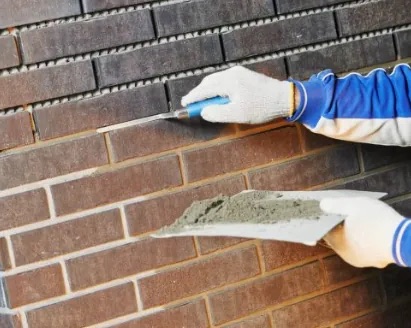
The price comes from Thomas, who comes out to look at the brickwork in person. He checks each elevation, the chimney stack and the garden and front walls, and looks for cracks that step through the joints, because Merley sits on clay that shrinks and swells and movement shows in the brickwork first. The written quote is broken down by elevation, with access, raking out, the mortar mix, brick replacement and disposal on separate lines.
The wall is priced from footing to coping on one quote. A drive usually gives us somewhere to stand a tower or scaffold, and a bungalow gable rarely needs more than a tower. Nothing is left unsafe overnight, dust sheets go down over paths and borders, and the rubble leaves with us. If a wall tie has failed or a lintel has cracked, work stops while you see a photograph and a written price.
On an ordinary house, repointing and brick repair are maintenance with no application, and Planning Portal guidance on external walls covers where a change of appearance begins. The estates are not part of the Canford Magna or Oakley Lane conservation area. Listed entries cluster around Canford, and the council keeps the listed building records; on a listed building, repointing needs consent first. Structural work goes through building control, and a wall shared with next door brings in the Party Wall etc. Act 1996.
Cost
Cracks, bricks and access decide a brickwork price
We don't price brickwork by the square metre. The same area can be half a day or a week, depending on what is wrong with it.
What the wall is doing. A crack that follows the mortar in a stepped line, on ground like Merley's clay, needs understanding before it is filled. Sometimes it is seasonal movement that has settled. Sometimes a leaking drain or a downpipe is softening the ground, and that has to be put right first.
Getting to it. A detached house you can walk right round is easy. A bungalow with a conservatory tight to the back wall, or a stack on a two storey gable, needs a tower or scaffold built around it. The work at height rules are why that is a priced line.
Matching the brick. Houses from the seventies used machine-made bricks in colours that have since gone out of production. Finding a close match from reclaim or a current range takes time, and so does a trial panel for the mortar colour.
Depth of the joints. How far the old mortar has to come out, and whether the brick faces have spalled, sets the hours more than area does.
When you compare, ask what mortar mix is proposed and whether it is matched, how deep the raking goes and whether by hand or disc, and whether the scaffold is included.
If something has moved
A wall leaning, or bricks coming loose
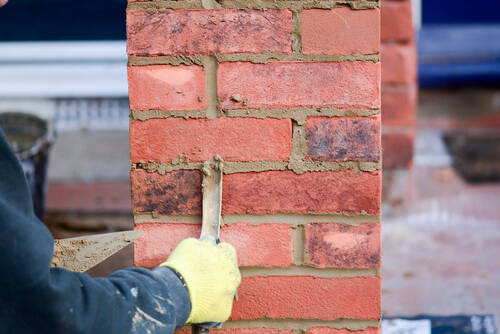
Keep people and cars away from anything leaning or loose, especially a chimney stack or a front wall by the pavement. Don't lean on it or try to push bricks back in. Pick up the phone rather than the form.
Our first job on site is making it safe, by propping, taking down loose courses or fencing it off, and then we look at why it moved: a car strike, failed wall ties, or ground movement on the clay after a dry summer. The permanent repair is priced once we know. Booked work happens Monday to Friday, 8am to 6pm, and a missed call gets a ring back as soon as we can manage.
The one local thing
Merley was built in one go, so it ages in one go
Almost the whole of Merley went up inside a short run of years, most of it in the 1970s and early 1980s. That matters more than it sounds. Every house on a street got the same wall ties, the same mortar mix, the same detail over the garage opening and the same low front wall, laid within a few seasons of each other.
So they do not fail one at a time in a random order. They come to the end of the same detail at roughly the same time, which is why a road can go years with nothing happening and then have three houses with cracked gables in the same winter.
The useful part of that is you can see your own future in the street. If a neighbour has had remedial ties in, look at the same elevation on yours, because the ties are the same age and in the same wall. If two houses along has a dropped soldier course over the garage, it is worth someone looking at yours before the crack arrives.
It works in your favour on price too. Where two neighbours want the same elevation done, one visit, one set up and one lot of access is cheaper than two, and we will say so rather than quote each of you as if the other did not exist. It also means we can tell you what we found next door in plain terms, so you are deciding on evidence rather than on a hunch.
Who you are dealing with
A bricklaying firm you can look up yourself
Merley sits 6.6 miles from where we are based in Boscombe, and we cover it along with Bearwood, Canford Magna, Oakley, Broadstone and the rest of BH21. Merley, Bearwood, Canford Magna and Oakley fall under BCP Council; the rest of BH21 around Wimborne is Dorset Council.
Registered in England and Wales, Bournemouth Roofing & Building Ltd has the company number 15471719, and you can look it up. Every wall is seen by the owner, Thomas Hannen, before anything is priced. On Checkatrade a verified customer marked us 10 out of 10. There is no charge to come out, and the itemised written quote is free too. Before you book a visit in Merley, you can read our customers' Google reviews, word for word, on our reviews page.
Planning at a glance
Do you need planning permission in Merley?
Most repairs in Merley need no application at all. What decides whether a change to the outside of your house does is who the council is, whether a conservation area or a listing applies, and whether the place sits in a protected landscape.
| Question | In Merley |
|---|---|
| Who decides | BCP Council is the planning authority for Merley. BCP Council's heritage pages set out what it controls. |
| Conservation area | The Merley estates are outside any conservation area; Oakley Lane and Canford Magna CAs sit nearby in the same ward, so check your address. |
| Listed buildings | Yes, there are listed buildings in and around Merley. If yours is one, work can need listed building consent. |
| Protected landscape | No National Park or National Landscape covers Merley. |
Questions
Questions about bricklaying in Merley
Why has our whole street gone at the same time?
Because the whole street was built at the same time. 77.0% of Merley went up between 1945 and 1982, and half of it in the 1970s and early 1980s, so the mortar went into those walls within a few years of each other and it is wearing out together. Three neighbouring walls failing within a year or two is usually that, not a bad batch of sand.
What do you check on a detached house here?
The perps first, then the bed joints under the cills, then any movement joint the builder left. Detached houses are 49.0% of Merley, so there are four full elevations and no neighbouring wall sheltering any of them. We tap the faces for hollow brick, check the airbricks are clear and chisel one joint open to see how deep the soft mortar runs before anything is priced.
Why has the drive pulled away from the house?
The slab sits on the cohesive ground under Merley, which shrinks and swells at a significant rating, and it moves with the seasons while the house on its deeper footing stays put. Once the joint between them opens, every downpour on the drive runs straight into the gap and down beside the foundation. We cut a proper gap, seal it, point the base of the wall and let the slab move where it wants.
Does radon matter if we extend at the back?
Only for the new floor: Merley sits in a 3 to 5 per cent radon affected band, which calls for basic protection built into a new slab, so it is a detail for an extension or a garage conversion. It has nothing to do with repointing, rebuilding a garden wall or replacing a lintel in the existing house. If we lay the slab, the barrier goes in as part of it.
Canford School is listed. Does that reach our house?
It does not reach an ordinary house. There are 26 listed entries around Merley and Canford School accounts for several of them, John of Gaunt's Kitchen included, but listing attaches to the building itself and not to what stands near it. The Merley estates also sit outside a conservation area, so Bournemouth, Christchurch and Poole Council treats a repoint as maintenance. The Oakley Lane and Canford Magna conservation areas are in the same ward, though, so we still run the address past the council's lists at the visit.
Nearby, and next door
Bricklaying near Merley
Nearby places we also cover for bricklaying, with straight-line distances from Merley, and the other trades we offer in Merley itself.
Bricklaying nearby
Our other trades in Merley
Brickwork and repointing guides
Lime or cement mortar: which do you need? Single storey extension: planning and building regs Subsidence cracks: which ones matterEverything we do in Broadstone Bricklaying, all areas Every area we cover
Free quote
Get the wall looked at properly
Tell us what you can see and which wall it is on. We will come out, check whether it is the pointing or the ties, and put an itemised written price in your hand.