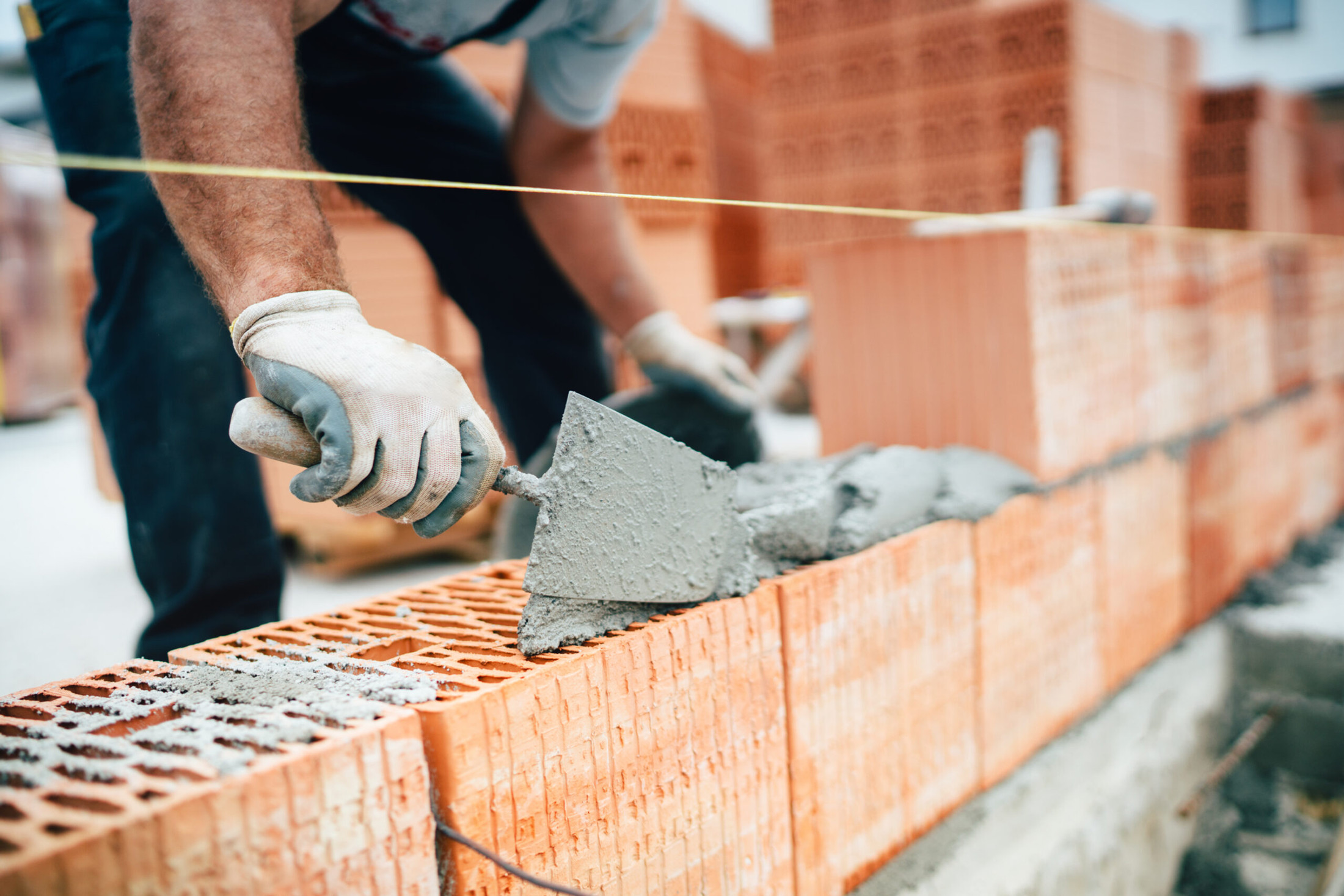
Bricklaying and repointing in Bearwood
Repointing, crack repairs, lintels, garden and boundary walls across Bearwood and BH11, looked at properly and priced in writing.
The site visit is free and so is the written itemised quote. Thomas Hannen prices every job himself.
If a crack has opened in the brickwork of a Bearwood house, the first job is deciding whether the wall is moving or the mortar has simply worn out. Those are two different prices and two different jobs, and you should not be quoted for the second when you have the first.
Bearwood went up as an estate, so the brickwork here is nearly all cavity wall in machine made facings with a thin cement joint, and it fails in a small number of predictable ways. People ring us when a crack shows up over a window or where the house meets the garage, when the front boundary wall along one of the footpath links has been shunted or has started to lean, or when damp is coming through on one wall and the joints outside it are hollow and sandy to a screwdriver.
We come and look at the wall itself rather than guess from the drive. Most of the time the wall is fine and the mortar is not, which is a repair rather than a rebuild. When it is genuinely structural we say so, and we would sooner tell you to watch a crack for a season than take money for cutting out and rebuilding something that is still on the move.
The work
What we do most on the walls of these estates
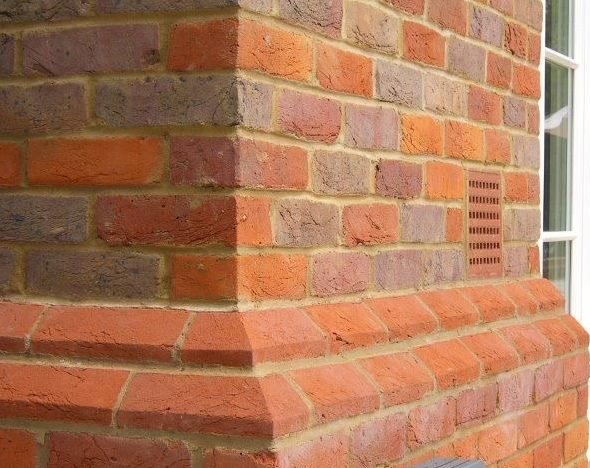
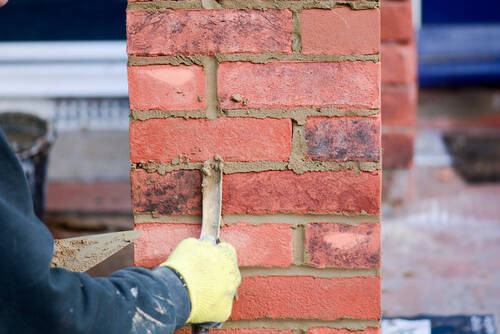
Repointing, in the places it goes first. There is nothing pre-1919 in Bearwood and a third of it went up in the eighties, so the wall you have is a cavity wall with a cement mix in a shallow joint, and it does not fail evenly. The gable that catches the weather goes first, then the course under a gutter that has been overflowing for a couple of winters, then the chimney above the roof line. We rake out to roughly twice the joint width, by hand where a disc would bruise the brick, and point back in a matched mix finished to the profile already on the wall, usually a bucket handle here rather than flush or weather struck. Patching one elevation of a semi is days, not weeks.
Movement in a long run of houses. Nearly three in ten dwellings here are terraced, and a run of linked houses moves with the seasons. Where nothing was built in to let it, the crack turns up in the same places: stepping up through the joints from the corner of an opening, straight down the line where two houses meet, or at the junction between the house and a garage built off a shallower footing. We cut out and rebuild the damaged brickwork, and where the crack is on the line of a shared wall, the Party Wall etc. Act 1996 decides how it gets handled with next door before anything starts. The ground here shrinks and swells, so where the rainwater off a roof ends up beside a footing is a structural question and not only a damp one.
Over the openings on this stock you have a concrete or steel lintel, and when the bearing at one end has gone the crack above it is the symptom rather than the fault. Corroding cavity ties show as a horizontal line of lifted joints on the most exposed elevation. A brick kept wet by a leaking downpipe, or by ground raised above the damp proof course, loses its face to the first hard frost and then takes water like a sponge, so those are cut out and replaced one at a time. Matching an eighties facing is the awkward part because a lot of them are out of production, and a reclaimed brick or a careful blend usually looks better than the nearest new one. The estate is stitched together with footpaths, so there are a lot of low walls, piers and planters taking knocks from cars and push from hedge roots, and half a brick thick with no pier every few metres is a wall that will lean eventually.
How it runs
From your call to a written price
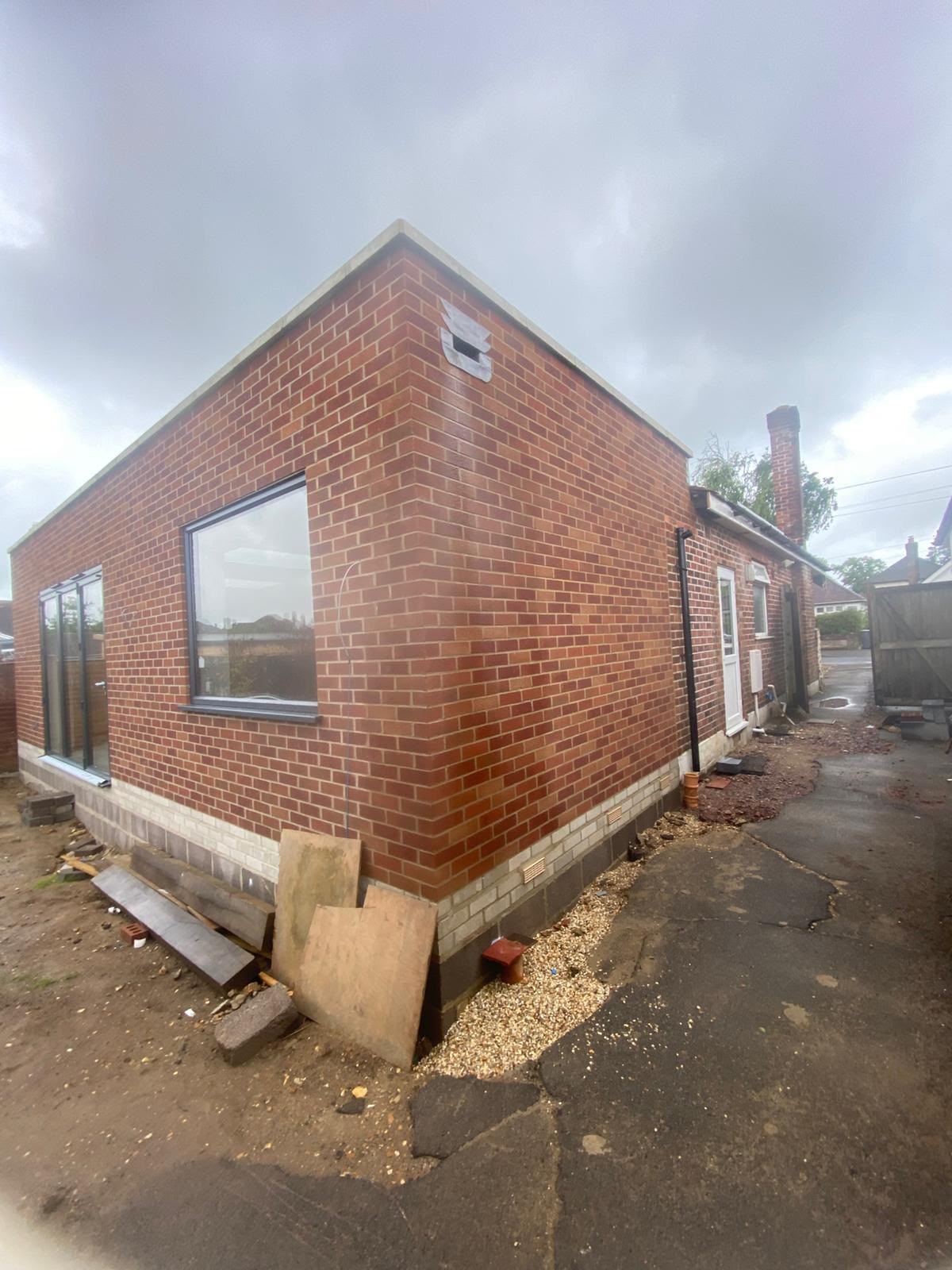
The quote is itemised: access, raking out, the mix, the area of each elevation, brick replacement and disposal on separate lines. On permission, repointing and repairing what is already there is maintenance, so no planning permission and no building control are involved. Bearwood has no conservation area of its own and only three listed buildings, and the council keeps the list if you want to check your own address. Building a new boundary wall, or rebuilding one higher than it was, is the case where you do need to look at the height rules for garden walls first. Building control comes back in where the structure changes, which here is usually a lintel over a new opening or a garage conversion.
Cost
What decides the price of a brickwork job
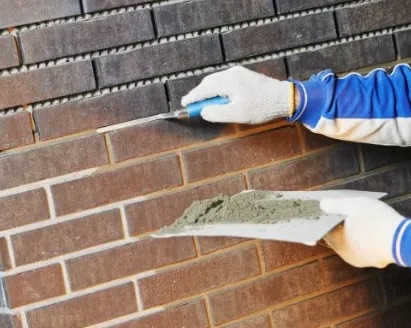
No rate per square metre. Until you have seen the joints the area means nothing. A mid terrace where every barrow goes round the block, a link detached with a garage tight to next door, and a front boundary wall you can park alongside are three different jobs before a brick is touched. A chimney or a gable wants a scaffold, and how long it stands is why work at height rules make access a priced line. Raking by hand is slow, and joint depth and spalled faces decide the hours. Ask how deep, by hand or disc, what mix, how many bricks, and whether scaffold is in.
If something has moved
Loose brickwork, or a wall that has shifted
Ring rather than use the form. Anything overhead or leaning goes to the front of the queue, and the first visit makes it safe before we price the permanent repair. Bearwood is a few minutes from us across Wallisdown, so a leaning wall or a stack with movement in it normally gets looked at the same day. The phone is answered 24 hours for emergencies; scheduled work runs Monday to Friday, 8am to 6pm.
The one local thing
The ground here moves, so watch where your water goes
The ground under this part of town is cohesive and it shrinks and swells with the seasons. In a dry summer it pulls away and settles, in a wet winter it takes water up and pushes back, and anything sat on a shallow footing goes along for the ride.
That is why the cracking we see in Bearwood is so often in the porch, the conservatory dwarf wall, the garage return or the garden wall rather than in the house itself: the house is on a deeper foundation and the add ons usually are not. A crack that opens in August and closes by February is telling you about the ground, not the brickwork, and pointing it up in summer just means it opens somewhere else.
The practical thing you can do about it is control where rainwater ends up. A downpipe running into a gully that has cracked, a soakaway put in too close to the house, or a drive that falls back towards the wall all keep one patch of ground wet while the rest dries out, and that difference is what moves a footing. Approved Document H is the standard for getting surface water away properly, and it is worth sorting before you pay anyone to repair a wall it is undermining.
Where we are rebuilding on this ground we dig deeper than the old footing, keep new planting away from it, and tell you honestly if the sensible answer is to watch the crack for a year first.
Who you are dealing with
A local firm you can check
We cover Bearwood, Kinson, Merley, Canford Magna, Wallisdown and the rest of BH11, and we are a short run from most of it. Bournemouth Roofing & Building Ltd, registered in England and Wales, company number 15471719, which you can look up in a minute. Thomas Hannen's business, and he is the one who comes out to price the job, not a salesman. A verified customer's 10 out of 10 on Checkatrade. The visit and the written quote are both free.
Questions
Bearwood questions we get asked
There is nothing old in Bearwood. Does that simplify the work?
It does. Not one dwelling in the Bearwood stock predates 1919, and the 1980s alone account for 34.6% of it, so almost everything we point here is cavity built with a cement based mortar and a bucket handle or weather struck joint. That means no lime argument, no breathability debate and no heritage consent. It also means the failures are modern ones: thin pointing over soft sand, sulphate attack on stacks, and ties that were skimped.
My terrace shares a wall. Do I need my neighbour's agreement?
For work on the party wall itself, yes, and with terraced housing at 28.9% of Bearwood it comes up often. Repointing your own outside face does not touch the party wall. Cutting into it, rebuilding a shared chimney breast or taking a stack down does, and that needs written notice to the adjoining owner under the party wall procedure. Bournemouth, Christchurch and Poole is the council, but this particular part sits between owners.
Why do the chimneys round here crack near the top?
Sulphate attack, usually. Flue gases and rain soak the inside of an unlined or poorly lined stack, the salts go after the cement mortar, and the joints expand on the sheltered side, which bows the stack towards the weather. On the 1980s housing in Bearwood the stacks went up quick and thin. From the ground, look for a stack that leans and for horizontal joint lines that have opened on one face only.
Drive water runs towards my house wall. Does it matter?
Yes it matters. The ground under Bearwood is freely draining, which sounds like good news until you follow where the water actually goes, which is often straight down beside a footing. It washes the fines out from under the foundation edge and the wall settles at that corner. Fitting a channel across the fall and running it to a proper outlet is a small job set against putting the settlement right afterwards.
You are close by. Can you look at a small job quickly?
Bearwood is about four miles from the yard, which is as close as we work, so a bowed garden wall or a patch of blown pointing is usually a couple of days rather than a couple of weeks. Thomas comes out, looks at it and leaves you with a written itemised quote at no charge. Small jobs near the base are the ones we can slot between bigger runs without dragging you along.
Nearby, and next door
Bricklaying and repointing near Bearwood
Bricklaying and repointing nearby
Our other trades in Bearwood
Everything we do in Broadstone Bricklaying and repointing, all areas Every area we cover
Free quote
Find out what that crack actually is
A free site visit, photographs of what we find, and an itemised written quote for the work that is genuinely needed.