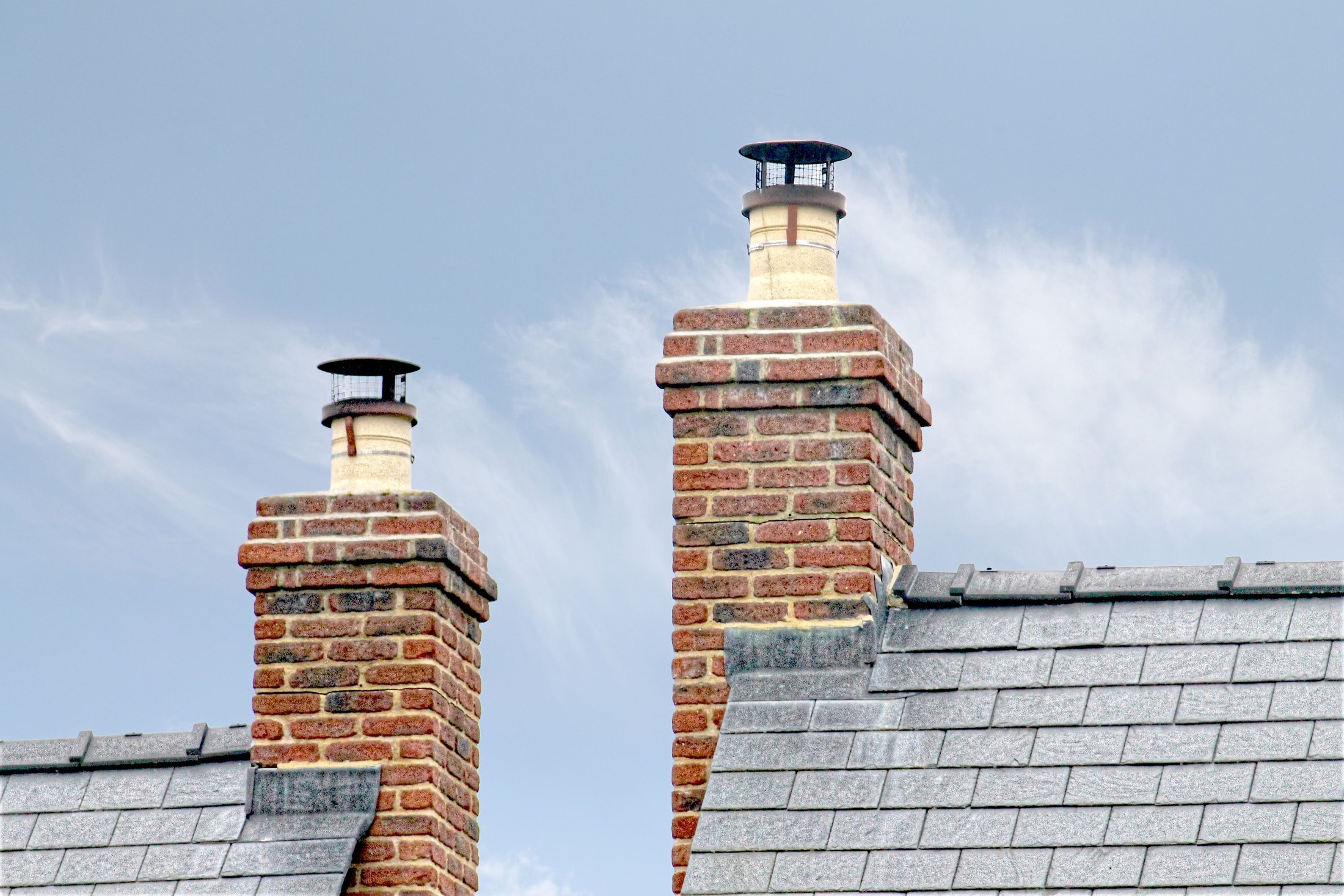
Roofing in Bearwood
Repairs, dry ridge and verge, full re-roofs, flat roofs and leadwork across the BH11 estates. A free site visit and an itemised written quote.
The site visit is free and so is the written itemised quote. Thomas Hannen prices every job himself.
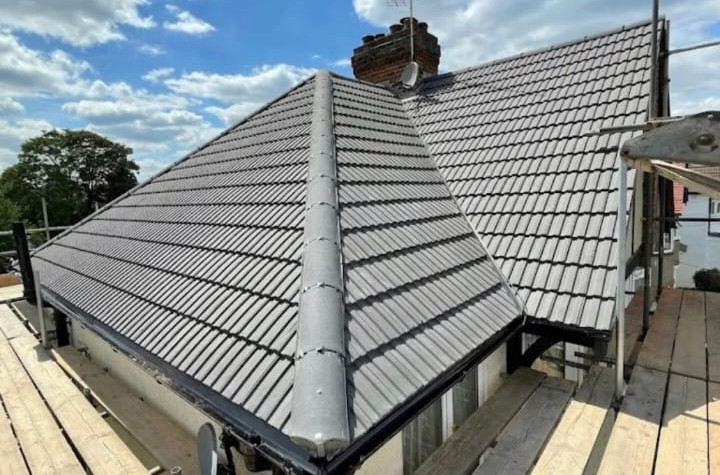
Bearwood is post-war and 1980s stock almost end to end, so what is over your head is very likely concrete interlocking tile. On a roof that age the tile outlasts the nails, the felt and the mortar under the ridge, which is why most jobs here are fixings and edges rather than a new roof.
People ring us for three things: a tile off after a blow, a stain spreading across a bedroom ceiling, or a gutter that has run down the wall all winter. Bearwood is a compact set of estates between Kinson and Bear Cross, cul-de-sacs of terraced and detached houses put up from the 1950s through to the late 1980s, with garages, porches and rear extensions added since.
Nothing is old enough to want lime and almost nothing is listed, so the diagnosis is simpler than it is out in the villages. The free site visit surveys the whole roof rather than the corner you rang about: we get on it, put a torch through the loft hatch and photograph what we find. About four miles from us.
The work
A torch through the hatch shows you the torn felt
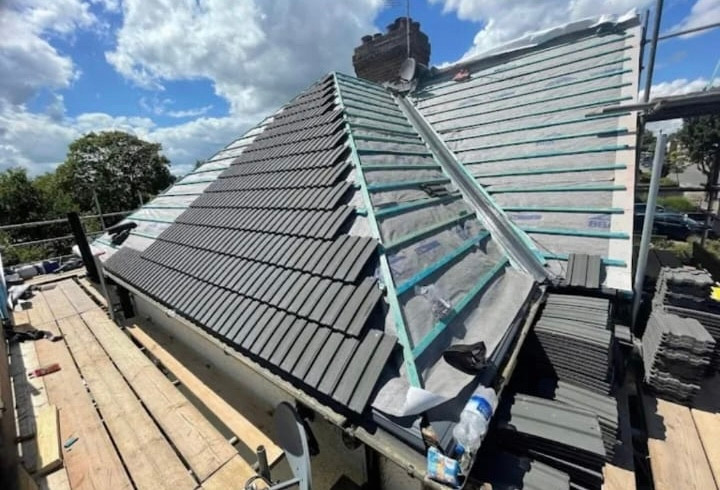
A torch through the hatch shows you the torn felt. Under the tiles on a house of this vintage sits bitumen felt, and by now it has sagged into troughs between the rafters and torn where it laps into the gutter. That tear is the usual cause of a wet fascia and a stained ceiling here, and you can often see it from the loft hatch with a torch. Soft batten ends and a damp rafter foot tell the same story.
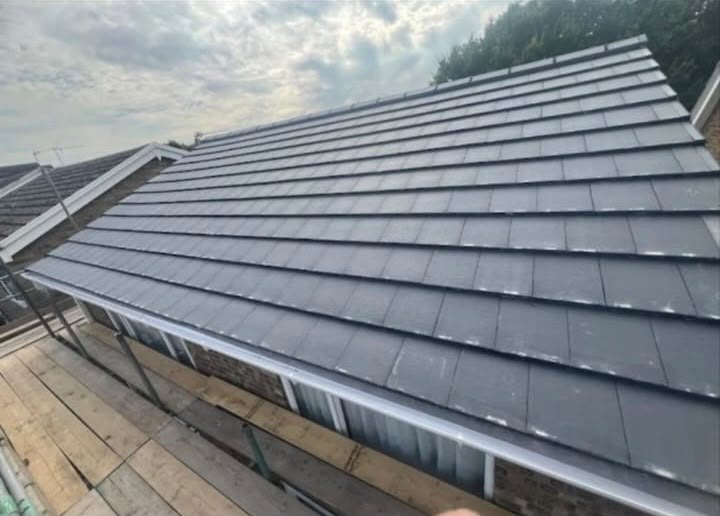
Slipped, cracked and missing tiles. The commonest call here by a distance. On a concrete interlocking tile roof of this age the tile is rarely the problem: the nails holding the perimeter courses have rusted thin, or a clip has let go, and the covering starts to creep. We fit a matched tile, re-fix the ones either side and chase the reason rather than the symptom. Storm damage after a south westerly tends to turn up along the same two or three courses.
Everything built here before the late 1980s has ridge and hip tiles bedded in mortar and a gable verge pointed in the same stuff. The bedding cracks, frost gets in, and a ridge that rocks under your hand will go in a gale. We convert to a dry ridge and dry verge system screwed onto a ventilated roll, the mechanical fixing BS 5534 expects, which vents the roof space along the ridge at the same time. Dry fixed edges are priced by the metre.
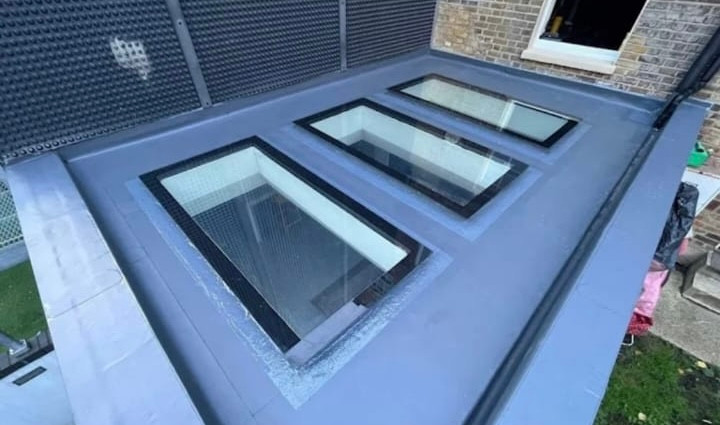
When nails, battens and felt have gone together, patching stops being worth the money. The covering comes off, soft timber is cut out, and it goes back on breathable membrane and treated battens with a matched concrete tile. Nearly every house on these estates has a flat roof over the garage or extension, in felt, GRP fibreglass or EPDM rubber, and we look at the deck first, because a new membrane over a soft deck is money thrown away.
Chimney flashings, soakers, the valley between two roof planes and the abutment where a rear extension meets the house wall go in code rated lead cut so it can move. The uPVC rainwater goods fitted across these streets in the 1990s are often on their second set of brackets, and clearing the moss and debris out of them heads off the rotted fascia below. With the covering off, insulation and eaves ventilation are far cheaper to sort, and Approved Document L sets the standard a renovated roof is expected to reach.
How it runs
From your call to a written price
One team throughout, one number to ring, and an itemised written price. What turns up on the strip is photographed and priced before it is done.
On permission the answer here is short. No conservation area over Bearwood and only three listed entries, so a like for like re-cover, a repair, new rainwater goods and rooflights all sit inside ordinary householder permitted development, with nothing to apply for, as long as nothing stands more than 150mm above the roof plane. Planning Portal guidance sets out the limits. Building control comes into it for a dormer, or if you renew more than a quarter of a slope. Bournemouth, Christchurch and Poole Council for both.
Cost
What decides the price of a roof
No rate per square metre: the area is the easiest thing to measure and the least useful thing to know. The estate streets here are kind to a scaffold, with a drive or a verge to stand it on and two storey roofs with simple shapes and no parapets. How long it stands matters as much as its size, and the work at height rules are why the platform is a priced line.
Chimneys, valleys and abutments are priced one at a time. Ask whether the scaffold is in the price, whether battens and membrane are renewed or covered over, and who pays for the skip.
If it is leaking now
Water coming in today
Ring rather than use the form. Anything letting water in goes to the front of the queue, and the first visit makes it safe rather than prices it. Water tracking across a ceiling here is more often the eaves or the gutter than the middle of the slope, so look at the downpipe and tell us what it is doing. The phone is answered 24 hours for emergencies; scheduled work runs Monday to Friday, 8am to 6pm.
Worth knowing
Where the roof water ends up matters here
The ground under Bearwood is cohesive and it moves with the weather. It swells when wet and shrinks back when it dries, which makes where your rainwater goes a structural question and not only a damp one. A downpipe discharging onto the border beside the house, or a silted gully that backs up against the wall, keeps one strip of ground wet all winter while the rest dries out in summer. Approved Document H is why a downpipe should reach a proper outfall rather than a flowerbed.
So we follow the water the whole way down: the fall on the gutter, the joints, the shoe at the bottom of the downpipe and the gully it discharges into. Cheapest part of a roof to put right, and the part most often skipped. Where a drive has been block paved since the house was built, the original gully is sometimes buried under it.
Who you are dealing with
A local firm you can check
Four miles from us and inside BH11, which we are in most weeks, along with Kinson, Bear Cross, Merley and Broadstone. Bournemouth, Christchurch and Poole Council for planning and building control. Bournemouth Roofing & Building Ltd, registered in England and Wales, company number 15471719, which you can look up in a minute. Thomas Hannen's business, and he is the one who comes out to price the job, not a salesman. A verified customer's 10 out of 10 on Checkatrade. The visit and the written quote are both free.
Questions
Bearwood questions we get asked
There is nothing old in Bearwood. Does that make it easier?
It makes it predictable. Not one dwelling in Bearwood predates 1919 and the 1980s alone account for over a third of the estate, so we are almost always looking at interlocking concrete tiles, softwood battens and mortar bedded ridges of a known age rather than a patchwork of repairs. That means the survey is quick and the quote is firm. It also means most of these roofs are reaching the same stage together.
Can I swap the concrete tiles for something lighter?
Sometimes, and the rafters decide it. The interlocking concrete tile that went on most Bearwood roofs is heavy, so dropping to a lighter covering is rarely a structural problem while going heavier can be. What changes is batten gauge, the fixing pattern and often the ridge and verge details. Thomas Hannen measures the rafter size and spacing in the loft before he puts a covering on the quote.
You are only a few miles away. How soon for a leak?
Bearwood is about four miles from the yard, which is close enough to look the same day in most weeks. A leak call gets a temporary fix first, usually a tarpaulin or a slipped tile refixed, so the ceiling stops taking water while the real job is priced properly. Chasing a leak in the wet is guesswork. We come back in dry weather to find where it actually enters.
The tiles are 1980s. Repair or start again?
Repair, until the battens say otherwise. A roof of that age in Bearwood normally has forty years left in the tiles and none in the mortar at the ridge and verge, so a dry fixed ridge, new verge and a handful of replacement clips will see it a long way. When the battens crumble under a nail, or the felt has torn back off the eaves across the whole slope, the sums change.
Does the council need to know about a re-cover here?
Not for a like for like job. Bearwood sits in the Bournemouth, Christchurch and Poole area with no conservation area over it and just three listed entries in total, so re-covering is permitted development for almost everyone here. Building control comes into it if more than a quarter of the roof area is renewed, because insulation and structure then have to meet current standards. We handle that notification.
Nearby, and next door
Roofing near Bearwood
Roofing nearby
Our other trades in Bearwood
Roofing guides
Concrete vs clay roof tiles: which is right? Planning, building regs or listed building consent Storm damage to a roof: the first 24 hoursEverything we do in Broadstone Roofing, all areas Every area we cover
Free quote
Get a straight answer on your Bearwood roof
Tell us the street and what the roof is doing. We come out, look properly, and put a price in writing.