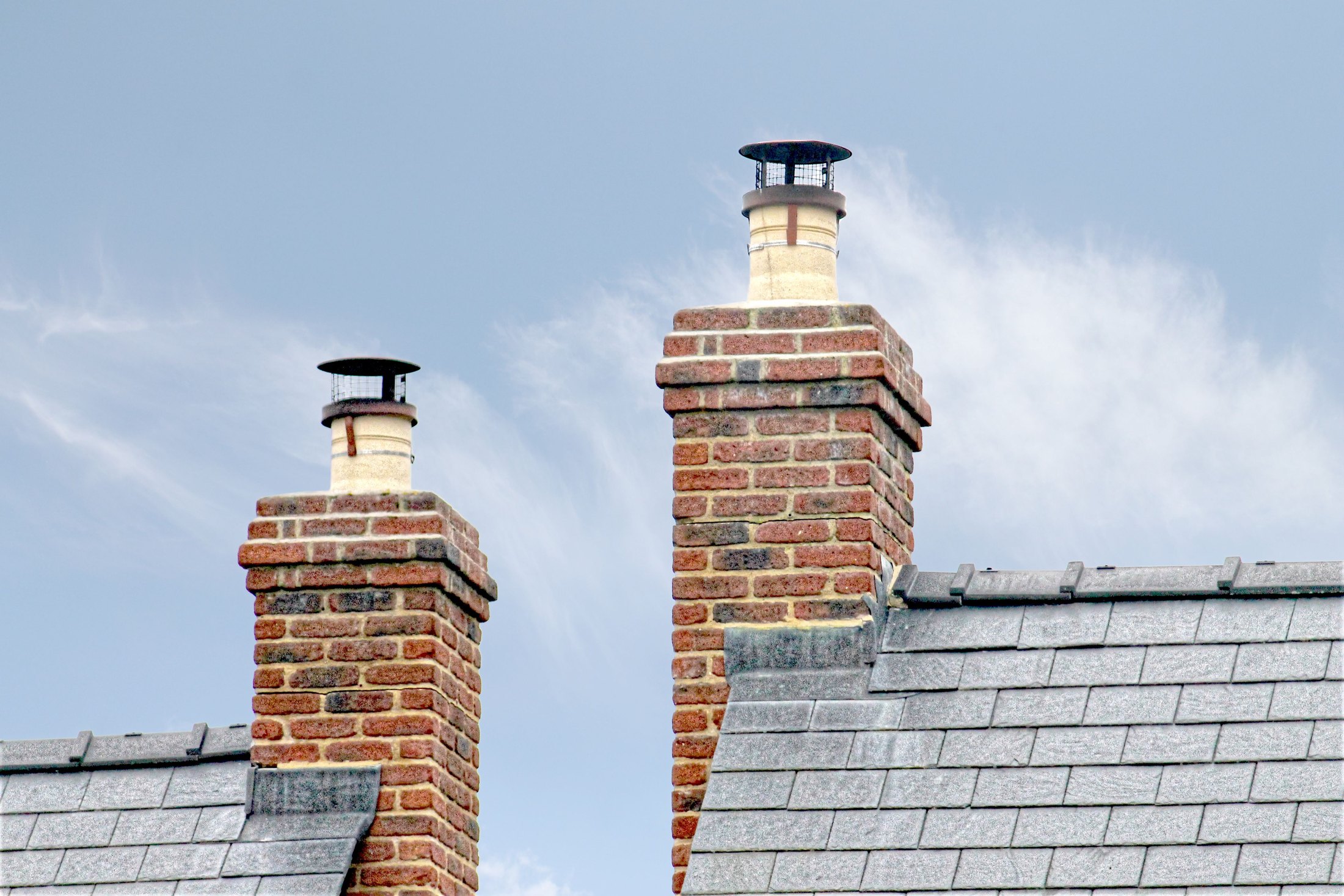
Roofing in Longham
Roof repairs, dry ridge and verge, re-covering, flat roofs, leadwork and gutter work across Longham, Hampreston and the BH22 addresses.
The site visit is free and so is the written itemised quote. Thomas Hannen prices every job himself.
Last updated
Most Longham roofs are the same age as each other, and what fails on them first is the mortar at the ridge, hips and verges rather than the covering. That is edge work, and it is a different job and a different price from a new roof.
On a Longham roof the first trouble is usually at an edge or on a ceiling. There is mortar on the drive and a ridge or verge tile has started to rock. Or a stain has appeared on a bedroom ceiling and somebody has already told you the whole roof needs doing. Both are worth having looked at properly, because on this stock they are usually the same underlying thing and only one of them needs a scaffold. If the stain is actually dripping now, ring 07435 839745 and we will talk you through keeping the bedroom dry.
The visit is straightforward. Somebody gets up there, lifts a tile, looks at the eaves, then goes into the loft with a torch and comes down with photographs. You are told plainly whether this is a fixing job, a run of edge work, or a covering that has done its time. Neither the visit nor the written itemised quote costs you anything.
The work
Every hip is a run of mortar sat in the weather
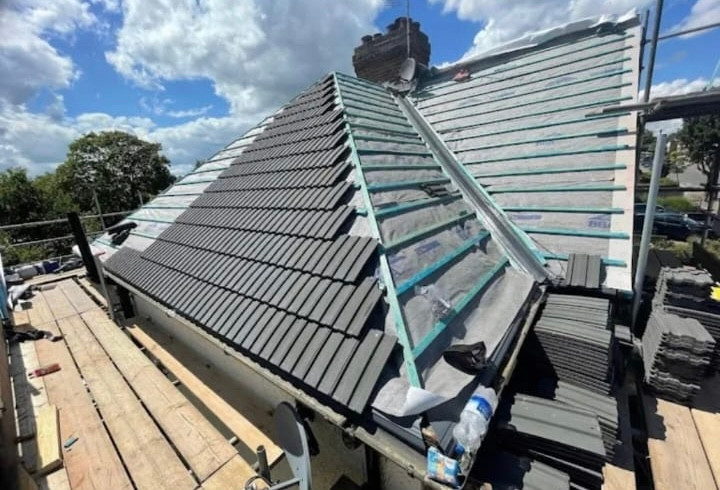
Every hip is a run of mortar sat in the weather. On this stock the edges are the weak point. More than a third of the dwellings are bungalows, which means the same floor area with roughly twice the roof and far more ridge, hip and verge per house, and every one of those runs is mortar bedding that has sat in the weather since the house went up.
Once it cracks the tiles start to move and you find the mortar on the path. We take the old bedding off and refit ridge, hips and verges dry, screwed down over a ventilated roll. That is the mechanical fixing BS 5534 asks for, it opens a ventilation path along the ridge, and there is nothing left to re-bed later. Six in ten dwellings went up between 1945 and 1982, most in the late sixties and early seventies, so nearly everything in Longham is concrete tile, most of it interlocking.
Interlocking concrete outlasts the nails and clips holding it down, so what has failed is a fixing or a junction, not the tile. Rusted nails, batten ends gone soft and underlay that comes apart in your hand are what finishes a roof, and together they make patching money thrown away: the covering comes off, rotten rafter feet are cut out, and the slope is relaid over breathable membrane on treated battens in a tile matched to the street. On these roofs you are more often not there yet, and we say so. Chimney flashings, soakers, valleys and abutments go in code rated lead, and on this stock the usual leak is the valley between two hips or where an extension meets the original roof.
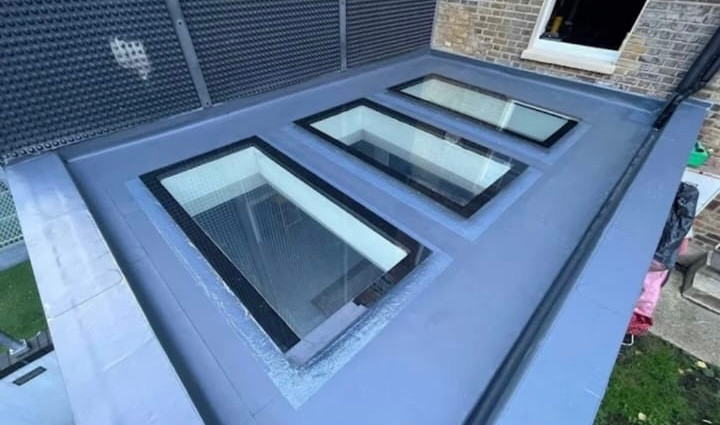
Where the water goes. On a wide, low roof like these, plenty of apparent roof leaks are really guttering: a run overflowing at the back, or a downpipe emptying onto nothing. Where that water finishes up matters here, because the ground is cohesive and changes volume with how wet it is, so a downpipe discharging beside a wall is a structural question and not simply a damp one. Approved Document H is the standard for taking it away properly. The attached garage, rear extension and porch are felt, GRP fibreglass or EPDM rubber, and on a single storey house the flat roof runs into the main slope rather than up a wall, which is where they give up, so the deck and that junction come first. With the slope open and the platform already paid for, insulation and eaves ventilation cost a fraction of the same work as its own visit, and Approved Document L is the standard a renovated roof must meet.
How it runs
How a roof job goes here, from your call to the clear-up
A Longham roof job starts with Thomas on your drive. He prices every roof himself, and on the late sixties and early seventies roofs that fill Longham he looks hardest at the edges: the ridge, the hips and the verges. Roofs of that age, many of them over bungalows, tend to let go there first, so the honest answer is often edge work, not a new roof.
His written quote splits the job into its real parts. Scaffold or tower. Stripping. New battens. Underlay or a breathable membrane. Tiles. Ridge and hip work. Lead flashing. Skip and waste. Your roof is one job with one company, from the first tile off to the last one on. Detached plots in Longham usually have room at the side, so a bungalow gets a short run of scaffold or a tower. Broken tiles and old mortar are bagged daily, and our debris is lifted out of your gutters before we leave.
A soft rafter foot or a perished batten run only shows once tiles are up. If we find one, you get a photo of it and a price, and it waits for your yes. With no conservation area here, a repair, a like for like re-cover, rainwater goods or rooflights on an unlisted house are permitted development, though re-covering most of a roof still goes through building control, inside the limits in Planning Portal guidance. The parish's thirteen listed entries need consent from Dorset Council for any work, and the Green Belt only bites on extensions.
Cost
What moves the price on a bungalow or a detached roof
The shape of the roof matters. About a third of homes in Longham are bungalows. A bungalow puts the same floor area under a bigger roof, with more ridge, hip and verge for every room below it. That edge work is slow, careful labour, so a hipped bungalow can take longer than a plain two storey gable with the same footprint.
Getting up there. Single storey eaves need less scaffold, and the edge and rainwater work can often come off a tower. A two storey detached house wants a proper platform along the elevation, which is its own line because the HSE rules on roofwork demand edge protection. How long it stands matters as much as its size.
What is under the tiles. Roofs of this age often still have the original bitumen felt, sagging between the rafters and brittle at the eaves, over battens that have had decades of damp. Whether the battens and membrane are renewed, or the tiles are relaid on the old ones, is the biggest difference between two quotes.
Ridge and hips. Mortar bedded ridge and hip tiles from that era crack and wash out. Rebedding them is one price. Changing to a dry ridge and dry hip system with mechanical fixings is another, and it is the direction the code of practice for slating and tiling points in.
Before you sign anyone's quote, ask about the parts that are easy to leave out. Are the battens and membrane new, or are the tiles going back on the old ones? Is the scaffold in the figure? And who takes the old tiles away?
If it is leaking now
Tiles on the drive or a wet patch on the ceiling
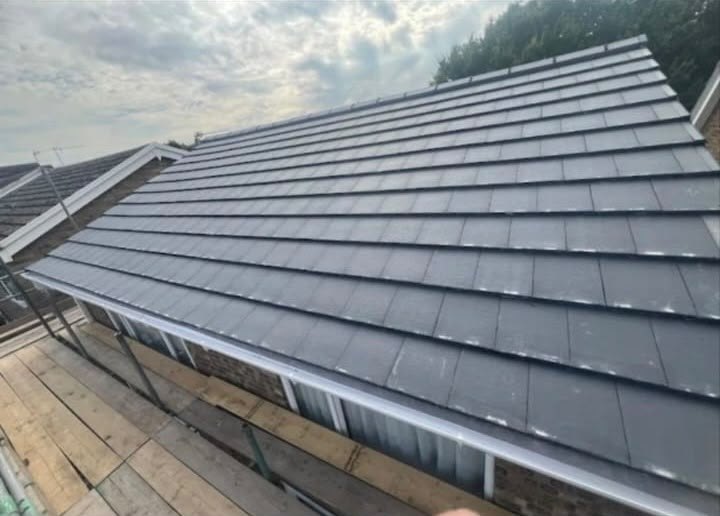
If water is coming in, ring us rather than filling in the form. Put a bucket under the drip and move anything electrical. Then have a look outside. On a bungalow here the usual culprit is a hip or ridge tile that has lost its bedding, so check the drive and the lawn for broken mortar or a fallen tile.
With a torch in the loft, look for daylight and dark, wet timber, and tell us where you found it. The first visit is about making the roof safe and watertight, with a temporary cover or refixed tiles, and the proper repair is priced after. Scheduled work runs Monday to Friday, 8am to 6pm. If nobody picks up, we ring back as soon as we can.
Worth knowing
These roofs all went on within a few years of each other
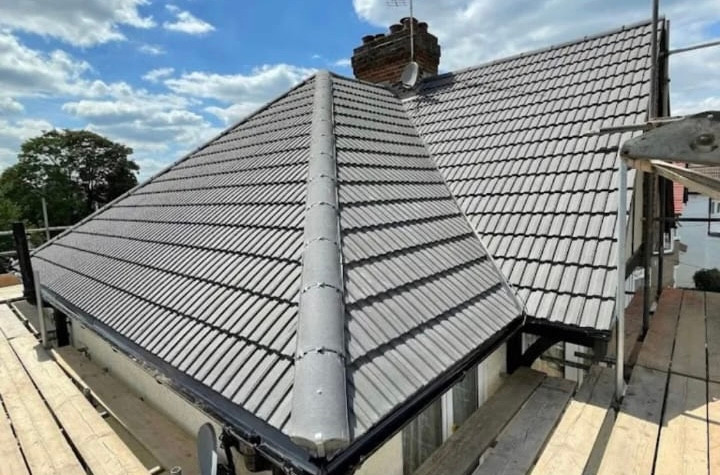
Six in ten homes in Longham were built between 1945 and 1982, and the peak was the late 1960s and early 1970s. That is one cohort of roofs, laid to the same detail, within a few years of each other, and it is the single most useful thing to know before you spend anything.
That has consequences in Longham. The roofs reach the end of their bedding mortar together, which is why scaffolds appear along one road in the same couple of summers and why your neighbour's roof is a fair preview of yours. And what has gone is almost always the mortar at the edges, not the tile.
So when someone quotes you a full re-cover on a roof that is dropping mortar, ask them what they found in the loft. If the battens are sound and the underlay is not tearing, dry fixing the ridge, hips and verges is the job, and it costs a fraction of a re-cover because it needs a fraction of the work. If all you have is one rocking hip tile, a single valley letting in rain or a drip under the garage roof, our page on roof repairs in Longham takes each of those faults on its own.
Who you are dealing with
Thomas Hannen's firm, a short drive from Longham
Longham is 4.7 miles up the road from our base in Boscombe. We cover the village along the Ringwood Road and Ham Lane, and the BH22 roads either side towards Ferndown, Hampreston and West Parley. Dorset Council handles planning and building control here.
The firm is Bournemouth Roofing & Building Ltd, registered in England and Wales, company number 15471719. It is Thomas Hannen's business, and Thomas comes out and prices your roof himself. On Checkatrade, one verified customer has given us 10 out of 10. The site visit costs nothing, and neither does the written, itemised quote. Before you book a visit in Longham, you can read our customers' Google reviews, word for word, on our reviews page.
Planning at a glance
Do you need planning permission in Longham?
Most repairs in Longham need no application at all. What decides whether a change to the outside of your house does is who the council is, whether a conservation area or a listing applies, and whether the place sits in a protected landscape.
| Question | In Longham |
|---|---|
| Who decides | Dorset Council is the planning authority for Longham. Dorset Council's heritage pages set out what it controls. |
| Conservation area | None covers Longham, so a like-for-like repair is ordinary maintenance. |
| Listed buildings | Yes, there are listed buildings in and around Longham. If yours is one, work can need listed building consent. |
| Protected landscape | No National Park or National Landscape covers Longham. |
Questions
Questions about roofing in Longham
Why is a bungalow roof a bigger job than it looks?
Because a bungalow carries roughly twice the roof of a two storey house with the same floor area, and far more ridge, hip and verge for each household. Longham is bungalow country at 36.3 per cent, so the typical roof here is wide and low with a very long perimeter. The scaffold is lower and quicker to erect, which helps, and while we are in the loft it is the easiest house type to get insulation right in.
Why do whole streets in Longham need the same repair?
Sixty per cent of Longham was built between 1945 and 1982 and the late 1960s and early 1970s alone account for 28.1 per cent, so these roofs went on within a season or two of each other and the bedding reaches the end of its life at much the same time. Cracked mortar at the ridge lets water into the joint and then into the loft. It is edge work, not a new roof, whatever the neighbours have had done.
The soakaway floods every winter. Is that our gutters?
It might be the volume rather than the soakaway. Ground around Longham is cohesive with a significant shrink and swell rating, which means it takes water slowly and moves as it does, so a soakaway coping easily in September can be beaten in January. A wide bungalow roof also sheds a great deal of water into very few outlets. We check gutter sizes and the number of downpipes as part of the survey, because that is frequently the real fault.
Can you sort the loft while the roof is open?
While the covering is off, yes, and it is the sensible time. On a bungalow the loft is a large open area under a low roof, so getting the insulation right returns more than it does on a house, and with the tiles off we can see the ceiling joists and every gap in the run. It has to be done without choking the ventilation at the eaves, or you trade a cold loft for a damp one. Ask for it as a separate line.
You are only up the road. Does that speed things up?
It helps with the things that normally hold a job up. Longham is 4.7 miles from our base, so a forgotten fixing or an extra length of batten is a half hour round trip instead of a lost day, and we can get back out to look at something without booking it a week ahead. What it does not change is the weather or what turns up under the felt. Rotten rafter feet still mean timber work before any tile goes back.
Nearby, and next door
Roofing near Longham
Nearby places we also cover for roofing, with straight-line distances from Longham, and the other trades we offer in Longham itself.
Roofing nearby
Our other trades in Longham
Roofing guides
Concrete vs clay roof tiles: which is right? Planning, building regs or listed building consent Storm damage to a roof: the first 24 hoursEverything we do in Kinson Roofing, all areas Every area we cover
Free quote
Get a written price for your Longham roof
Free site visit, free written itemised quote, and we will tell you honestly whether edge work will do.