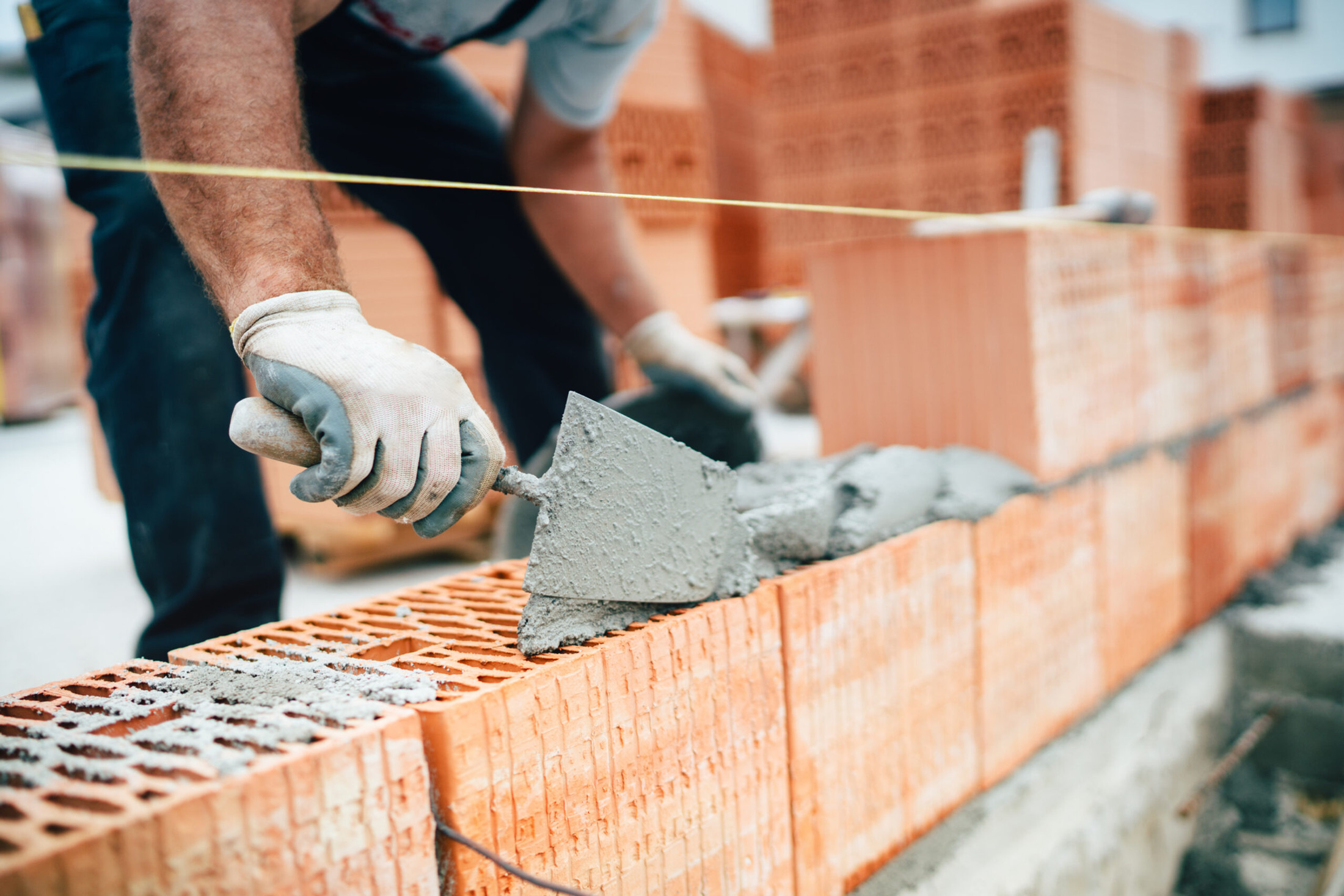
Bricklaying in Parkstone
Leaning front walls, loose chimney stacks, cracked brickwork and new garden walls, rebuilt in brick and mortar that match the house.
The site visit is free and so is the written itemised quote. Thomas Hannen prices every job himself.
Last updated
Bricklaying in Parkstone
Front walls, stacks and the crack over the bay
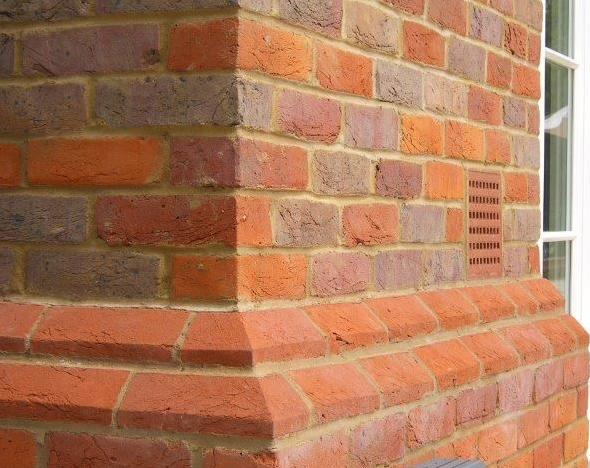
Most brickwork in Parkstone needs repairing, not rebuilding. A leaning front wall, a loose chimney stack or a crack over a window can usually be taken down and rebuilt in part, in brick and mortar that match what is there.
Parkstone brickwork needs a builder for a leaning front wall, a loose stack, a crack over a bay or new building work. The low front wall of a Victorian house near Ashley Cross has started to lean towards the pavement. Bricks have come loose at the top of a chimney. A stepped crack has opened above a bay window on a house up towards Ashley Road. Or you want a new garden wall, gate piers or a small extension built properly.
We look at the wall, find out why it has moved before we price the repair, and write it all down with photographs. The site visit is free.
The work
Brickwork we take on in Parkstone
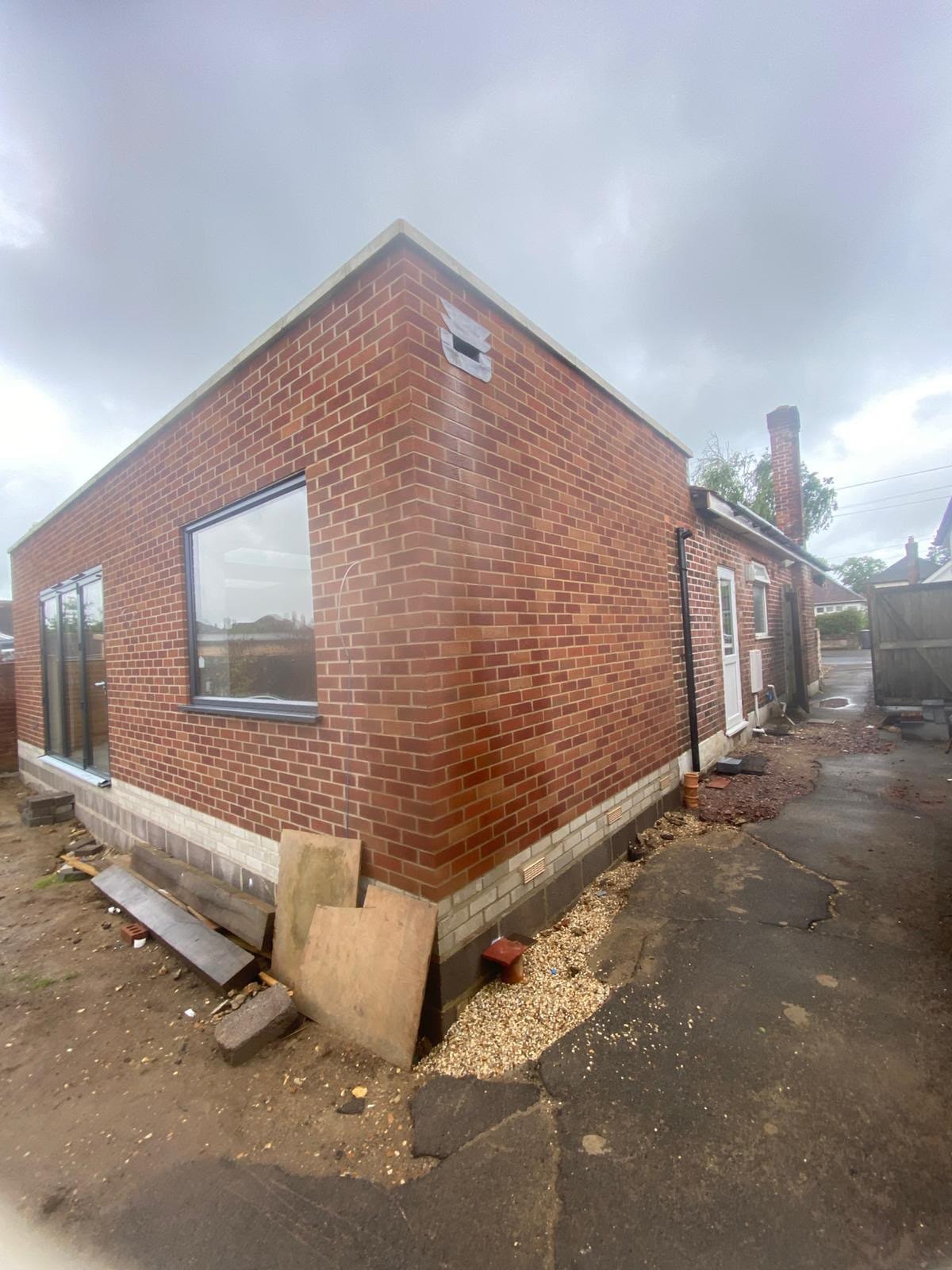
Front and garden walls. Many older streets have shallow front gardens behind a low brick wall with a coping on top. Roots, a failed coping and years of frost push them out of line.
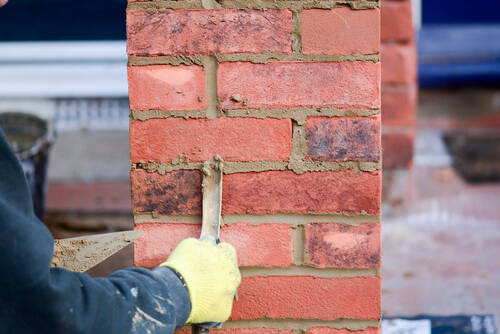
We take the leaning section down to sound footing, clean and reuse the good bricks, make up the rest with reclaimed brick of the same size and colour, and rebuild it in the original bond with a proper coping so rain runs off rather than soaking in. Gate piers get the same.
Chimney stacks. Parkstone's older houses have large chimneys, and the top few courses take the worst of the weather. Loose brickwork is taken down and rebuilt to the same height and detail, the pots reset, and the flaunching on top renewed. We check the lead flashing at the same time, because that is where the stack meets the roof.
Cracks and lintels. A crack that follows the joints over a bay or window is often a failed lintel or an arch that has dropped. We cut out the cracked brickwork, fit a new lintel where one is needed and rebuild above it, matching the face. We tell you if the crack points to a footing or foundation problem that needs an engineer first.
Cavity walls. On the inter-war and post-war semis in Parkstone the walls are usually cavity built. Horizontal cracks every few courses can mean rusting wall ties; we check, and replace ties where they have failed. We also look for anything bridging the damp proof course, such as a raised path or a heap of soil.
New brickwork. Garden walls, piers, small extensions and porches, built in brick and blockwork on proper footings, with a DPC, cavity and ties where the wall needs them, and to building control where they apply.
Pointing. Where only the joints have gone and the bricks are sound, you do not need a bricklayer, you need the wall repointed. That is on our repointing in Parkstone page.
When would we talk you out of a rebuild? When a wall is out of line but stable and the bricks are sound. Then we say so.
How it runs
From your call to a written price
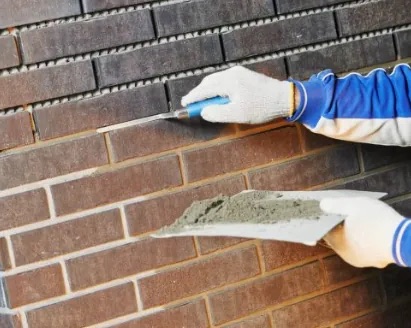
One person to ring from the first visit to the last. The quote is itemised, not a figure on the back of a card: access, raking out, the mortar mix, the area of each elevation, any brick replacement and disposal on separate lines, so you can compare it properly against anyone else's.
Nothing on a Parkstone job is left open or unusable overnight. The site is swept at the end of each day rather than the end of the job, and what comes out leaves with us. If something turns up once we start that nobody could have seen, you get a photograph and a price before we carry on.
Repairs in matching brick and mortar are maintenance. A new wall over a certain height by a road, or an extension, may need planning permission and building control, and work on a shared wall can fall under the Party Wall Act. Ashley Cross is a conservation area and the council keeps the list, so removing a front wall or a chimney there is worth checking first.
Cost
What decides the price of a brickwork job
No rate per square metre, because the metre of wall tells you almost nothing until you know what the joints are like.
Getting to it. A front wall on the pavement in Lower Parkstone, a stack on an Upper Parkstone terrace and a garden wall behind a 1930s semi are three very different jobs to reach. A chimney or a gable wants a scaffold, a garden wall wants nothing. How long the platform stands matters as much as its size, and the work at height rules are why it is a priced line rather than an optional extra.
The joints, not the wall. Raking out by hand is slow and is the only safe way on soft old brick. How deep the joints have to come out, and whether the brick faces have already spalled, decides the hours more than the area does.
The mix, and matching. Matching an existing mortar for colour, texture and strength takes trial panels. Matching a brick means sourcing it. Neither is a line most quotes make visible, and both are why two prices for the same wall can be so far apart.
Comparing quotes? Ask how deep the joints are being raked and by hand or by disc, what the mortar mix is and whether it has been matched, how many bricks are being replaced, and whether the scaffold is included. Quotes for one wall can describe very different jobs.
If something has moved
Loose brickwork, or a wall that has shifted
Ring rather than use the form. Anything overhead or leaning goes to the front of the queue: a chimney with movement in it, a parapet, a garden wall pushed out by roots or a vehicle.
The first visit is about making it safe and stable, and we quote the permanent repair once we can see how far the movement goes. On the older Parkstone houses, loose bricks at the top of a stack are the ones to worry about, because they are above a path or a pavement. Scheduled work runs Monday to Friday, 8am to 6pm. For anything urgent, ring rather than use the form, and if we cannot pick up we ring you back as soon as we can.
Worth knowing
The older walls here are solid, and that changes the mortar
A lot of Parkstone's housing was built before 1919, from the villas around Ashley Cross to the smaller artisan terraces up the hill. Those walls are solid brick, with no cavity, built in a soft lime mortar. They stay dry by letting damp out through the joints. The mortar is meant to be the weak, sacrificial part of the wall.
Rebuild a section of that wall in hard cement mortar and the moisture has to leave through the brick face instead, which then spalls in the frost. Cement patches next to crumbling brick are the sign this has already happened. So on a pre-1919 wall ask what mortar is going in. We rebuild in a lime mortar matched for strength and colour, and put a sample panel up first where it will show.
Who you are dealing with
A local firm you can check
We cover the whole of Parkstone, from Ashley Road and Heatherlands on the higher ground down to Ashley Cross and Penn Hill, across BH12 and BH14, under BCP Council.
You are dealing with Bournemouth Roofing & Building, the trading name of Bournemouth Roofing & Building Ltd, registered in England and Wales, company number 15471719, which you can look up in a minute. Thomas Hannen's business, and he is the one who comes out to price the job, not a salesman. A verified customer's 10 out of 10 on Checkatrade. The visit and the written quote are both free. Before you book a visit in Parkstone, you can read our customers' Google reviews, word for word, on our reviews page.
Planning at a glance
Do you need planning permission in Parkstone?
Most repairs in Parkstone need no application at all. What decides whether a change to the outside of your house does is who the council is, whether a conservation area or a listing applies, and whether the place sits in a protected landscape.
| Question | In Parkstone |
|---|---|
| Who decides | BCP Council is the planning authority for Parkstone. BCP Council's heritage pages set out what it controls. |
| Conservation area | Yes: Ashley Cross Conservation Area. Check whether your street is inside the boundary before changing anything visible. |
| Listed buildings | Yes, there are listed buildings in and around Parkstone. If yours is one, work can need listed building consent. |
| Protected landscape | No National Park or National Landscape covers Parkstone. |
Questions
Questions about bricklaying in Parkstone
Can you match the bricks on our old front wall?
Usually, by reusing the sound bricks and making up the rest with reclaimed brick of the same size and colour. We show you a sample before we build, and we match the mortar colour too.
Is a crack over my bay window serious?
Often it is a lintel or arch that has dropped, which we can repair. If the crack is wide, getting wider, or runs through the bricks, not the joints, it may be a footing problem, and we tell you to get an engineer first.
How long does it take to rebuild a front wall?
A typical short front wall is two or three working days, depending on the length, how much comes down, and how long the lime mortar needs in cold weather.
Do you work on brickwork in winter?
Yes, but not in frost. Fresh mortar, especially lime, must not freeze while it sets, so we plan exposed work for milder days and protect it overnight.
Nearby, and next door
Bricklaying near Parkstone
Nearby places we also cover for bricklaying, with straight-line distances from Parkstone, and the other trades we offer in Parkstone itself.
Bricklaying nearby
Our other trades in Parkstone
Brickwork and repointing guides
Lime or cement mortar: which do you need? Single storey extension: planning and building regs Subsidence cracks: which ones matterEverything we do in Parkstone Bricklaying, all areas Every area we cover
Free quote
Find out what your wall actually needs
A free visit, a straight answer on repair or rebuild, and a written quote with each part on its own line.