Flat roofing in Parkstone
Back additions on Victorian terraces, garages behind 1930s semis, dormers and roofs over the Ashley Road shops, re-covered in EPDM, GRP or felt.
The site visit is free and so is the written itemised quote. Thomas Hannen prices every job himself.
Last updated
Flat roofing in Parkstone
Back additions, dormers and the roof over the shop
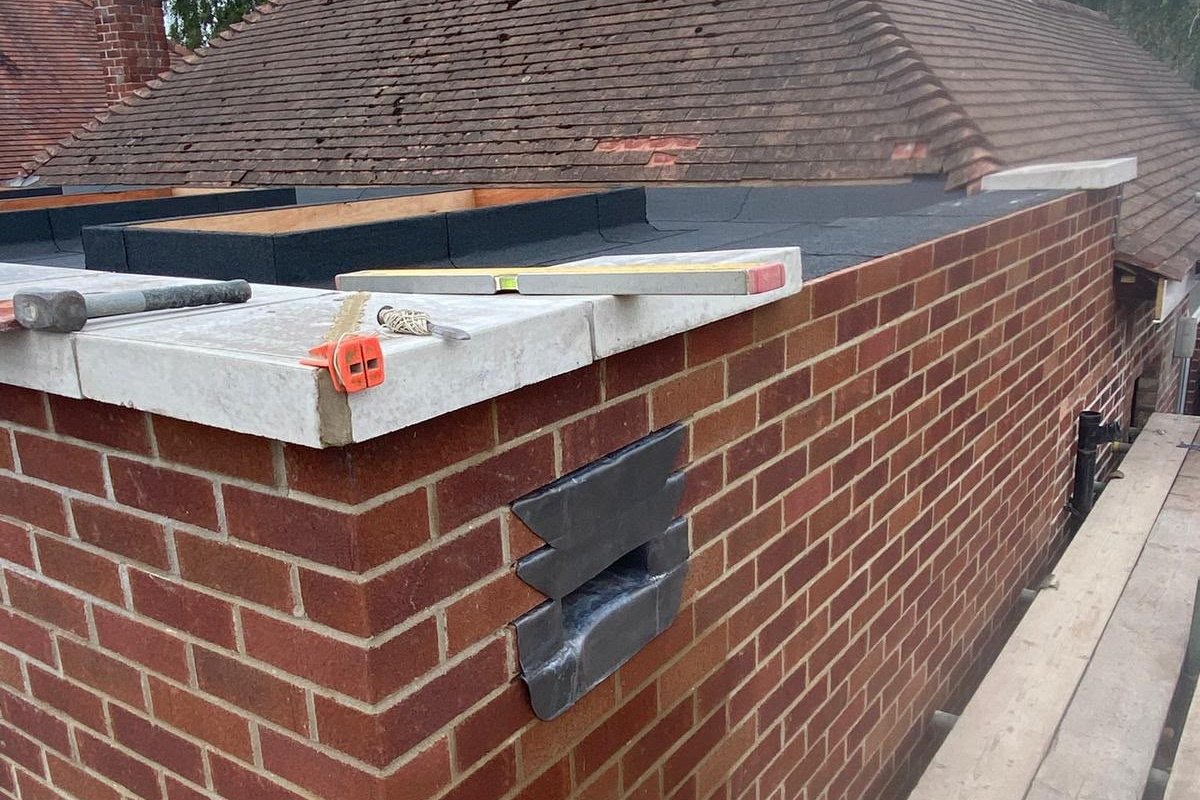
A flat roof in Parkstone that has split, blistered or started holding water is usually a re-cover, not a rebuild. What decides it is the deck under the covering, so we open a small area and look before we price anything.
A leaking flat roof in Parkstone announces itself in a familiar way. A stain is spreading on the kitchen ceiling under the back addition of a Victorian terrace. The felt on a garage behind an Upper Parkstone semi has lifted along the edge. Or a puddle sits on the dormer for days after rain. If water is dripping into a room right now, ring 07435 839745, put a bucket under it and tell us which roof it is under.
None of that can be judged from a bedroom window. We get up there, lift the covering at the worst corner, photograph the deck and show you, then write a quote that tells you whether it is a repair or a re-cover.
The work
The flat roofs Parkstone actually has
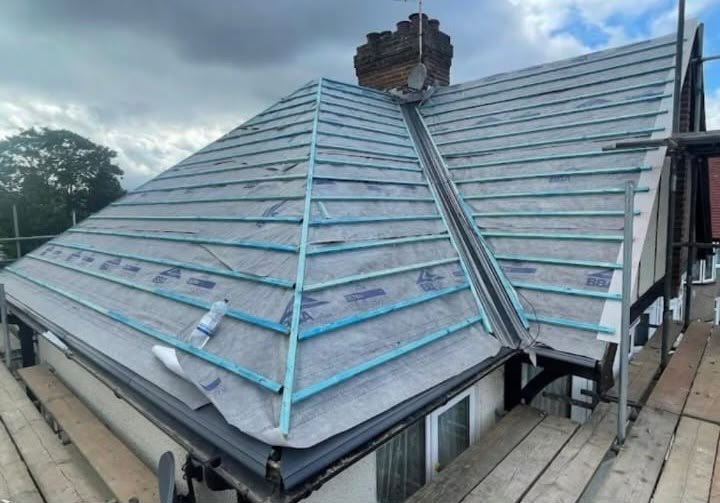
Back additions on the older terraces. The Victorian and Edwardian houses between Ashley Cross and Ashley Road often have a single storey kitchen or bathroom out the back under a flat roof, usually felt, often built up in three layers with a mineral cap sheet and patched more than once.
Where the plywood or boarded deck on a Parkstone back addition is still sound we strip the felt and re-cover. Where it is chipboard that has been wet for years and sags between the joists, it comes off and new OSB or plywood goes down first. That is the biggest swing in the price, and the reason we look before quoting.
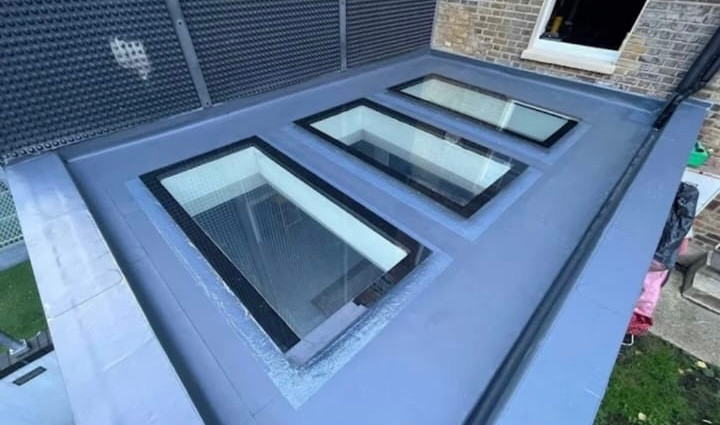
Choosing the covering. A plain Parkstone garage or extension roof suits a single sheet of EPDM rubber with bonded laps and no seams in the middle. A roof broken up by a rooflight, a soil pipe and several upstands can be better in GRP fibreglass, laid wet and finished with a topcoat. Torch on felt in a modern built up system is still a good choice on some roofs. We say which, and why.
Ponding. Standing water works at every lap and seam. Often the fall was never right, or the firrings have sagged, or the outlet has been blocked. We set a proper fall with new firrings or tapered insulation so water reaches the outlet, and BS 6229 sets the minimum. We check the hopper and downpipe too, because a new roof draining into a blocked gutter still soaks the wall.
Edges and openings. Flat roofs in Parkstone fail at the edge trim, the drip, the upstand, the kerb around a skylight or Velux, and where the roof meets the house wall. We form upstands to a proper height and chase a lead cover flashing into the wall rather than rely on mastic. On a parapet we check the coping and whether a cavity tray is behind it, because otherwise the wall leaks and the roof gets blamed.
Warm roof or cold roof. Most older extensions in Parkstone are cold roofs, with insulation between the joists and a void that rarely vents. Condensation collects there and rots the deck from underneath. When we rebuild one we make it a warm roof: a vapour control layer on the deck, PIR insulation above it, then the covering, keeping the timber on the warm side of the dew point.
If the problem is really the pitched slope above, or the slate at the abutment, that is on our roofing in Parkstone page. When would we talk you out of a full re-cover? When a split is local and the rest of the covering is sound.
How it runs
From your call to a written price
One person to ring from the first visit to the last. The quote is itemised, not a figure on the back of a card: access, stripping the old covering, any new deck or firrings, the insulation, the membrane and each upstand, outlet and edge trim, and disposal on separate lines, so you can compare it properly against anyone else's.
Nothing is left open or unusable overnight. The site is swept at the end of each day rather than the end of the job, and what comes out leaves with us. If something turns up once we start that nobody could have seen, you get a photograph and a price before we carry on.
Re-covering in the same way is maintenance and sits inside permitted development; the Planning Portal guidance covers it. Replace more than half of the roof and the insulation has to meet Approved Document L, with building control involved. In Ashley Cross, a conservation area where the council keeps the list, a new lantern or rooflight seen from the street is worth checking first.
Cost
What decides the price of a flat roof
No rate per square metre, because the square metres are the easy part and what is under the covering is what decides the job.
Getting to it. A back addition behind a terrace off Ashley Road, a dormer on a Lower Parkstone villa and the roof over a parade shop with a flat above are three different ways up. A garage or a single storey extension will often come off a tower, anything above a two storey wall wants a scaffold, and the platform has to stand while the deck is open rather than for an afternoon. The work at height rules are why it is a priced line rather than something folded into a rate.
The deck under the covering. A sound deck can be re-covered. Chipboard that has been wet for years, or ply that gives underfoot, has to come off and be replaced, and you cannot tell which you have from the ground or from a photograph. We lift a corner before quoting, because the deck is the single biggest swing in the price.
The falls, and where the water is meant to go. Most flat roofs that fail were never laid to a fall, or the fall runs at an outlet that has since been blocked or built over. Correcting it with firrings is more work than laying a membrane and it is the difference between a roof that lasts and one that ponds. Upstands, edge trims and each outlet are priced one at a time, because that is where the hours and the leaks both are.
Comparing quotes? Ask which system is being quoted and how many layers, whether the deck is being renewed or covered over, whether the falls are being corrected with firrings, how the upstands, outlets and edge trims are detailed, and whether the scaffold and the skip are in the price.
If it is coming through
Water through a flat roof
Ring rather than use the form. A flat roof that has split, blistered or lifted at an upstand puts water straight onto a ceiling, and once the deck is wet the damage carries on after the rain stops.
The first visit is about getting it covered and dry, and we price the permanent job once we can see how much of the deck has gone. In a flat over a Parkstone shop, tell whoever manages the building as well, because they will need to instruct the permanent repair. Scheduled work runs Monday to Friday, 8am to 6pm. For anything urgent, ring rather than use the form, and if we cannot pick up we ring you back as soon as we can.
Worth knowing
Over a shop or in a converted villa, check who owns the roof
A lot of Parkstone's homes are flats. Some are in purpose built blocks, some are in large Victorian houses split into two or three flats, and some sit above the shops along Ashley Road and around Ashley Cross, where the flat roof over the back of the shop is often the thing leaking into someone's kitchen. In almost all of those the roof belongs to the freeholder, not to the person with the stain on their ceiling.
That matters before anyone climbs up. A leaseholder can ring us and we will look, but the freeholder or their managing agent has to instruct the work, and on a bigger job the cost shared between leaseholders may need a formal consultation under section 20 first. So check your lease, tell the agent in writing, and ask us for a quote detailed enough for them to act on. We will write it that way.
Who you are dealing with
A local firm you can check
We cover the whole of Parkstone, from Ashley Road and Heatherlands on the higher ground down to Ashley Cross and Penn Hill, across BH12 and BH14, under BCP Council.
You are dealing with Bournemouth Roofing & Building, the trading name of Bournemouth Roofing & Building Ltd, registered in England and Wales, company number 15471719, which you can look up in a minute. Thomas Hannen's business, and he is the one who comes out to price the job, not a salesman. A verified customer's 10 out of 10 on Checkatrade. The visit and the written quote are both free. Before you book a visit in Parkstone, you can read our customers' Google reviews, word for word, on our reviews page.
Planning at a glance
Do you need planning permission in Parkstone?
Most repairs in Parkstone need no application at all. What decides whether a change to the outside of your house does is who the council is, whether a conservation area or a listing applies, and whether the place sits in a protected landscape.
| Question | In Parkstone |
|---|---|
| Who decides | BCP Council is the planning authority for Parkstone. BCP Council's heritage pages set out what it controls. |
| Conservation area | Yes: Ashley Cross Conservation Area. Check whether your street is inside the boundary before changing anything visible. |
| Listed buildings | Yes, there are listed buildings in and around Parkstone. If yours is one, work can need listed building consent. |
| Protected landscape | No National Park or National Landscape covers Parkstone. |
Questions
Questions about flat roofs in Parkstone
Can a split felt roof just be patched?
Sometimes. A single split on an otherwise sound roof can be cut back and repaired. If the felt is blistering all over, the laps are opening and the deck is soft, a patch buys a few months at best, and we will say so with photographs.
EPDM, GRP or felt: which lasts longest?
All three last well when the deck is sound and the edges are detailed properly, and all three fail early when they are not. EPDM suits simple shapes, GRP suits roofs with lots of upstands and openings, and a modern torch on felt system is still sound. The deck and the falls matter more than the brand.
How long does a flat roof re-cover take?
A single garage or back addition is usually a couple of working days once the weather is dry. A new deck, new falls and a warm roof build-up add time, and we put the length in the quote.
Do you work on flat roofs in winter?
Yes, when it is dry. EPDM adhesives and GRP resin need the right temperature and a dry deck, so we plan around the weather and never leave a roof stripped and open overnight.
I live in a flat above a shop. Can I book the repair?
You can ask us to look and report, but the roof almost always belongs to the freeholder, so they or their agent instruct the job. We write the quote so they can act on it.
Nearby, and next door
Flat roofing near Parkstone
Nearby places we also cover for flat roofing, with straight-line distances from Parkstone, and the other trades we offer in Parkstone itself.
Flat roofing nearby
Our other trades in Parkstone
Flat roofing guides
GRP, EPDM or felt: which flat roof covering? Snow on a flat roof or a conservatory Warm roof or cold roof: which do you need?Everything we do in Parkstone Flat roofing, all areas Every area we cover
Free quote
Find out what is under your flat roof
A free visit, photographs of the deck, and an itemised written quote that says repair or re-cover.