Plastering in Parkstone
Skims, sagging lath ceilings, blown plaster and making good, in Victorian houses near Ashley Cross, 1930s semis and flats above Ashley Road.
The site visit is free and so is the written itemised quote. Thomas Hannen prices every job himself.
Last updated
Plastering in Parkstone
Old ceilings, blown walls and rooms ready for paint
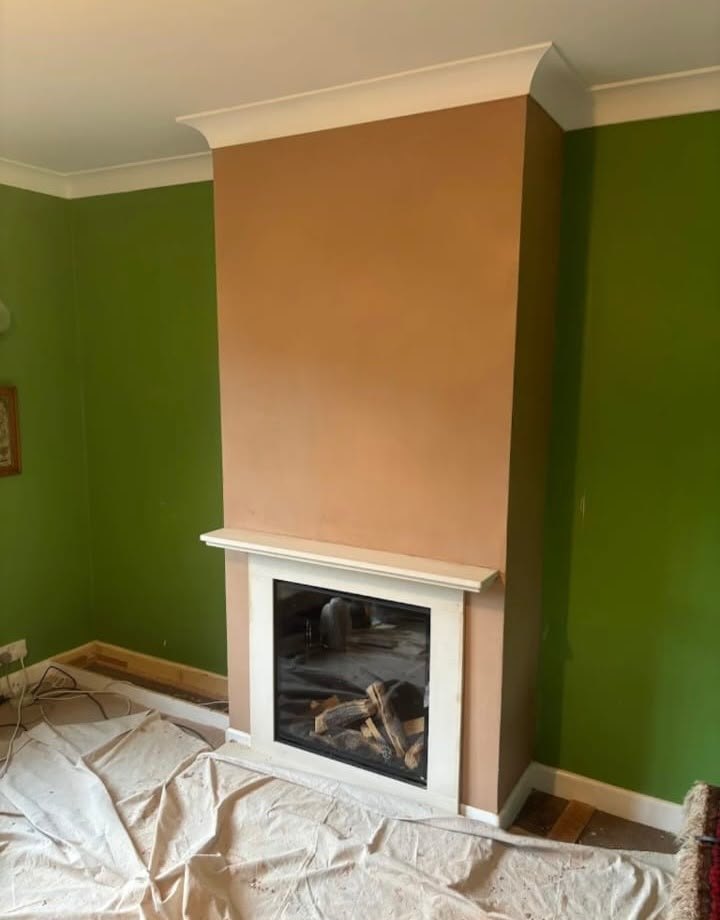
Most plastering in Parkstone is a skim over sound plaster, a ceiling reboarded where the old one has sagged, or a wall taken back and replastered where it has blown. We tap and look before we quote, because the wall underneath decides which.
Parkstone houses tend to need plastering after a crack, a leak or a decision to redecorate. A ceiling in a Victorian house near Ashley Cross has a crack across it and a bulge in the middle. Plaster sounds hollow when you knock it, or has come away after a leak upstairs. Or you are redecorating, want smooth walls and ceilings, and are tired of filling the same cracks or living with an old Artex ceiling.
We come out, tap the walls, check for damp, and write a quote room by room. The site visit is free, and we tell you when a room only needs filling and decorating.
The work
Plastering jobs in Parkstone homes
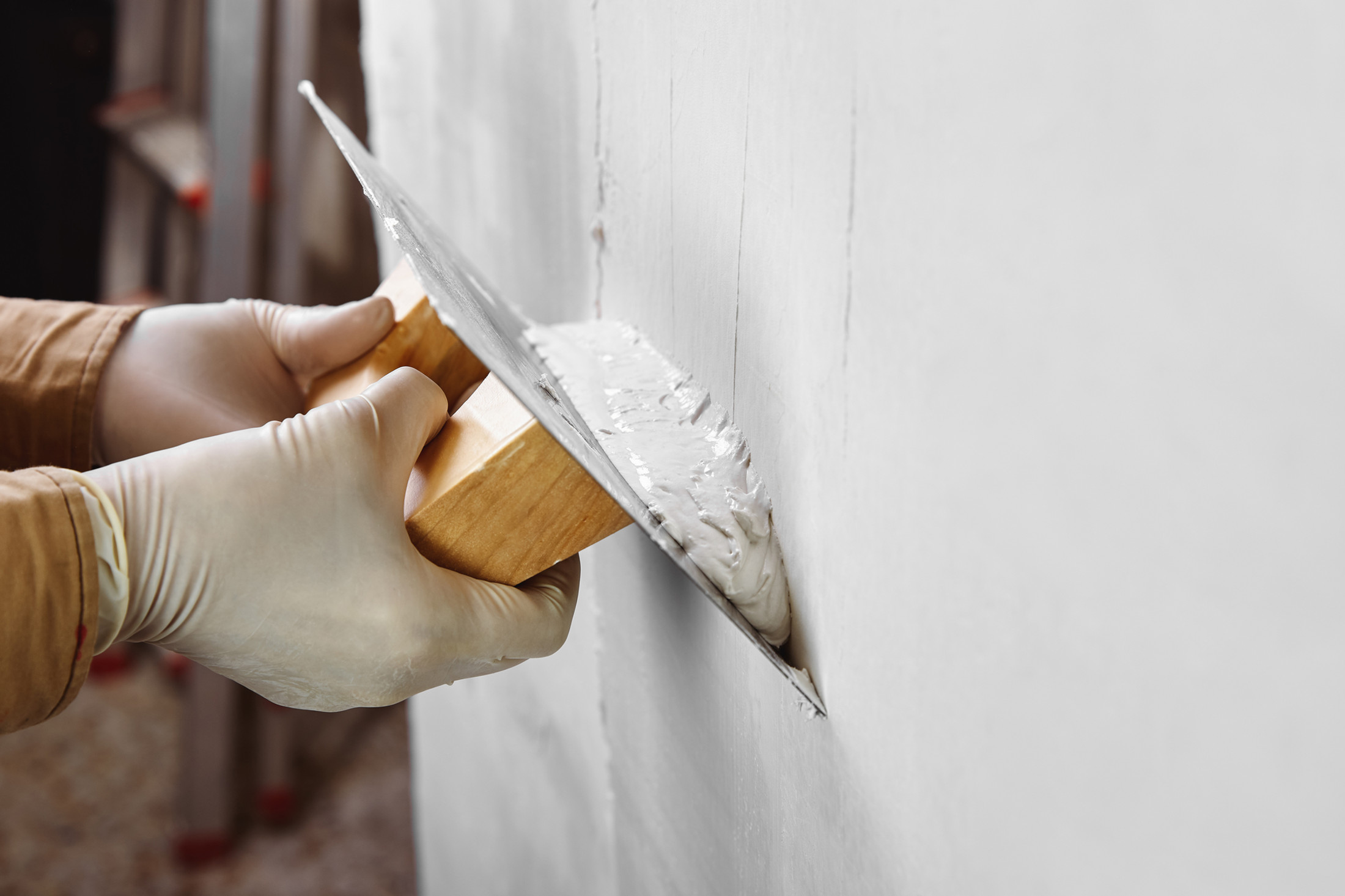
Skimming suits plaster that is still sound. Where the existing plaster is sound but tired, cracked or patched, we prepare the surface, apply a bonding coat or PVA where it needs it, then a two coat skim with a finish coat trowelled flat. New angle beads go on corners and reveals so the edges stay straight. A typical room is a day or two, then it needs time to dry before a mist coat and paint.
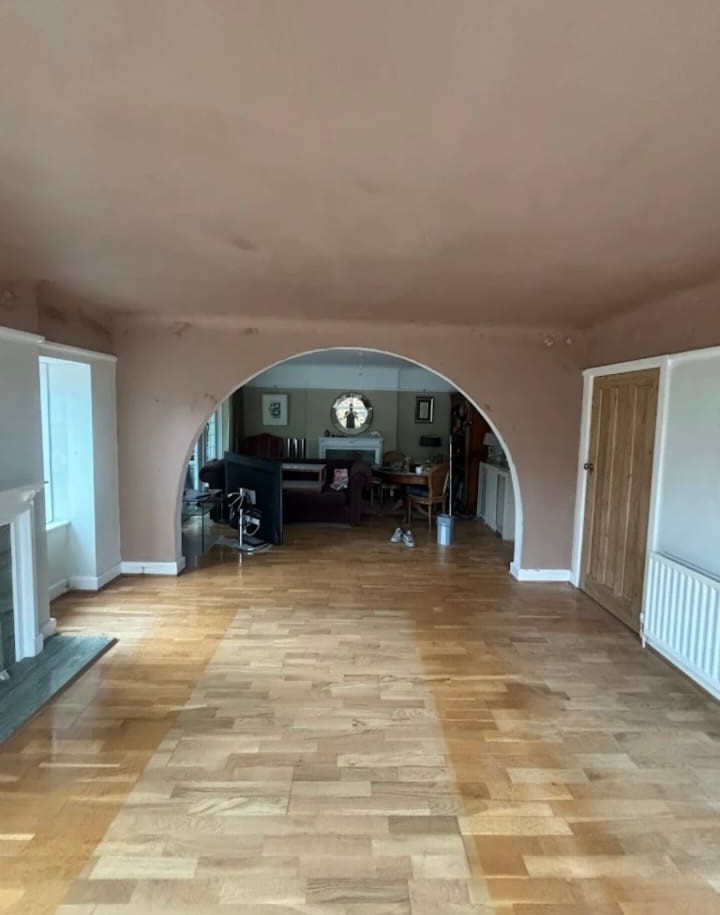
Old ceilings. Many of the older houses in Parkstone still have lath and lime plaster ceilings. When the plaster loses its grip on the laths it sags, and a sagging ceiling can come down. Where it is sound but cracked we can secure it and skim. Where it has gone, we take it down, fix plasterboard to the joists, tape and joint, and skim. The Artex on some later ceilings we skim over or board over rather than sand.
Walls that have blown. Hollow, crumbly plaster after a leak or years of damp is hacked back to the brick. On a solid wall we replaster in a way that lets it breathe. On a newer cavity wall we use a backing coat of browning, hardwall or a sand and cement render coat, float it flat, then skim. Where speed matters, dry lining with plasterboard on dot and dab or a timber stud is an option, and we explain the trade off.
Making good after other trades. New windows, rewiring, a removed chimney breast or a new doorway all leave patches. We cut back to sound edges, bead the reveals and patch so the join disappears under paint.
Room by room, or a whole house. In the Parkstone flats in converted villas and above the shops on Ashley Road the job is often a whole flat between tenants. We work one room at a time, with dust sheets down and the floors covered.
For outside walls, render systems such as silicone thin coat, monocouche or pebbledash repairs are covered on our rendering in Parkstone page.
How it runs
From your call to a written price
One person to ring from the first visit to the last. The quote is itemised, not a figure on the back of a card: protection and prep, how many coats, the area of each wall and ceiling, beads and stop ends, and disposal on separate lines, so you can compare it properly against anyone else's.
Nothing is left open or unusable overnight. The site is swept at the end of each day rather than the end of the job, and what comes out leaves with us. If something turns up once we start that nobody could have seen, you get a photograph and a price before we carry on.
Plastering inside a house needs no planning permission. If the building is listed, even changing old lime plaster can need consent. Ashley Cross is a conservation area and the council keeps the list, but that controls the outside of a building, not your plastering.
Cost
What decides the price of a plastering job
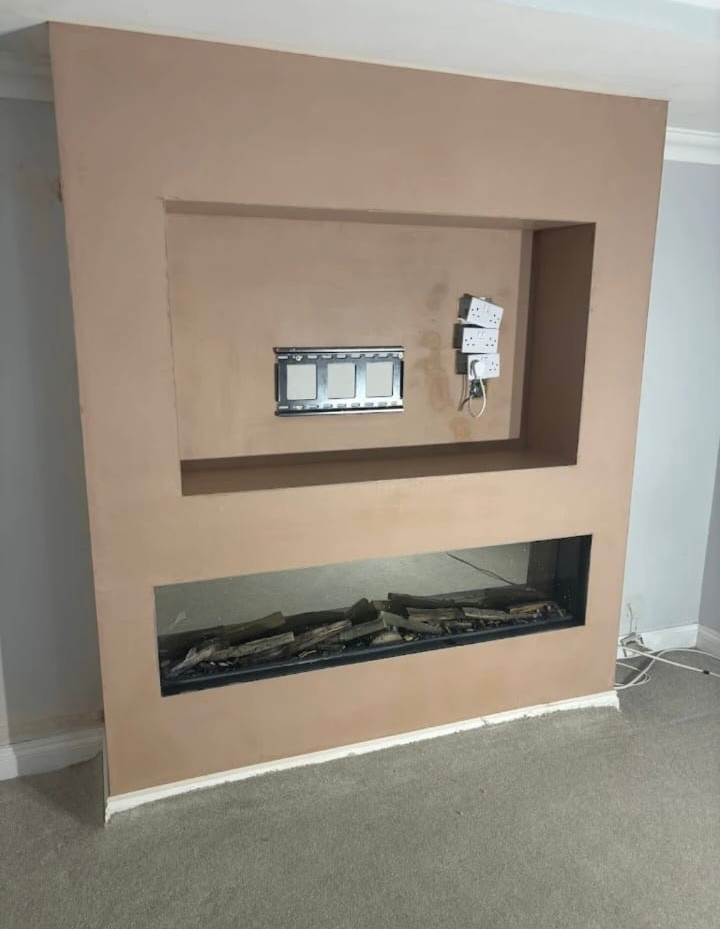
No rate per square metre, because two rooms of the same size can be a day apart once you have seen the walls.
Getting to it. A top floor flat above an Ashley Road shop, a Victorian ceiling near Ashley Cross and a 1930s semi with the furniture still in set up very differently. Ceilings and stairwells need a platform, and a room you are still living in needs protecting rather than emptying. Where the work is at height the work at height rules apply just as they do on a roof.
What is behind it. Skimming over sound plaster is a different job from taking a wall back to brick, and you often cannot tell which you have until something is tapped. Lath and lime, old bonding, dot and dab and bare block all take different preparation and a different number of coats.
The awkward parts. Reveals, beads, stop ends, arches, curved walls and getting a flat finish where an old ceiling has dropped. The middle of a wall is quick. The edges are where the day goes.
Comparing quotes? Ask how many coats are included, whether the walls are being skimmed or taken back, whether beads and making good are in the price, and who moves and protects the furniture.
If a ceiling has gone
A ceiling down, or plaster off a wall
Ring rather than use the form. A ceiling that is sagging, cracked in a line or dropping dust is the one thing here that will not wait, and nobody should be under it.
The first visit is about getting what is loose down safely and the room usable, and we quote the making good once we can see how far the failure goes. In an older Parkstone house a ceiling that has started to sag after a leak is the one to call about first; keep people out of the room. Scheduled work runs Monday to Friday, 8am to 6pm. For anything urgent, ring rather than use the form, and if we cannot pick up we ring you back as soon as we can.
Worth knowing
On the older solid walls, gypsum is the wrong answer
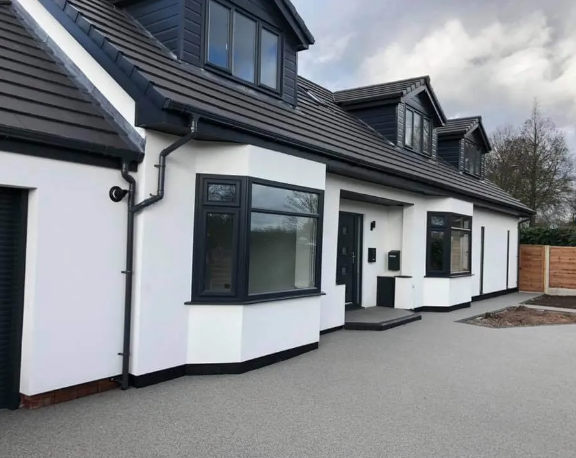
A lot of Parkstone was built before 1919: the villas around Ashley Cross and the smaller terraces up towards Ashley Road. Those walls are solid brick, and they were plastered in lime. Solid walls handle damp by letting it evaporate out through the plaster and the joints.
Hack that off and put gypsum or a hard cement backing coat on, and the moisture is trapped. The new plaster can blow, salts come through, and the room is blamed on rising damp. So on a pre-1919 house ask what is going on the wall. On the solid walls we use a breathable lime plaster where the wall needs it, and we are straight with you about where a modern plaster is fine, such as on a later partition, a stud wall or a plasterboard ceiling.
Who you are dealing with
A local firm you can check
We cover the whole of Parkstone, from Ashley Road and Heatherlands on the higher ground down to Ashley Cross and Penn Hill, across BH12 and BH14, under BCP Council.
You are dealing with Bournemouth Roofing & Building, the trading name of Bournemouth Roofing & Building Ltd, registered in England and Wales, company number 15471719, which you can look up in a minute. Thomas Hannen's business, and he is the one who comes out to price the job, not a salesman. A verified customer's 10 out of 10 on Checkatrade. The visit and the written quote are both free. Before you book a visit in Parkstone, you can read our customers' Google reviews, word for word, on our reviews page.
Planning at a glance
Do you need planning permission in Parkstone?
Most repairs in Parkstone need no application at all. What decides whether a change to the outside of your house does is who the council is, whether a conservation area or a listing applies, and whether the place sits in a protected landscape.
| Question | In Parkstone |
|---|---|
| Who decides | BCP Council is the planning authority for Parkstone. BCP Council's heritage pages set out what it controls. |
| Conservation area | Yes: Ashley Cross Conservation Area. Check whether your street is inside the boundary before changing anything visible. |
| Listed buildings | Yes, there are listed buildings in and around Parkstone. If yours is one, work can need listed building consent. |
| Protected landscape | No National Park or National Landscape covers Parkstone. |
Questions
Questions about plastering in Parkstone
Can you skim over my old ceiling?
If it is sound and firmly fixed, yes. If it sags, sounds loose or has come away from the laths, skimming only adds weight, so we take it down and board it.
How long before I can paint new plaster?
It needs to dry fully first, usually a few days to a couple of weeks depending on the thickness and the season. Then a mist coat goes on before your normal paint.
Will you make a mess of the house?
Plastering is messy work, so we sheet the floors and furniture, protect doorways and clean up at the end of each day. Hacking off old plaster is the dustiest part and we tell you beforehand.
Can you plaster over Artex?
Usually, yes, with a bonding coat and a skim. If the Artex is older, we can advise about having it tested before anyone sands or scrapes it.
Nearby, and next door
Plastering near Parkstone
Nearby places we also cover for plastering, with straight-line distances from Parkstone, and the other trades we offer in Parkstone itself.
Plastering nearby
Our other trades in Parkstone
Plastering and rendering guides
Silicone, cement or lime: which render? Cracked render: which cracks matter Hollow-sounding wall: blown plaster or dot and dabEverything we do in Parkstone Plastering, all areas Every area we cover
Free quote
Get a price for your plastering
A free visit, a room by room written quote, and a straight answer on skim or replaster.