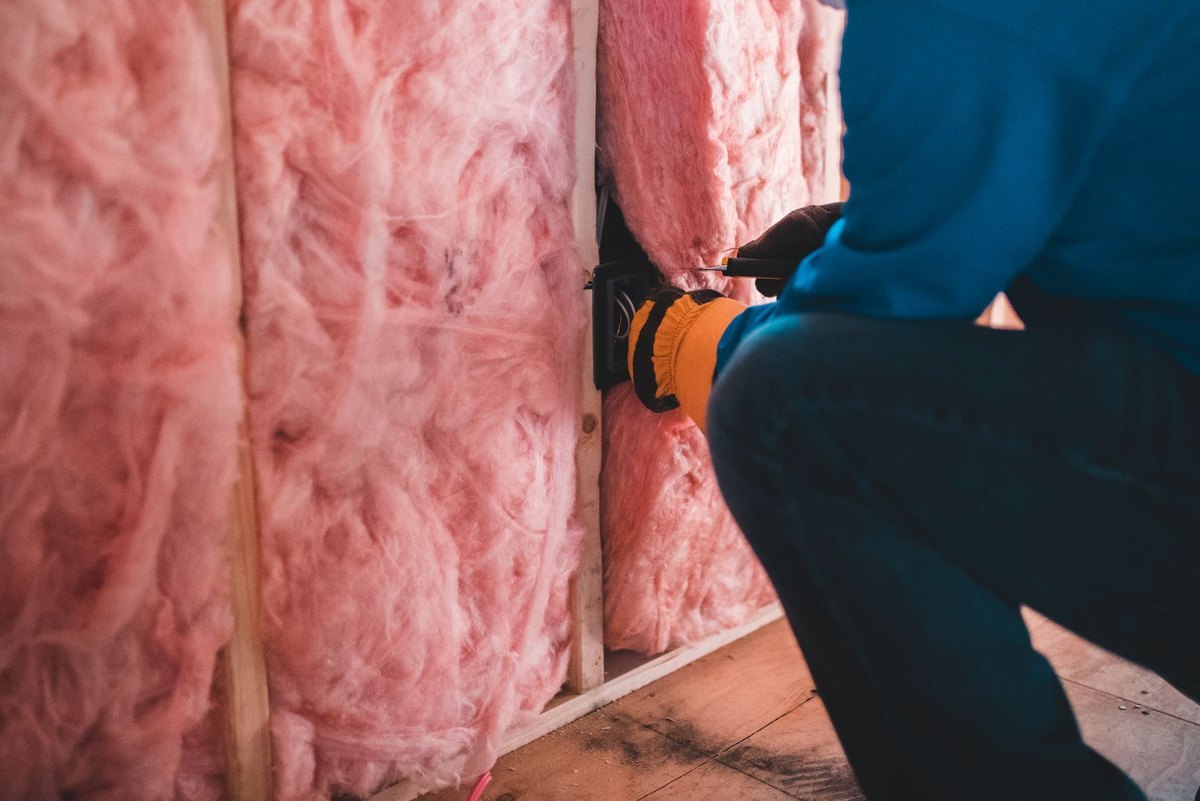
Wall insulation in Stone
Whether a Stone house has a cavity or a solid wall decides the job, and on an attached house the cavity may not stop at your boundary.
The site visit is free and so is the written itemised quote. Thomas Hannen prices every job himself.
Last updated
A house around Stone with a cavity can take a fill once a borescope shows it clear and dry, but a shared wall changes where the fill goes. Where a house here is joined to the next one, some of its walls are shared. The wall between you and next door is then a party wall, and a cavity does not stop politely at your boundary. That changes the practical questions: where the fill goes, who has to be told, and which walls are actually yours to insulate.
The problems in Stone are straightforward. A cold gable end that is always the worst wall in the house. Mould appearing along the top of an upstairs wall. Or a let house where the landlord wants the outside wall lined and is not sure which route suits it.
We start by reading the wall. One small hole and a borescope tells us the cavity width, whether it is clear and dry, and whether anything has already been blown into it. Then we look at the reveals, the threshold, the eaves and the joist ends. The site visit and the written itemised quote are both free, and insulation in Stone covers the loft too.
The work
Shared walls, end gables and the cavity between them
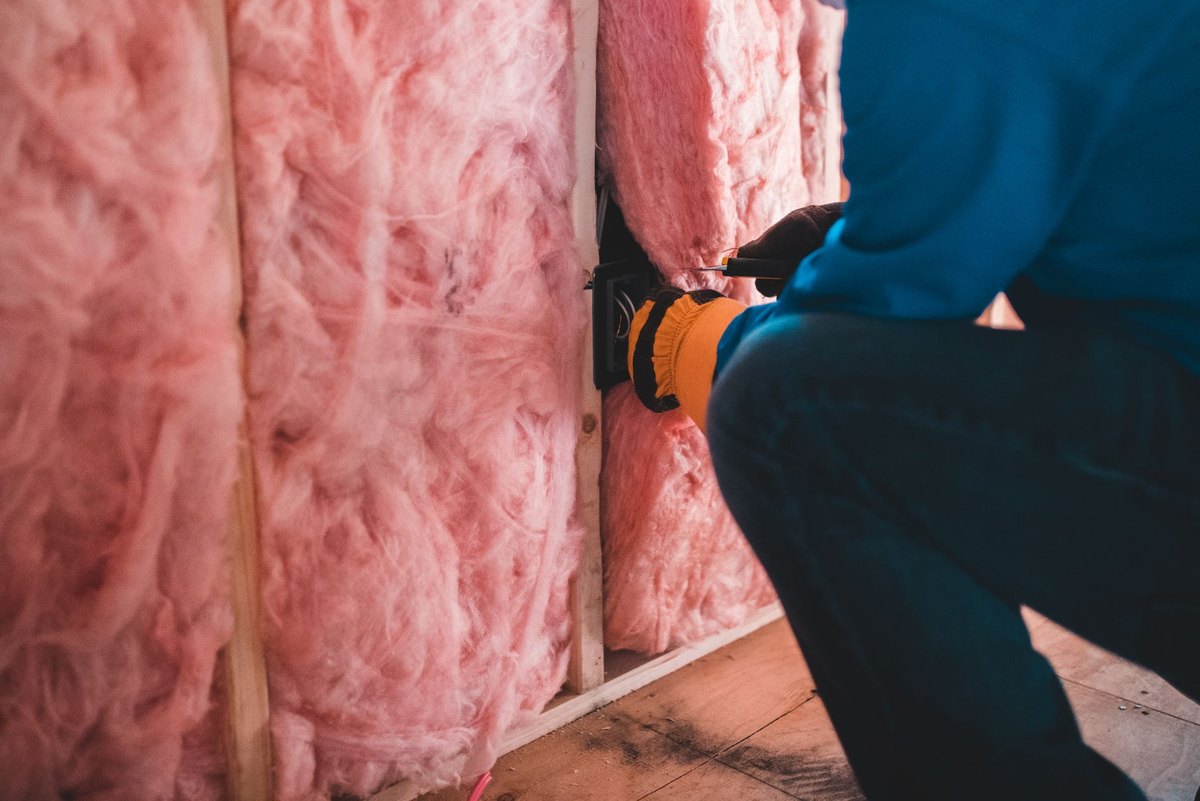
End gables, which are the cold ones. A house joined on both sides loses heat through two walls, a semi through three and a detached house through four. A gable has nothing warm on the other side of it, which is why it is usually the coldest wall and usually the one worth doing first.
Cavity fill, and cavity barriers. Where the borescope shows a cavity that is wide enough, clear of mortar snots and dry, it is drilled and filled from outside. In an attached house the cavity often runs on past the party wall, so a barrier goes in first or your bead ends up warming next door. That is standard practice and it is also a fire separation matter, not just a tidiness one.
Telling the neighbours, and the Act. Work to a shared wall itself, such as cutting into it, is party wall territory and the Party Wall etc. Act sets out the notice. Filling your own outer cavity is usually not, but where the cavity is continuous it is still worth a conversation before the drill comes out rather than afterwards.
Internal wall insulation, IWI. On solid brick in Stone, or where the cavity is too narrow, the lining goes inside: insulated plasterboard bonded to the masonry, or a batten and stud frame filled with mineral wool. PIR laminate such as Celotex or Kingspan gets there in the least depth, with the vapour control layer taped so warm air cannot get behind it, per BS 8000-8.
External wall insulation, EWI. Boards, a render carrier and a render finish. On an attached house it is rarely one owner's decision, because the system has to stop somewhere and one insulated house beside an unrendered neighbour looks exactly like what it is. Where neighbours go together it is the strongest option available.
Fill that has failed. Wool blown into a Stone wall years ago slumps and leaves a cold band under the eaves, which shows inside as black mould along the top of a wall. A wet cavity, where water crosses on a bridge, gives damp patches that follow the weather. Both begin with extraction, drilling and vacuuming the old material out, not with adding more.
Junctions, ventilation and draughts. Reveals, the threshold, the floor junction and the joist ends are where the heat loss is concentrated, and a thermal bridge left at any of them collects condensation whatever the u value beside it. Reveals take a thin board or aerogel. Then trickle vents, a working extract fan and clear air bricks, because airtightness without ventilation is how a warm house turns mouldy, and Approved Document F sets what is expected.
How it runs
Filling a cavity or lining a wall, start to finish
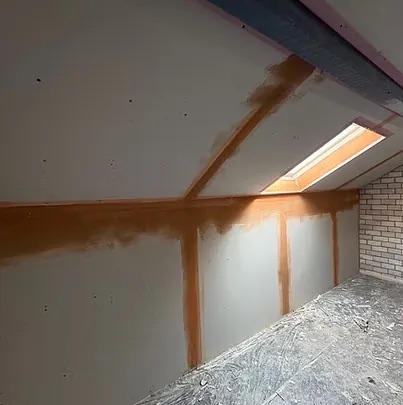
The first job is finding out which wall you have. A house in Stone built since the war usually has a cavity, so Thomas drills a single small hole and puts a borescope camera in to see whether the gap is clear, part filled from an earlier job, or choked with mortar. Older cottages usually have solid walls, which have to be lined on the inside instead. Either way, the camera comes before any price.
Your quote shows the survey, the camera check, the insulation chosen and how thick it is, making good at window and door reveals, any extra ventilation, and taking the waste away. For a cavity, a registered installer blows beads or fibre in from outside, with a CIGA certificate, through a set pattern of holes, which are then pointed up to match. Lining is done one room at a time: furniture moved, floors covered, sockets and skirtings off and back on. A wet wall or a blocked cavity is photographed and priced, and we wait for your go-ahead.
Stone is in Pamphill parish, under Dorset Council. No conservation area covers the housing, and the listed entries are mostly on the Pamphill estate, so for most homes this is a building control matter rather than planning. Upgrading an existing wall comes under regulation 23, and Approved Document L gives the U-value it has to meet.
Cost
Cavity, solid or shared: what drives the wall price
Cavity or solid sets the cost. Blowing fill into a clear, dry cavity is quick and barely touches the inside of the house. A solid cottage wall means insulated plasterboard on the inside or a system on the outside, and either is a much bigger job.
Attached houses. A house joined on both sides has only a front and a back to do; a semi or an end house adds a gable. Where the cavity is shared, the barrier at the party wall is a line of its own.
Reveals and junctions. Round windows and doors, where the floor meets the wall and up at the eaves, cold bridges form and condensation follows if the detail is skimped. It is fiddly, slow work and the part cheaper prices tend to drop.
Old fill. Fill from an earlier job that has slumped or soaked up water may have to be pulled out before anything new goes in.
Access. Drilling a two storey gable needs a tower; a taller or awkward wall needs a scaffold or a powered platform. The work at height rules decide which.
Ask other quotes whether anyone has actually looked inside the cavity, what U-value the finished wall reaches, how the reveals are being handled, and who puts the plaster right.
If damp has appeared
Damp patches after a cavity was filled
If damp or black spots show up on an outside wall after it was filled or lined, the cause is usually rain being carried across the cavity by the fill, or warm room air meeting a cold edge where the insulation stops.
Open a window and keep the room heated while you wait. Phone rather than using the form. At the first visit we find out which it is, with the borescope or by opening a small area, and nothing is ripped out on a guess. If you rent, let the landlord or agent know as well. Wall insulation is carried out Monday to Friday, 8am to 6pm. For urgent calls, ring, and if we cannot answer we call back as soon as we are free.
Worth knowing
The wall you share, and the one that costs you
On an attached house it is easy to spend money on the wrong wall. The party walls have a heated house on the far side of them and lose almost nothing, so insulating them achieves very little except a narrower room. The front and back walls and, on an end house, the gable are where the heat actually goes. Any quote that prices the whole internal perimeter of a house joined on both sides is selling you square metres rather than warmth.
The shared cavity is the other thing worth understanding. In a lot of attached houses the outer leaf runs on continuously behind the party wall, so material blown in at your end can travel, and a problem at your neighbour's end can travel back. That is why a cavity barrier goes in before the fill does, and why a straight conversation with next door before the work is worth more than a letter afterwards. If you rent, the outside wall is the landlord's, so written consent comes before any drill or any board.
Who you are dealing with
The business behind the wall insulation
We cover Stone, Pamphill, Cowgrove and the Wimborne edge, broadly BH21. Stone is roughly nine miles from Boscombe, where our base is, and its planning and building control are handled by Dorset Council. We are Bournemouth Roofing & Building Ltd, registered in England and Wales with company number 15471719. Before you book a visit in Stone, you can read our customers' Google reviews, word for word, on our reviews page.
The company is owned by Thomas Hannen, who surveys the walls and prices the job personally. A verified customer's rating on Checkatrade is 10 out of 10. There is no charge for the survey visit or the written quote, itemised in full.
Planning at a glance
Do you need planning permission in Stone?
Most repairs in Stone need no application at all. What decides whether a change to the outside of your house does is who the council is, whether a conservation area or a listing applies, and whether the place sits in a protected landscape.
| Question | In Stone |
|---|---|
| Who decides | Dorset Council is the planning authority for Stone. Dorset Council's heritage pages set out what it controls. |
| Conservation area | None covers Stone, so a like-for-like repair is ordinary maintenance. |
| Listed buildings | Yes, there are listed buildings in and around Stone. If yours is one, work can need listed building consent. |
| Protected landscape | No National Park or National Landscape covers Stone. |
Questions
Questions about wall insulation in Stone
Should I insulate the wall between me and my neighbour?
A shared wall is usually not worth insulating. There is a heated house on the other side of it, so it loses very little. The front, back and any gable are the walls that cost you money.
Does cavity fill travel into next door's wall?
It can, where the outer cavity runs on past the party wall. That is why a barrier goes in first, and it is a fire separation point as much as a tidiness one.
Do I have to give my neighbour formal notice?
For work to the shared wall itself, yes, under the Party Wall etc. Act. For filling your own cavity, usually not, but a conversation first saves a lot of bother.
How long does it take, and can you work with a narrow side passage?
How long a fill takes depends on the wall. A tight passage means barrowing and a smaller platform, so the access shows as its own line on the quote rather than disappearing into a rate.
Why is the end house always the coldest in the row?
Because it has an extra outside wall, and that gable takes the weather with nothing warm behind it. It is normally the first wall worth doing.
Nearby, and next door
Wall insulation near Stone
Nearby places we also cover for wall insulation, with straight-line distances from Stone, and the other trades we offer in Stone itself.
Wall insulation nearby
Our other trades in Stone
Wall insulation guides
Damp at the bottom of a wall: what it is PIR board vs mineral wool: which insulation? Hollow-sounding wall: blown plaster or dot and dabEverything we do in Corfe Mullen Wall insulation, all areas Every area we cover
Free quote
Find out which of your walls is actually costing you
Thomas comes out, borescopes the cavity, says which walls are worth doing and prices the work in writing. The visit and the quote are free.