
Plastering and rendering in Wimborne Minster
Lath ceilings, lime plaster, cornice repair, skimming, dry lining and external render across Wimborne and BH21. Free site visit, free itemised quote.
The site visit is free and so is the written itemised quote. Thomas Hannen prices every job himself.
We skim, re-plaster, board and dry line inside, and repair or renew render outside, from lath and plaster ceilings in the Borough streets to taped joints on the newer estates. Which method your room needs depends entirely on what is behind the surface, and a free visit anywhere in Wimborne Minster is where that gets settled rather than guessed at.
Wimborne is two different jobs inside one postcode, and the price follows which one you have. Getting on for a fifth of the town predates the First World War, so behind those fronts it is solid brick, lime plaster and lath ceilings, with cornices and deep window reveals that a modern flat skim would spoil. The estates and the newer flats are board: taped joints, dot and dab, artex overhead in the seventies stock.
So we sound every wall and ceiling in the room before anything is quoted, and where there is a loft or a floor above a suspect ceiling, we look at it from the other side too. Then you get an itemised written price with the method on it as well as the number.
People usually ring us for one of four things: a ceiling that has cracked and started to bow, a wall that has gone hollow, a room left rough after other trades, or render on a frontage that has blown and is letting water behind it.
The work
A century of paint fills the detail in a cornice
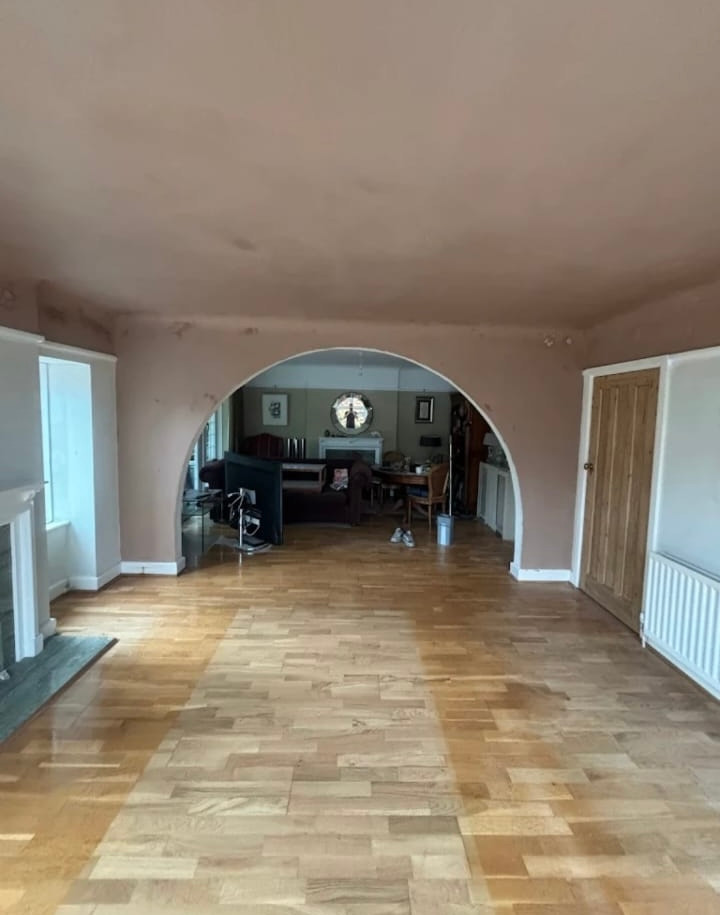
Lath ceilings and lime plaster in the old town. Getting on for one home in five in Wimborne predates 1919, and the brick houses through the Borough streets and the lanes off the Minster carry lime plaster on solid walls with lath ceilings above. The crack you can see is rarely the story. What decides it is whether the plaster keys that curl over the backs of the laths have snapped off, and we check that from the loft or the room above rather than guessing from underneath. Keys gone, the ceiling comes down. Keys holding, scrim, a patch and a skim will see you out.
Plenty of the older rooms here still have a run of cornice worth keeping. It gets protected before anything comes off the ceiling, cleaned back where a century of paint has filled the detail, and any missing length is run or cast to match rather than replaced with the nearest thing off a shelf. If a room has lost its cornice altogether we will say honestly what can be matched and what cannot.
Flats, conversions and rooms above shops. A third of the homes in Wimborne are flats or maisonettes, a good many of them carved out of older houses and the buildings over the shops. Behind those partitions you find timber studwork, old lath and later board all in the same wall, so the joints between them are where cracks appear. New board is cut in square, mesh goes over every junction between two different backgrounds, then tape and joint or a full skim. Stairs and access get planned at the site visit, because full sheets of board do not go round every turn. The outside of a flat usually belongs to the freeholder rather than to you, so it is worth knowing which of the two you are ringing about.
Where plaster has parted from the brick or block behind it, the loose work comes off back to a clean background and a backing coat goes on before any finish. On a solid old wall that means lime, because the wall has to stay breathable and a hard gypsum finish over one still carrying water simply blows again. On a dry modern background it is browning where it keys, bonding on dense block or a painted face, hardwall where you want it harder. A floated wall holds real water and keeps a room out of use far longer than a skim.
Outside it is painted render over soft old brick in the town, pebbledash on the post-war housing and thin coat systems on the newer work. A blown patch is cut out square, a render coat brought back level and the texture matched so the repair does not read as one. A full elevation goes back as a scratch coat and a basecoat with mesh bedded through it, a primer, then a silicone thin coat, a monocouche or a K render topcoat, off a bell cast bead at the base. On an old town house, lime render rather than sand and cement, every time.
How it runs
From your call to a written price
The quote is itemised: protection, hacking off, board, the backing coat, beads, the finish coat, making good and disposal each on its own line. Plastering inside an ordinary house is repair. Two things change that in Wimborne. If the building is one of the ten listed entries here, listed building consent reaches the inside as well as the front, so taking down a lath and plaster ceiling, stripping historic plaster or altering a cornice can need consent before anything comes off. And if a whole elevation is being re-rendered rather than patched, Approved Document L treats that as renovating a thermal element. The town centre is also a conservation area, which controls appearance rather than what you do indoors.
Cost
What decides the price
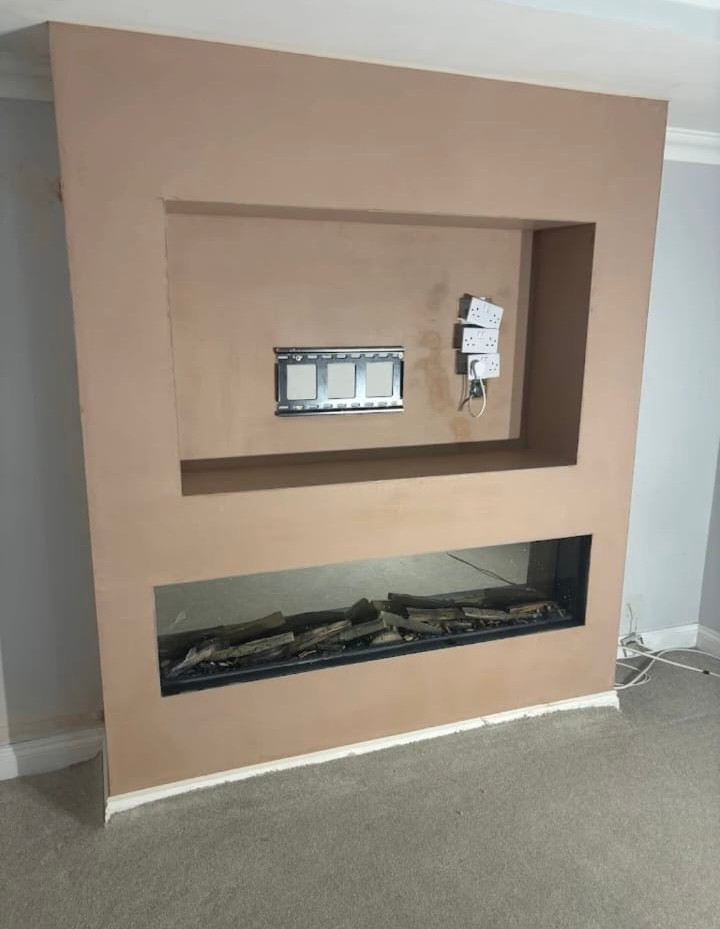
No rate per square metre. Every wall and ceiling is sounded with a knuckle first, because the split between what is skimmed and what comes off back to the brick moves the price further than the size of the room does. A Georgian town house in the Borough with nowhere to park, a first floor flat over a shop reached by a stair that will not take full sheets of board, and a modern semi with a drive are three different jobs. Anything above a porch wants a scaffold on its own line, because work at height rules decide the platform rather than the budget.
If it has come down
A ceiling coming down, or plaster blown off a wall
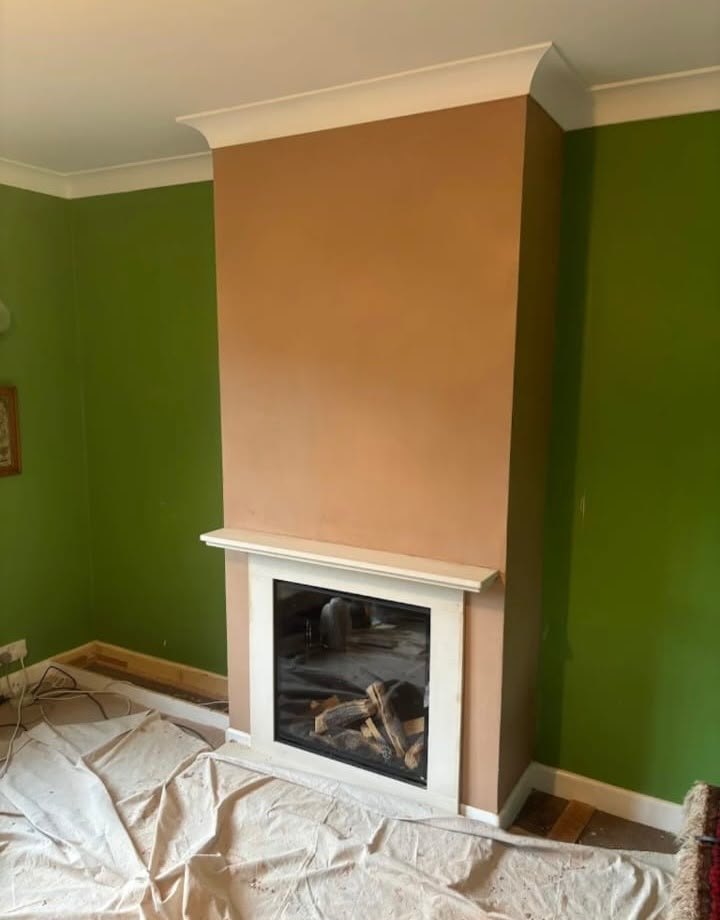
Ring rather than use the form. A ceiling pulling away from the joists, or plaster coming off a wall in sheets, goes to the front of the queue, because the next piece usually follows within days. Wimborne is a short run for us, so in most weeks we can look the same day, and in the town centre we will sort out loading and parking rather than leaving that to you.
Worth knowing
What the conservation area lets you do to a front elevation
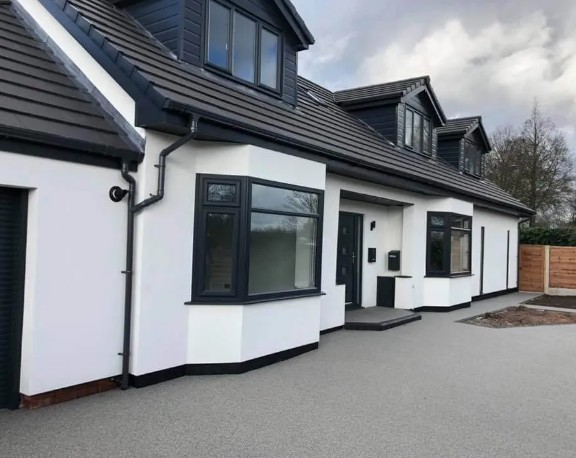
The middle of the town is the Wimborne Minster conservation area, and what that controls is how a building looks from the street rather than what you do behind your own front door. Inside, plaster is plaster and nobody needs to be asked. Outside, the distinction that matters is repair against change. Cutting out a blown patch of render and matching it back is maintenance and needs nothing.
Rendering or cladding a front that is bare brick today is a change of appearance and is not permitted development in a conservation area, and swapping a painted render for a different texture or a noticeably different colour on a street elevation can be caught the same way. Ask before it comes off, because putting it back is the expensive way to find out.
Practically, that pushes you towards matching rather than modernising on any frontage that is seen from the road, and on the older houses that is the right answer anyway. The brick behind those renders is soft and was never meant to be sealed, so a rigid sand and cement skin traps water in the wall and pops off in sheets a few winters later, usually taking some of the brick face with it.
A lime render on a lime backing moves with the wall, lets it dry and can be repaired in patches for the rest of its life. Two questions worth putting to anyone who quotes on a frontage here: will they do a sample panel and match the texture before doing the whole wall, and what the backing coat is on soft old brick. If the answer to the second is sand and cement, keep asking.
Who you are dealing with
A local firm you can check
We cover Wimborne Minster, Colehill, Pamphill and Merley, out to Corfe Mullen, Furzehill and the BH21 villages, and Dorset Council is the planning and building control authority for this address. Bournemouth Roofing & Building Ltd, registered in England and Wales, company number 15471719, which you can look up in a minute. Thomas Hannen's business, and he is the one who comes out to price the job, not a salesman. A verified customer's 10 out of 10 on Checkatrade. The site visit and the written itemised quote are both free.
Questions
Wimborne Minster questions we get asked
Can you run a cornice to match the one in the hall?
Yes, either by matching an off the shelf profile or by running it in place from a template cut to the original. Almost a fifth of Wimborne Minster predates 1919, 18.9% of it, with the largest single block built before 1900, so original run cornice is common in the town houses here. Where a section is damaged we take a mould from a sound length and cast the missing piece rather than replacing the whole run.
Our flat is in a converted town house. Who orders the work?
Whoever holds the freehold, in most cases. A third of Wimborne Minster dwellings are flats or maisonettes, 33.9% of them, and many are conversions of older buildings where the structure and the external walls stay with the freeholder and get looked after through the service charge. Internal finishes inside your own demise are usually yours to deal with. Read the lease plan before committing, because the boundary between the two is where arguments start.
The town centre is a conservation area. Does that cover render?
It covers how the outside looks. The Wimborne Minster conservation area takes in the centre, and inside it a change of external material or finish is treated differently from a repair. Putting the same render back in the same finish is maintenance. Covering brick with render, or fitting a dense modern system where a soft lime one was, changes the appearance and Dorset Council will expect an application. Interior work is untouched by it unless the building is listed.
When does a wall here actually need lime rather than gypsum?
When the wall is solid and has to let moisture back out. Across the pre 1900 part of Wimborne Minster, and in the ten listed entries in the town, walls have no cavity and rely on drying through their own surface. Seal that with a gypsum set on a dense backing and the damp travels up and sideways until it finds another way out. Lime is not sentiment, it is the only coat that lets the wall behave as built.
What is the realistic timescale on a lime job?
Longer than a gypsum one, because lime sets by carbonating rather than going off chemically. Each coat has to be left alone, protected from frost and from drying too fast, so a three coat lime job on a Wimborne town house wall is measured in weeks between coats rather than days. Decoration then waits for a breathable paint. That is the reason lime work is quoted as its own line rather than lumped in with ordinary setting.
Nearby, and next door
Plastering and rendering near Wimborne Minster
Plastering and rendering nearby
Our other trades in Wimborne Minster
Everything we do in Wimborne Plastering and rendering, all areas Every area we cover
Free quote
Get a price for plastering in Wimborne Minster
Tell us the address and what the wall or ceiling is doing. We come out, sound it and put an itemised price in writing. No charge for either.