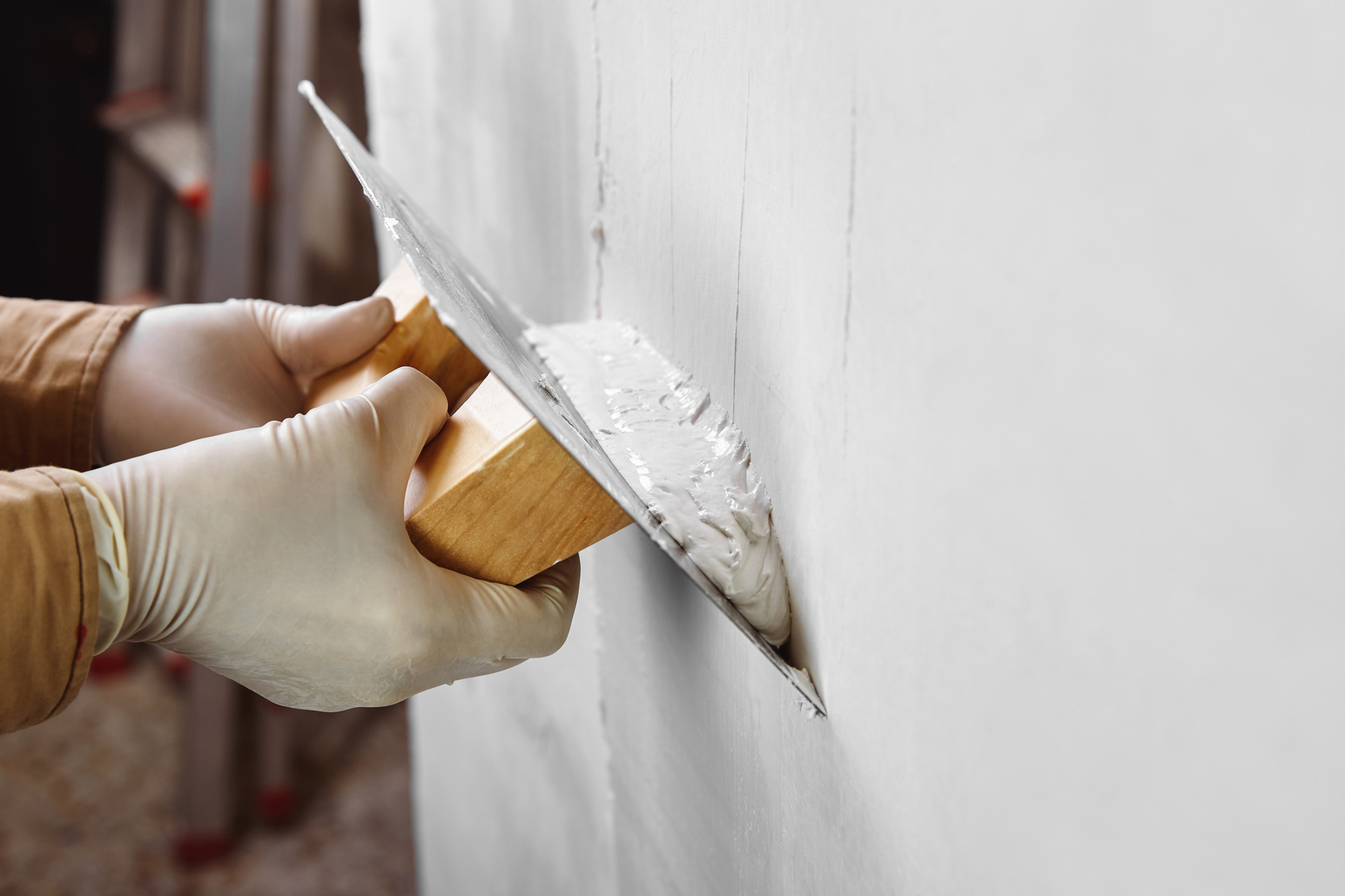
Plastering in Broadstone
Ceilings, walls and render across Broadstone and BH18, checked by hand before they are priced and itemised in writing.
The site visit is free and so is the written itemised quote. Thomas Hannen prices every job himself.
In most Broadstone houses the ceiling is the job. Bungalows have the whole floor plan overhead rather than one storey of it, so what a plastering quote here really turns on is how many ceilings are coming down and how many are being boarded over.
The calls from Broadstone are fairly consistent. A ceiling has cracked or stained and somebody wants to know whether it is a leak, the loft or just age. A bungalow has been bought to modernise and every room needs skimming before the decorator starts. Or the render on a gable has hairlined and is coming away in patches.
We go through it with you room by room, tapping walls and ceilings to sort what is tired from what has let go, and putting our head into the loft where there is access, because half the ceiling problems in this town are settled up there rather than down here. Then you get an itemised written price. If a surface can be saved with a skim we say so rather than sell you a ceiling.
The work
Most damp patches here are condensation
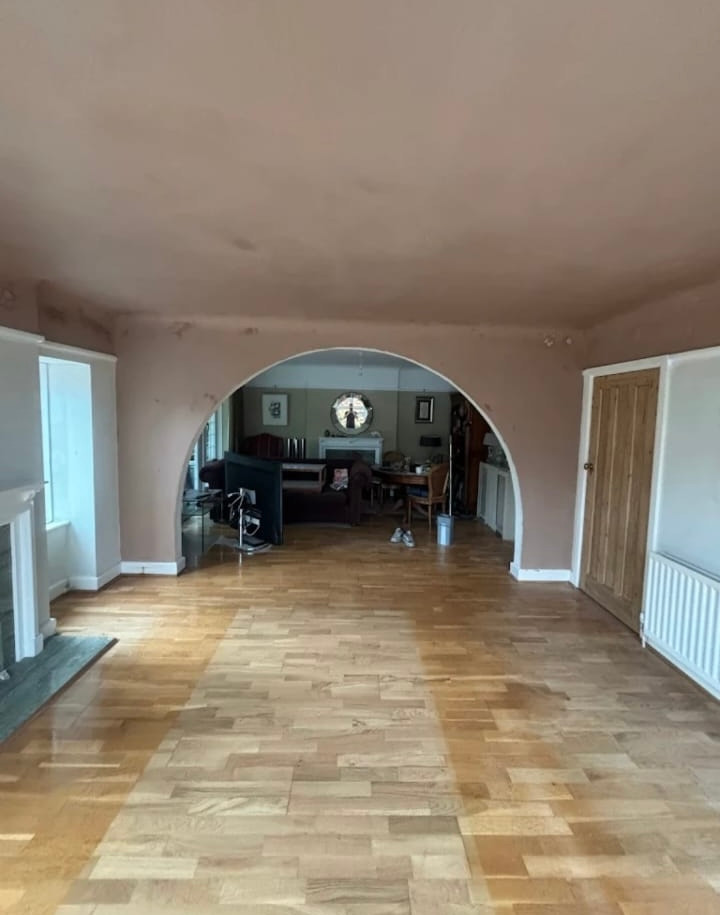
Ceilings, and plenty of them. Overboarding and skimming is the bread and butter here: fresh plasterboard screwed through the old surface into the joists, joints taped, then two passes of finish coat. That deals with a cracked ceiling, a textured coating you want gone and a ceiling papered too many times in one operation. Where a ceiling has failed and is loose it comes down instead, and we check the joists and the wiring before anything goes up.
Most of Broadstone went up in one short stretch after the war, 63.1% of it between 1945 and 1982 and a quarter of the whole place in the late 1950s and early 1960s. Those walls are a dense sand and cement float coat with a thin gypsum finish over it. That background is hard and it does not drink like a modern block wall, so it wants preparing properly and sealing with PVA before a skim rather than wetting and hoping. Where the float coat itself sounds hollow it comes off and a backing coat in bonding or hardwall goes back first.
Patching after the alterations everybody does here. Chimney breasts taken out, fireplaces opened up, serving hatches filled in, a wall knocked through between kitchen and dining room. Each leaves an edge, and making good across it is the difference between a repair you can see from the doorway and one you cannot. With 42.0% of the housing single storey, a big loft is the obvious place to put another room and a wide garage the obvious place to put one more: stud partitions boarded and finished in tape and joint or a full skim, board on dot and dab where the blockwork is true enough, sloping ceilings and dormer cheeks lined out, and bead on every corner and reveal.
Render here is mostly original sand and cement with the odd pebbledash panel, painted more than once, and it fails in the same places: the corners of openings, the bottom courses where the ground splashes them, and the panel over a bay. Small areas are cut out and made good in a matching mix; a whole elevation comes back as a primer, a mesh-reinforced basecoat and a silicone thin coat, or a monocouche where the colour runs through the material, with a bell cast at the base. A dark cold stripe across a ceiling or the top of a wall in a bungalow is very often condensation on a cold spot rather than water coming in, and replastering that without fixing the cause puts a new surface on the same problem.
How it runs
From your call to a written price
Tell us the address and what the wall or ceiling is doing. The visit is free and the quote is itemised: prep, hacking off, backing coat, beads, finish coats, making good and waste on separate lines. Dust sheets go down and the doorways are sheeted before a bag is opened. Broadstone has no conservation area and four listed entries, so on almost every house the outside finish is your decision and ordinary replastering needs no permission. Near one of those four, the council keeps the list of what is designated. Changing the material or the look of a render is where maintenance stops, and Planning Portal sets out where that line falls. Taking a whole elevation back to the blockwork is renovating a thermal element, which brings Approved Document L and building control in.
Cost
What decides the price
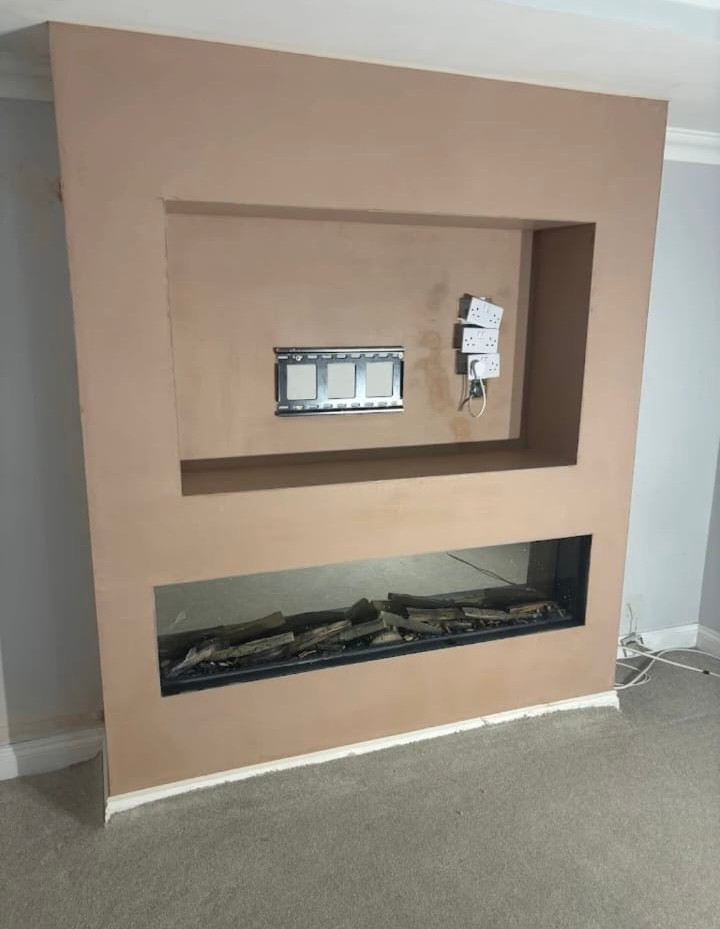
No rate per square metre. What sits behind the surface decides it: plaster still stuck takes a skim, plaster that sounds hollow comes off and brings a backing coat and a second visit with it. Most of what we price in Broadstone is a post-war bungalow or a flat in a low-rise block, so the ceilings are reachable off trestles and outside the platform costs as much as the render. Ask any quote whether a backing coat is included or only a skim, whether the beads are new, how long it wants before a mist coat and decorating, and who takes the waste away.
If it has let go
Plaster coming down today
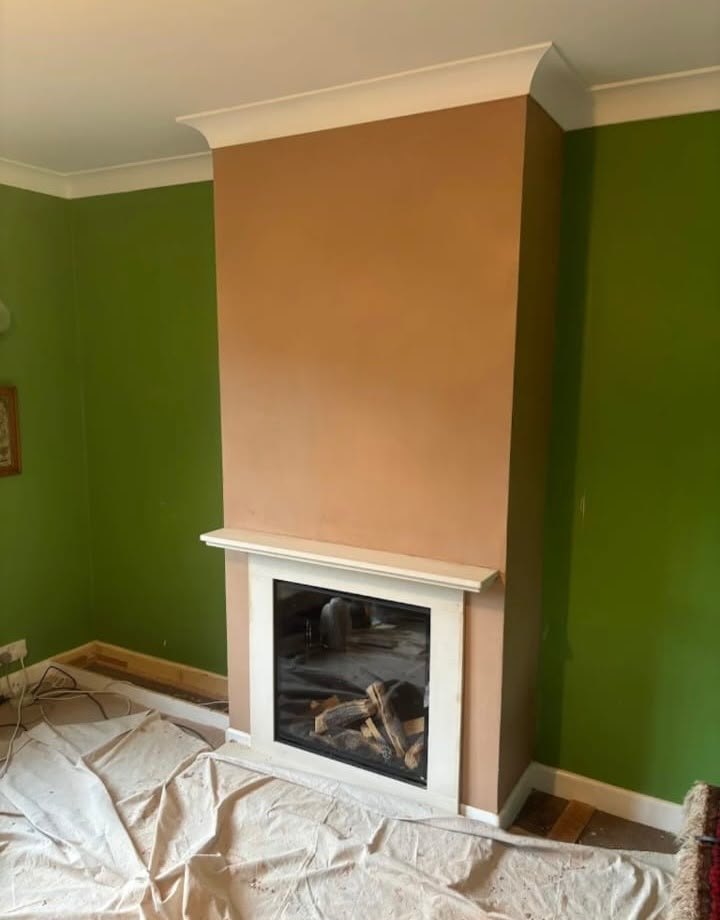
Ring rather than use the form. A ceiling that has dropped at one end, or plaster bulging after a leak, goes to the front of the queue: keep the room shut and get what you can out from under it. In a bungalow the ceiling that goes is usually the one under the loft hatch or an old tank, so turn that lighting circuit off first.
One local thing
Bungalow country, and what that does to the job
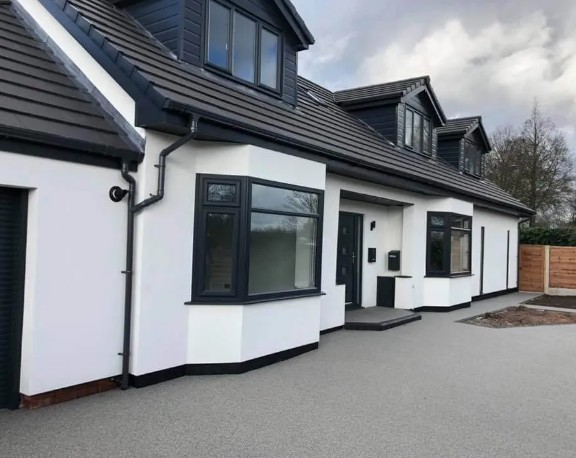
More than four in ten homes in Broadstone are bungalows, and that changes a plastering job more than any planning rule will. The obvious part is quantity: the ceilings are the whole footprint of the house rather than one storey of it, so ceilings, not walls, are the biggest line on the quote. The less obvious part is what sits above them.
Every ceiling in a bungalow has a cold loft on the other side, which is why so many of the cracks and grey patches we get called to here are condensation rather than a leak. Before replastering one we want to see whether the insulation has been pushed hard into the eaves and blocked the ventilation, because if it has, a new ceiling will mark in the same places.
The same shape works in your favour on price. A bungalow can be done in one run while it is empty, with no stairwell to fight and no first floor to protect, so a whole house skimmed is far less disruptive here than in a two storey house. Outside, low eaves mean most elevations can be reached from a tower rather than a full scaffold, which takes real money off a re-render.
The catch is at the bottom of the wall: render on a bungalow often finishes close to the ground, where paving and borders splash it and keep it wet. We want a bell cast and a clear gap above the paving, and if we are only repairing we will say honestly whether the ground level is going to undo the work.
Who you are dealing with
A local firm you can check
We cover Broadstone and BH18, across to Merley, Corfe Mullen, Upton and Canford Heath, and down into Poole. Bournemouth Roofing & Building Ltd, registered in England and Wales, company number 15471719, which you can look up in a minute. Thomas Hannen's business, and he is the one who comes out to price the job, not a salesman. A verified customer's 10 out of 10 on Checkatrade. The visit and the written quote are both free.
Questions
Broadstone questions we get asked
Why do so many ceilings crack in Broadstone bungalows?
Because 42.0% of the dwellings here are bungalows, and a bungalow ceiling sits directly under the loft with nothing above it but rafters and cold air. Every truss moves a little with the seasons and the board joints follow. A straight line running along a row of screw heads is movement, not failure. We scrim and re-skim rather than pull the ceiling down, unless the board itself has lost its fixings.
Is the plaster in a late 1950s Broadstone house lath?
Rarely. The peak building period in Broadstone is the late 1950s and early 1960s, some 25.0% of the stock, and by then walls were floated in sand and cement with a gypsum finish over brick or block. Ceilings are usually plasterboard with a thin skim on top. That matters because a boarded ceiling can be re-skimmed in place, whereas genuine lath and plaster has to come off first.
The surface water risk here is high. Does damp reach the plaster?
It can reach it, and it shows at low level first. Broadstone sits well back from the Stour, over two miles off, so river flooding is not the worry; the problem is surface water standing against a wall after heavy rain because it has nowhere to go. Plaster then blows in a band above the skirting. We want the drainage and the ground levels sorted before a new backing coat goes on.
There is no conservation area here. Can I render the front?
Broadstone has no conservation area of its own and only four listed entries in the whole settlement, so on an ordinary house the render system and its colour are your choice. Bournemouth, Christchurch and Poole is the authority if anything does need asking. Building a wall out with insulation behind the render is a different question from recovering what is already there, so tell us which of the two you mean.
Do you need scaffold to render a single storey bungalow?
For a single storey wall we work off a low tower rather than a full scaffold, which keeps that line on the quote short. With 42.0% bungalows and another 37.8% detached, most Broadstone jobs give us somewhere off the road to stand the mixer and stack the boards. Where a wall runs tight to a boundary or a neighbour's drive, we say so at the visit and price the access properly.
Nearby, and next door
Plastering and rendering near Broadstone
Plastering and rendering nearby
Our other trades in Broadstone
Everything we do in Broadstone Plastering and rendering, all areas Every area we cover
Free quote
Ceiling looking tired?
Tell us the address and what it is doing. The site visit is free and so is the written itemised quote.