Insulation in Broadstone
Loft top-ups, boarding done properly, rafter level work in converted roofs and cavity wall insulation across Broadstone. We measure the eaves as well as the middle.
The site visit is free and so is the written itemised quote. Thomas Hannen prices every job himself.
In Broadstone the loft is nearly always the job worth doing first. On a bungalow the roof sits directly over every room in the house, so what is up there decides more of your heating than anything else you could spend the same money on.
Most calls start the same way. The back bedroom is freezing and the front room is fine. The heating runs all evening and the house is cold again by breakfast. Or somebody has been up to put the Christmas boxes away, seen the state of the insulation under the boards, and wondered how long it has been like that.
We come out, get right into the loft rather than peering in from the ladder, and check the depth at the edges as well as in the middle, because that is usually where the difference is. Then you get a written price for what actually needs doing.
The work
Four shallow eaves instead of two on a hipped roof
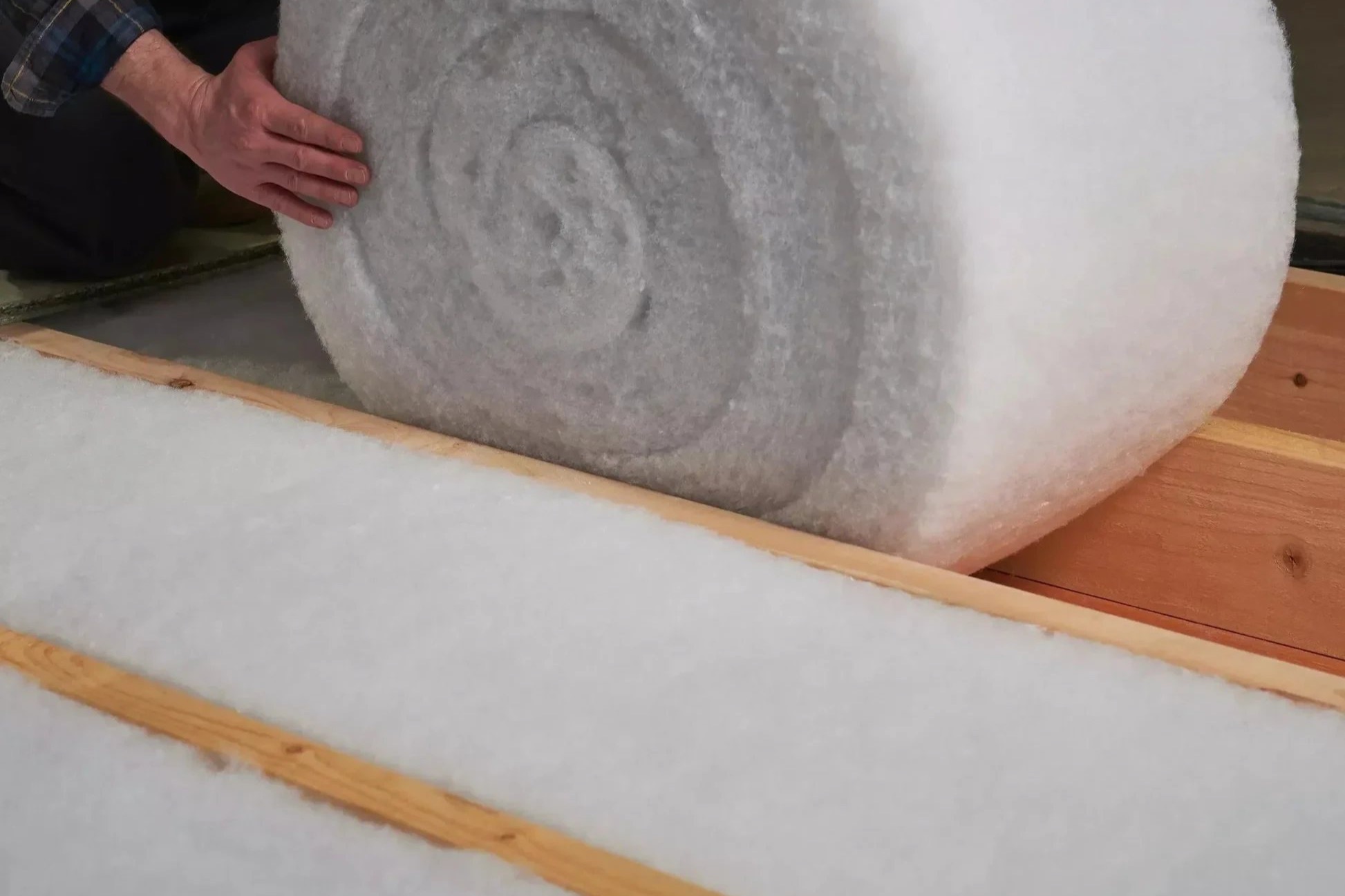
Loft top-ups and full relays. Broadstone went up in a rush either side of 1960, and 63.1 per cent of the housing dates from between 1945 and 1982, the peak falling in the late fifties and early sixties. Those lofts got an inch or two of mineral wool if they got anything, and where a top-up has been added since it has usually gone on in one direction only, so the joists run through it as a cold bridge. We work to 270mm of ordinary eco roll in two layers, the second across the first, and take an even 250mm right out over the wall plate rather than stopping at the last easy reach, which is the 0.16 u-value expected of a renovated element. Material that is compressed, damp or full of loft dust comes out, gets bagged and leaves with us.
Hipped roofs and the awkward perimeter. Bungalows are 42.0 per cent of the dwellings here and a lot of them are hipped on all four sides, which gives you four shallow eaves instead of two and very little room to work where the rafters meet the ceiling. That corner is where insulation gets thin, where the draught gets in, and where vent trays have to go so the roof still breathes once the depth goes up. On a bungalow the ceiling is also the largest single surface losing heat, so the last half metre decides whether the outside walls of your rooms feel cold.
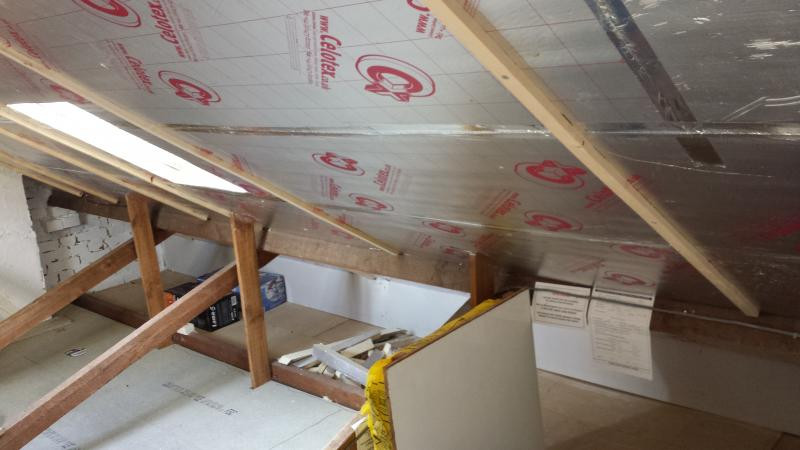
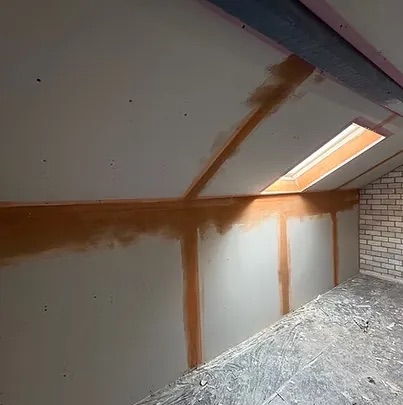
Half the lofts here have a chipboard deck laid straight onto the joists over the original insulation, and everything under those boards is squashed flat. The fix is raised loft legs, so the deck goes back at a height that leaves full depth underneath and you keep the storage. Where a bungalow has had the roof space turned into a room in the roof there is no loft floor left to treat and the work moves to rafter level: rigid PIR board cut between the rafters with a ventilation gap kept clear above, a layer under the rafters, and insulated dwarf walls at the sides. Where a sloping ceiling has no depth for rigid board, a multi-layer foil quilt such as TLX gets part of the way, and a dormer is built as a warm roof.
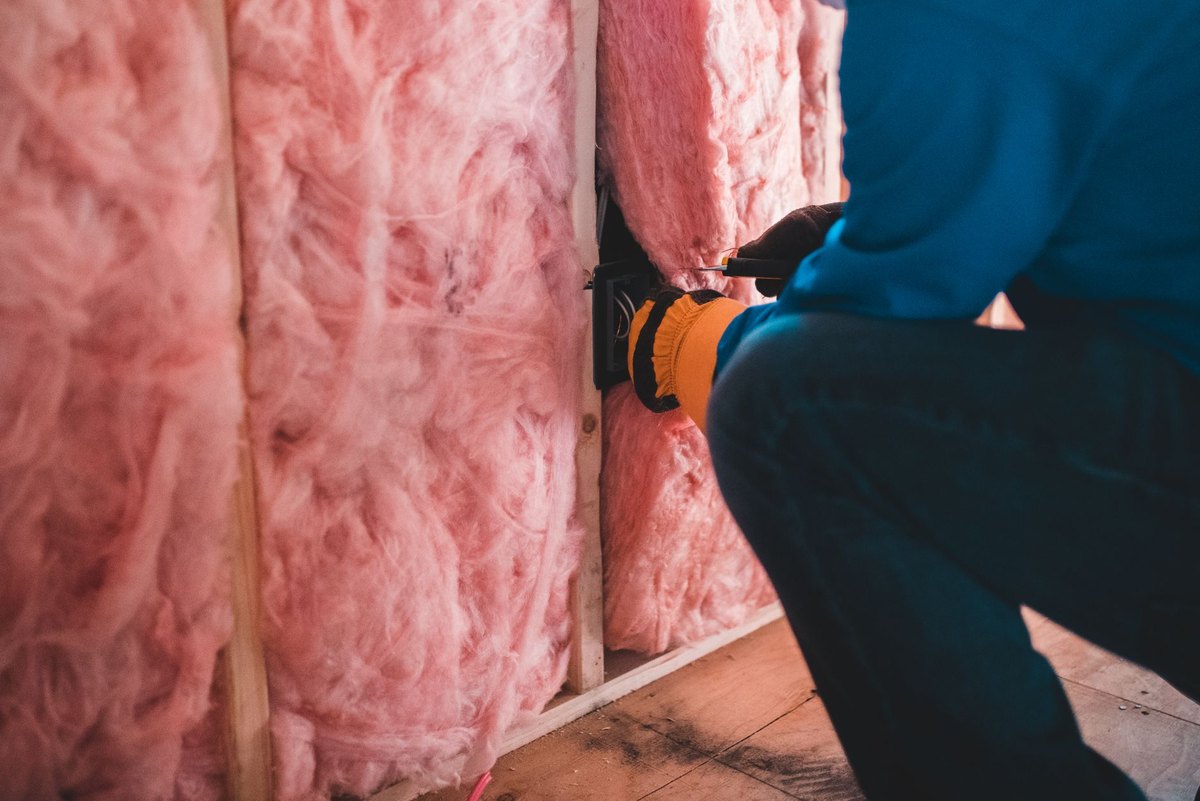
Housing of this age has a cavity, and a fair few were filled decades ago with material that has since slumped and left the top of the wall bare, so it gets a borescope check before anyone quotes to refill it. If you are in one of the top floor flats around the village centre, the loft above you normally belongs to the freeholder, so the first call is to whoever manages the block. We will still look and put it in writing for you to send them. Then lagging on the tank and pipework, and covers over the downlighters.
How it runs
From your call to a written price
The quote is itemised, not a figure on the back of a card: survey, clearing, the material and its depth, ventilation works and disposal on separate lines. Anything nobody could have seen beforehand gets a photograph and a price before we carry on.
Insulating a loft, a cavity or a floor is maintenance rather than development, so there is no application and nothing for building control to sign off, and the Planning Portal sets out where that ends. Broadstone is not in a conservation area and the council keeps the list for the parts of the borough that are. External wall insulation is the one that changes the look of a house and needs checking first.
Cost
What decides the price of an insulation job
A bungalow with a hatch in the hallway and a clear loft, the same bungalow boarded out and full, and a top floor flat reached over a communal landing are three different days before any material is unwrapped. Old material to bag and take away, storage to move and put back, eaves kept clear and depth into the corners rather than just across the middle all come before the material, and Approved Document L sets what it has to reach. Comparing quotes, ask what depth is being laid, whether the old material is removed or covered, and whether the hatch and pipework are included.
If it is urgent
Damp, condensation or a room you cannot heat
Ring rather than use the form. A loft running with condensation, mould coming back faster than you can wash it off, or a room you cannot heat before a cold snap gets seen quickly. Insulating a roof space that cannot breathe makes it worse, so the first visit settles which of the two you have. Broadstone is under six miles from us, usually a visit within a couple of days.
Worth knowing
In a bungalow the loft is not one job among several, it is the job
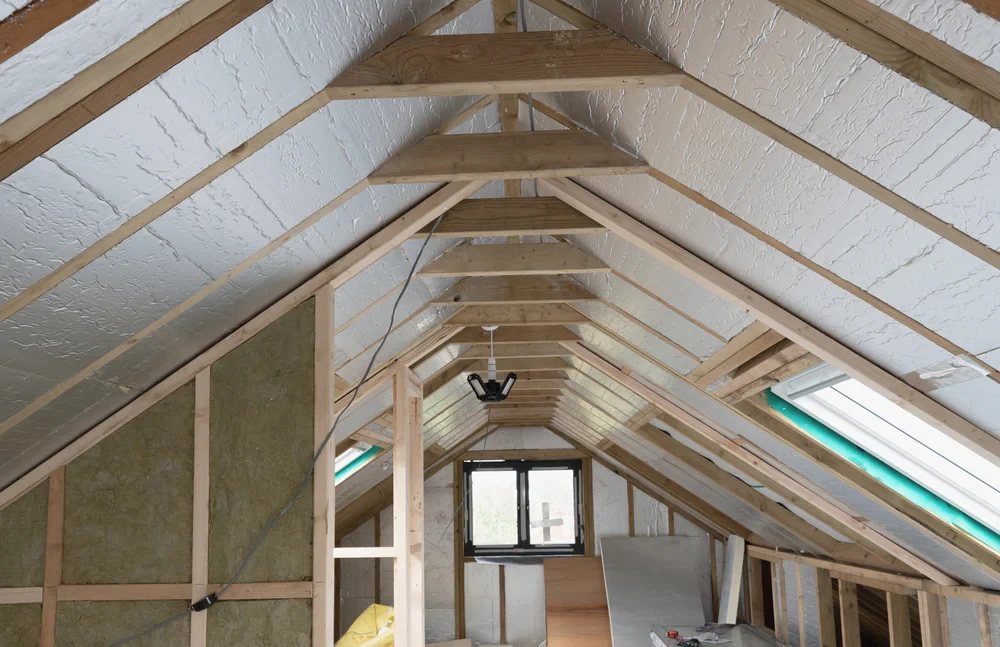
Something over four in ten homes in Broadstone are bungalows, which is unusual even for this part of Dorset, and it changes the sums. In a two-storey house of the same floor area, only half the rooms sit under the roof. In a bungalow every room does.
You are heating the same space through roughly twice the ceiling area, so the loft is a far bigger share of the total heat loss and the money spent up there works harder than the same money spent almost anywhere else on the building. It also means a thin, patchy or squashed loft shows up as cold rooms everywhere rather than just upstairs.
What that should change about how you buy the job: ask what depth is going in at the eaves, not in the middle. A hipped bungalow roof has a long, low perimeter, most of it too tight to crawl into comfortably, and it is the first thing a rushed job skimps.
Ask whether vent trays are included, because pushing insulation to the wall plate without them blocks the airflow and you trade cold rooms for a damp roof. And if you are thinking about converting rather than just insulating, say so before the work starts: the insulation then belongs at rafter level and doing the loft floor first is money spent twice.
Who you are dealing with
A local firm you can check
We cover Broadstone, Merley, Corfe Mullen, Upton, Canford Magna and the north side of Poole, and all of BH18. Bournemouth Roofing & Building Ltd, registered in England and Wales, company number 15471719, which you can look up in a minute. Thomas Hannen's business, and he is the one who comes out to price the job, not a salesman. A verified customer's 10 out of 10 on Checkatrade. The visit and the written quote are both free.
Questions
Broadstone questions we get asked
Why do bungalow lofts here lose so much heat?
In a bungalow the ceiling under the loft is the whole house, not just the upstairs. With 42.0% of Broadstone dwellings being bungalows, that is the single biggest cold surface most people here own. Heat rises into the roof space and leaves through the tiles. It also means the area we insulate is roughly double what a two storey house of the same floor area needs.
Our estate went up together. Does that matter?
It matters for what we find. 63.1% of the housing here went up between 1945 and 1982, with the peak in the late 1950s and early 1960s, so lofts on a whole road were often done to the same standard on the same day. If your neighbour's roof space has thin matted glass wool between the joists and nothing over them, yours almost certainly does too.
Does Broadstone's surface water risk affect insulating the floor?
Sometimes, and the check comes first. Broadstone sits in a high surface water band, so the airbricks that ventilate a suspended timber floor matter more than the insulation you put between the joists. If those vents are silted or bridged by a raised path, the void stays damp and anything laid in it stays damp. We look under the floor before quoting for it, not after.
Do I need anything from BCP before insulating?
For a loft top up, no. Broadstone has no conservation area of its own and only four listed entries in the whole settlement, so for almost every house here it is straightforward work under Bournemouth, Christchurch and Poole. It changes if you are in one of those four, or if you want the roof stripped and boarded over the rafters, which alters the outside. We tell you which side of that line you are on.
The hatch in our bungalow is tiny. Problem?
Not usually, and it decides how we work rather than whether we can. A lot of the 1950s and 1960s bungalows in Broadstone have a small hatch over a landing cupboard or the hall, so material goes up in compressed rolls and gets opened out in the loft. If the hatch is over a stairwell we bring a platform. Thomas looks at the hatch on the free site visit and prices the handling into the quote.
Nearby, and next door
Insulation near Broadstone
Insulation nearby
Our other trades in Broadstone
Everything we do in Broadstone Insulation, all areas Every area we cover
Free quote
Get a price for insulating your Broadstone loft
Tell us the address and which rooms are cold. We will get into the loft, measure what is really up there, and put an itemised price in writing. No charge either way.